Friday, August 27, 2021

One of the greatest Saints ever; converted by the prayers of his saintly mom


St. Augustine of Hippo


St. Augustine of Hippo is the patron of brewers because of his conversion from a former life of loose living, which included parties, entertainment, and worldly ambitions. His complete turnaround and conversion has been an inspiration to many who struggle with a particular vice or habit they long to break.

This famous son of St. Monica was born in Africa and spent many years of his life in wicked living and in false beliefs. Though he was one of the most intelligent men who ever lived and though he had been brought up a Christian, his sins of impurity and his pride darkened his mind so much, that he could not see or understand the Divine Truth anymore. Through the prayers of his holy mother and the marvelous preaching of St. Ambrose, Augustine finally became convinced that Christianity was the one true religion. Yet he did not become a Christian then, because he thought he could never live a pure life. One day, however, he heard about two men who had suddenly been converted on reading the life of St. Antony, and he felt terrible ashamed of himself. "What are we doing?" he cried to his friend Alipius. "Unlearned people are taking Heaven by force, while we, with all our knowledge, are so cowardly that we keep rolling around in the mud of our sins!"

Full of bitter sorrow, Augustine flung himself out into the garden and cried out to God, "How long more, O Lord? Why does not this hour put an end to my sins?" Just then he heard a child singing, "Take up and read!" Thinking that God intended him to hear those words, he picked up the book of the Letters of St. Paul, and read the first passage his gaze fell on. It was just what Augustine needed, for in it, St. Paul says to put away all impurity and to live in imitation of Jesus. That did it! From then on, Augustine began a new life.

He was baptized, became a priest, a bishop, a famous Catholic writer, Founder of religious priests, and one of the greatest saints that ever lived. He became very devout and charitable, too. On the wall of his room he had the following sentence written in large letters: "Here we do not speak evil of anyone." St. Augustine overcame strong heresies, practiced great poverty and supported the poor, preached very often and prayed with great fervor right up until his death. "Too late have I loved You!" he once cried to God, but with his holy life he certainly made up for the sins he committed before his conversion. His feast day is August 28th.

A beloved and holy Bishop loses battle with Covid19


A BELOVED BISHOP LOSES HIS BATTLE WITH COVID


“GOD HAS CALLED ME TO RADIATE HIS LOVE AND CARE FOR THESE BROTHERS AND SISTERS WITHOUT LOOKING AT THEIR FAITH, CASTE, COLOR, LANGUAGE.”

Some may remember the homily I preached last spring on India’s Bishop Jacob Mar Barnabas, a man I described as a “living saint.” He was in the hospital, fighting for his life in a long and difficult battle with COVID.

This morning, the battle ended:  

Bishop Dr Jacob Mar Barnabas of the Gurugram diocese of the Syro-Malankara Catholic Church passed  away. near here on Thursday. He was 60. The Bishop was undergoing treatment for COVID-19. His condition worsened Thursday.

This is heartbreaking news for so many of us. As I put it last May:

His enthusiasm is infectious — and so is his love for the poor.

He bears witness to it every day.

When COVID first struck India over a year ago, families naturally came to him, looking for help. Many had lost jobs, livelihoods, homes. “We don’t have any place to go,” they said, “Please help us.”

And he did.

He set up a kitchen to prepare hot meals for 1,500 people a day. He organized volunteers, priests and religious in his diocese to distribute food, hygiene kits, protective equipment, masks.

This simple man with a long grey beard and flowing saffron robes climbed into a Jeep and traveled with workers to villages. When they arrived, he got out of the Jeep and put on rubber gloves and a mask and gave out food and supplies and blessings.

A year ago, as the pandemic was just beginning to spread, he wrote an essay describing the hundreds of people who were showing up every day outside his cathedral, waiting for help: old people, widows, families with children. Day after day, the bishop met with them, talked with them, brought food to them, prayed with them.

As he put it: “God has called me to radiate his love and care for these brothers and sisters without looking at their faith, caste, color, language. They find in our cathedral a place of consolation and comfort.”

That was a year ago. I don’t think he could have imagined what was coming.

In just the last few weeks, COVID has brought India to its knees.

Families have been wiped out. The death rate is soaring. Gravediggers can’t keep up. Funeral pyres burn day and night. Government officials can’t even keep an accurate account of the dead and dying, there are so many of them. Hundreds of thousands are fighting for their lives.

One of them is Bishop Jacob Mar Barnabas.

Three weeks ago, he was admitted to a hospital with a fever. It turned out to be COVID.

This morning, he is still in a hospital, on a ventilator, in critical condition.

But even that hasn’t stopped him.

One of his priests wrote, “Irrespective of his poor health, he was anxious about the poor on the street, that they are getting food daily or not. We have tried our best to fulfill his dreams and ensure the distribution of food to the poor.”

Eternal rest grant unto him, O Lord … 

Catholic Church in the U.S. playing major role in helping arriving Afghan refugees


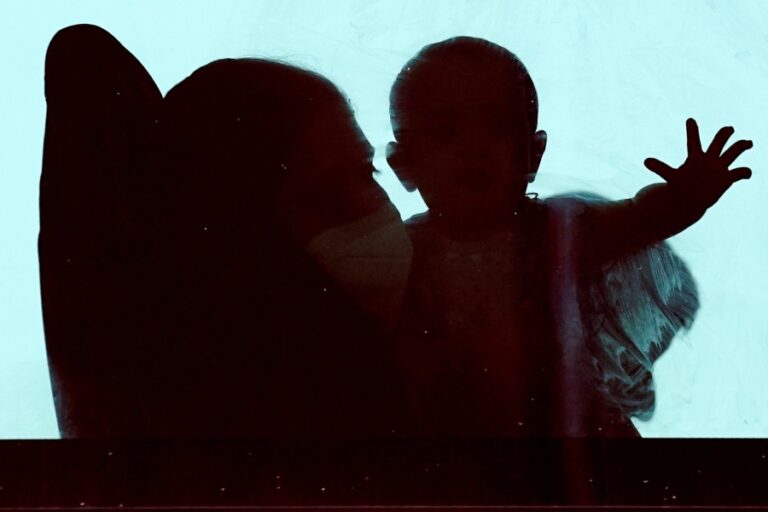
An Afghan refugee waves aboard a bus headed to a refugee processing center upon the Afghans' arrival at Dulles International Airport in Dulles, Va., Aug. 25, 2021. (CNS photo/Kevin Lamarque, Reuters)

As Afghanistan convulses, Catholic organizations help refugees in U.S.

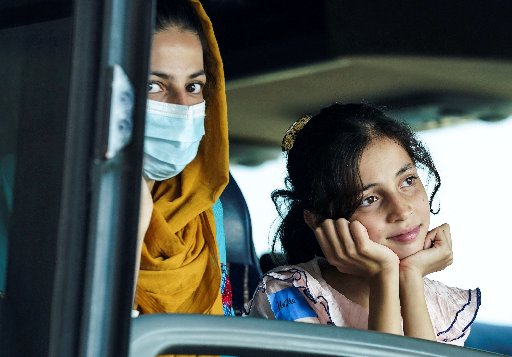
Afghan refugees ride aboard a bus taking them to a refugee processing center upon their arrival at Dulles International Airport in Dulles, Va., Aug. 25, 2021. (CNS photo/Kevin Lamarque, Reuters)

WASHINGTON (CNS) — An already tense situation in Afghanistan took a turn for the worse early Aug. 26 when two explosions near the Kabul airport led to casualties and injuries still being calculated.

Gen. Kenneth F. McKenzie, head of U.S. Central Command, said in an Aug. 26 video news conference that 12 U.S. service members were killed and 15 were wounded in the attack.  

“While we’re saddened by the loss of life, both U.S. and Afghan, we’re continuing to execute the mission,” said McKenzie, adding that an extremist Islamic State group was behind the attack involving suicide bombers.

Afghans, U.S. citizens and others eager to leave the country had been flocking to Kabul’s international airport after a Taliban takeover in the capital in mid-August when the Afghan military collapsed following withdrawal of U.S. troops and contractors.

On the other side of the world, the Catholic Church, particularly in the U.S., has been “involved in the reception and establishment” of those seeking safe haven, participating in the effort with other faith-based aid groups and organizations such as the International Rescue Committee, said Bill Canny, executive director of Migration and Refugee Services for the U.S. Conference of Catholic Bishops.

While some of those fleeing are U.S. citizens, many are refugees who don’t have family members in the country nor have been in the U.S. before and left their lives behind at a moment’s notice with little beyond what they could carry.

“These are people who have been persecuted in their countries and they need new homes, their kids need to get into schools, they need to find work,” said Canny in a Aug. 25 telephone interview with Catholic News Service, speaking about the dire situation unfolding by the minute in Afghanistan.

Faith-based groups, including Catholic organizations, also have been calling on the Biden administration to speed up the evacuations.

“Our government owes a debt of service to the Afghan people, not to mention the moral responsibility it has to help the women and children of Afghanistan who are now in imminent danger. The National Advocacy Center of the Sisters of the Good Shepherd calls on President Biden to immediately not just to welcome but to fervently work to get out those in danger,” said Fran Eskin-Royer, the organization’s executive director, in an Aug. 26 statement.

Anna Gallagher, executive director for Catholic Legal Immigration Network Inc., said Aug. 24 on Twitter that Afghans had “risked their lives for us, and we must now make every effort to protect theirs.”  

The George W. Bush administration sent troops to Afghanistan after the Sept. 11, 2001, attacks in New York and Washington, trying to pin down al-Qaida militants who planned the attack, including Osama bin Laden, who was believed to be in and out of Afghanistan hiding with help from the Taliban.

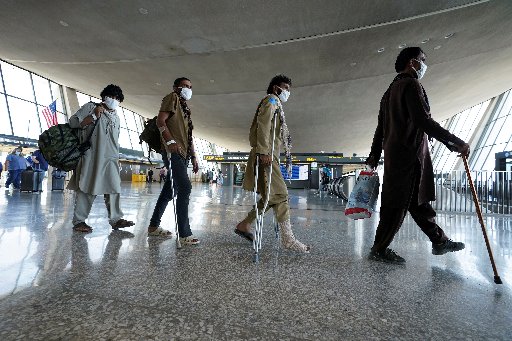
Afghan refugees walk to a bus taking them to a refugee processing center upon their arrival at Dulles International Airport in Dulles, Va., Aug. 25, 2021. (CNS photo/Kevin Lamarque, Reuters)

U.S. troops remained there under previous administrations from both political parties and in October 2020, President Donald Trump tweeted that he would withdraw U.S. troops from Afghanistan by Christmas. Biden continued with the plan but with a different timeline. However, analysts have blamed all previous administrations– from George W. Bush to Biden — with the unfolding drama.

Some Catholics say what is important is to help those affected by it.  

“All politics must remain out of this decision. These are our brothers and sisters, and we must receive them with great dignity and respect,” Gallagher said.

President Joe Biden said Aug. 22 that the military had evacuated 28,000 people since Aug. 14 from the Kabul airport and seemed set on an Aug. 31 full withdrawal of troops in what analysts said was to prevent precisely the kind of attack that took place Aug. 26.

McKenzie said at least 1,000 Americans were still in Afghanistan and the U.S. would do everything possible to get them out, “but not everybody wants to leave,” he said.

For its part, the church has been helping Afghans as best as it can, given that certain systems to move refugees along, in the U.S., are “still slow and recovering from the previous administration,” said Canny.

“Over the last month, we’ve begun to rebuild the system in preparation of more arrivals … since those arrivals haven’t been able to get started, it’s a good moment to welcome those families being resettled,” Canny said.  

The U.S. has been using domestic military bases to process and house Afghan refugees, including at El Paso’s Fort Bliss in Texas, Camp McCoy in Wisconsin, Fort Lee in Virginia, Joint Base McGuire-Dix-Lakehurst in New Jersey.

The challenge is that facilities at those military installations have only been put up recently, Canny said.

“We have staff in each one with exception of Fort Lee. … We want to make sure we do a review of their legal status. They would only be in the installation for a week and are given assistance with mental health and wellness, if they need it, make sure they’re OK, make sure the kids are OK,” said Canny.

Local news reports out of New Mexico also said Holloman Air Force Base was waiting for indications it would be a place to welcome refugees.

Parishes and Catholic laypeople around the country who want to help can do so in a variety of ways, said Canny.

“The best thing for parishes to do is get in in touch with local Catholic Charities who are involved in the national effort,” Canny said. “Call their dioceses and find out what’s going on (locally). Also, look at what other churches are doing in an ecumenical (effort) to provide refugees, people who are here out of fear for their lives, the best welcome, because they aided our government.”

People can also donate to Catholic Charities as well as to organizations listed in the MRS resources page at www.justiceforimmigrants.org/afghanistan. There also may be opportunities for people to open up their homes to refugees in the short-term as they move into some cities where the housing markets are expensive, Canny said.

“We’re grateful for the opportunity to help,” Canny said. “We don’t consider ‘we’re saving these people,’ who are in effect saving us by giving us the opportunity to help. … This is what our church does and it’s founded on the Gospel and it includes the life of Jesus and Mary and Joseph as they fled for safety.”

Thursday, August 26, 2021

The prayer warrior mother of St. Augustine


St. Monica


Saint Monica, also known as Monica of Hippo, is St. Augustine of Hippo's mother. She was born in 331 A.D. in Tagaste, which is present-day Algeria.

When she was very young, she was married off to the Roman pagan Patricius, who shared his mother's violent temper. Patricius' mother lived with the couple and the duo's temper flares proved to be a constant challenge to young Monica.

While Monica's prayers and Christian deeds bothered Patricius, he is said to have respected her beliefs.

Three children were born to Monica and Patricius: Augustine, Navigius, and Perpetua. Unfortunately, Monica was unable to baptize her children and when Augustine fell ill, Monica pleaded with Patricius to allow their son to be baptized.

Patricius allowed it, but when Augustine was healthy again, he withrew his permission.

For years Monica prayed for her husband and mother-in-law, until finally, one year before Patricius' death, she successfully converted them.

As time passed, Perpetua and Navigius entered the religious life, but unfortunately Augustine became lazy and uncouth. This greatly worried Monica, so when Patricius died, she sent the 17-year-old Augustine to Carthage for schooling.

While in Carthage, Augustine became a Manichaean, which was a major religion that saw the world as light and darkness, and when one died, they were removed from the world of matter and returned to the world of light, which is where life comes from.

After Augustine got his education and returned home, he shared his views with Monica, who drove him from her table. Though it is not recorded how much time passed, Monica had a vision that convinced her to reconcile with her wayward son.

Monica went to a bishop, who told her, "the child of those tears shall never perish."

Inspired, Monica followed Augustine to Rome, where she learned he had left for Milan. She continued her persual and eventually came upon St. Ambrose, who helped her convert Augustine to Christianity following his seventeen-year resistance.

Augustine later wrote a book called Confessions, in which he wrote of Monica's habit of bringing "to certain oratories, erected in the memory of the saints, offerings of porridge, bread, water and wine."

When Monica moved to Milan, a bishop named Ambrose told her wine "might be an occasion of gluttony for those who were already given to drink," so she stopped preparing wine as offerings for the saints.

Augustine wrote: "In place of a basket filled with fruits of the earth, she had learned to bring to the oratories of the martyrs a heart full of purer petitions, and to give all that she could to the poor - so that the communion of the Lord's body might be rightly celebrated in those places where, after the example of his passion, the martyrs had been sacrificed and crowned."

After a period of six months, Augustine was baptized in the church of St. John the Baptist at Milan. The pair were led to believe they should spread the Word of God to Africa, but it the Roman city of Civitavecchia, Monica passed away.

Augustine recorded the words she imparted upon him when she realized death was near. "Son, nothing in this world now affords me delight. I do not know what there is now left for me to do or why I am still here, all my hopes in this world being now fulfilled."

She was buried at Ostia, and her body was removed during the 6th century to a hidden crypt in the church of Santa Aurea in Osta, near the tomb of St. Aurea of Ostia.

In 1430, Pope Martin V ordered her relics to be brought to Rome and many miracles were reported to have occurred along the way. Later, Cardinal d'Estouteville built a church to honor St. Augustine called the Basilica di Sant'Agostino, where her relics were placed in a chapel to the left of the high altar.

Her funeral epitaph survived in ancient manuscripts and the stone it was originally written on was discovered in the church of Santa Aurea in 1945.

Douglas Boin translated the tablet's Latin to read:

"Here the most virtuous mother of a young man set her ashes, a second light to your merits, Augustine.

As a priest, serving the heavenly laws of peace, you taught [or you teach] the people entrusted to you with your character. A glory greater than the praise of your accomplishments crowns you both - Mother of the Virtues, more fortunate because of her offspring."

Fun Fact
The city of Santa Monica, California is named after Monica, as were the "weeping" springs outside the city.

St. Monica Prayer

St. Monica,
I need your prayers.
You know exactly how I'm feeling because you once felt it yourself.
I'm hurting, hopeless, and in despair.
I desperately want my child to return to Christ in his Church but I can't do it alone.
I need God's help.
Please join me in begging the Lord's powerful grace to flow into my child's life.
Ask the Lord Jesus to soften his heart, prepare a path for his conversion, and activate the Holy Spirit in his life.
Amen.

Here we go again; this is why I hate August/September in SE Louisiana


Since 2019, what has happened in the church concerning combating sexual abuse


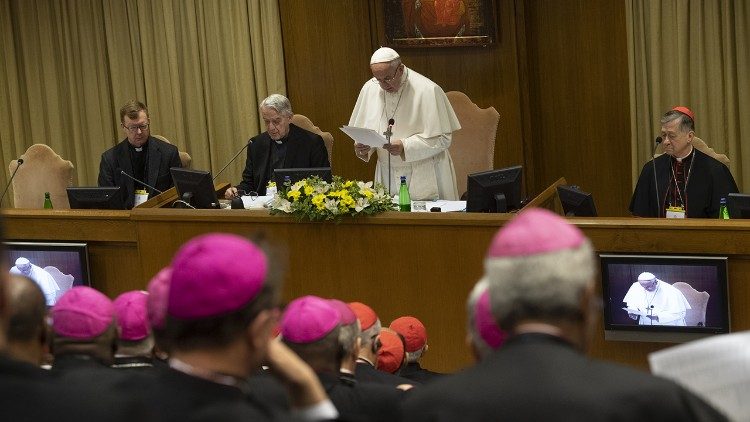
Pope Francis addresses the 2019 Meeting on the Protection of Minors in the ChurchPope Francis addresses the 2019 Meeting on the Protection of Minors in the Church 

The challenge of sexual abuse: What has happened since the February 2019 Summit

In February 2019, Pope Francis invited the presidents of every episcopal conference to the Vatican for a Meeting on the Protection of Minors in the Church to address the issue of the sexual abuse of minors by members of the clergy. A similar meeting focusing on the region of Central and Eastern Europe will take place in Warsaw from September 19-22. In this article, Fr Federico Lombardi puts this regional meeting into the context of the Church journey thus far.

By Father Federico Lombardi, SJ

The Church must confront the challenges present in today’s world, the most fundamental being the faith and the proclamation of the God of Jesus Christ, with all the grandiose cultural and anthropological transformations present. There are also specific challenges, however, that profoundly influence the life of the Church and its evangelizing mission. One of the most critical challenges that has emerged in the last few decades, is that of the sexual abuse of minors by members of the clergy. This has undermined the Church’s credibility and, therefore, its authority and its capacity of proclaiming the Gospel credibly. It has cast the shadow of inconsistency and insincerity over the Church as an institution, and on the entire community of the Church as a whole. This is indeed extremely serious.

Over time and with experience, beginning with the sexual abuse of minors – which is the most serious – we have learned to broaden the perspective to include various aspects. Thus, today, we often speak of abuse suffered by “vulnerable” persons. And we know the abuses sustained are not only sexual, but also abuse of power and conscience, as Pope Francis has often stated.
 

In addition, it is necessary to remember that the problem of abuse, in its various manifestations, is a general problem in human society, in the countries we live in and on the various continents. It is not a problem exclusive to the Catholic Church. Rather, those who study the issue objectively and as a whole, have seen that there are different regions, places, and institutions where it is dramatically widespread.

At the same time, it is only right that the Church look specifically at the problem since, as has already been noted, its credibility and constancy is at stake. The Church has always insisted on its teaching regarding sexual behavior and respect for the human person. Therefore, even if we know that this is not a problem that exists exclusively in the Church, we must be absolutely serious about it and understand that it has a terrible impact in the context of ecclesial life and on the proclamation of the Lord’s Gospel.

In particular, what is at stake is the depth and truth of relationships between people whose dignity is to be profoundly respected. As Christians and as Catholics, we pride ourselves on recognizing the primacy of the dignity of the person who is the image of God. So, the abuse of a person, the lack of respect, considering others as objects, not being attentive to their sufferings, and so on, is a sign that something specific and fundamental is missing in our faith and in our vision of the world.

In the latest reform of the Church’s penal code, there is an aspect that might seem purely formal, but is instead very significant from this point of view. The crimes of sexual abuse were inserted under the heading of offences “against human life, dignity and liberty”. They are not “scandalous” actions or deeds considered “unworthy of the clergy”. Rather, the emphasis is placed on the Church’s understanding that the dignity of the person is central and must be respected because we are and as God’s image. This is absolutely fundamental. The fact that a conversion is taking place and we have begun to more seriously listen to and respect each individual person, even the smallest and weakest, is one of the most important steps on the journey in our time toward the conversion and purification of the Church to regain its credibility.

The 2019 Meeting: responsibility, accountability, transparency

Without going through the entire history of the tragic events and the Church’s response regarding the sexual abuse of minors, we can, for simplicity’s sake, begin with the February 2019 Meeting. It was convened by the Pope as a global moment, in which the entire Church (represented by members of every Episcopal Conference, in which representatives of institutes of consecrated men and women also participated), gathered together to become aware of and dedicate itself to continue to more effectively embrace the path of renewal.

The organization of that Meeting revolved around three main points (the Acts were subsequently published in the book published by Libreria Editrice Vaticana entitled Consapevolezza e purificazione – Awareness and Purification).

First of all, becoming aware of and embracing responsibility for the problem, of the issues connected to the sexual abuse of minors and others; the importance of profound and compassionate listening and understanding, which leads to the openness to participate in the consequences, the suffering, the seriousness of what has happened and is happening. Listening and compassion form the starting point in forming the conviction that needs to be adopted. Then, of course, there is the need for justice to be done for crimes that have harmed others. Another aspect is that of prevention so that such crimes never be committed again, or at least, that becoming more and more rare, this tragic reality can be controlled. This implies the formation of all who work within the ecclesial community, and specifically, the formation of competent people who can act as reference points for dealing with the problem. In short, awareness and responsibility in facing the issue go together.

Another very important and crucial point is accountability so as to overturn the culture of covering up or concealing the problem. One of the tragic aspects of this crisis is that it has brought a serious situation to the surface, to the awareness of the public (even though at times people knew what was happening) – a way of dealing with the sexual abuse of minors that had become systemic, often interpreted as “natural”, kept in the shadows or swept under the carpet, due to embarrassment or to defend the honor of the families or the institutions involved, and so on. This tendency to hide the issue needs to be replaced by the tendency to be accountable for what has been done, even by those in leadership roles. This tendency to cover abuse up was so widespread at every level, even more serious when done by those in positions of responsibility (superiors of communities, bishops, etc.). Thus, bringing things to the light and making sure that everyone is accountable for their actions, is a way to make sure that we are moving toward transparency, responsibility and justice – another absolutely necessary step forward in the process.

The third point that was talked a lot about during the Meeting was transparency, which is a consequence of the first two. This does not only mean admitting that crimes were and still are being committed, talking about them and focusing on them. Certainly, facing the truth of the facts is essential. But transparency also means knowing and making known what is being done in response, what the procedures are by which the Church, in all of its manifestations, is facing and dealing with the issue, what measures it is taking, what the verdicts are regarding those who are guilty, and so forth. In this way, both the ecclesial and civil community becomes aware not only of the faults and crimes committed, but also of the journey the community is consciously engaged in by which it is responding to this problem.

Important steps taken since the 2019 Meeting

But if the Meeting in 2019 was supposed to be a common point of departure, it needs to be recognized that subsequently many steps were taken by the Pope and Church leadership that implemented all of the main tasks identified during that Meeting. What are they?

Firstly, already by the end of March, Pope Francis issued an Apostolic Letter promulgating new laws and guidelines pertaining to the Vatican and the Holy See which broadened the perspective beyond the abuse of minors to include “vulnerable persons”. Then on May 9, 2019, he promulgated a very important new law for the entire Church, the Motu Proprio Vos estis lux mundi – “You are the light of the world” – in which the Pope legislated that an office be organized in every diocese to receive reports and to initiate the canonical procedures in response to the sexual abuse of minors. In addition, he also established that every priest and religious who becomes aware of such abuse is obliged to report it. The Pope also extended an invitation to members of the laity to report such abuse as well. Now, all priests and men and women religious are obliged in conscience to report cases regarding the sexual abuse of minors that they are made aware of; this obligation applies not only to minors, being the most serious, but applies also to other vulnerable persons or other abuses that include the use of violence. Once again, members of the laity are also invited to do so. In order to report abuse, the offices established to receive the reports must be publicized.

This is one of the most decisive steps. Of course, it needs to be ascertained whether all of this is being implemented. However, the law is already in place for the entire Church. It is an absolutely fundamental step the Pope took, probably the most important in the last twenty years regarding this issue. Furthermore, the same law instituted a process that involves the reporting of superiors at the highest levels – superiors general of institutes of consecrated life, bishops and cardinals – not only those accused of sexual abuse of minors, but also those who cooperate(d) in “covering it up”. Therefore, concrete steps toward responsibility and accountability have been radically implemented.
 

Yet another step taken leading toward greater transparency took place in December 2019 when Pope Francis abolished the “papal secret” that previously covered cases of the sexual abuse of minors. This allows clearer and easier collaboration to take place between ecclesiastical and civil authorities than had previously been the case. Finally, the famous Vademecum that had been developed was published in July 2020. This document was a direct request brought to the February 2019 Meeting, and had been indicated early on in the Meeting by Pope Francis as one of the Meeting’s first objectives. The Congregation for the Doctrine of the Faith compiled it. Although not containing anything new, it is a well-presented document that presents in an orderly manner and clearly explains what every bishop or other person in authority needs to know and what they need to do in different situations. It is an extremely necessary tool, even though it did not receive a lot of attention when it was published. It was, however, a key suggestion requested by the participants in the 2019 Meeting that was accomplished.

Even more recently, on the Solemnity of Pentecost 2021, Pope Francis promulgated a reform of Book VI of the Code of Canon Law. This portion of Canon Law contains a summary of the Penal Sanctions in the Church. The new version rewords and reorganizes the previous version in such a way that the new norms established throughout the years dealing with the sexual abuse of minors and other issues are now contained in a well-organized way in the Code of Canon Law. Prior to this date, the legislation remained “scattered” throughout a whole series of documents and other types of interventions.

It can now be confirmed beyond a doubt that all the things we expected from the Pope and the Holy See in the aftermath of the 2019 Meeting have been accomplished.
 

But something else can be added. In this same period, in November 2020 to be exact, the voluminous “McCarrick Report” was published by the Vatican Secretariat of State. Ordered by Pope Francis himself, this investigation revealed the details regarding the grievous scandal that rocked the Church in the United States and throughout the world, and how it was possible that someone guilty of such abuse could have climbed to the heights of ecclesiastical responsibility as the Cardinal Archbishop of Washington, DC. The publication of this report can also be considered a painful, but very courageous, step in the direction toward transparency and demonstrates the desire to account for crimes and to own responsibility even at the highest levels of the Church.

Thus, we are before an enormous, difficult and painful problem, that touches the Church’s very credibility. Although this is true, it is not at all true that nothing has been done or that nothing, or next to nothing, is being done. On the contrary, it can be unhesitatingly stated that the universal Church has faced and is facing the problem, that it has taken necessary steps to establish norms, procedures and laws to deal with it correctly.

The next steps forward: from norms to practice

Of course, this does not mean that everything has been done, because as we know, it is one thing to establish norms or create a framework, and quite another to change the situation, by enforcing them. The upcoming September Conference of the Church in Central and Eastern Europe in Warsaw on the protection of minors and vulnerable persons is, in fact, taking this direction. Every geographic and ecclesiastical area possessing certain commonalities from the historical and cultural point of view need to reflect on where they are and need to identify what needs to be done concretely to effectively enforce the guidelines of the universal Church at the local level.

This has been done in other geographic regions. For example, a large conference for Latin America was held in Mexico about a year ago. The pandemic interrupted many other plans and caused delays. However, conferences are being planned, or have already taken place, on various continents, conferences similar to that planned for the countries making up Central and Eastern Europe. These regional meetings are also necessary steps on the common journey of the universal Church applied specifically to geographical, cultural and ecclesial regions.

To conclude, much has been done at the general and normative levels, in addition to gaining concrete experience. In some areas more has been done, and in other areas, less. Meetings are necessary for the circulation of knowledge and insight into the concrete and efficacious ways to face the problem. We are on a journey and we will remain on the journey. But the road on which it is necessary to move quickly and without uncertainties is now substantially and sufficiently delineated. This road must be taken to heal suffering, apply justice, prevent future abuse, restore trust and credibility within the ecclesial community and in the Church’s mission for the good of the world.