Sunday, July 9, 2017

Today's Sunday Angelus w/ Pope Francis

Angelus Address: On Going to Jesus when Life Becomes Overwhelming
“Come to Me, All Who Labor and Are Heavy Laden, and I will give You Rest”
Angelus / Foto: Francesco Sforza - © PHOTO.VA - OSSERVATORE ROMANO

Here is a ZENIT translation of the address Pope Francis gave today before and after praying the midday Angelus with those gathered in St. Peter’s Square.
* * *
Before the Angelus
Dear Brothers and Sisters, good morning!
In today’s Gospel, Jesus says: “Come to Me, all who labor and are heavy laden, and I will give you rest” (Matthew 11:28). The Lord does not reserve this phrase for some of His friends, no, He addresses to “all” those that are tired and oppressed by life. And who can feel excluded from this invitation? The Lord knows what a burden life can be. He knows that many things weary the heart: past disappointments and wounds, burdens to carry and wrongs to be endured in the present, uncertainties and worries for the future.
In face of all this, Jesus’ first word is an invitation, an invitation to move and react: “Come.” The mistake, when things go badly, is to stay where one is, lying there. It seems evident, but how difficult it is to react and open oneself! It’s not easy. In dark moments it is natural to stay with oneself, to brood over how unjust life is, over how ungrateful others are and how evil the world is, and so on. We all know it. We have suffered this awful experience sometimes.  But thus, closed in on ourselves, we see everything black. Then we even becomes familiar with sadness, which becomes as home: that sadness that prostrates us; this sadness is an awful thing. Instead, Jesus wants to extricate us from this “quicksand” and therefore He says to each one: “Come!” – “Who?” – You, you, you . . .” The way out is in relation, in extending the hand and raising one’s eyes towards the One who really loves us.
In fact, to come out of oneself isn’t enough, it is necessary to know where to go, because so many aims are illusory: they promise rest and distract somewhat, assuring peace and giving amusement, then leaving one in the solitude of before; they are “fireworks.” Therefore Jesus points out where to go: “Come to Me.” Often, in face of a burden of life or a situation that pains us, we try to talk about it with someone who listen to us, with a friend, with an expert . . . It is a great good to do this, but let us not forget Jesus! Let us not forget to open ourselves to Him and to tell Him about our life, to entrust people and situations to Him. Perhaps there are “areas” of our life that we have never opened to Him and that have remained dark, because they have never seen the Lord’s light. Each one of us has his/her own story. And if someone has this dark area, seek Jesus, go to a missionary of mercy, go to a priest, go . . . But go to Jesus, and tell this to Jesus. Today He says to each one of us: “Courage, do not give in to the burdens of life, do not close yourself in face of fears and sins, but come to Me!”
He waits for us,  He always waits for us, not to resolve our problems magically, but to make us strong in our problems. Jesus does not remove the burdens of life, but the anguish of heart; He does not take the cross away from us, but carries it with us. And with Him, every burden becomes light (Cf. v. 30), because He is the rest that we seek. When Jesus enters our life, peace comes, that that remains even in trials, in sufferings. Let us go to Jesus, let us give Him our time, let us meet Him every day in prayer, in a confident and personal dialogue; let us familiarize ourselves with His Word, let us rediscover His forgiveness without fear, let us be satiated with His Bread of life: we will feel loved and consoled by Him.
It is He Himself who asks this of us, almost insisting. He repeats it again at the end of today’s Gospel: “Learn from Me [. . .] and you will find rest for your souls” (v.29). And thus we learn to go to Jesus and, while in the summer months we will seek a bit of rest from what wearies the body, let us not forget to find true rest in the Lord. May the Virgin Mary our Mother, who always takes care of us when we are tired and oppressed, help us in this and take us to Jesus.
[Original text: Italian]  [Translation by Virginia M. Forrester]
*
After the Angelus
Dear Brothers and Sisters,
I greet you all warmly, Romans and pilgrims of Italy and of various countries. You are courageous, with this sun, with this heat, in the Square. Good! In particular, I greet the Polish faithful who have come on bicycle from Chelm, Archdiocese of Lublin, Poland, remembering also the great pilgrimage that today the Polish Family of Radio Maria is undertaking to the Shrine of Czestochowa. Let us all together accompany this pilgrimage of the Polish people with a Hail Mary.
[Hail Mary . . .]
I receive joyfully the Sisters Handmaids of the Blessed Immaculate Virgin and I bless the works of the General Chapter, which begins today, as well as the priests of different countries taking part in the course for seminary formators organized by the Sacerdos Institute of Rome.
A special greeting goes to the youngsters of the “Puzangalan” Choir — which means “hope” –, of Taiwan. Thank you for your singing! – and also the Alpine Choir of Palazzolo sull’ Oglio and to the faithful of Conversano.
I wish you all a good Sunday. Please, do not forget to pray for me. Have a good lunch and goodbye!

Saturday, July 8, 2017

Travel Day Sunday

No posting at all tomorrow unless I arrive home before 8 pm.  It's an all day travel day.  So long NC and family.  Thanks for all the fun with the grand kids!

Home Sunday night!

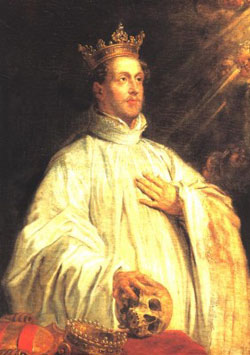
Two Godfreys, 17 others, martyrs for the faith in Holland

St. Godfrey

Image of St. Godfrey

Facts

Feastday: July 9
Death: 1572


Two martyrs of the same name: Godfrey of Duynen, and Godfrey of Merville, both hanged by Calvinists. Godfrey of Duynen was a priest and former rector, and Godfrey of Merville was a member of the Franciscan house at Gorkum, Holland. They were hanged at Briel and are honored among the Martyrs of Gorkum

A very compelling and interesting interview with Cardinal Tobin

Tobin: Abortion, anti-immigrant rhetoric both ‘brutalize’ the American heart

Tobin: Abortion, anti-immigrant rhetoric both ‘brutalize’ the American heart
Cardinal Joseph W. Tobin of Newark, N.J., speaks July 3 during the "Convocation of Catholic Leaders: The Joy of the Gospel in America" in Orlando, Florida. Leaders from dioceses and various Catholic organizations gathered for the July 1-4 convocation. (Credit: Bob Roller/CNS.)
On today's mounting anti-immigrant rhetoric, Cardinal Joseph Tobin of Newark, New Jersey, connects it to the 1973 'Roe v. Wade' decision as another chapter in the "brutalization of the American heart." He also explained his recent decision to welcome a LGBTQ pilgrimage to the Newark Cathedral in part by saying, "I don’t presume that every person who identifies him or herself as LGBTQ is sexually active."
ORLANDO, Florida - Cardinal Joseph Tobin of Newark, New Jersey, often is styled as among the most prominent “Pope Francis bishops” in America, and he’s indeed a Francis enthusiast. Tobin praised the July 1-4 “Convocation of Catholic Leaders” in Orlando, for instance, as “the first time, at least that I’m aware of, on a national scale, that Church leadership is discussing Pope Francis” due to its focus on Evangelii Gaudium, the pope’s 2013 document on “The Joy of the Gospel.”
Yet if anyone suspects his backing for Francis comes at the expense of Catholic orthodoxy on matters such as the Church’s pro-life teaching or its sexual morality, Tobin has some surprises in store.
Asked about his outspoken support for immigrant rights, for example, he quickly connects it to the 1973 Roe v. Wade and Doe v. Bolton decisions legalizing abortion as a further chapter in the “brutalization of the American heart,” one that “affects not only the immigrant population but all of us.”
On his recent decision to welcome a LGBTQ pilgrimage to the Newark Cathedral, Tobin made clear it was not a prelude to challenging traditional sexual ethics.
“I don’t presume that every person who identifies him or herself as LGBTQ is sexually active,” he said. “If they’re attempting to live a chaste life, then they certainly need the support of the believing community, a chance to pray, and to know that they’re welcomed within the body of Christ.”
The bottom line, according to Tobin, is that “I preach what the Church preaches, and teach what the Church teaches, and believe it with great serenity.” At the same time, he said, “I feel it’s my job to welcome people.”
Tobin spoke to Crux during the convocation in Orlando, which brought together almost 3,500 bishops, clergy, religious, and laity to ponder how to implement Evangelii Gaudium in the contemporary American context.
On other matters, Tobin said:
  • Bringing Catholics together in the convocation was a good move, in part because “people who take their faith seriously, and also want to make a lifestyle out of it, can feel like the odd people out if you listen to enough messages from other sectors of society.”
  • There are real threats to religious freedom in America today, including “the fairly persistent attempt to reduce our faith to worship, and then privatize the rest of it. It’s not acceptable, for many religious people, but particularly for Christians who believe in the importance of worship, and where worship is connected to your life.”
  • A “climate of fear” is spreading among immigrants today, including “parents who will tell me that when they kiss their kids going to school, they’re not sure they’re going to be home when they come back, because they could be taken.”
  • Pope Francis, Tobin insisted, does not emphasize the centrality of the poor because of his politics or background, but because it’s core to the Christian faith. Tobin said he was once listening to the radio and “almost drove off the road.” He heard a fellow bishop say Francis uses that sort of rhetoric because he’s a Latin American. ‘Whoa, no,’ Tobin recalls thinking. ‘He reads the Gospel, that’s why he talks that way.’
  • He said he’s still getting used to the intense media spotlight surrounding him in Newark, including a recent spread in the New York Times featuring a picture of him lifting weights. “Sometimes I console myself with the wisdom of Andy Warhol, who said ‘Everybody has 15 minutes of fame in their lifetime,’ so I think maybe I am at 14 minutes 35 seconds, and they’ll grow tired and move on to the next new thing,” he said.
The following are excerpts of Crux’s conversation with Tobin, which took place on July 4.
Crux: What kind of vibe are you picking up at this convocation?
Tobin: Well, I think something like this is always immediately useful to the participants, because it gives you a feeling of solidarity. People who take their faith seriously, and also want to make a lifestyle out of it, can feel like the odd people out if you listen to enough messages from other sectors of society. You can feel that that isn’t the case here, and that’s good. I think a crucial moment is this morning, when the diocesan delegations gather together and decide [what to take back with them to implement at home].
How many people do you have here?
I just have about ten, but we didn’t come as a delegation. You know, I’ve only been in Newark for about six months, and I didn’t have a feel yet about the people in the diocese, to do what the organizers expected. But I didn’t just want to bring my staff.
We spoke with one of your brother archbishops yesterday, who defined the convocation as a ‘World Youth Day for adults but without the pope,’ in the sense that every WYD has a lofty rhetoric about what they’re supposed to achieve, but when you talk to people, what they’ll tell you is they mostly liked being together with so many Catholics from so many parts of the world, and feeling like they’re not alone.
Most bishops maybe wouldn’t tell you this, but no matter how good or bad the agenda is at the bishops’ meeting, there was the benefit of being with other bishops. We can kind of talk shop, and cry on each other’s shoulders.
Other than that, how do you see the importance of this event?
I want to say what I think is really novel about this meeting, which is that it’s the first time, at least that I’m aware of, on a national scale, that Church leadership is discussing Pope Francis. I think this is a noteworthy event. It’s taken a document that came out almost four years ago and studied it.
That document is Evangelii Gaudium, the Joy of the Gospel, which came out in 2013, described as the Magna Carta of his pontificate.
It’s his programmatic statement, and I think subsequent actions and publications and words of the Roman Pontiff has been consistent with what he laid out in ‘The Joy of the Gospel.’ I’ve been very pleased with the way people have engaged that.
This event is taking place at the end of the Fortnight for Freedom. When the bishops got together recently and there was a debate on whether to make the Ad-hoc Committee on Religious Liberty that organizes it permanent, you argued against it. You weren’t saying that there aren’t real religious freedom issues in the country, so where were you coming from in terms of why you thought that’s not the best way for the Church to engage religious freedom issues?
Yes, there are issues of religious freedom. One big one is the fairly persistent attempt to reduce our faith to worship, and then privatize the rest of it. It’s not acceptable, for many religious people, but particularly for Christians who believe in the importance of worship, and where worship is connected to your life.
In fact, the authenticity of your worship is connected to the way you live your life, isn’t it?
Exactly. My issues, questions, at the conference, and I think the conference thought it over and at least a majority decided not to agree, was whether at this stage of the game that concern [for religious freedom] had to be addressed by a single committee, especially if it was going to be restricted to the national level, when it’s a much deadlier concern for Christians in lots of other parts of the world.
In Iraq and Syria, they’re not worried about contraception mandates but about staying alive.
Exactly, and really, the systematic depravation of property. If you have a chance to talk to Archbishop Sebastian Shaw of Lahore, Pakistan, who was in the country recently, you’ll hear how the blasphemy laws are turned against Catholics and Christians not only to deprive them of their lives, which often happens, but also of their businesses that they’ve worked hard to build up.
We have some standing committees already that could deal with that. But, I think, my concern was also coupled with the fact that the Ad-hoc Task Force on Immigration was being disbanded. So those two events, it wasn’t only bad optics, but it was a bad message going to the world and to the people.
On immigration, you along with many other bishops, have been increasingly raising your voice. You’ve made a point, for instance, to accompany immigrants scheduled for deportation to their hearings. What have you picked up from them in terms of where they are now?
Certainly the fear is quite real. Thanks be to God, there’s not been a fall in people coming to Church. I take the Spanish Mass often at the Cathedral, and there’s about 1,000 people coming each Sunday. But parents will tell me that when they kiss their kids who are going to school, they’re not sure they’re going to be home when they come back, because they could be taken.
I think that beyond the undocumented, what I worry about pastorally, is how this is a further brutalization of the American heart. The heart has been brutalized in so many ways. Look at what’s happened in the wake of Roe v. Wade and Doe v. Bolton, the 1973 decisions, I think have had an incredibly brutalizing effect on the American heart, and in the way we speak. I think this current dehumanization of the undocumented, and the name-calling and rhetoric, it affects not only the immigrant population but all of us.
What you’re really talking about is the ‘throw-away culture,’ to use Pope Francis’s term.
That’s a good way of summarizing it, yeah.
Recently you made headlines for welcoming an LGBTQ pilgrimage to your Cathedral. Why do you think it was important to do that?
The request came, I believe, during Lent. A priest, a member of my order, who serves LGBTQ people, said, ‘If a pilgrimage came to your cathedral, not only from the archdiocese but also New York and Connecticut, would you welcome them?’ And I said, ‘Yes, I would certainly welcome them.’
As I understand it, it was a lovely celebration. I had a youth Mass in southern New Jersey that afternoon, so I had to push off. But I got to shake a lot of hands, and say something. People were very moved to be there. I think it’s engendered some questioning by some people and actually some pretty awful words, but also a lot of encouragement from other folks.
My intention was to welcome. I would justify that with the words of somebody like Benedict XVI, who would frequently say: ‘If we proclaim the Gospel first and foremost as a moral code, then we’ve destroyed the Gospel, it becomes something else.’ It doesn’t mean that our moral choices aren’t important, but they’re a response to the previous announcement of good news, the encounter.
Secondly, I don’t presume that every person who identifies him or herself as LGBTQ is sexually active. If they’re attempting to live a chaste life, then they certainly need the support of the believing community, a chance to pray, and to know that they’re welcomed within the body of Christ.
What makes some people nervous about these initiatives is that the end-game might be going soft on the Church’s moral code. Not your intent?
No, certainly not. If anybody asks me, I preach what the Church preaches, and teach what the Church teaches, and believe it with great serenity. But I also feel that it’s my job to welcome people. When I received the crozier in St. Peter’s in Rome, what I did was say a prayer that says, ‘You’re to be attentive to the hearts of the people entrusted to you.’ I feel these people were entrusted to me too.
One of the aims of the convocation was to take Evangelii Gaudium as a point of departure and figure out what the pastoral implications of that are in the America of here and now. If you had to pick up two or three points from Evangelii Gaudium that you think are critically important for the U.S. right now, what would they be?
I think the first one is an experience of Jesus Christ. I think that makes Catholics nervous sometimes, because it sounds like happy-clappy stuff, and ‘I don’t do religious experiences,’ but that’s key. It’s key for Francis himself, who talks about his own experience of the mercy of God, and that’s why he seems to make such a fuss about it.
The second point is, that experience naturally will help people to want to share it, if it’s authentic. As a friend of mine says, ‘If my spiritual life is mainly me and Jesus, it’s mainly me.’
The third and last thing I’d say, I think the part of Evangelii Gaudium when it came out that didn’t get much play here, but when it came out caused a lot of problems for some Americans, was chapter four. It’s the one that examines the effect of this experience of Jesus and the need to bring it to others on the way we structure ourselves in society. Particularly, what we do to and for the poor, who Francis maintains have a privileged place in the economy of salvation.
It was that chapter four that began the ‘Francis the socialist’ narrative…
I almost drove off the road once. It was Christmas Eve in Indianapolis 2013, a month to the day after it was published, and it was already kicking up some dust. I heard a brother bishop on the radio say ‘Well, he’s from Latin America, he’s gotta talk that way.’
And I said, ‘Whoa, no. He reads the Gospel, that’s why he talks that way.’
You’ve worn a lot of hats in the Catholic Church. You were the superior of the Redemptorists order, then the number two official in the Vatican’s Congregation for Religious, then you were the archbishop of Indianapolis, all of which are important, valuable positions of leadership, but none with an intense media spotlight. Now, you’re in the New York media market and you’ve become a cardinal. How are you coping with the new media scrutiny, knowing that everything you say or do will be put under a microscope and studied for hidden political significance?
I have to admit that as I was departing Indianapolis, my media guy there said this was a different ballgame, but I’d yet to experience it. Now I realize what an intense spotlight it is. Sometimes I console myself with the wisdom of Andy Warhol, who said ‘Everybody has 15 minutes of fame in their lifetime,’ so I think maybe I am at 14 minutes 35 seconds, and they’ll grow tired and move on to the next new thing.
Ever thought a shot of you lifting weights was going to end up in the New York Times?
God no! I was back to Indianapolis for the bishops’ meeting, and they actually have that picture on the wall. I never thought of that. Honestly, I have a lot of defects, but being in the New York Times has never been one of my career goals. Sometimes they want to talk about something, and I have to say, ‘I won’t talk about that.’
That’s why I write my homilies, so when people ask if I said something [that they heard about in the media], I can just point at it and say, ‘Read this, this is what I tried to say.’
Have you been able to carve out a zone of privacy?
I know that I need the quiet time. I used to read a Spanish philosopher by the name of Ortega y Gasset, and he talked once about his regimine in Madrid. He would have his lunch at 2:00 PM, and he had a very healthy habit called the siesta [nap], and then he would take a walk, often go to the zoo. This was back in the 30s, when the first serious stuff on psychology based on Darwin came out. He would go in front of the apes cage, where he would have an existential crisis. He would stare at those apes and say, ‘What’s the difference?’
He said that one day it occurred to him the ape could never be quiet. He had to be jumping and fighting and doing ape-like things. But when he tried to be quiet, he fell asleep. Silence is a requirement for our humanity. Otherwise, we become something else. I find my quiet generally about 5:00 AM, because I can pray for a while, then do a few exercises and hit the bricks.
Have you found a place to play hockey yet?
No, I’m waiting to be invited to play in the Rockefeller Center … But I did find a gym, so I’m still lifting. And I have perfect anonymity. So far, they don’t know and don’t care about what I do for a living, and that’s great!

Meanwhile down the Interstate in Charlotte, this well known Priest heaps praise on Vatican II and thinks celebacy should be optional

Let married men become priests, says pastor of America’s largest Catholic church


  • Cardinal Wuerl on the Church, Pope Francis, Vatican II

    Cardinal Wuerl: Vatican II being unleashed through Pope Francis

    Cardinal Wuerl: Vatican II being unleashed through Pope Francis
    Washington Cardinal Donald W. Wuerl smiles while speaking during the 'Convocation of Catholic Leaders: The Joy of the Gospel in America' on July 2 in Orlando, Florida. (Credit: Bob Roller/CNS.)
    Cardinal Donald Wuerl says he finds “a great consolation and sense of serenity” in the fact that, for Catholics, Peter is the touchstone of faith, but added that doesn’t mean you still don’t raise a question, if you “speak truth in love.”
    ORLANDO, Florida - People are free to raise questions about certain teachings but should remember Peter is the rock of the Catholic faith, according to the Archbishop of Washington, Cardinal Donald Wuerl.
    Wuerl was in Orlando for the July 1-4 “Convocation of Catholic Leaders,” and spoke with Crux about the impact of the pontificate of Pope Francis.
    “We are 50 years after the [Second Vatican] Council. What’s happening is all that Pentecostal energy that the Council unleashed is now, with this Holy Father, being felt,” Wuerl said. “It has taken a long time, but the Church moves very slowly solidifying, clarifying, reaffirming her teaching. Now we are at a point where this Holy Father is saying all that energy, let’s do something with it, and people are responding and saying: I do feel my call.”
    The cardinal downplayed opposition to the papacy, especially objections to the papal document Amoris Laetitia, saying it’s “not a very large group,” adding that it’s “a rather concentrated, and in a certain sense, esoteric” discussion.
    “I can reflect back to my entire adult life - there has never been a pontificate where something that was issued wasn’t contested by someone,” Wuerl said.
    He said he finds “a great consolation and sense of serenity” in the fact that, for Catholics, Peter is the touchstone of faith, but added that doesn’t mean you still don’t raise a question, if you “speak truth in love.”
    “And I think that’s how you can gauge whether this is truly Spirit-driven or not,” Wuerl said. “The Spirit is the Spirit of patience, of peace, of love, of gentleness, of compassion, of kindness. When you hear language that doesn’t reflect that, I have to say to myself, ‘How could that be Spirit-driven?’”
    The following are excerpts of Crux’s conversation with Wuerl, which took place on July 1, at the beginning of the Convocation, which brought together 3,500 bishops, clergy, religious and laity.
    Crux: How are you doing?
    Wuerl: I am doing well, and all the better for being here at this extraordinary gathering. To think of it, we are going to have some 3,000 people representing efforts, elements, aspects of the life of the Church in this country. I think one of the really significant elements of this is the vast majority of participants will be laywomen and laymen, and that speaks to what is happening in our Church. It’s the Second Vatican Council making its way … slowly but surely…but doesn’t the Church work that way? Slowly but surely…Think of it, when you look out into that array of people, you are going to see the face of the world, because that’s who we are in the United States: Every ethnic tradition, how many languages, how many backgrounds, how much heritage. And all there under the banner of ‘We believe in Jesus Christ.”
    And you obviously find that very exciting.
    Well, I do. Because isn’t that what priestly ministry, and certainly episcopal ministry, is all about? I think of it in terms of the office and the role of the bishop. His job, his task, is to maintain the unity. You have this huge, and in Washington, greatly complex Church…. the goal is to keep everybody on board as the Church moves forward. Remember, when Pope Francis was in Washington for the canonization of Junipero Serra, he kept using that motto of Serra: He kept saying, ‘siempre adelante’ - always forward - and he kept saying, “we have to move forward.” The bishop’s job is to make sure we are moving forward together.
    You can probably make an argument that it is especially challenging in the United States, simply because the United States is a very rambunctious culture, and because we are so big - the Church in this country is so big - there is a tendency for people, even when there is no question of ideological disagreement, just they do different things, there is a tendency for them to work in silos.
    I think that, as you say, we are so big, and I think this is healthy, we tend to do things regionally, we tend to do things according to that area of the nation that we come from. Mainly because we are too big to do much together. Even this is really just one layer - a very high-level layer - of Church. My hope is that everybody is going to come back from the Orlando experience to their diocese to their region to their parish and say okay folks now let’s us get together and do these things here.
    You talk about the importance of moving forward together, and obviously trying to lift up what is a real unity often, even though sometimes we don’t see it because we become very consumed by the divisions, and the fractures, and the fault lines. But unity at this particular moment in American history, it has to be said is a somewhat counterculture enterprise, isn’t it? It’s not exactly like the larger culture, particularly our political culture, helps reinforce a spirit of common cause.
    And this I think is something that I think we need to thank God for: The gift of the Spirit. When we look at - as we will tomorrow - at that crowd, whether it’s when we are having the talks, at the Mass, when we are having the presentations, and you realize what holds all of us together is our faith, because people have different appreciations of everything else going on. In our country - economically, politically, culturally socially - it’s so diverse, but the one thing that brings us together…is the Holy Spirit.
    It’s like that Pentecost experience, but now we are back to what you had raised earlier, the task of trying to hold that together. But the rambunctious part is the Spirit. Is the Spirit working? Think of it: Some of my colleagues in Europe with almost envy look at the Church in this country and see how alive it is, how much energy there is, and, as you well know, that’s because of parish life.
    The life in the Church in the United States is unfolding in parishes all over: In various languages, following different customs and traditions, but all bound around the Eucharist and that Creed.  But it’s being energized by laywomen and laymen. Your average parish - and I would like to think that every parish had at least a priest, and in Washington that’s still, thank God, true - but the priest has increasingly the function of holding together and making sure that the sacramental ministry is carried out while encouraging all of this activity going one.
    And that really is the difference, I think, at the grass roots between American Catholicism and western Europe, in particular. I mean, our parishes, in comparison are beehives of activity. It’s like one stop shopping. Of course, at the center is the Sunday Eucharist, but around that you have got soup kitchens, and you’ve got bible study groups, and you’ve got youth ministry, and you’ve got marriage prep, and you’ve got RCIA.
    I think when you take a look at that response, I think it is so on target. We are blessed with movements, but our parishes are where the life of the Church is. We don’t have to turn to a movement to say “Will you come in revitalize us?” or “Will you come in and form a seminary for us?” It’s all going on.
    I think where the movements are an exceptional blessing for the Church is in two areas: In the older Church - that’s Europe - where it needs now new energy, and in those parts of the world - Asia, Africa - where they can use some evangelizing help, because they just could use some more help to do what they are doing.
    I think of the growth of movements where in Europe if it weren’t for the presence of that movement in this particular area there would be nothing happening. But you’re right: The parishes do that.
    We are blessed, though. It’s like the role of religious communities, particularly the great religious communities of men like the Dominicans, or the Franciscans, or the Jesuits. The goal is not to have them come in and run parishes, the goal is to have them come in and do their charism to enrich their Church. I think that is what the movements could do. They don’t need to do the parish, because the parish is already doing that.
    You know that unity does not mean that we do not occasionally have our disagreements. We have seen plenty of examples of them in the Church recently. I suppose the most high profile would be divergent reactions to Pope Francis’s document Amoris Laetitia and the idea of the cautious opening to Communion for the divorced and remarried.
    When those kind of things come up - and obviously you are very well aware those clashes are out there - when they come up, what would your message be to Catholics about ways in which to voice what they perceive to be legitimate concerns about things happening in the Church, but doing it in a way that doesn’t rupture a spirit of fundamental unity?
    I think we have to put this into perspective. For my perspective, the reaction you are speaking about is relatively focused, it is not a very large group, and it certainly isn’t reflected in the hierarchy of the Church, and I don’t see it reflected among most of the priests. So in a way, that’s a rather concentrated and in a certain sense esoteric discussion.
    You’re saying it’s a sort of insider debate?
    Put it into the perspective of two things. There has always been - I can reflect back to my entire adult life - there has been never been a pontificate where something that was issued wasn’t contested by someone.
    Go all the way back to John XXIII and Mater et Magistra. And then we have Paul VI, as well. And then John Paul II, not everybody liked his social encyclicals. And then comes Benedict, and the complaint was “You can’t understand these things,” which I always found to be not a real complaint, because they were always beautifully written.
    There has always been that. But on the other side, there is a sense in which what holds us together - the Creed, the Eucharist - is never challenged, so what we are talking about are things that are far further down the line.
    I’m asking for you to do a little bit of pastoral counseling on the fly: If you are Catholic out there and you see something the pope has written about refugees or something the U.S. bishops have said about health care, and your instinctive reaction is negative. Obviously, the advice is to not just to stifle that because we want to hear what people think - and it’s a positive thing that people are so passionate about the Church that they want to push it - but how do you voice that in a way that doesn’t end up fueling acrimony rather than promoting unity?
    This is one of the ways elements of the theological heritage of our Church. We are always free to raise questions about the presuppositions of specific teaching. We are always free to say ‘What’s that based on?’ while accepting the teaching.
    I think for Catholics, the Rock is the touchstone of our faith, and that Rock is Peter. And if Peter - whatever his name is today: Paul, John Paul, Benedict, Francis - if Peter is saying “this is how we are looking at this and moving forward,” I find a great consolation and sense of serenity in that, that doesn’t mean you still don’t raise a question - such as “I’m not sure I understand this” or “what does that mean” - but we always speak the truth in love.
    And I think that’s how you can gauge whether this is truly Spirit-driven or not. The Spirit is the Spirit of patience, of peace, of love, of gentleness, of compassion, of kindness. When you hear language that doesn’t reflect that, I have to say to myself “How could that be Spirit-driven?”
    The touchstone of this convocation is evangelization, and in talking to many of your brother bishops it has become very clear that in many ways - although the planning, and talking, and thinking about this event was well under way before this happened - Pope Francis’s document Evangelii Gaudium, which was sort of in some ways the Magna Carta of his papacy, is also an incredibly important touchstone for this event.
    The reason that document is so important is that it is the fruit of a whole history leading up to its publication, because even our Holy Father says that that is not all his work.
    Few papal documents ever are!
    But, it’s not as if the inspiration came from him. The inspiration goes all the way back.
    I think it was Paul VI who said isn’t it time for us to begin to see how well we are going to witness to the faith? Then John Paul comes along and says we need a whole new evangelization - new in order, new in method - now Benedict comes along and calls for a synod on the new evangelization to say, ‘folks aren’t we supposed to be evangelizing disciples?’
    Then out of all of that comes Evangelii Gaudium, and I think this is where Pope Francis brought such impetus to the life of the Church. He is saying every single believer is supposed to be an evangelizing disciple, and let’s go do it, and here is the document that says how we are going to do that. We are not going to recognize how profound has been the effect of Pope Francis on the Church in terms of evangelization for some time.
    Next March will be the five-year anniversary of the election of Pope Francis - March 13, 2013. You just alluded to the effect of Francis in the realm of evangelization, but when we get to that five-year anniversary, at that stage what do you think the “Francis Effect” on the Church will have been?
    I think it will have been an opening up onto the world with the invitation - his whole style is invitation, his whole style is to say to people ‘why don’t we together take a look at Jesus, and see if we can get both of us a little closer to him?’
    I think the impact of these five years has been an opening up from ‘let us not just concentrate on how the Church is doing,’ but ‘let’s concentrate on how well are we reaching out.’ And he keeps saying that mantra: Go out, encounter, engage, and accompany. I think the five years are going to be looked on as the great opening again of the invitation to encounter Christ.
    Do you think that message and that impulse to get, as he often says, to get out of the sacristy and into the street, meeting people where they are and bringing them the message of Christ - do you see that impulse filtering down to the clergy, to the laity, to the rank-and-file of the Church?
    This is the big difference. We are 50 years after the Council. What’s happening is all that Pentecostal energy that the Council unleashed is now with this Holy Father, being felt.
    It has taken a long time, but the Church moves very slowly solidifying, clarifying, reaffirming her teaching. Now we are at a point where this Holy Father is saying all that energy, let’s do something with it, and people are responding and saying I do feel my call.
    So fair to say, you believe the enthusiasm we see for Pope Francis is the reception of Vatican II taking place?
    I think it is. I think [that’s] what we are seeing - and again it takes a long time. The Spirit works through individuals, and it just takes time - for generations - to fully understand. And with the leadership that comes…remember we wouldn’t be here at least in my opinion, if we didn’t have John Paul II for 26 years. We wouldn’t be in the Francis papacy.
    When you think of it: All the energy that was unleashed at the Council, and then there was the periods of confusion, there was the period where not everything was clearly focused the way it should have been. Then we had this wonderful pontificate that basically did an encyclical or an exhortation on every single element of the [Council]. With that done, now we can say we truly have a clear idea of what the Council wanted us to do, now let’s go do it. And Francis is the one saying here’s how you do that.

    Bishops told to support black lives matter; an interesting read

    Engage young adults, support Black Lives Matter, bishops told

    • Auxiliary Bishop Fernand Cheri III of New Orleans speaks during a young adult forum at the National Black Catholic Congress in Orlando, Florida, July 6. (NCR photo/Gail DeGeorge)
     | 
    Orlando, Fla.
    A standing-room-only crowd of young black Catholics in a frank session that lasted more than two hours told bishops, priests and women religious why they stay in the church, what threatens to drive them away and that they want a stronger voice from church officials for the Black Lives Matter movement.
    As the National Black Catholic Congress got underway in Orlando July 6 with more than 2,000 attendees, some 120 participants discussed ways to keep young adult black Catholics engaged in their parishes and the church — and raised criticism of, and an apology for, the church's silence regarding the movement spawned by the killings of unarmed blacks by police. Among the bishops attending Congress XII was Archbishop Christophe Pierre, apostolic nuncio to the United States.
    Discussion centered on key themes:
    • Why young black adult Catholics stay in the church;
    • Why they leave;
    • How they live out their faith;
    • How to foster more vocations;
    • The state of race relations in the U.S.
    "How do we respond as people of faith to issues of race that have always been going on in society but especially in light of the Black Lives Matter movement? And in a lot of the police killings, a lot of people feel that the church has been almost silent in its response," Stacy Allen, one of the facilitators, said toward the end of the session.
    "The church is very vocal on a myriad of issues -- immigration for instance -- which are important," Allen said. "But specifically on the issues of race, especially from the perspective of a young adult black Catholic, what should the Catholic response be?"
    field-hospital-logo.jpg
    Get free email updates from NCR's blog series covering parish life.
    That prompted Auxiliary Bishop Fernand Cheri III of New Orleans to stand. With a bow to those in the room, he said, "To the black youth, I apologize to you as a leader of the church because I feel we have abandoned you in the Black Lives Matter movement and I apologize.
    "Partly, I didn't understand it, and by the time I did understand it, it was too late — the moment was gone," he said. "I'm very proud of you — you stood up and said enough is enough. As a leader, I want to say that to you — thank you."
    He then went on to tell of challenges in his own journey as a priest and a bishop, his outreach to bring young people, and starting choirs in parishes. "You're going to struggle and you're going to persevere," he said.
    He counseled that young black adults reach out to each other and others within their parishes and church communities.
    "No one knows how to best minister to you as young people — we're all learning this together," he said. "One of the reasons we have faltered when it comes to vocations from our community because when it comes to being church, we just don't have the community working at it together and that's the failure."
    Many at the session spoke of the need to address a lack of programs for young adults and meaningful engagement and leadership opportunities within parishes and the larger church. Young adults want more than to be tapped to set up tables, take out trash, run kids' programs and generally do things that older parishioners don't want to do, participants said.
    Too many parishes have youth programs that end at high school — and nothing for those who come back after college with talents and skills and a willingness to get involved, participants said. It's particularly difficult for young black Catholics not in large metropolitan areas like Chicago, Atlanta or Washington with black churches.
    "People leave because there's just no community," said one young woman from Lansing, Michigan.
    While a participant from New Orleans said the reason she stays Catholic is the strength of her parish community, she has encountered resistance in other parishes. "One reason young adults are leaving is that sometimes it feels like the church does not want us," she said.
    She says she's tried to volunteer and has been told "no because of age, or no because they don't say it, but because I'm a young adult, and they think I'm too young to know about that, or no because that's 'too black' and that might be fine for your church in New Orleans but not here," she said.
    The rejection is like "asking for a hug and someone is crossing their arms," she said, recounting how she and a young Asian woman were "shut down" in a parish in San Francisco when trying to introduce new programs. "That's why people leave, because they don't feel wanted. And if you don't feel wanted, you leave."
    Applause, laughter and murmurs of recognition swept through the room as participants from New York, California, Louisiana, Texas and elsewhere shared their experiences and ideas.
    "We as young adults don't want programs, we want a relationship," said a participant. "We don't want things to do — we have enough to do. We want a place to belong. Successful young adult ministries are where they feel invested to make change within their parishes."
    One mistake is to mix up "youth" programs with "young adult" programs without recognizing the huge differences between them, some participants noted. One mentioned having a young adult "meet and greet" to get ideas for programs they want — and then implementing them.
    Another mentioned having eucharistic adoration on Monday evenings rather than Fridays to not interfere with happy hour. One priest mentioned having the sacrament of reconciliation available on Sundays when people are already at church.
    Participants from Nigeria and other African nations shared their experiences of encountering cultural differences assimilating into U.S. parishes, the lack of welcome, and some of the strong communal faith traditions they know from their homelands.
    "You feel like you don't belong," said one participant. "It is hard as an African to belong to the Catholic Church in the United States."
    Programs focused on prayer and spiritual, not just social, needs are important, participants said.
    In an interview afterward, Allen, who is from the Galveston-Houston Diocese, expanded on the issue of race relations and the lack of support for the Black Lives Matter movement by the church.
    "It's been painful that a faith that I love so much and I dedicate quite a lot of time to feels like it hasn't seen my own humanity, hasn't seen my own pain," said Allen, who is an attorney and serves in her parish counsel, youth ministry and catechism programs.
    "As someone who mentors young people too, I see those stories and I worry about if they're going to be the next hashtag. So with something so dominating the news cycle, and I think the American psyche, for our church to be so silent — it just questions whether people like me even matter — if we are even seen within the faith and if we belong," Allen said.
    "Because of my faith and the holy Eucharist, there's no way I am going to leave, but I wish that the church would on a national level create a think tank or a group that really tries to address black Catholics in the church and what is our space."
    Cheri in an interview said bishops haven't been more supportive because they haven't really understood the Black Lives Matter movement, relying more on media reports than talking with black people within their dioceses.
    "One of the primary teachings of the church is the value of human life and human dignity, and if Black Lives Matter is not a matter of human dignity, something is wrong," he said.
    "We [bishops] speak out for many things and we stand for many things and I think we stand for life. I'm not saying I'm against police — it's not a question of that, it's not a question of for and against. It's about life at all levels and all times," he said.
    The National Black Catholic Congress, held every five years, continues through Sunday morning, July

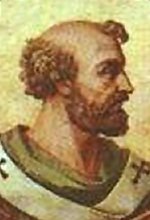
    This 9th century Pope is Saint of the Day

    St. Adrian III

    Image of St. Adrian III

    Facts

    Feastday: July 8
    Death: 885

    The life and sanctity of Pope St. Adrian III remains obscure. He was born in Rome and was elected to the papacy in 884. During his brief reign of sixteen months, violent vendettas that arose from the assassination of John VIII continued. George of the Avertine, a priest whom John had exiled and whom Marinus I had allowed to return to Rome, was blinded, possibly by order of Adrian III. In the summer of 885, Charles the Fat of the Holy Roman Empire convoked the Diet of Worms to insure the succession of his illegitimate son, Bernard. Adrian III died, en route to Worms, at the Abbey of Nonantola, where he was buried. He was canonized in 1891.

    Friday, July 7, 2017

    Pope Francis reminds the G20 to get priorities right; the poor, the refugee

    G20: Give “Absolute Priority” to the Poor, to Refugees, to the Suffering, to the Excluded
    Pope Pleads for African Populations
    G20 Hamburg, / Wikimedia Commons - Kremlin.Ru, CC BY 4.0
    Pope Francis’ appeal to the participants in the G20 Summit, being held in Hamburg, Germany, on July 7-8, 2017, is to “give absolute priority to the poor, to refugees, to the suffering, to the displaced and to the excluded” and to “reject armed conflicts.”
    In a letter sent to German Chancellor Angela Merkel, on the occasion of the opening of the works, the Pontiff pleaded especially for populations dying of hunger in Africa.
    In the message signed on June 29, the Holy Father offers considerations that he has very much “at heart.” In face of “the gravity, complexity and interconnection of global problems,” notably the drama of migrations, he pleads for processes that are able to offer progressive and non-traumatic solutions and to lead, in relatively brief delays, to free circulation and the stability of persons that are advantageous to all.”
    “In the hearts and spirits of governments and in each of the phases of the implementation of policy measures, it is necessary to give absolute priority to the poor, to refugees, to the suffering, to the displaced and to the excluded, without distinctions of nation, race, religion or culture, and to reject armed conflicts,” he adds.
    The Pope addresses an appeal to the global community for the “tragic situation of South Sudan, the Lake Chad basin, the Horn of Africa and Yemen, where 30 million people lack food and water to survive.”
    Here is Pope Francis’ complete message, translated into English by the Holy See. The original is in German. (ak/vf)
    *  * *
    To Her Excellency
    Mrs Angela Merkel
    Chancellor of the Federal Republic of Germany

    Following our recent meeting in the Vatican, and in response to your thoughtful request, I would like to offer some considerations that, together with all the Pastors of the Catholic Church, I consider important in view of the forthcoming meeting of the G20, which will gather Heads of State and of Government of the Group of major world economies and the highest authorities of the European Union.  In doing so, I follow a tradition begun by Pope Benedict XVI in April 2009 on the occasion of the London G20.  My Predecessor likewise wrote to Your Excellency in 2006, when Germany held the presidency of the European Union and the G8.
    In the first place, I wish to express to you, and to the leaders assembled in Hamburg, my appreciation for the efforts being made to ensure the governability and stability of the world economy, especially with regard to financial markets, trade, fiscal problems and, more generally, a more inclusive and sustainable global economic growth (cf. G20 Leaders Communiqué, Hangzhou Summit, 5 September 2016).  As is evident from the Summit’s programme, such efforts are inseparable from the need to address ongoing conflicts and the worldwide problem of migrations.
    In my Apostolic Exhortation Evangelii Gaudium, the programmatic document of my Pontificate addressed to the Catholic faithful, I proposed four principles of action for the building of fraternal, just and peaceful societies: time is greater than space; unity prevails over conflict; realities are more important than ideas; and the whole is greater than the part.  These lines of action are evidently part of the age-old wisdom of all humanity; I believe that they can also serve as an aid to reflection for the Hamburg meeting and for the assessment of its outcome.
    Time is greater than space.  The gravity, complexity and interconnection of world problems is such that there can be no immediate and completely satisfying solutions. Sadly, the migration crisis, which is inseparable from the issue of poverty and exacerbated by armed conflicts, is proof of this.  It is possible, though, to set in motion processes that can offer solutions that are progressive and not traumatic, and which can lead in relatively short order to free circulation and to a settlement of persons that would be to the advantage of all.  Nonetheless, this tension between space and time, between limit and fullness, requires an exactly contrary movement in the minds of government leaders and the powerful.  An effective solution, necessarily spread over time, will be possible only if the final objective of the process is clearly present in its planning.  In the minds and hearts of government leaders, and at every phase of the enactment of political measures, there is a need to give absolute priority to the poor, refugees, the suffering, evacuees and the excluded, without distinction of nation, race, religion or culture, and to reject armed conflicts.
    At this point, I cannot fail to address to the Heads of State and of Government of the G20, and to the entire world community, a heartfelt appeal for the tragic situation in South Sudan, the Lake Chad basin, the Horn of Africa and Yemen, where thirty million people are lacking the food and water needed to survive.  A commitment to meet these situations with urgency and to provide immediately support to those peoples will be a sign of the seriousness and sincerity of the mid-term commitment to reforming the world economy and a guarantee of its sound development.
    Unity prevails over conflict.  The history of humanity, in our own day too, presents us with a vast panorama of current and potential conflicts.  War, however, is never a solution.   As the hundredth anniversary of Pope Benedict XV’s Letter to the Leaders of the Warring Peoples draws near, I feel bound to ask that the world put an end to all these “useless slaughters”.  The goal of the G20 and of other similar annual meetings is to resolve economic differences peacefully and to agree on common financial and trade rules to allow for the integral development of all, in order to implement the 2030 Agenda and the Sustainable Development Goals (cf. Communiqué of the G20 Hangzhou Summit).  Yet that will not be possible unless all parties commit themselves to substantially reducing levels of conflict, halting the present arms race and renouncing direct or indirect involvement in conflicts, as well as agreeing to discuss sincerely and transparently all their differences.  There is a tragic contradiction and inconsistency in the apparent unity expressed in common forums on economic or social issues, and the acceptance, active or passive, of armed conflicts.
    Realities are more important than ideas.  The fateful ideologies of the first half of the twentieth century have been replaced by new ideologies of absolute market autonomy and financial speculation (cf. Evangelii Gaudium, 56).  In their tragic wake, these bring exclusion, waste and even death.  The significant political and economic achievements of the past century, on the other hand, were always marked by a sound and prudent pragmatism, guided by the primacy of the human being and the attempt to integrate and coordinate diverse and at times opposed realities, on the basis of respect for each and every citizen.  I pray to God that the Hamburg Summit may be illumined by the example of those European and world leaders who consistently gave pride of place to dialogue and the quest of common solutions: Schuman, De Gasperi, Adenauer, Monnet and so many others.
    The whole is greater than the part.  Problems need to be resolved concretely and with due attention to their specificity, but such solutions, to be lasting, cannot neglect a broader vision.  They must likewise consider eventual repercussions on all countries and their citizens, while respecting the views and opinions of the latter.  Here I would repeat the warning that Benedict XVI addressed to the G20 London Summit in 2009.  While it is reasonable that G20 Summits should be limited to the small number of countries that represent 90% of the production of wealth and services worldwide, this very situation must prompt the participants to a profound reflection.  Those states and individuals whose voice is weakest on the world political scene are precisely the ones who suffer most from the harmful effects of economic crises for which they bear little or no responsibility.  This great majority, which in economic terms counts for only 10% of the whole, is the portion of humanity that has the greatest potential to contribute to the progress of everyone.  Consequently, there is need to make constant reference to the United Nations, its programmes and associated agencies, and regional organizations, to respect and honour international treaties, and to continue promoting a multilateral approach, so that solutions can be truly universal and lasting, for the benefit of all (cf. Benedict XVI, Letter to the Honourable Gordon Brown, 30 March 2009).
    I offer these considerations as a contribution to the work of the G20, with trust in the spirit of responsible solidarity that guides all those taking part.  I ask God’s blessings upon the Hamburg meeting and on every effort of the international community to shape a new era of development that is innovative, interconnected, sustainable, environmentally respectful and inclusive of all peoples and all individuals (cf. Communiqué of the G20 Hangzhou Summit). 
    I take this occasion to assure Your Excellency of my high consideration and esteem.
    From the Vatican, 29 June 2017
    Francis
    © Copyright – Libreria Editrice Vaticana