Showing posts with label Honduras. Show all posts

Sunday, February 1, 2026

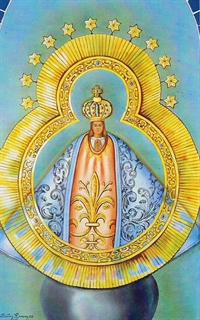
Today our Hispanic community is celebrating Our Lady of Suyapa, patron of Honduras


Our Lady of Suyapa, patroness of Honduras, turns 277 years old


The Patroness of Honduras is a national treasure and the focus of a popular pilgrimage. This February 3 marks the 277th anniversary of her discovery.  

Our Lady of Suyapa, also known as the Virgin of Suyapa, is a revered image of the Virgin Mary, mother of Jesus Christ. Her tiny dark statue, carved from cedar wood, is a national treasure of Honduras and the focus of a popular pilgrimage. This February 3 marks the 277th anniversary of her discovery.  

Discovery and early devotion

According to popular tradition, the statue of Our Lady of Suyapa was discovered in late January or early February 1747 by a Honduran laborer named Alejandro Colindres. The legend claims that Colindres and an 8-year-old boy were clearing cornfields on Piligüin mountain, northeast of Tegucigalpa, when night fell. They had no choice but to spend the night in the field. Colindres awoke to a sharp pain in his side and discovered that he had been sleeping on a small statue of the Virgin Mary. He immediately took the statue home and placed it on his family’s altar.

News of the discovery spread quickly, and soon people from all over Honduras began to flock to Colindres’ home to venerate the statue. A small chapel was built to house the image. By 1777, a larger shrine was needed.

Miraculous intercession and patronage

Over time, Our Lady of Suyapa became known for her miraculous intercession. Many people attributed healings, answered prayers, and other blessings to the intercession of the Virgin. In 1925, Pope Pius XI declared Our Lady of Suyapa the patroness of Honduras, and her feast day was set on February 3, the anniversary of her discovery.

Enshrinement and lay caretakers

In 1954, a grand basilica was built next to the shrine to accommodate the growing number of pilgrims who visit Our Lady of Suyapa each year. The statue spends most of its time in the basilica, but it is occasionally taken on pilgrimages to other parts of the country.

A group of lay caretakers, known as the Orden de los Caballeros de Suyapa, is responsible for safeguarding the statue and maintaining the basilica and shrine.

A symbol of hope and faith

Our Lady of Suyapa holds a special place in the hearts of Hondurans, who see her as a symbol of hope and protection. Her tiny statue, with its gentle smile and serene expression, has inspired generations of believers, and her miraculous intercession continues to be a source of comfort and solace for many.

Each year, thousands of pilgrims from Honduras and beyond visit the Basilica of Our Lady of Suyapa to venerate the statue, participate in religious celebrations, and seek her intercession.

Sunday, February 2, 2025

Today was also the feast of the patron Saint of Honduras

 Our Lady of Suyapa, also called Our Lady of the Conception of Suyapa, is the Patroness of Honduras and her story dates back to the 1700s.

Our Lady of SuyapaHistory:

The story of our Lady of Suyapa began on a Saturday in February of 1747. It is told that a local peasant, Alejandro Colindres, was on his way back to the village of Suyapa after a long day of gathering corn. As night fell, he decided to spend the night near a ravine about halfway to Suyapa. When he laid down on the ground, he felt a hard object, perhaps a stone, under him and tossed it far away.  Upon lying down again, however, he found that the object had returned.  He placed the object into his bag and discovered, in the morning, that the object that had returned to him was not a stone, but rather a small carved image of Our Lady.

Description:

The image of Our Lady of Suyapa is carved in cedar wood, and measures less than 7 centimeters in size. It is believed that the carving is very old, and possibly done as a devotional item by an unknown, amateur artist.  She has an oval face and straight, shoulder length hair.  Her hands are joined in prayer and she wears a light pink robe (though much of the color is no longer visible) covered by a cloak trimmed in stars and jewels. Her image rests on a solid silver sphere and is surrounded by silver rays.

Veneration:

The first shrine of our Lady of Suyapa was blessed in 1780. In 1796, the first notable attested miracle occurred.  Our Lady of Suyapa was declared the Patroness of Honduras by Pope Pius XI in 1925, and her feast day was set as February 3rd. The current sanctuary of Our Lady of Suyapa is located in a humble part of the city and has a large amount of space to allow for the multitude of pilgrims who visit the shrine throughout the year.


Source:  Photo, story and description from Zelada, Rogelio. Marian Titles in the Popular Religiosity of Latin America (Advocaciones Marianas en la Religiosidad Popular Latinoamericana) Miami, Southeast Regional Office for Hispanic Ministry, Inc (DBA SEPI) No Date. Print.

Monday, July 24, 2023

Reported Eucharistic Miracle in Honduras


A new eucharistic miracle in Latin America?


The first bishop of the Diocese of Gracias in Honduras, Walter Guillén Soto, has recognized a new eucharistic miracle that occurred a year ago in a rural parish in the small town of San Juan.

Gracias, in the department of Lempira, is a town and “municipio” of just over 57,000 inhabitants in western Honduras. Its foundation dates back to 1536, and its original name was “Gracias a Dios” (Thanks Be to God).

Instead of states and counties, the administrative districts in Honduras are called departments and “municipios.”

Just 22 miles south of Gracias is the town of San Juan, in the neighboring department of Intibucá. There in the chapel of the El Espinal community is where the eucharistic miracle declared by the prelate occurred: a blood stain on a corporal.

The moment of the miracle

On the afternoon of June 9, 2022, when the Catholic Church was celebrating the liturgical feast of Jesus Christ, Eternal High Priest (celebrated the Thursday after Pentecost), José Elmer Benítez Machado arrived before anyone else at the chapel of the El Espinal community to celebrate the Liturgy of the Word and distribute to the faithful the hosts previously consecrated by the priests of the diocese.

About 60 families live in El Espinal, spread throughout the mountainous region, dedicated mainly to agriculture and raising cattle, pigs, and poultry. Barely 15 families attend the Liturgy of the Word every Thursday conducted by laypeople, since they don’t have a priest based in the town. 

Benítez was appointed an extraordinary minister of holy Communion two years ago to attend to the pastoral needs of the chapel dedicated to the Apostle James.

At about 5 p.m. local time, the Liturgy of the Word began. When it was time to distribute the Eucharist, Benítez opened the tabernacle and noticed that the corporal (sacred linen cloth), under and folded over the wooden ciborium and on a white satin cushion, showed large stains that seemed to be of human blood.

“I was amazed,” he told “EWTN Noticias,” the EWTN’s Spanish-language news program. “My first hope was: ‘It’s the blood of Christ.” However, in the confusion of the moment, and to complete his ministry, he continued with the celebration and distributed the Eucharist.

Before concluding, at the time of making the parish announcements, Benítez asked those present if they had seen any water leaking into the church or if they knew of anyone who had entered before. He then told what he had seen.

“Several of us responded that we had not seen any water leaking, and when he explained what had happened, we asked him to show the corporal,” Reginaldo Aguilar Benítez, parish coordinator and sworn witness in the investigation process, told “EWTN Noticias.”

Pedrina García, who was in the chapel at the time, said she did not doubt that it was a miracle. “This is something that God has put there for us,” she said.

The investigation

The next day, Father Marvin Sotelo and Father Oscar Rodríguez, Missionaries of the Sacred Heart of Jesus — who had come to the town of San Juan de Intibucá just two months before — went to the community of El Espinal to corroborate what the parish coordinator had told them over the phone.

Sotelo put the corporal in a plastic bag with a hermetic seal, kept it in his rectory, and handed it over to Bishop Guillén two days later.

Guillén was particularly skeptical and decided to keep it in his personal chapel while he decided what to do. “I’m not that prone to naively believing in things. Logic makes us prudent in terms of believing things without sifting through them and without analyzing them,” he told “EWTN Noticias.”

Almost three months later, the bishop ordered some scientific tests to be carried out at the Santa Rosa de Copán Medical Center, about 30 miles from Gracias, to evaluate the oxidation and dilution of the apparent blood. 

Concluding that the necessary material was not available to carry out an analysis, the corporal was sent to the DISA Test toxicological center in Tegucigalpa, where Dr. Héctor Díaz del Valle, who holds a doctorate in chemistry and pharmacy, led the investigation.

At the end of October 2022, the analysis began with the intervention of an external forensic expert and an expert in analytical toxicology.

The same blood type on the Shroud of Turin and Lanciano

Initially, it was ruled out that the stains were of wood resin or animal blood. Subsequent procedures revealed that the blood was human and was type AB with a positive Rh factor, the same as the eucharistic miracle of Lanciano, Italy, as well as that found on the Shroud of Turin, also in Italy.

According to the World Population Review portal in Honduras, less than 2.5% of the population in that country has that same blood type.

The expert tests also ruled out that the pattern of the blood stains could have been made artificially.


Valle was surprised because the cloth “had contact with air, humidity; presumptive tests were carried out on the cloth and it did not dry properly” and yet to date “it does not show deterioration or fungus.”

In forensic investigations, presumptive and confirmatory tests are a useful tool in the study of blood stains.

After carrying out the investigations and putting the statements of the witnesses under notarized oath, the bishop of Gracias confirmed that it was a surprising occurrence. “I don’t place in doubt the credibility,” he said.

“I think that this extraordinary, visible, tangible, perceptible, verifiable sign of this manifestation of the blood of the Lord in an obscure community in the midst of the most extreme rurality of our agricultural environment says a lot at this time,” he said.

“You have to think that God seeks extremes to call us to the balance of good sense and truth. It seems to me that this is an extreme sign of God who manifests himself again, as he has done in the holy Scriptures, in the history of salvation, by those simple ones whom Mary praises for their lowliness,” the bishop said.

‘A call to conversion’


Regarding the possible reason for the miracle, the bishop allowed himself to intuit that “God loves the marginal, the hidden, the simple. In an obscure village, without any social relevance, far from the urban area, the Lord chooses to manifest himself.”

In his opinion, what happened is a “miracle of synodality,” since the Lord did not decide to show himself to a bishop, a priest, or a religious but to a layperson. 

“It’s the time of the laity,” he said. “It is the faith of the laity that has kept alive the vitality of the Church in these corners of the world. For me and for the clergy of the diocese it has been a call to conversion to recognize the call of God in the voice of the laity.”

For now, both the priests of the diocese and Guillén have made an effort to be prudent. They have disseminated information to the faithful about what a eucharistic miracle is, but they have not yet invited the faithful to venerate the blood-stained corporal, which has not been exposed to the faithful.

Although the bishop has recognized that it is a eucharistic miracle, at the request of the apostolic nuncio in Honduras, Archbishop Gábor Pintér, the scientific evidence and the notarized oaths of the witnesses were collected and sent to the Vatican for further investigation.

For Father Sotelo, God manifested himself in a poor community because that is how the Lord grew up: “The Lord has a preference for the vulnerable,” he stressed. 

He trusts that with the eucharistic miracle, the “community will grow in love for the Eucharist, in adoration of the Blessed Sacrament, and that it will grow in fraternity. From San Juan Intibucá, a light for Honduras and the whole world.”

Father Rodríguez stressed that “proof that Jesus is with us is the manifestation of this miracle, which is the blood of Christ that wishes to wash us and lighten our load.”

In the history of the Church, more than 100 eucharistic miracles have been recorded. Of these, at least four had taken place in Latin American countries. Gracias, Honduras, would be the fifth.

Watch the full “EWTN Noticias” story about the alleged eucharistic miracle below (in Spanish).

This story was first published by ACI Prensa, CNA’s Spanish-language news partner. It has been translated and adapted by CNA.

Thursday, February 3, 2022

The Honduran Catholic influence in the Archdiocese of New Orleans on today's Feast day of Our Lady of Suyapa


The Honduran community in New Orleans

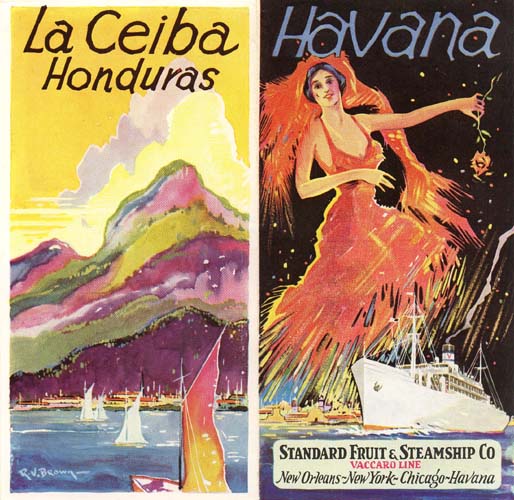
A poster for the Standard Fruit Company. Photo by Bjorn Larsson. 

New Orleans is home to the single largest Honduran population within America. The connection between New Orleans and Honduras began over a century ago, primarily due to both regions’ shipping industries. Many Hondurans came to the United States as employees of either the Standard Fruit Company or the United Fruit Company, both of which imported bananas and other fruits into the United States through the Port of New Orleans. This economic relationship forged the beginnings of a strong social, cultural and political connection that still exists between Honduras and the United States. (1)

Self-identified Hondurans actually make up up the largest Spanish-speaking cultural group  in New Orleans (2). However, the Honduran cultural presence within the city is not nearly as well known as some of its counterparts. Despite their large numbers, the Honduran immigrants to New Orleans did not develop a distinct neighborhood like other cultures in New Orleans have done, and according to Folklife in Louisiana, there is a feeling among the Latino community that Latin nationalities within New Orleans tend to blend together (3). Nevertheless, the Honduran community still maintains strong connections to their cultural heritage, even while many self-identify primarily as New Orleanians. The Honduran community within New Orleans has maintained linguistic, culinary, and cultural traditions that have helped shape a distinct Honduran identity within the city.

Places like  Casa Honduras, preserve and share Honduran cuisine to mainstream culture and serve as a sort of community hub, turning into a club at nights and making space available for community meetings. On top of that, families continue to pass down traditional recipes like baleadas, Sopa de Pescado, and Honduran-style tacos, enchiladas, tamales, and carne asada (4). That food is good for the soul, and to keep their souls even further connected to culture, the Honduran community has established religious roots here in New Orleans.

The majority of Hondurans in the city are Catholic, though there are a number of Evangelical Protestants as well, and several churches, especially St. Teresa of Avila on Prytania Street, have been serving the Honduran community for generations. St. Teresa even features a statue of Our Lady of Suyapa, the patron saint of Honduras. And New Orleans wouldn’t be New Orleans without a party around a said, and one of the most prominent Honduran celebrations within New Orleans is the Feast and Mass of Our Lady of Suyapa, which is celebrated on the third of every February. Both St. Teresa of Avila and Immaculate Conception Church in Marrero hold feasts for the celebration; at the latter, children wear traditional Honduran dress as part of the celebration and the Honduran national anthem is sung during Mass (5).

In addition to these more formal manifestations of community culture, Hondurans in New Orleans celebrate their culture in a myriad of other ways. For example, on Sundays, there is an adult soccer league, Villa d’Est, that gathers at City Park. The league serves both as a link to a sport that is quite popular in Honduras as well as a positive gathering space for Hondurans (6).

Now let’s get even smaller in scope to look at the Garifuna Community, which is an Afro-Central American ethnic group who originated in St. Vincent. There is debate as to how the group made it to the Americas; nevertheless, by the late 18th century there was a small group of the Garifuna community in Roatan, Honduras (possibly banished there by the British) (7). The Garifuna culture quickly came to combine a mixture of African and Honduran cultural, linguistic, and religious traditions and practices.

In New Orleans, the Garifuna are largely known for their language, dance and music. The Garifuna musical tradition draws widely upon their West African tradition, utilizing distinctive percussive stylings and a traditional call-and-response pattern (8). Though a relatively small population, there is an active effort to maintain these cultural traditions. Bernardo Guerrero, vice president of the community agribusiness Lemenigi Lomba, is an active advocate for the preservation of the Garifuna language. Guerrero is also involved in Hamenigi Garinagu, a dance group that performs traditional Garifuna dances for special events. Anrulfo Lacayo, another advocate for Garifuna culture, speaks of the importance of maintaining traditions, saying, “From where we came, there we go” (9).

Like all New Orleanians, the Hondurans of the city were greatly affected by Hurricane Katrina. Though there is little data about how it impacted the community in terms of population density, anecdotal data suggests that many Hondurans left the city and were never able to return (10). Conversely, the destruction caused by the hurricane lead to an influx of Latino day laborers, including many coming from Honduras. With the workers came a new emphasis on Honduran culture, which lead to the establishment of restaurants and shops (including the aforementioned Casa Honduras). This influx of workers differs from that of previous generations in that the workers were bringing their families with them (unlike many of those who worked for the fruit companies, who would often leave their families in Honduras while they moved to New Orleans) (11). This shift has helped create more of a family atmosphere for the Honduran community living in New Orleans.

Nevertheless, Hondurans and Garifunas living in New Orleans continue to face certain challenges. There is some degree of racial discrimination between the two, both in New Orleans and in Honduras. Though the Honduran Consulate is located in New Orleans, it is largely inaccessible to a big proportion of the Honduran population who live outside of the city proper. This means that many local residents do not have access to the information and necessary services that they need from the government, such as help getting visas and resources to get children into schools (12).

With more understanding about the Honduran culture and all it adds to New Orleans, we are happy they call this city home.