Showing posts with label Canon Law. Show all posts

Saturday, August 29, 2026

Pope Leo XIV grants the Eastern Synod of Bishops to remove Patriarchs ammending canons 106 & 126


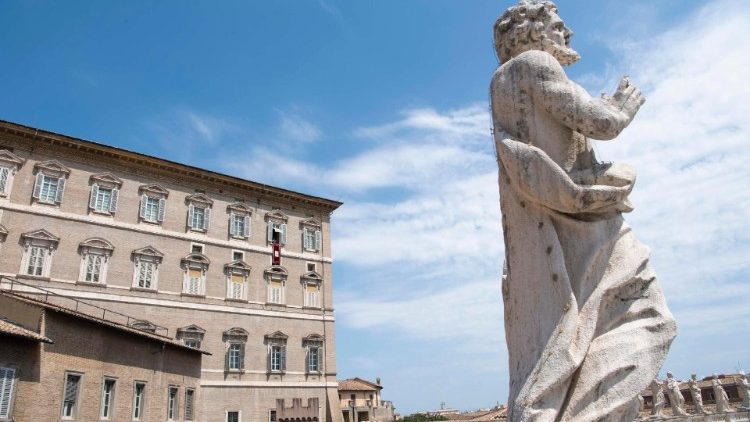
The Apostolic PalaceThe Apostolic Palace  (@Vatican Media)

Pope Leo grants Eastern Synods the faculty to remove Patriarchs

With an Apostolic Letter issued motu proprio on 29 August, Pope Leo XIV provides the Synods of Bishops of Eastern Catholic Churches the faculty to remove their respective Patriarchs in order “to restore the wounded communion, even by removing him from office for grave cause”, in the event their “bond” is “irreparably compromised.” In such an event, the Roman Pontiff must grant assent to the Synod’s judgment.

By Vatican News

An Apostolic Letter in the form of a motu proprio by Pope Leo XIV, with the incipit Mutua concordia, which was published today, 29 August, amends canons 106 and 126 of the Code of Canons of the Eastern Churches and grants the Synod of Bishops the power, through “an orderly procedure”, to remove a Patriarch from office should their relationship be irreparably compromised for serious reasons.

Without prejudice to the prerogatives of the Apostolic See, therefore, the Synods of Bishops in such cases are called upon “to restore the wounded communion” through a procedure which, in accordance with the norms, guarantees the Patriarch “the right to a full defence before the Synod”.

It will, however, remain for the Pope to “grant his assent to the synodal decision, to ensure that the Fathers’ full freedom to express their choice is guaranteed, free from any possible undue internal or external pressure”.

The Pontiff has ordered that a new paragraph, §3, be inserted after §2 of Canon 106, specifying that “should the Patriarch fail to fulfil the obligations” laid down by the Code itself “the Synod of Bishops of the patriarchal Church may be lawfully convoked by the Bishop who is the most senior in terms of episcopal ordination and who is entitled to vote; and if he too fails to proceed with the convocation, this power passes to the subsequent Bishops, who are more senior in terms of episcopal ordination, who are available to do so and who are entitled to vote”.

Canon 126 is also modified by the addition of a new paragraph stipulating that “for a grave cause recognized as such by the Synod of Bishops of the patriarchal Church, that same Synod—convoked in accordance with Canons 106 § 1, no. 3, and 108 § 3—may request the Patriarch to resign from office.”.

The following paragraph establishes that if, following such a request, “the Patriarch does not resign from his office, the Bishop who is the most senior in terms of episcopal ordination, and who is entitled to vote, shall arrange for the election of a new President by the Synod, which shall submit the removal of the Patriarch to a secret ballot of at least two-thirds of the members of the Synod entitled to vote, whilst respecting [the Patriarch’s] right to defend himself before the Synod itself”. It is also the President’s responsibility to inform the Pope, who must give “his assent to the removal, which renders the patriarchal see vacant”.

Given that in the Eastern Churches there exists a close relationship uniting the Patriarch – who presides over his patriarchal Church as father and head, tamquam pater et caput (CCEO, can. 55) – and the Synod of Bishops, which he himself convokes and leads, a harmonious relationship between them is essential for a fruitful ecclesial life, in the unity of the Spirit and in the sole interest of the Church itself, the motu proprio says.

However, the Code of Canons of the Eastern Churches, which governs the functioning and duties of the Synods of Bishops, made no provision for the event that “the sacred bond between the Pater et Caput and the other Bishops should be irreparably compromised”, resulting in ‘a grave wound requiring remedy, as also urged by numerous Eastern Prelates’,

With the Motu Proprio, therefore, a set of rules comes into force to be followed in the event of an irreconcilable rift between the Patriarch and the Synod, should the Patriarch fail to resign. It is established that it is the responsibility of the Synod to set out the serious reasons that led to the rift, to determine who is to convene the Synod in such a situation and how this is to be done, to specify the majority of votes required to bring the Patriarch’s term of office to an end, and to ensure that the Patriarch’s rights of defence are safeguarded.

The Pope’s provisions are intended to enhance the prerogatives of the Synod of Bishops of the Eastern Catholic Churches, endowing them with a new power consistent with their nature as Churches sui iuris and restoring to them that which originates within them, since they are better placed to understand and assess the situation, whilst reserving for the Roman Pontiff a role of guarantor. The provisions set out in the Motu Proprio also apply, by their very nature, to the major archiepiscopal Churches (cf. can. 152).

Saturday, November 23, 2024

Pope Francis to canon lawyers: love justice, charity and truth


Pope Francis meets with participants in the Roman Rota's formation coursePope Francis meets with participants in the Roman Rota's formation course  (Vatican Media)

Pope: Canon lawyers must love justice, charity, truth

Pope Francis greets canon lawyers taking part in a course organized by the Roman Rota, and highlights how charity, justice, and truth are interconnected and at the heart of the 2025 Jubilee of Hope.

By Devin Watkins

“Love—caritas—is an extraordinary force that impels people to courageously and generously engage in the field of justice and peace. It is a force that originates in God, eternal Love, and absolute Truth.”

Pope Francis opened his address to participants in a formation course organized by the Tribunal of the Roman Rota with those words from Caritas in Veritate, Pope Benedict XVI’s 2009 encyclical.

The mission of the Roman Rota, the Church’s highest appellate court, as well as each of the Church’s lower tribunals, can be described as a “ministry of justice and charity in truth,” said the Pope.

Canon lawyers, he added, are called to love justice, charity, and truth, which are so closely intertwined that if one is lacking all three lose authenticity.

“Neither justice without charity nor charity without justice,” he said. “Charity without justice is not true charity.”

Justice involves seeking the good of the entire community and must be tempered by mercy, “for justice can only be understood in the light of love.”

“Never forget,” urged the Pope, “that those who come to you seeking the exercise of your ecclesial office must always encounter the face of our Mother, the Holy Church, who tenderly loves all her children.”

Love, he noted, teaches canon lawyers to cultivate their “legal sensitivity” so that they may recognize “what constitutes a true right of the person within the Church.”

Pope Francis went on to invite everyone to overcome fear of justice, since it can undermine charity due to its root in a mistaken concept of justice as a merely punitive exercise.

Justice, he said, “is a distinctly altruistic virtue that seeks the good of the other,” which links it closely with charity and mercy.

“Charity does not nullify justice, nor does it relativize rights,” he said. “In the name of love, we cannot neglect what is a duty of justice.”

As an example, he noted, the current norms on matrimonial cases cannot be compromised in pursuit of speed, since “mercy does not abolish justice.”

Charity and justice, said the Pope, work harmoniously together when they find their basis in truth.

In conclusion, Pope Francis invited canon lawyers to embrace hope, as the Church looks to the upcoming 2025 Jubilee of Hope, which begins on December 24.

“Let us allow ourselves to be drawn by hope and make it contagious for those who desire it,” he said, citing the Jubilee Bull of Indiction. “May our lives proclaim: ‘Hope in the Lord, be strong, let your heart take courage, and hope in the Lord’.”

Friday, November 8, 2024

Archbishop Aymond confirms he will submit letter of resignation To Pope Francis as required by Canon Law


Archbishop Aymond reflects on canon law as 75th birthday approaches


by Archbishop Gregory Aymond
Archbishop Gregory Aymond will turn 75 years old on Nov. 12, the date on which he is required by canon law to submit his resignation letter to the pope, who may accept the resignation or ask that he remain as archbishop of New Orleans. Archbishop Aymond writes the following reflection for the people of the Archdiocese of New Orleans.

As many of you may know, I will turn 75 years old on Nov. 12, and, in accordance with canon law (No. 401, paragraph 1), I will submit a letter of resignation to the Holy Father on that date. 
Canon law stipulates that each bishop, on his 75th birthday, must submit his letter of resignation to the pope. The letter actually is mailed to the papal nuncio to the United States – Cardinal Christophe Pierre – who then forwards it to Pope Francis.

I have offered to remain in office until the archdiocesan reorganization (bankruptcy) process is completed. It is up to Pope Francis whether he accepts my resignation or asks me to remain through the completion of the reorganization process.

In recent times, it is not unusual for a bishop to remain in office for some length of time after the celebration of his 75th birthday. Once again, that is the decision of the Holy Father as to who will assume the leadership of the Archdiocese of New Orleans, and I expect to find out from him in the near future what his preference is according to canon law.

As I encounter this important moment in my life, I am deeply appreciative of the opportunity to have been ordained to the priesthood nearly 50 years ago and to have served as a bishop the past 27 years. It also has been a privilege to have served Christ and his church, and, in a particular way, the church of the Archdiocese of New Orleans, as archbishop for more than 15 years.

As we continue working toward a conclusion to the reorganization process, which we hope will bring some measure of healing to the survivors of sexual abuse, I am pleased that we have recently completed the non-monetary commitments that cause us to appreciate our effective safe environment program to prevent abuse from happening in the future. It also has given us the opportunity to strengthen these safe environment guidelines and requirements. We hope to finalize the monetary portion of the bankruptcy as soon as possible.

For me, personally, the whole process is about bringing healing to the survivors of sexual abuse. These survivors remain in my daily prayers, and I will be available to meet with anyone who wishes to have a personal meeting with me or to meet with me in a group setting.

We have seen recent progress in the mediation process, and I pray daily that this can be completed as soon as possible in order to bring justice to the survivors.

As I look back on my last 15-plus years as archbishop of New Orleans, I am grateful to God and to the clergy, religious and lay faithful, because this has been a time of blessing in many ways. 

It is evident to me that the church is strong. People are committed to Christ and to the mission of the church. I think it's significant to note that Mass attendance has increased, and there are other signs that the church is alive and committed to the mission of Jesus Christ.

May God continue to bless the clergy, religious and laity of the Archdiocese of New Orleans. 

Saturday, October 19, 2024

At the Synod they tackle the fight against Abuse


Archbishop Filippo Iannone, Prefect of the Dicastery for Legislative TextsArchbishop Filippo Iannone, Prefect of the Dicastery for Legislative Texts  (Vatican Media)

Archbishop Iannone on Church's fight against abuse and existing norms

As the Synod on Synodality explores the issue of abuse and the Church's efforts to combat it, Archbishop Filippo Iannone, Prefect of the Dicastery for Legislative Texts, speaks to Vatican News about the various procedures being implemented and the efficacy of existing canonical norms.

By Andrea Tornielli

The fight against abuse remains a constant concern within the Church, especially in recent years. The topic has also surfaced in the discussions of the ongoing Synod and continues to be monitored closely by the media.

We spoke to Archbishop Filippo Iannone, Prefect of the Dicastery for Legislative Texts, to explore some of the procedures being implemented.

Q: Can you tell us where we stand in terms of the laws in force? Are they effective?

This is certainly a topic of central concern for the entire Church, as the Pope frequently emphasizes, so it naturally found its way into the interventions of the Synod members. Canon law for the repression and punishment of crimes of abuse against minors and vulnerable adults has been updated in recent years, taking into account the experience gained in past years, various suggestions from local Churches, and individuals working at different levels in combating the phenomenon. Most importantly, it reflects the 2019 meeting in the Vatican, convened by Pope Francis, with the Presidents of Episcopal Conferences from around the world and officials from the Roman Curia.

Canon penal law has been revised, and the new motu proprio Vos estis lux mundi was promulgated, which establishes "universal procedures aimed at preventing and combating these crimes that betray the trust of the faithful." The norms followed by the Dicastery for the Doctrine of the Faith when judging crimes reserved to it have also been revised. In all the legislative texts, the focus is increasingly placed on the well-being of those whose dignity has been violated and the desire to ensure a "just" process, respecting the fundamental principles of the legal system. Among other things, the obligation for priests and consecrated persons to report potential abuses to ecclesiastical authorities if they become aware of them has been established.

Regarding the effectiveness of the norms, it is difficult to give a global judgment because it would require access to all relevant data. However, based on my personal experience, I would say yes. In any case, I would like to recall Pope Francis' words: " Even if so much has already been accomplished, we must continue to learn from the bitter lessons of the past, looking with hope towards the future.."

Q: Can you explain how the possible remission of an excommunication is granted? Are there expedited processes for this? Who is involved?

Excommunication, which canon law classifies among the censures, is the penalty that deprives a baptized person who has committed a crime (such as the desecration of the Eucharist, heresy, schism, abortion, or violation of the seal of confession by a priest) and is contumacious (i.e., disobedient) of certain spiritual goods until they cease to persist in this state and are absolved. The spiritual goods, or those attached to them, that the penalty deprives the individual of are those necessary for Christian life, primarily the sacraments.

Excommunication has a strictly “medicinal” purpose, aimed at the recovery and spiritual healing of the person affected, so that, once repentant, they may once again receive the goods from which they have been deprived (the salvation of souls is the supreme law in the Church). Consequently, to obtain remission, the person must demonstrate that this purpose has been achieved. No specific timeframes are set. The necessary condition is that the individual has truly repented of the crime and has made adequate reparation for the scandal and damage caused, or at least has seriously promised to make such reparation. Obviously, the evaluation of these circumstances must be made by the authority responsible for granting the remission of the penalty, in a pastoral spirit, taking into account the person's good disposition and the social impact of such a decision.

Q: In recent weeks, several media articles have offered various interpretations regarding the canonical procedures for reserved crimes. Could you explain what these procedures are and how they are applied?

We are dealing with crimes that, due to their gravity in matters of faith or morals, are judged exclusively by the Dicastery for the Doctrine of the Faith. The procedure followed by the Dicastery can be of two types: the so-called "administrative" procedure or the judicial procedure. In the case of an administrative process, once the procedure is concluded with an extrajudicial penal decree, the convicted individual has the possibility of appealing the decision to the College for the examination of appeals, specially constituted within the same Dicastery. The decree issued by this College is final. In the case of a judicial penal process, once the various stages of the trial have been completed, the sentence becomes final (res iudicata) and thus enforceable.

In both cases, the convicted person may request restitutio in integrum (i.e., the restoration of their original condition) from the Dicastery for the Doctrine of the Faith. It is also possible to request a review in the form of mercy; in this case, the procedure is ordinarily handled by the Supreme Tribunal of the Apostolic Signatura, but it may also be entrusted to other bodies. Given the confidential nature of such communications, the Secretariat of State coordinates the various instances and sends the relevant decisions for the execution of the adopted measures.

Friday, July 5, 2024

Archbishop Vigano declared excommunicated


The headquarters of the Dicastery for the Doctrine of the FaithThe headquarters of the Dicastery for the Doctrine of the Faith 

Viganò excommunicated for schism

A press release from the Dicastery for the Doctrine of the Faith declares the excommunication “latae sententiae” incurred by the former nuncio to the United States, who does not recognize the legitimacy of Pope Francis or of the Second Vatican Council.

Vatican News

Archbishop Carlo Maria Viganò, former apostolic nuncio to the United States of America, has incurred excommunication latae sententiae for having abandoned communion with the Bishop of Rome and the Catholic Church.

A press release issued by the Dicastery for the Doctrine of the Faith states: “On 4 July 2024, the Congress of the Dicastery for the Doctrine of the Faith met to conclude the extrajudicial penal process referred to in canon 1720 CIC against the Most Reverend Carlo Maria Viganò, titular Archbishop of Ulpiana, accused of the reserved delict of schism (canons 751 and 1364 CIC; art. 2 SST).”

The communiqué continues, “His public statements manifesting his refusal to recognize and submit to the Supreme Pontiff, his rejection of communion with the members of the Church subject to him, and of the legitimacy and magisterial authority of the Second Vatican Council are well known.

“At the conclusion of the penal process, the Most Reverend Carlo Maria Viganò was found guilty of the reserved delict of schism.

Further, the press release notes, “The Dicastery declared the latae sententiae excommunication in accordance with canon 1364 § 1 CIC. The lifting of the censure in these cases is reserved to the Apostolic See.”

Finally, the statement says, “This decision was communicated to the Most Reverend Viganò on 5 July 2024.”

The case against Viganò

It was Archbishop Viganò himself who revealed the process against him, revealing the full text of the decree summoning him to Rome to answer the charges against him, and offering the opportunity to defend himself or appoint an advocate, and to appear in person or present a written defence. As he did not choose to avail himself of these opportunities within the specified time limit, he was assigned a public defender who undertook Viganò's defence according to the norms of law.

On several occasions in recent years, the former nuncio to the United States had declared that he did not recognize the legitimacy of Pope Francis or of the Second Vatican Council. Certain crimes in canon law incur an automatic (“latae sententiae”) penalty from the very fact of having committed the offence; for the delict of schism, the penalty is excommunication.

According to the Code of Canon Law (canon 1331, paragraph 1), an excommunicated person is prohibited from celebrating the Sacrifice of the Eucharist and the other sacraments; receiving the sacraments, administering sacramentals and celebrating the other ceremonies of liturgical worship, and from taking an active part in the celebrations listed above. Further, they are prohibited from exercising any ecclesiastical offices, duties, ministries, or functions; and from performing acts of governance.

The second paragraph of canon 1331 lists consequences that follow from the latae sententiae excommunication being formally declared.

Excommunication is considered a “medicinal” penalty that aims at inviting the offender to repentance. As such, there is always the hope that the subject of excommunication will return to communion.

Monday, January 8, 2024

Catholic Priest guilty of soliciting sex during confessions


Missouri Catholic priest was found guilty by the church of soliciting sex from an adult during a confession, an act the church described as "a sacrilege" and a "grave form of abuse" that cannot be tolerated.

Father Ignazio Medina of the Diocese of Jefferson City is now prohibited from holding office in the church, hearing confessions and celebrating or leading Mass publicly without the explicit permission of his diocesan bishop, the diocese said in a statement.

The diocese received a report on April 15, 2022, through the diocese’s abuse hotline alleging sexual solicitation of an adult on the occasion of the Sacrament of Reconciliation.

Canon 1385 of the Code of Canon Law says a priest "who in the act, on the occasion, or under the pretext of confession solicits a penitent to sin against the sixth commandment of the Decalogue is to be punished according to the gravity of the delict, by suspension, prohibitions, privations; and in more grave cases, he is to be dismissed from the clerical state."

Bishop W. Shawn McKnight of Jefferson City launched an investigation after learning of the report and placed temporary restrictions on Medina, including banning him from hearing confessions and from being alone with anyone other than his family on church property.

Medina, who served as a priest at Our Lady of the Lake Parish in Lake Ozark, was found guilty by decree by the Dicastery for the Doctrine of the Faith in Rome on Nov. 27, 2023. Medina did not appeal the decision.

"I want to be clear that sexual solicitation during confession is a sacrilege, a crime in our Church, and a grave form of abuse; it cannot be tolerated," McKnight said. "With God’s help we must work to continue to eradicate abuse from all corners of our Church. Please join me in prayer for all who are left in pain and confusion when a trusted leader abuses their position of sacred trust and power for sinful purposes."

"I have met with Father Medina to express my concerns and informed him he will not be allowed to celebrate or concelebrate Mass publicly except for funeral Masses of his immediate family, at the gathering of priests at their annual conference in October, and at the Chrism Mass during Holy Week," he continued.

Medina remains a priest of the Diocese of Jefferson City and continues to receive support as a retired priest, the diocese said.

"I thank the victim in this case for stepping forward, and I pray for healing," McKnight said. "I also thank all who helped during the investigation and disciplinary process. In addition, I am very grateful for our clergy, parish staff and parishioners who are dedicated to ensuring our diocesan Safe Environment protocols are followed. As we move forward together, I seek the renewal of our Church by facing the awful reality of abuse with the hope and grace of the Gospel which provides the healing we all need."

This comes after Medina was found guilty in April 2023 of abuse of ecclesiastical power after transferring roughly $300,000 in parish funds to personal accounts.

Tuesday, August 8, 2023

Pope Francis issued motu proprio concerning personal prelatures


Vatican CityVatican City  (ANSA)

Pope modifies Church law on personal prelatures

Pope Francis issues a motu proprio to modify two canons of Church law related to the treatment of personal prelatures.

By Deborah Castellano Lubov

Pope Francis, in the form of a motu proprio, has made updates to some Church laws relating to personal prelatures.

A personal prelature is made up of a particular group of faithful and is structured in a hierarchical manner, with a prelate who is its head and source of unity and with priests and deacons who assist him.

The Pope's motu proprio goes into force, today, 8 August, the Feast of St. Dominic, with its promulgation in L'Osservatore Romano, and later, inclusion in the official commentary of the Acta Apostolicae Sedis. 

In the new legislation, it says that given recent Church law updates, especially Art. 117 of the Apostolic Constitution Praedicate evangelium (19 March 2022), in which the competence over personal prelatures was transferred to the Dicastery for the Clergy, upon which public clerical associations with the faculty to incardinate clerics also depend (Art. 118, 2), the Pope modifies canons 295 and 296 relating to personal prelatures.

In the Code of Canon Law's Book II on the People of God, Title IV is the section which contains four canons, 294 to 297, pertaining specifically to personal prelatures.

The first articles address modifications to canon 295.

Statutes and the Prelate

The first concerns the statutes and the Prelate, and adds that the personal Prelature is 'assimilated to public clerical associations of pontifical right with the faculty of incardinating clerics', that its statutes can be 'approved or issued by the Apostolic See' and that the Prelate acts 'as Moderator, endowed with the faculties of an Ordinary.'

This part of the canon, therefore, is reformulated, as follows:

"Can. 295, § 1. The personal prelature, which is similar to public clerical associations of pontifical law with the ability to incardinate clerics, is governed by statutes approved or emanated by the Apostolic See and presided over by the Prelate as Moderator, endowed with the faculties of an Ordinary, who has the right to erect a national or international seminary as well as to incardinate students, and promote them to orders under title of service to the prelature."

Responsibilities of the Prelate

The second article concerns the responsibilities of the Prelate regarding the formation and support of incardinated clerics of the Prelature, specifying that he acts 'as Moderator, endowed with the faculties of an Ordinary.' 

This canon can be formulated as follows:

"Can. 295, § 2. As a Moderator endowed with the faculties of an Ordinary, the Prelate must provide either for the spiritual education of those whom he has promoted by the aforementioned title, or for their dignified support."

To canon 296, concerning the participation of the laity in the apostolic activities of the personal Prelature, the reference to canon 107 is added, a canon that stipulates "through both domicile and quasi-domicile, each person acquires his or her pastor and ordinary."

This canon, the Pope reformulates, as follows:

"Can. 296. Servatis can. 107 according to the provisions and agreements entered into with the prelature, the laity can dedicate themselves to the apostolic works of the personal prelature; but the manner of this organic cooperation and the main duties and rights connected with it, shall be determined appropriately in the statutes."

Wednesday, April 5, 2023

Pope issues Motu Proprio revising penal law for Eastern-rite Churches


Pope revises penal law of the Eastern Churches

With a new Apostolic Letter issued motu proprio, Pope Francis introduces changes to the Code of Canons of the Eastern Churches. The changes are similar to those made to the Latin Code of Canon Law in 2021, while preserving the distinctive characteristics of Eastern canon law.

By Vatican News

In a new Apostolic Letter issued motu proprio, Pope Francis has revised the penal law of the Eastern Churches, harmonizing some aspects of the Eastern discipline with that of the Latin Church, while preserving the distinctive features of Eastern law. The Letter, with the incipit Vocare peccatores [full text in Latin], was signed on 20 March, the Solemnity of Saint Joseph, this year, and published on Wednesday. The new law will enter into force on 29 June 2023, the Feast of Saints Peter and Paul.

Pope Francis had already amended Book VI of the Code of Canon Law concerning penal sanctions in the Latin Church in 2021, with the Apostolic Constitution Pascite gregem Dei. This was a work of revision begun under Pope Benedict XVI.

At the time, Pope Francis explained that it was clear that the penal discipline promulgated by St. John Paul II in the 1983 Code of Canon Law needed to be revised, “so that the Church’s pastors can employ it as a more flexible means of correction and salvation, capable of being applied swiftly and with pastoral charity in order to avoid more serious evils and to bring healing to injuries caused by human weakness.” The new Book VI of the Latin Code entered into force on 8 December 2021.

The Pope stated that it is “a concrete and essential requirement of charity, not only towards the Church, the Christian community and potential injured parties, but also towards those who commit crimes and are themselves in need of the Church’s mercy and correction.” He noted that “in the past, great damage was done by a failure to appreciate the close relationship existing in the Church between the exercise of charity and recourse — where circumstances and justice so require — to disciplinary sanctions.”

In today’s Apostolic Letter, the Pope states clearly that the purposes of punishment are the restoration of justice, the correction of the offender, and the reparation of the offence and the damage. Pastors, therefore, manifest their solicitude when they strive to correct the behaviour of the Christian faithful who do wrong.

“The new norms determine much more clearly when ecclesiastical authority must intervene in the case of offences,” explains Monsignor Juan Ignacio Arrieta, secretary of the Dicastery for Legislative Texts. “They are more precise and the penalties to be imposed are also clearer, better determined. Moreover, Eastern discipline has also been harmonised with Latin discipline in many aspects, such as the abuse of minors and the protection of the sacraments.”

Friday, March 24, 2023

Archbishop strips a Priest's faculty to hear confessions


Priest stripped of faculty to hear confessions after he advocated violating that sacrament in sex abuse cases


Archbishop Jerome Listecki of Milwaukee has stripped one of his priests of the faculty to hear confessions following the clergyman’s public support for civil laws mandating that priests break the seal of confession for sins of sexual abuse.

“I have informed Father James Connell that effective immediately he is to cease all such erroneous communications that distort the teachings of the Church about the confessional seal,” Listeicki wrote in a March 22 statement. 

“I have also immediately removed the canonical faculties of Father Connell to validly celebrate the sacrament of confession and to offer absolution, here in the Archdiocese of Milwaukee and thereby also in the Catholic Church around the world.”

Connell, a retired priest in the archdiocese and former vice chancellor, made comments March 13 in delawareonline.com advocating for a Delaware state bill that mandates priests break the seal of confession for penitents who confess sins of child sexual abuse. 

Connell wrote that “no institution in our society, not even a recognized religion, has a significant advantage over governments’ compelling interest and responsibility to protect its children from harm by abuse or neglect.”

“Thus, no valid freedom of religion argument rooted in the absence of truth can provide a moral justification for sheltering perpetrators of abuse or neglect of children from their deserved punishment, while also endangering potential victims,” he continued.

This isn’t the first time Connell, a canon lawyer, has spoken publicly on the issue. In 2018, he appealed to Pope Francis in an online article to “release from the seal of confession” all information regarding child or vulnerable adult sexual abuse so authorities can be notified.

The seal of confession “is not a matter of divine law,” he said in that piece. 

In the Code of Canon Law, Canon 983 says that “the sacramental seal is inviolable; therefore it is absolutely forbidden for a confessor to betray in any way a penitent in words or in any manner and for any reason.”

In 2019, he filed a lawsuit in a U.S. district court against Wisconsin and nine other states arguing that exemptions for the clergy from being mandatory reporters in cases when sexual abuse became known to them under the sacramental seal are unconstitutional.

That lawsuit was dismissed by the judge one day after it was filed.

Connell is a vocal advocate for victims of clerical sexual abuse. Following the August 2022 death of Archbishop Rembert Weakland, who covered up priestly sexual abuse and paid hush money to a former adult seminarian with whom he had a sexual relationship, Connell publicly called for clergy in the archdiocese to boycott the funeral.

Connell himself was accused in 2009 of covering up a sexual abuse case when he worked in the chancery, a claim that both he and the archdiocese denied.

In his recent column, Connell wrote that “all people in Delaware should support the proposed HB 74 that would repeal the Delaware clergy-penitent privilege statute.”

Listecki said that Connell’s comments on the confessional seal are “gravely contrary” to Church teaching and that the Church “firmly declares that the sacramental seal of confession is always, and in every circumstance without exception, completely inviolable.”

“The false assertions of Father James Connell have caused understandable and widespread unrest among the people of God, causing them to question if the privacy of the confessional can now be violated, by him or any other Catholic priest,” he said.

CNA reached out to Connell for comment but received no response by time of publication. 

Sandra Peterson, the archdiocese’s communications director, referred CNA to Listecki’s statement and added that she is unaware of any intervention against Connell for his prior comments against the seal of confession in the two years she has been working for the archdiocese.