Showing posts with label Motu Proprio. Show all posts

Saturday, August 29, 2026

Pope Leo XIV grants the Eastern Synod of Bishops to remove Patriarchs ammending canons 106 & 126


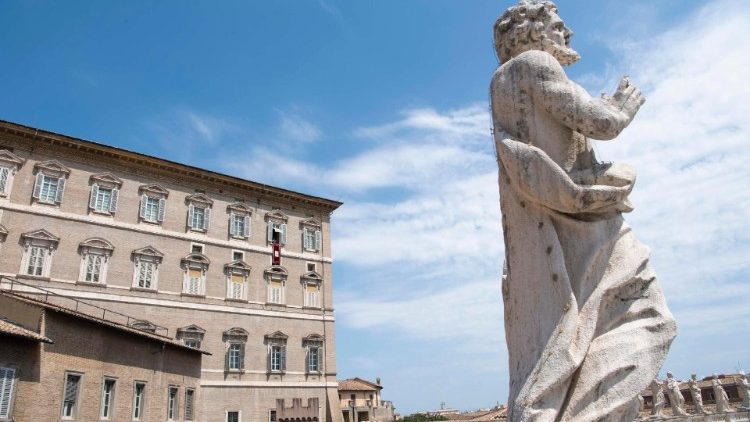
The Apostolic PalaceThe Apostolic Palace  (@Vatican Media)

Pope Leo grants Eastern Synods the faculty to remove Patriarchs

With an Apostolic Letter issued motu proprio on 29 August, Pope Leo XIV provides the Synods of Bishops of Eastern Catholic Churches the faculty to remove their respective Patriarchs in order “to restore the wounded communion, even by removing him from office for grave cause”, in the event their “bond” is “irreparably compromised.” In such an event, the Roman Pontiff must grant assent to the Synod’s judgment.

By Vatican News

An Apostolic Letter in the form of a motu proprio by Pope Leo XIV, with the incipit Mutua concordia, which was published today, 29 August, amends canons 106 and 126 of the Code of Canons of the Eastern Churches and grants the Synod of Bishops the power, through “an orderly procedure”, to remove a Patriarch from office should their relationship be irreparably compromised for serious reasons.

Without prejudice to the prerogatives of the Apostolic See, therefore, the Synods of Bishops in such cases are called upon “to restore the wounded communion” through a procedure which, in accordance with the norms, guarantees the Patriarch “the right to a full defence before the Synod”.

It will, however, remain for the Pope to “grant his assent to the synodal decision, to ensure that the Fathers’ full freedom to express their choice is guaranteed, free from any possible undue internal or external pressure”.

The Pontiff has ordered that a new paragraph, §3, be inserted after §2 of Canon 106, specifying that “should the Patriarch fail to fulfil the obligations” laid down by the Code itself “the Synod of Bishops of the patriarchal Church may be lawfully convoked by the Bishop who is the most senior in terms of episcopal ordination and who is entitled to vote; and if he too fails to proceed with the convocation, this power passes to the subsequent Bishops, who are more senior in terms of episcopal ordination, who are available to do so and who are entitled to vote”.

Canon 126 is also modified by the addition of a new paragraph stipulating that “for a grave cause recognized as such by the Synod of Bishops of the patriarchal Church, that same Synod—convoked in accordance with Canons 106 § 1, no. 3, and 108 § 3—may request the Patriarch to resign from office.”.

The following paragraph establishes that if, following such a request, “the Patriarch does not resign from his office, the Bishop who is the most senior in terms of episcopal ordination, and who is entitled to vote, shall arrange for the election of a new President by the Synod, which shall submit the removal of the Patriarch to a secret ballot of at least two-thirds of the members of the Synod entitled to vote, whilst respecting [the Patriarch’s] right to defend himself before the Synod itself”. It is also the President’s responsibility to inform the Pope, who must give “his assent to the removal, which renders the patriarchal see vacant”.

Given that in the Eastern Churches there exists a close relationship uniting the Patriarch – who presides over his patriarchal Church as father and head, tamquam pater et caput (CCEO, can. 55) – and the Synod of Bishops, which he himself convokes and leads, a harmonious relationship between them is essential for a fruitful ecclesial life, in the unity of the Spirit and in the sole interest of the Church itself, the motu proprio says.

However, the Code of Canons of the Eastern Churches, which governs the functioning and duties of the Synods of Bishops, made no provision for the event that “the sacred bond between the Pater et Caput and the other Bishops should be irreparably compromised”, resulting in ‘a grave wound requiring remedy, as also urged by numerous Eastern Prelates’,

With the Motu Proprio, therefore, a set of rules comes into force to be followed in the event of an irreconcilable rift between the Patriarch and the Synod, should the Patriarch fail to resign. It is established that it is the responsibility of the Synod to set out the serious reasons that led to the rift, to determine who is to convene the Synod in such a situation and how this is to be done, to specify the majority of votes required to bring the Patriarch’s term of office to an end, and to ensure that the Patriarch’s rights of defence are safeguarded.

The Pope’s provisions are intended to enhance the prerogatives of the Synod of Bishops of the Eastern Catholic Churches, endowing them with a new power consistent with their nature as Churches sui iuris and restoring to them that which originates within them, since they are better placed to understand and assess the situation, whilst reserving for the Roman Pontiff a role of guarantor. The provisions set out in the Motu Proprio also apply, by their very nature, to the major archiepiscopal Churches (cf. can. 152).

Monday, October 6, 2025

The first "motu proprio" of Leo XIV's papacy


Entrance of the offices of the Administration of the Patrimony of the Apostolic See Entrance of the offices of the Administration of the Patrimony of the Apostolic See  

Pope Leo issues new motu proprio concerning Holy See investments

In a new Apostlic Letter issued “motu proprio,” Pope Leo XIV provides new guidance on the financial investment activities of the Holy See.

By Vatican News

Pope Leo XIV has issued a new Apostolic Letter “motu proprio” confirming specific recommendations approved by the Council for the Economy concerning the financial investment activities of the Holy See.

The new motu proprio, with the incipit “Coniuncta cura”, highlights the principle of “co-responsibility in communio” as requiring the consolidation of various provisions that have arisen over time, as well as the clear definition of “the roles and responsibilities” of the various institutions of the Holy See, “enabling everyone to converge in a dynamic of mutual collaboration.”

Issued after careful evaluation of the Council’s recommendation and consultation with experts, the new Apostolic Letter repeals an earlier rescript “on the administration and management of the financial activities and liquidity of the Holy See and of the institutions connected with the Holy See," dated August 23, 2022.

The repealed rescript provided that the Institute for the Works of Religion (IOR, sometimes referred to as the Vatican Bank) had exclusive competence over asset management and was the custodian of all the movable assets of the Holy See and of its associated institutions.

It therefore stipulated that all institutions of the Holy See that held financial assets with financial institutions other than the IOR must inform the IOR and transfer them to the Vatican Bank as soon as possible.

"Coniuncta cura" establishes that “financial investment activities of the Holy See, which are dedicated to its own use and carried out in accordance with art. 219 of the Apostolic Constitution Praedicate Evangelium, must adhere to the provisions established by the Investment Committee, in compliance with the approved Investment Policy."

It further establishes that financial investment activities of the Holy See are generally undertaken by the Administration of the Patrimony of the Apostolic See (APSA) through the Institute for the Works of Religion, “unless the competent bodies, as established by the statutes of the Investment Committee, deem it more efficient or convenient to use financial intermediaries established in other countries.”

The new motu proprio takes effect on Monday, 6 October 2025, the day of its official promulgation by publication in L’Osservatore Romano.

Friday, April 19, 2024

Another motu proprio from Pope Francis; this one has changes to the Vatican judicial sysytem


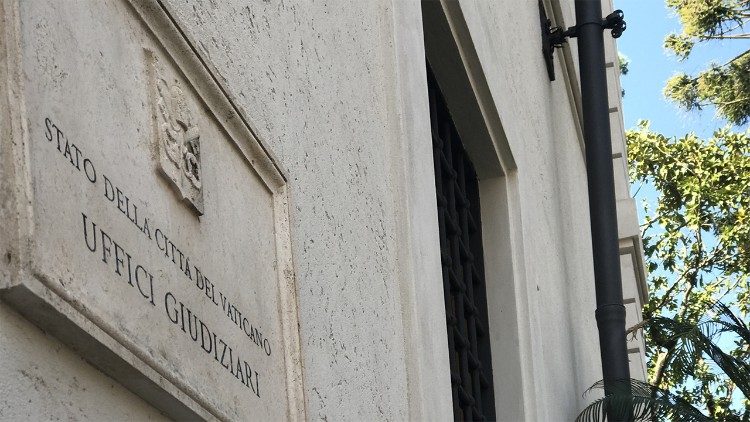
The Judiciary Offices in Vatican City The Judiciary Offices in Vatican City  

Pope modifies Vatican judicial norms with new motu proprio

With a new Apostolic Letter issued 'motu proprio,' Pope Francis modifies laws governing the Vatican's judicial system, especially regarding remuneration and pensions for judges.

By Vatican News

Years of experience have "highlighted the need" for a series of changes to Vatican judicial regulations related "to the professional dignity and economic treatment of ordinary judges of the Tribunal and the Office of the Promoter of Justice."

This is how Pope Francis explained his decision to make changes to certain aspects of the Vatican judicial system, at the beginning of his Apostolic Letter in the form of a motu proprio, released on Friday.

Age limits

In the new legislation, Pope Francis established new rules in six articles.

Among the revisions, the Pope indicated that the retirement of ordinary judges is now set at the age of 75, while for Cardinal judges, it is instead set at 80.

However, the Pope is able to extend their tenure beyond these limits.

Principle of immutability

In the motu proprio, which calls for respecting the "principle of immutability of the judge" and "ensuring the reasonable duration of the process," the Pope may appoint an additional president for the judicial year in which the president leaves office, who takes over the position at the time of the president's departure.

It is also stated that the Pope "may, at any time, release from service judges who, due to proven incapacity, are unable to fulfill their duties, even temporarily."

Remuneration and pensions

Subsequent articles specify terms regarding remuneration, end-of-service benefits, and pensions. The motu proprio also makes determinations about the work of judges with regard to civil liability.

Wednesday, November 1, 2023

On this solemn feast the Pope issues another Motu Proprio


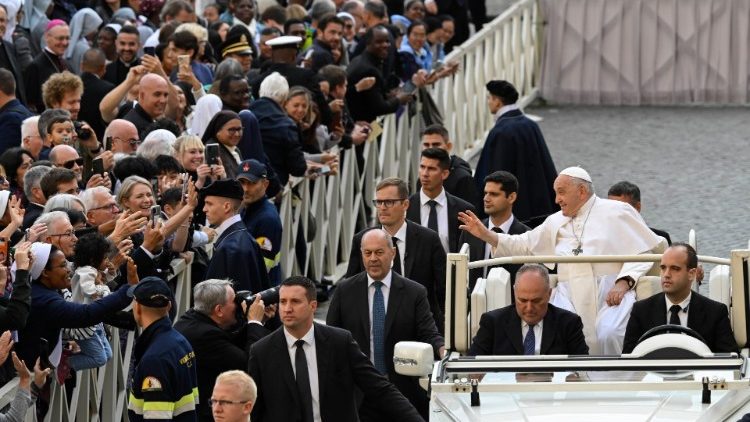
Pope Francis at his General Audience in October 2023Pope Francis at his General Audience in October 2023  (VATICAN MEDIA Divisione Foto)

Pope: Theology must interpret the Gospel for today’s world

In a new Motu Proprio, "Ad theologiam promovendam", Pope Francis updates the Statutes of the Pontifical Academy of Theology, calling it to "courageous cultural revolution" and commitment to dialogue in the light of Revelation

By Tiziana Campisi

A Church that is “synodal, missionary, and ‘goes forth’” needs a theology that “goes forth”, too.

That's the thought behind Pope Francis’ new Motu Proprio Ad theologiam promovendam [link to Italian original], dated 1 November 2023, which updates the statutes of the Pontifical Academy of Theology.

Established canonically by Clement XI on 23 April 1718, with the brief Inscrutabili, the Academy aimed "to place theology at the service of the Church and the world". It has evolved over the years into a "group of scholars called to investigate and deepen theological themes of particular relevance".

Now, for the Holy Father, it is time to revise the norms that regulate its activities to make them "more suited to the mission that our times impose on theology".

Opening up to the world and to humanity, "with its problems, its wounds, its challenges, its potential", theological reflection must make room for "an epistemological and methodological rethinking", and is therefore called to "a courageous cultural revolution".

What is needed is "a fundamentally contextual theology", writes the Pope, "capable of reading and interpreting the Gospel in the conditions in which men and women live daily, in different geographical, social, and cultural environments".

Dialogue with different traditions and disciplines

Theology must "develop in a culture of dialogue and encounter between different traditions and different disciplines, between different Christian denominations and different religions", the Apostolic Letter says.

It must engage "openly with all, believers and non-believers alike".

"This is the approach of transdisciplinarity", Francis specifies. The Apostolic Constitution Veritatis gaudium explains that this means "situating and stimulating all disciplines against the backdrop of the Light and Life offered by the Wisdom streaming from God’s Revelation.

For this reason, theology must "make use of new categories developed by other forms of knowledge, in order to penetrate and communicate the truths of faith and transmit the teaching of Jesus in today's languages, with originality and critical awareness".

A “pastoral stamp”

Then there is the contribution that theology can make "to the current debate of 'rethinking thought', showing itself, as a discipline of wisdom, to be a true critical discipline".

Theology is a discipline that must not be "abstract and ideological, but spiritual", stresses Francis, "worked out on one's knees, pregnant with adoration and prayer; a transcendent discipline and, at the same time, attentive to the voice of the people".

It is a "popular theology" that the Pope calls for, "mercifully addressed to the open wounds of humanity and creation and within the folds of human history, to which it prophesies the hope of an ultimate fulfilment".

In practice, for Francis, theology, as a whole, must take on a "pastoral stamp", and therefore theological reflection must start "from the different contexts and concrete situations in which peoples find themselves", placing itself "at the service of evangelization".

Staglianò: a new mission for theology

This is a new mission, says the president of the Pontifical Academy of Theology, Monsignor Antonio Staglianò.

It’s the mission of "promoting engagement and dialogue in every sphere of knowledge, in order to reach and involve the whole people of God in theological research, so that the life of the people may become theological life."

Tuesday, August 8, 2023

Pope Francis issued motu proprio concerning personal prelatures


Vatican CityVatican City  (ANSA)

Pope modifies Church law on personal prelatures

Pope Francis issues a motu proprio to modify two canons of Church law related to the treatment of personal prelatures.

By Deborah Castellano Lubov

Pope Francis, in the form of a motu proprio, has made updates to some Church laws relating to personal prelatures.

A personal prelature is made up of a particular group of faithful and is structured in a hierarchical manner, with a prelate who is its head and source of unity and with priests and deacons who assist him.

The Pope's motu proprio goes into force, today, 8 August, the Feast of St. Dominic, with its promulgation in L'Osservatore Romano, and later, inclusion in the official commentary of the Acta Apostolicae Sedis. 

In the new legislation, it says that given recent Church law updates, especially Art. 117 of the Apostolic Constitution Praedicate evangelium (19 March 2022), in which the competence over personal prelatures was transferred to the Dicastery for the Clergy, upon which public clerical associations with the faculty to incardinate clerics also depend (Art. 118, 2), the Pope modifies canons 295 and 296 relating to personal prelatures.

In the Code of Canon Law's Book II on the People of God, Title IV is the section which contains four canons, 294 to 297, pertaining specifically to personal prelatures.

The first articles address modifications to canon 295.

Statutes and the Prelate

The first concerns the statutes and the Prelate, and adds that the personal Prelature is 'assimilated to public clerical associations of pontifical right with the faculty of incardinating clerics', that its statutes can be 'approved or issued by the Apostolic See' and that the Prelate acts 'as Moderator, endowed with the faculties of an Ordinary.'

This part of the canon, therefore, is reformulated, as follows:

"Can. 295, § 1. The personal prelature, which is similar to public clerical associations of pontifical law with the ability to incardinate clerics, is governed by statutes approved or emanated by the Apostolic See and presided over by the Prelate as Moderator, endowed with the faculties of an Ordinary, who has the right to erect a national or international seminary as well as to incardinate students, and promote them to orders under title of service to the prelature."

Responsibilities of the Prelate

The second article concerns the responsibilities of the Prelate regarding the formation and support of incardinated clerics of the Prelature, specifying that he acts 'as Moderator, endowed with the faculties of an Ordinary.' 

This canon can be formulated as follows:

"Can. 295, § 2. As a Moderator endowed with the faculties of an Ordinary, the Prelate must provide either for the spiritual education of those whom he has promoted by the aforementioned title, or for their dignified support."

To canon 296, concerning the participation of the laity in the apostolic activities of the personal Prelature, the reference to canon 107 is added, a canon that stipulates "through both domicile and quasi-domicile, each person acquires his or her pastor and ordinary."

This canon, the Pope reformulates, as follows:

"Can. 296. Servatis can. 107 according to the provisions and agreements entered into with the prelature, the laity can dedicate themselves to the apostolic works of the personal prelature; but the manner of this organic cooperation and the main duties and rights connected with it, shall be determined appropriately in the statutes."

Wednesday, April 5, 2023

Pope issues Motu Proprio revising penal law for Eastern-rite Churches


Pope revises penal law of the Eastern Churches

With a new Apostolic Letter issued motu proprio, Pope Francis introduces changes to the Code of Canons of the Eastern Churches. The changes are similar to those made to the Latin Code of Canon Law in 2021, while preserving the distinctive characteristics of Eastern canon law.

By Vatican News

In a new Apostolic Letter issued motu proprio, Pope Francis has revised the penal law of the Eastern Churches, harmonizing some aspects of the Eastern discipline with that of the Latin Church, while preserving the distinctive features of Eastern law. The Letter, with the incipit Vocare peccatores [full text in Latin], was signed on 20 March, the Solemnity of Saint Joseph, this year, and published on Wednesday. The new law will enter into force on 29 June 2023, the Feast of Saints Peter and Paul.

Pope Francis had already amended Book VI of the Code of Canon Law concerning penal sanctions in the Latin Church in 2021, with the Apostolic Constitution Pascite gregem Dei. This was a work of revision begun under Pope Benedict XVI.

At the time, Pope Francis explained that it was clear that the penal discipline promulgated by St. John Paul II in the 1983 Code of Canon Law needed to be revised, “so that the Church’s pastors can employ it as a more flexible means of correction and salvation, capable of being applied swiftly and with pastoral charity in order to avoid more serious evils and to bring healing to injuries caused by human weakness.” The new Book VI of the Latin Code entered into force on 8 December 2021.

The Pope stated that it is “a concrete and essential requirement of charity, not only towards the Church, the Christian community and potential injured parties, but also towards those who commit crimes and are themselves in need of the Church’s mercy and correction.” He noted that “in the past, great damage was done by a failure to appreciate the close relationship existing in the Church between the exercise of charity and recourse — where circumstances and justice so require — to disciplinary sanctions.”

In today’s Apostolic Letter, the Pope states clearly that the purposes of punishment are the restoration of justice, the correction of the offender, and the reparation of the offence and the damage. Pastors, therefore, manifest their solicitude when they strive to correct the behaviour of the Christian faithful who do wrong.

“The new norms determine much more clearly when ecclesiastical authority must intervene in the case of offences,” explains Monsignor Juan Ignacio Arrieta, secretary of the Dicastery for Legislative Texts. “They are more precise and the penalties to be imposed are also clearer, better determined. Moreover, Eastern discipline has also been harmonised with Latin discipline in many aspects, such as the abuse of minors and the protection of the sacraments.”

Saturday, March 25, 2023

Confirming prevention of abuse against minors and vulnerable adults: Vos estis lux mundi

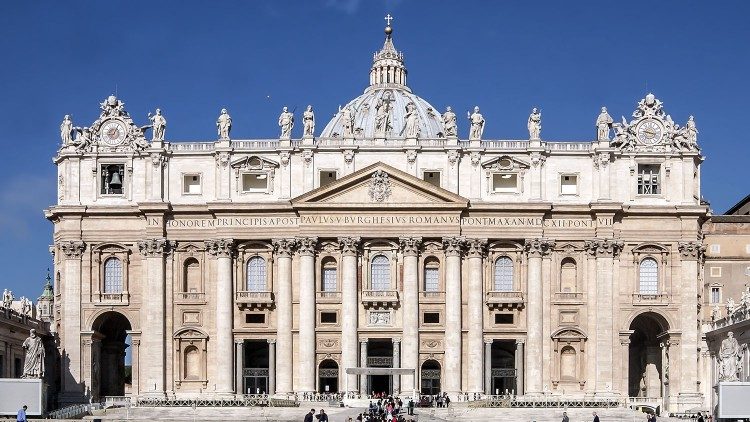
A view of St. Peter's BasilicaA view of St. Peter's Basilica 

Pope confirms ‘Vos estis lux mundi’ procedures against abuse

Pope Francis promulgates an updated version of the Church’s norms to prevent and counter sexual abuse against minors and vulnerable adults, harmonizing various legislative reforms introduced since 2019 and extending the norms to cover lay leaders of international associations of the faithful recognized by the Holy See.

By Vatican News

Following nearly four years of experimentation and extensive consultation with bishops and the Dicasteries of the Roman Curia, Pope Francis has definitively promulgated procedures to prevent and counter sexual abuse within the Catholic Church.

The updated version of the motu proprio Vos estis lux mundi was published on Saturday, and enters into force on 30 April. It replaces the previous version published in May 2019, and confirms the Church’s desire to continue to combat crimes of sexual abuse.

Leaders of lay associations

The most significant change introduced in the new version of the normative text concerns the provisions in "Title II" which lay out the responsibilities of bishops, religious superiors, and clerics in charge of a particular Church or Prelature.

The updated text specifies that “the lay faithful who are or have been moderators of international associations of the faithful recognized or created by the Apostolic See [are responsible] for acts committed" while they were in office.

Various other modifications were introduced to harmonize the procedural text against abuse with other normative reforms introduced between 2019 and the present. These include the revision of the motu proprio Sacramentorum sanctitatis tutela (norms amended in 2021), changes made to Book VI of the Code of Canon Law (2021 reform), and the new Constitution on the Roman Curia Praedicate Evangelium (promulgated in 2022).

Vulnerable adults and abuse reporting

One notable modification regards the inclusion of "vulnerable" adults in the normative text.

The previous version referred to "sexual acts with a minor or a vulnerable person". However, the updated text speaks of "a crime against the Sixth Commandment of the Decalogue committed with a minor, or with a person who habitually has an imperfect use of reason, or with a vulnerable adult."

Another change concerns the protection of the person who submits a report of alleged abuse.

Whereas the earlier text stated that no constraint of silence may be imposed on the person who reports alleged abuse, this protection has now been extended to "the person who claims to have been offended and those who were witnesses."

Additionally, the text strengthens calls to safeguard "the legitimate protection of the good name and privacy of all persons involved," as well as the presumption of innocence for those who are under investigation during the period in which determinations of responsibility are underway.

The updated version of Vos estis lux mundi also specifies that dioceses and eparchies must operate an "organisation or office" (the earlier version spoke in general about a "stable system") which is easily accessible to the public in order to receive reports of cases of abuse.

It also clarifies that the task of proceeding with the investigation lies under the responsibility of the bishop or Ordinary of the place where the reported events allegedly took place.

Abuse of authority

The procedures introduced in 2019 set out precise guidelines on how to deal with reports of abuse and ensure that bishops and religious superiors—who now including lay people with responsibility for international associations—are held accountable and are obliged through a universally-established legal precept to report abuse of which they have become aware.

The document includes, and continues to include, not only abuse and violence against children and vulnerable adults, but also covers sexual violence and harassment resulting from the abuse of authority.

Therefore, the obligation to report also includes cases of violence against religious women by clerics, as well as cases of harassment of adult seminarians or novices.