Thursday, December 28, 2017

From Crux: The state of the Church in America in the time of President Trump

U.S. Church in 2017: Tension in the time of Trump

U.S. Church in 2017: Tension in the time of Trump
New York Cardinal Timothy M. Dolan delivers the invocation before U.S. President-elect Donald Trump's swearing-in as the country's 45th president at the U.S. Capitol in Washington. (Credit: CNS photo/Carlos Barria, Reuters.)
Part one of Crux's look back at life in the U.S. Church during 2017.
[Editors note: This is part one of Crux national correspondent Christopher White’s look back at the U.S. Church in 2017. In part two tomorrow, he examines the often overshadowed pastoral developments of Church life during the last 12 months.]
NEW YORK - When Cardinal Timothy Dolan, Archbishop of New York, offered a prayer at the inauguration of President Donald Trump last January, he stressed that his role at the event was not political, but rather, pastoral.
“Many people may have reservations of the president-elect and I certainly do, as with any incoming president,” Dolan told reporters before the inauguration. “But in the great American tradition, we look at the time of an incoming president as a time of hope … a way to give a man a chance and try to fulfill some of the promises he made.”
While the campaign promises made by candidate Trump were a source of great joy to the U.S. Catholic bishops during the first few weeks of his presidency, the rest of 2017 - with a few notable exceptions - would be marked by serious tensions between the administration and the hierarchy of the U.S. Church.

“Life is winning in America”

Within two weeks of taking office, Trump took executive action and reinstated the Mexico City Policy, a move that banned giving U.S. tax dollars to groups who perform or support abortion overseas. The day after the Mexico City Policy was reinstated, the House of Representatives punctuated that decision by passing legislation known as the No Taxpayer Funding for Abortion Act, which aimed to make the Hyde Amendment permanent.
The Hyde Amendment prohibits tax dollars from paying for abortion except in cases of rape, incest or threat to the life of the mother, and has been a traditional part of the annual budget approval process for over forty years.
In a historic first, Vice President Mike Pence spoke at the rally prior to the annual March for Life, which is timed to coincide with the anniversary of the Supreme Court’s decision in Roe v. Wade, which established a legal right to abortion in the United States. Pence, who was sent by the president, boasted of the administration’s recent pro-life victories and announced, “life is winning in America, and today is a celebration of that progress.”
Three months later, the confirmation of Justice Neil Gorsuch to the United States Supreme Court, was widely viewed as the president making good on his campaign promise to appoint a “pro-life justice” in the mold of the late Antonin Scalia, with the hope of eventually overturning the court’s 1973 decision in Roe.

“A sense of indifference and cruelty” 

On the same day that nearly half a million individuals gathered in Washington, D.C. for the March for Life, the Trump administration issued the first version of its travel ban which targeted individuals from seven Muslim-majority countries, barring their admission into the United States - and the U.S. Catholic bishops fired back with the first of many statements on the matter.
“We strongly disagree with the Executive Order’s halting refugee admissions. We believe that now more than ever, welcoming newcomers and refugees is an act of love and hope,” they wrote. “Given this extraordinary level of suffering, the U.S. Catholic Bishops will redouble their support for, and efforts to protect, all who flee persecution and violence, as just one part of the perennial and global work of the Church in this area of concern.”
If tensions over religious liberty had defined the relationship between the U.S. bishops and the Obama administration, by the end of January it was evident that immigration would be the defining issue of marked differences between the Trump administration and the Catholic Church.
At the World Meeting for Popular Movements in Modesto, California, in February, Archbishop José Gomez of Los Angeles denounced “the sense of indifference and cruelty that seems to be coming out of this new administration in Washington.”
Gomez, who was born in Mexico but is a naturalized U.S. citizen, spoke about the concerns of the many immigrants who make up his archdiocese and their fears of deportation in light of the Trump presidency.
“They are playing with people’s emotions and toying with people’s lives and futures, and that’s not right,” Gomez said of the administration.
At that same meeting, Bishop Robert McElroy of San Diego made headlines when he said “President Trump was the candidate of disruption,” and then went on to call on those in attendance to become both “disruptors” and “rebuilders of solidarity.”
In March, Cardinal Joseph Tobin of Newark, New Jersey, also received national attention when he accompanied an undocumented grandfather of four to his deportation hearing. He used the occasion to call for comprehensive immigration reform, arguing that “the enforcement of the broken immigration system is capricious and unjust.”

Contraception coverage and a “common sense” compromise  

In May, President Trump held a White House Rose Garden ceremony where he signed an executive order on religious freedom meant to end the standoff between the government and religious groups over the Obama Administration’s HHS contraception mandate.
“We will not allow people of faith to be targeted, bullied or silenced anymore,” said the president as he spotlighted the Little Sisters of the Poor who had become the public face of the battle over religious liberty after their case came before the Supreme Court over the HHS mandate.
Yet following the public ceremony, the U.S. bishops waited for five months - with visible annoyance - for the executive order to result in a new rule regarding the mandate.
In October - after months of promises and continued pressure from religious liberty advocacy groups - the Trump administration announced a new rule that ended the requirement for employers to provide birth control coverage in their health insurance plans if it violated “sincerely held religious beliefs.”
While the new rule is now facing challenges in court, the U.S. bishops praised the move as “good news for all Americans” and “a return to common sense, long-standing federal practice, and peaceful coexistence between church and state.”

DACA and the need for a “prophetic witness”

Despite the flurry of events that have engaged the U.S. bishops over the past year - including battles over tax reform, the federal budget, and the aforementioned efforts over life and religious liberty, the defining issue of the past year comes down to one four letter word, or - more precisely - an acronym: DACA.
In September, Attorney General Jeff Sessions announced the Trump administration would move to end the DACA program, which protects qualified immigrants who arrived in the country as minors from deportation. In an interview with Crux on the day of the decision, Dolan said the bishops felt the need “to be prophetic on this issue,” and over the past four months there’s been no shortage of statements and press conferences to make it abundantly clear that the bishops are a united front on this matter.
When former White House senior strategist Steve Bannon attempted to caricature the bishops’ support for immigrants and the DACA program as one of self-interest, the head communications officer for the USCCB fired back in a public statement labeling the remarks as “outrageous and insulting.”
At the annual fall gathering of the U.S. bishops in Baltimore this past November, immigration - and the issue of DACA, specifically - took center stage. Following the three-day meeting, USCCB president Cardinal Daniel DiNardo released a Thanksgiving message where he offered a particular plea for the protection of migrants and refugee families.
While over fifteen percent of the statements released by the USCCB over the past year have related to the issue of immigration, DACA remains the most pressing issue for the U.S. bishops as it enters into 2018.
In that same Thanksgiving statement, DiNardo summarized the fall meeting of the U.S. bishops by noting “My brothers expressed a shared and ever-greater sense of alarm-and urgency to act-in the face of policies that seemed unthinkable only a short time ago.”
As 2017 comes to a close, only one conclusion seems clear: those “unthinkable” policies will remain a source of frustration and friction for the foreseeable future.

So how is Christmas going, remembering Christmas is still underway

Today, the 4th day of Christmas, and the Feast of the Holy Innocents, is a great day for me to reflect.  You see I'm home today as I rebound from a morning colonoscopy which turned out to be great news!  You can imagine how tired I am because for the uninitiated you don't get much sleep the night before.  Also, a colonoscopy does require anesthesia and to that I say thank God.  In an indirect way this procedure was necessary post appendix removal surgery as recommended by my surgeon.  But past history also indicated I should have one and now I can scratch this off the list.

The occasion of my appendix event has also brought on a new approach and new attitude to getting healthy.  As many of you know I am a type 2 diabetic and have had other challenges over time so getting healthier is a great idea.  I shared on Facebook yesterday that I have lost 24 lbs. since the appendix removal and 44 lbs. since April.  That's a good thing.  And both my blood sugar and A1C are coming way down from there scary highs of just a few months past.

So today I reflect and pose the question how is your Christmas going?  How are you planning to celebrate the fullness of Christmas which does not end for quite some time yet?  And when you answer these questions is your barometer as the world measures or as our faith life should measure?

Spending time with family, spending time at Church throughout the season; these are good measurements.  These are better than how many gifts did you buy, how much money did I spend, how many family members and friends did I try to accommodate, etc.?  I think it can be hard for many of us to allow the Christmas season, with all it's faith and liturgical traditions, to be our guide.  I for one embrace Advent all the way to Christmas Eve in the afternoon.  Now that does not mean my wife and I don't put up the tree or the lights on the porch and we even might shop some before Advent ends.  But our focus, all the way to December 24th in the afternoon is Advent.  I mention the afternoon, either with Evening Prayer I of Christmas or the assisting as a Deacon at one of the Christmas anticipatory Masses is when I usher in Christmas.  Some of you still might hold on to the tradition of Midnight Mass although finding one that actually starts at Midnight is harder and harder. This year at our parish the Mass of the night was offered in the Extraordinary Form a.k.a. the Latin Mass.  I almost always have an assignment on Christmas morning and this year that was the 8 a.m. Mass.  After an exchange of gifts before more family arrives we have a big Christmas lunch and mostly my family comes in for the event, illnesses this year kept several people away.  On Christmas night, usually in some form of prayer, I remind myself about the need to keep celebrating Christmas because it is far from over as the 25th gives way to the 26th.  I hope none of you view Christmas night as a time to take down the tree and box up all the Christmas decorations.  One of the things I used to hate to see was the neighbors tree at the curb tossed aside for the garbage truck.  In good faith-filled Catholicism, that can never happen.

So here comes Day 2 of Christmas which in my world means Wendy's birthday.  Yes my wife has a birthday on the day after Christmas.  And yes, if it is a weekday, I have to go to work.  Since I entered formation for the diaconate and certainly since becoming a Deacon the 26th also means the celebration of the Feast of St. Stephen.  In our Archdiocese all the Permanent Deacons are invited to gather together for Mass and fellowship and we have attended in the past, but sometimes we just do Happy birthday things for Wendy.  This year I was slated to preach at the regular morning Mass this day at St. Jane's which turned into a Communion Service.  I'm just glad I was able to accommodate.  And we prayed that our Priests got to feeling better soon.

And then the season continues as the Octave continues and soon the focus of the secular world shifts to New Years, more specifically the eve of New Year.  In fact, as Catholics, we remember that it is still Christmas and carols sung, decorations up and the salutation Merry Christmas are still all appropriate.  I still have no solid plans for things like ringing in the New Year but I do have the opportunity to preach at three Masses for the weekend's Feast of the Holy Family.  I also hope to take in the Latin Mass for January 1st.  And guess what?  After New Years Day, it's still Christmas.  Yes, the Octave is over but the season continues, all the way to the Feast of the Baptism of the Lord.  Then, and maybe then, the tree comes down, the boxes packed and put away and we say farewell to the Christmas season, although many celebrate to February 2nd.

So how is Christmas going?  Has it been an opportunity to experience and give great love, to demonstrate and receive abundant kindness?  I sure hope so.  Has it been a time of profound prayer and deep reflection?  For some of us it will be a time of struggle and even despair, do you know that there are others praying for you and willing to help you?  Never be afraid to express that need or simply apply for help.

I hope tonight you turn the lights on the tree, light a fire, spend time with someone you love, send a prayer in thanksgiving for this gift of the Christmas season.  Heck, play some Christmas music or watch a Christmas movie.

Hey world, Christmas is still underway!


Pope Francis expresses full support and confidence in Honduran Cardinal

Pope Calls Card. Maradiaga: ‘Sorry for the Harm They Have Done to you’
Cardinal Denies Financial Issues Raised by Italian Newspaper

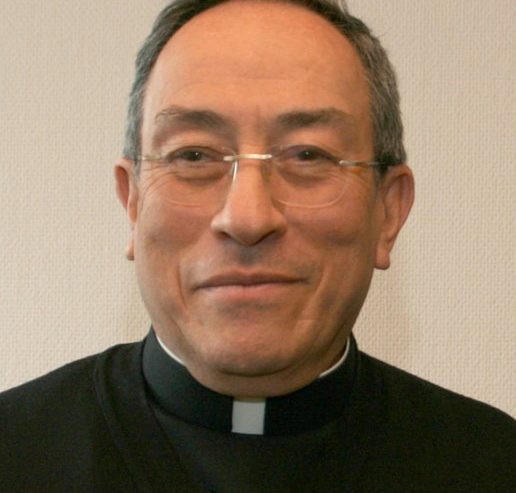
Card. Oscar Rodriguez Maradiaga @ Wikimedia Commons - Gabriele Merk
Pope Francis spoke via telephone with Cardinal Óscar Andrés Rodríguez Maradiaga, Archbishop of Tegucigalpa, following allegations that the Cardinal had inappropriately used monies received by the archdiocese from Catholic University of Honduras.  According to Vatican News, the pope expressed his regret for the harm done to the Cardinal, who denies the allegations.
“I am sorry for the harm they have done to you,” said Pope Francis to Cardinal during the call. “Do not worry.”  The Cardinal replied, “Holiness, I am at peace – at peace because I am with the Lord Jesus who knows everyone’s heart.”
The charges were reported in an Italian weekly, which resurrected them from a Honduran pamphlet that was discredited about a year ago, ZENIT’s French edition reported on December 23, 2017.
The Cardinal stated that this is old news, already disseminated in 2016, anonymously by a former employee of the University dismissed for the dishonest administration of the institute’s funds.
Asked about this on Friday, December 22, 2017, the director of the Vatican press room, Greg Burke, confirmed that there was “a personal investigation in person by the Holy Father”, without specifying on what or the result.
The allegations related to the use of “large sums of money” received from the university, of which the Cardinal is Chancellor. In an interview given to Suyapa TV, a television channel of the Church of Honduras, the Cardinal forcefully defined the allegations as calumnious.
The Cardinal explained that the money received by the archdiocese from the university is not used for personal purposes, but to help the poor, give healthcare to the needy, and to support priests in rural parishes. He suggested that the attack on him came from those who are opposed to the Pope’s Church reforms.
Cardinal Maradiaga is also the coordinator of the Council of Cardinals, the “C9” which assists the pope in the government of the Church and the reform of the Roman Curia.

Wednesday, December 27, 2017

The 4th Day of Christmas gives us the Feast of the Holy Innocents

Holy Innocents

The children mentioned in St. Matthew 2:16-18 :
Herod perceiving that he was deluded by the wise men, was exceeding angry ; and sending killed all the men children that were in Bethlehem, and in all the borders thereof, from two years old and under, according to the time which he had diligently inquired of the wise men. Then was fulfilled that which was spoken by Jeremias the prophet, saying: A voice in Rama was heard, lamentation and great mourning; Rachel bewailing her children, and would not be comforted, because they are not.
The Greek Liturgy asserts that Herod killed 14,000 boys ( ton hagion id chiliadon Nepion ), the Syrians speak of 64,000, many medieval authors of 144,000, according to Apoc., xiv, 3. Modern writers reduce the number considerably, since Bethlehem was a rather small town. Knabenbauer brings it down to fifteen or twenty (Evang. S. Matt., I, 104), Bisping to ten or twelve (Evang. S. Matt.), Kellner to about six (Christus and seine Apostel, Freiburg, 1908); cf. "Anzeiger kath. Geistlichk. Deutschl.", 15 Febr., 1909, p. 32. This cruel deed of Herod is not mentioned by the Jewish historian Flavius Josephus, although he relates quite a number of atrocities committed by the king during the last years of his reign. The number of these children was so small that this crime appeared insignificant amongst the other misdeeds of Herod. Macrobius (Saturn., IV, xiv, de Augusto et jocis ejus) relates that when Augustus heard that amongst the boys of two years and under Herod's own son also had been massacred, he said: "It is better to be Herod's hog [ ous ], than his son [ houios ]," alluding to the Jewish law of not eating, and consequently not killing, swine. The Middle Ages gave faith to this story; Abelard inserted it in his hymn for the feast of Holy Innocents:
Ad mandatum regis datum generale
nec ipsius infans tutus est a caede.
Ad Augustum hoc delatum risum movit,
et rex mitis de immiti digne lusit:
malum, inquit, est Herodis esse natum.
prodest magis talis regis esse porcum.
(Dreves, "Petri Abaelardi Hymnarius Paracletensis", Paris, 1891, pp. 224, 274.)
But this "infant" mentioned by Macrobius, is Antipater, the adult son of Herod, who, by command of the dying king was decapitated for having conspired against the life of his father.
It is impossible to determine the day or the year of the death of the Holy Innocents, since the chronology of the birth of Christ and the subsequent Biblical events is most uncertain. All we know is that the infants were slaughtered within two years following the apparition of the star to the Wise Men (Belser, in the Tübingen "Quartalschrift", 1890, p. 361). The Church venerates these children as martyrs ( flores martyrum ); they are the first buds of the Church killed by the frost of persecution ; they died not only for Christ, but in his stead (St. Aug., "Sermo 10us de sanctis"). In connection with them the Apostle recalls the words of the Prophet Jeremias (xxxi, 15) speaking of the lamentation of Rachel. At Rama is the tomb of Rachel, representative of the ancestresses of Israel. There the remnants of the nation were gathered to be led into captivity. As Rachel, after the fall of Jerusalem, from her tomb wept for the sons of Ephraim, so she now weeps again for the men children of Bethlehem. The ruin of her people, led away to Babylon, is only a type of the ruin which menaces her children now, when the Messias is to be murdered and is compelled to flee from the midst of His own nation to escape from the sword of the apparitor. The lamentation of Rachel after the fall of Jerusalem receives its eminent completion at the sight of the downfall of her people, ushered in by the slaughter of her children and the banishment of the Messias.
The Latin Church instituted the feast of the Holy Innocents at a date now unknown, not before the end of the fourth and not later than the end of the fifth century. It is, with the feasts of St. Stephen and St. John, first found in the Leonine Sacramentary, dating from about 485. To the Philocalian Calendar of 354 it is unknown. The Latins keep it on 28 December, the Greeks on 29 December, the Syrians and Chaldeans on 27 December. These dates have nothing to do with the chronological order of the event; the feast is kept within the octave of Christmas because the Holy Innocents gave their life for the newborn Saviour. Stephen the first martyr ( martyr by will, love, and blood), John, the Disciple of Love ( martyr by will and love ), and these first flowers of the Church (martyrs by blood alone) accompany the Holy Child Jesus entering this world on Christmas day . Only the Church of Rome applies the word Innocentes to these children; in other Latin countries they are called simply Infantes and the feast had the title "Allisio infantium" (Brev. Goth.), "Natale infantum", or "Necatio infantum". The Armenians keep it on Monday after the Second Sunday after Pentecost (Armenian Menology, 11 May), because they believe the Holy Innocents were killed fifteen weeks after the birth of Christ.
In the Roman Breviary the feast was only a semi-double (in other breviaries a minor double) up to the time of Pius V , who, in his new Breviary (1568), raised it to a double of the second class with an octave (G. Schober, "Expl. rit. brev. rom.", 1891, p. 38). He also introduced the two hymns "Salvete flores martyrum" and "Audit tyrannus anxius", which are fragments of the Epiphany hymn of Prudentius. Before Pius V the Church of Rome sang the Christmas hymns on the feast of the Holy Innocents. The proper preface of the Gelasian Sacramentary for this feast is still found in the Ambrosian Missal. We possess a lengthy hymn in honour of the Holy Innocents from the pen of the Venerable Bede, "Hymnum canentes martyrum" (Dreves, "Analecta hymnica") and a sequence composed by Notker, "Laus tibi Christe", but most Churches at Mass used the "Clesa pueri concrepant melodia" ( Kehrein, "Sequenzen", 1873, p. 348). At Bethlehem the feast is a Holy Day of obligation. The liturgical colour of the Roman Church is purple, not red, because these children were martyred at a time when they could not attain the beatific vision. But of compassion, as it were, towards the weeping mothers of Bethlehem, the Church omits at Mass both the Gloria and Alleluia ; this custom, however, was unknown in the Churches of France and Germany. On the octave day, and also when the feast falls on a Sunday, the Roman Liturgy, prescribes the red colour, the Gloria, and the Alleluia. In England the feast was called "Childermas".
The Roman Station of 28 December is at St. Paul's Outside the Walls, because that church is believed to possess the bodies of several of the Holy Innocents. A portion of these relics was transferred by Sixtus V to Santa Maria Maggiore (feast on 5 May; it is a semi-double). The church of St. Justina at Padua, the cathedrals of Lisbon and Milan, and other churches also preserve bodies which they claim to be those of some of the Holy Innocents. In many churches in England, Germany, and France on the feast of St. Nicholas (6 December) a boy-bishop was elected, who officiated on the feast of St. Nicholas and of the Holy Innocents. He wore a mitre and other pontifical insignia, sang the collect, preached, and gave the blessing. He sat in the bishop's chair whilst the choir-boys sang in the stalls of the canons. They directed the choir on these two days and had their solemn procession

During this Christmas Octave there is a feast day of an early Church Pope

St. Pope Dionysius

Image of St. Pope Dionysius

Facts

Feastday: December 26
Death: 268


Pope from 259-268, who rebuilt the Church after the persecution conducted by Emperor Valerian. Dionysius was a Greek who served as a priest in Rome. He was elected pope on July 22, 259, after a year's delay caused by the persecution. In 260, Dionysius defended the doctrine of the Holy Trinity against the heresy of Sabellianism. He also condemned Paul of Samosata for heretical teaching. Dionysius sent large sums of money to Cappadocia, which had been ravaged by the Goths. He rebuilt many areas after Emperor Gallienus issued an edict of toleration of Christians. Dionysius died in Rome, was the first pope not listed as a martyr, and was buried in the cemetery of Callistus.

Papal Wednesday General Audience in the Octave of Christmas

Christmas Is About Jesus, Otherwise It Is Fake, Pope Says
At General Audience, Francis Also Explains Why We Exchange Gifts on Christmas

© L'Osservatore Romano
The birth of Jesus is the greatest gesture of love of our Father in Heaven, and therefore, we must resist attempts to distort Christmas which detract from its meaning.
Pope Francis stressed this during this morning’s General Audience in the Vatican’s Paul VI Hall, Dec. 27, 2017, as he discussed the significance of Christmas, which in these days we are living in faith and in celebrations.
The Pope began mentioning that the construction of the nativity scene and the readings and traditional songs, have made those present with him for the General Audience hall relive today, the day in which Christ, the Lord, was born.
Warning: Distortion
In our time, especially in Europe, the Pope said, we witness a sort of “distortion” of Christmas.
“In the name of a false respect that is not Christian, which often hides the will to marginalize the faith,” Francis continued, “it eliminates from the celebration any reference to the birth of Jesus. But, in fact, this event is the only true Christmas!”
“Without Jesus there is no Christmas,” the Pope decried, “there is another party, but not Christmas.”
If Christ is in the center, then also the whole celebration, the lights, sounds, various local traditions, including the characteristic foods, all combine to create the atmosphere of the celebration properly, but only when Jesus is at the center, the Pope underscored.
“If we take away Him, the light goes out and everything becomes fake,” he decried.
Seeking the True Light
Through the proclamation of the Church, the Pope encouraged, we, like the shepherds of the Gospel, are guided to seek and find the true light, that of Jesus Who, made man like us, shows himself in a surprising way: born of a poor unknown young girl, who gives birth to Him in a stable, with only the help of her husband.
“The world does not notice anything, but in heaven the angels who know exult!” he said.
This, he pointed out, is how the Son of God presents himself to us today: as the gift of God for humanity who is immersed in the night and in the torpor of sleep.
“And even today we are witnessing the fact that humanity often prefers darkness because it knows that light would reveal all those actions and thoughts that would make the conscience blush or tarnish. Thus, we prefer to stay in the dark and not upset their bad habits.”
The True Gift, and Why We Exchange Gifts
Pope Francis then asked all faithful to ask themselves what it means to accept the gift of God that is Jesus. “As He Himself taught us with His life,” the Pope said, “it means becoming a free gift for those who meet on their own path every day.”
“That’s why at Christmas they exchange gifts,” Francis said, noting: The true gift for us is Jesus, and like him we want to be a gift for others. And since we want to be a gift to others, we exchange gifts, as a sign, as a sign of this attitude that Jesus teaches us: He, sent by the Father, was a gift for us, and we are gifts for others.”
The Pope recalled a passage from the Apostle St. Paul he finds especially important:  “The grace of God appeared, bringing salvation to all people and teaching us to live in this world with sobriety, with justice and piety “(Titus 2: 11-12). The grace of God ‘appeared’ in Jesus, the face of God, which the Virgin Mary gave birth to as every child in this world, but who did not come from earth, but from Heaven, from God.”
“In this way, with the incarnation of the Son, God has opened the way for new life, founded not on egoism but on love.”
Greatest Gesture of God
“The birth of Jesus,” Pope Francis declared, “is the greatest gesture of love of our Father in Heaven.”
The Holy Father then turned to one last important aspect. “in Christmas we can see how human history, that moved by the powerful of this world, is visited by the history of God.” Francis reminded how God involves those who, confined to the margins of society, are the first recipients of seeing the great light …and of the gift, namely the Salvation brought by Jesus.
“With these people, with the little ones and the despised ones, Jesus establishes a friendship that continues in time and that nourishes the hope for a better future. To these people, represented by the shepherds of Bethlehem, appeared a great light, which led them straight to Jesus.”
With them, at all times, the Pope reminded, God wants to build a new world, a world in which there are no more people refused, mistreated and destitute.
In These Days
The Holy Father lamented how many people in their life have never experienced a caress, an attention of love, a gesture of tenderness, noting “Christmas urges us to respond.”
Once we do, he explained, Jesus comes to be born again in the life of each one of us and, through us, continues to be a gift of salvation for the little ones and the excluded.
Pope Francis concluded, with the following encouragement: “Dear brothers and sisters, in these days we open our minds and hearts to welcome this grace. Jesus is God’s gift to us and, if we welcome it, we too can become it for others – to be God’s gift to others – first of all for those who have never experienced attention and tenderness.”
The Pope greeted various groups present and also received a circus toward the conclusion of the audience.

Deacon Greg has a great blog on the words of Pope Francis regarding the Holy Family as refugees; wow, lok at the words of Pope Benedict and Pius XII

he Holy Family as refugees? Yes.
Antoine Mekary | ALETEIA

There’s been some critical commentary over the last couple days, regarding Pope Francis’s homily on Christmas, which compared the Holy Family to modern-day refugees.
It’s worth remembering that he’s not the first pope to make this comparison.
Some examples:
“The émigré Holy Family of Nazareth, fleeing into Egypt, is the archetype of every refugee family. Jesus, Mary and Joseph, living in exile in Egypt to escape the fury of an evil king, are, for all times and all places, the models and protectors of every migrant, alien and refugee of whatever kind who, whether compelled by fear of persecution or by want, is forced to leave his native land, his beloved parents and relatives, his close friends, and to seek a foreign soil.” — Pope Pius XII, Exsul Familia Nazarethana
+
“In this misfortune experienced by the Family of Nazareth, obliged to take refuge in Egypt, we can catch a glimpse of the painful condition in which all migrants live, especially, refugees, exiles, evacuees, internally displaced persons, those who are persecuted. We can take a quick look at the difficulties that every migrant family lives through, the hardships and humiliations, the deprivation and fragility of millions and millions of migrants, refugees and internally displaced people. The Family of Nazareth reflects the image of God safeguarded in the heart of every human family, even if disfigured and weakened by emigration.” — Pope Benedict XVI, Message for World Day of Migrants and Refugees, 2007 
+
“This Sunday is World Day of Migrants and Refugees, which every year invites us to reflect on the experience of numerous men and women and a great many families who leave their homeland in search of a better standard of living. Migration is sometimes voluntary and at other times, unfortunately, is forcefully imposed by war or persecution and often happens — as we know — in dramatic circumstances. The Office of the United Nations High Commissioner for Refugees (UNHCR) was set up 60 years ago for this reason. On the Feast of the Holy Family, straight after Christmas, we recalled that Jesus’ parents were also obliged to flee from their country and seek refuge in Egypt, to save the life of their Child: the Messiah, the Son of God was a refugee.”—Pope Benedict XVI, Angelus, January 16, 2011.
+
“So many other footsteps are hidden in the footsteps of Joseph and Mary. We see the tracks of entire families forced to set out in our own day. We see the tracks of millions of persons who do not choose to go away but, driven from their land, leave behind their dear ones. In many cases this departure is filled with hope, hope for the future; yet for many others this departure can only have one name: survival. Surviving the Herods of today, who, to impose their power and increase their wealth, see no problem in shedding innocent blood. Mary and Joseph, for whom there was no room, are the first to embrace the One who comes to give all of us our document of citizenship. The One who in his poverty and humility proclaims and shows that true power and authentic freedom are shown in honoring and assisting the weak and the frail.”—Pope Francis, Christmas homily 2017

Tuesday, December 26, 2017

In the Octave of Christmas, the feast day of the youngest Apostle, Gospel writer, friend of Jesus

St. John the Evangelist

Image of St. John the Evangelist

Facts

Feastday: December 27


Saint John the Divine as the son of Zebedee, and his mother's name was Salome [Matthew 4:21, 27:56; Mark 15:40, 16:1]. They lived on the shores of the sea of Galilee. The brother of Saint John, probably considerably older, was Saint James. The mention of the "hired men" [Mark 1:20], and of Saint John's "home" [John 19:27], implies that the condition of Salome and her children was not one of great poverty.
SS. John and James followed the Baptist when he preached repentance in the wilderness of Jordan. There can be little doubt that the two disciples, whom Saint John does not name (John 1:35), who looked on Jesus "as he walked," when the Baptist exclaimed with prophetic perception, "Behold the Lamb of God!" were Andrew and John. They followed and asked the Lord where he dwelt. He bade them come and see, and they stayed with him all day. Of the subject of conversation that took place in this interview no record has come to us, but it was probably the starting-point of the entire devotion of heart and soul which lasted through the life of the Beloved Apostle.
John apparently followed his new Master to Galilee, and was with him at the marriage feast of Cana, journeyed with him to Capernaum, and thenceforth never left him, save when sent on the missionary expedition with another, invested with the power of healing. He, James, and Peter, came within the innermost circle of their Lord's friends, and these three were suffered to remain with Christ when all the rest of the apostles were kept at a distance [Mark 5:37, Matthew 17:1, 26:37]. Peter, James, and John were with Christ in the Garden of Gethsemane. The mother of James and John, knowing our Lord's love for the brethren, made special request for them, that they might sit, one on his right hand, the other on his left, in his kingdom [Matthew 20:21]. There must have been much impetuosity in the character of the brothers, for they obtained the nickname of Boanerges, Sons of Thunder [Mark 3:17, see also Luke 9:54]. It is not necessary to dwell on the familiar history of the Last Supper and the Passion. To John was committed by our Lord the highest of privileges, the care of his mother [John 19:27]. John [the "disciple whom Jesus loved"] and Peter were the first to receive the news from the Magdalene of the Resurrection [John 20:2], and they hastened at once to the sepulchre, and there when Peter was restrained by awe, John impetuously "reached the tomb first."
In the interval between the Resurrection and the Ascension, John and Peter were together on the Sea of Galilee [John 21:1], having returned to their old calling, and old familiar haunts.
When Christ appeared on the shore in the dusk of morning, John was the first to recognize him. The last words of the Gospel reveal the attachment which existed between the two apostles. It was not enough for Peter to know his own fate, he must learn also something of the future that awaited his friend. The Acts show us them still united, entering together as worshippers into the Temple [Acts 3:1], and protesting together against the threats of the Sanhedrin [Acts 4:13]. They were fellow-workers together in the first step of Church expansion. The apostle whose wrath had been kindled at the unbelief of the Samaritans, was the first to receive these Samaritans as brethren [Luke 9:54, Acts 8:14].
He probably remained at Jerusalem until the assumption of the Virgin, though tradition of no great antiquity or weight asserts that he took her to Ephesus. When he went to Ephesus is uncertain. He was at Jerusalem fifteen years after Saint Paul's first visit there [Acts 15:6]. There is no trace of his presence there when Saint Paul was at Jerusalem for the last time.
Tradition, more or less trustworthy, completes the history. Irenaeus says that Saint John did not settle at Ephesus until after the death SS. Peter and Paul, and this is probable. He certainly as not there when Saint Timothy was appointed bishop of that place. Saint Jerome says that he supervised and governed all the Churches of Asia. He probably took up his abode finally in Ephesus in 97. In the persecution of Domitian he was taken to Rome, and was placed in a cauldron of boiling oil, outside the Latin gate, without the boiling fluid doing him any injury. [Eusebius makes no mention of this. The legend of the boiling oil occurs in Tertullian and in Saint Jerome]. He was sent to labor at the mines in Patmos. At the accession of Nerva he was set free, and returned to Ephesus, and there it is thought that he wrote his gospel. Of his zeal and love combined we have examples in Eusebius, who tells, on the authority of Irenaeus, that Saint John once fled out of a bath on hearing that Cerinthus was in it, lest, as he asserted, the roof should fall in, and crush the heretic. On the other hand, he showed the love that was in him. He commended a young man in whom he was interested to a bishop, and bade him keep his trust well. Some years after he learned that the young man had become a robber. Saint John, though very old, pursued him among the mountain fastnesses, and by his tenderness recovered him.
In his old age, when unable to do more, he was carried into the assembly of the Church at Ephesus, and his sole exhortation was, "Little children, love one another."
The date of his death cannot be fixed with anything like precision, but it is certain that he lived to a very advanced age. He is represented holding a chalice from which issues a dragon, as he is supposed to have been given poison, which was, however, innocuous. Also his symbol is an eagle.

My St Stephen Feast Day Surprise

I love December 26th; first of all it is my wife Wendy's birthday and it is also the Feast of St. Stephen, a patronal feast day for all Deacons.  Since becoming part of the diaconate family, way back in formation, I have tried to participate in the Mass and social for all Deacons in the Archdiocese of New Orleans.  Now I have not made them all as sometimes it's better to take Wendy out for her birthday or sometimes work gets in the way.  I knew for a few days now that I would not be venturing south of the lake to participate in this years events.  So I planned to attend Mass today and even received permission from the pastor to preach for such important a feast day for Deacons.

Well, I arrived this morning, ready to assist and everything was ok except no Priest.  The long and the short of it is the Pastor was away for a post Christmas engagement and the other Priest was down with an illness, sick enough to not make Mass.  There was no other alternative, Deacon Mike needed to offer a Communion Service.  I made sure the tabernacle had sufficient Eucharist, made an announcement to the gathered crowd and proceeded to lead the prayers.  We still had singing, I preached a homily on the importance of this feast day in the Octave of Christmas, we prayed for our ill Priest, everyone received Jesus in Holy Communion.

For me, the opportunity to provide this service today on the Feast of St. Stephen was an awesome moment in my diaconate ministry.

St. Stephen, deacon & martyr, pray for us!