Showing posts with label Sacred Heart of Jesus. Show all posts

Monday, June 29, 2026

The Relics of St. Margaret Mary Alacoque in United States thanks to Knights of Columbus


Sacred Heart visionary’s relics travel US amid nation’s 250th anniversary


People venerate the major relics of St. Margaret Mary Alacoque at St. James Cathedral in Orlando, Fla., June 12, 2026. The Knights of Columbus brought the relics of the French Visitation nun and mystic to the United States for a multi-city tour. The saint experienced visions of Jesus revealing his Sacred Heart. (OSV News photo/Paul Haring, Knights of Columbus)

The relics of the French nun to whom Christ revealed his Sacred Heart will be available for public veneration in the U.S. at a number of locations, as the nation – newly consecrated to the Sacred Heart – marks its 250th anniversary.

The Knights of Columbus announced June 23 that major relics of St. Margaret Mary Alacoque will travel to Washington and Baltimore from June 29 through July 5.

The relics – which include the saint’s clavicles, two of her ribs and a small piece of her brain – arrived in the U.S. in early June, ahead of the U.S. Conference of Catholic Bishops’ formal consecration of the nation to the Sacred Heart during their annual spring plenary assembly in Orlando, Florida.

The lay leader of the Knights of Columbus in France, Arnaud Bouthéon, personally supervised the relics’ transatlantic transfer from the Chapel of the Apparitions at the Monastery of the Visitation in Parais-le-Monial, where they are housed along with a wax effigy of the 17th-century saint’s body.

Between 1673 and 1675, the Visitation nun experienced visions of Christ showing his Sacred Heart and calling on humanity to experience his love, mercy and tenderness.

The devotion – with roots in Scripture and patristic writings, and widely extolled by a number of popes – spread through the efforts of St. Claude La Colombière, the Jesuit confessor of St. Margaret Mary Alacoque, and the Society of Jesus.

The saint’s relics were on display from June 24-27 at the Blessed Michael McGivney Pilgrimage Center in New Haven, Connecticut.

From June 29 through July 4, the relics will be available for public veneration at the St. John Paul II National Shrine in Washington. Access hours vary slightly during that time, with the relics on public display from 10:30 a.m. to 3:30 p.m. June 29-July 1, and from 10 a.m. to 5 p.m. July 2-4.

From July 5-6, the relics will be available at Baltimore’s Basilica of the National Shrine of the Assumption of the Blessed Virgin Mary. Public veneration will begin with a 10:30 a.m. Mass on July 5 celebrated by Archbishop William E. Lori of Baltimore, and will last until 7 p.m. that day. On July 6, the relics will be available from 7 a.m. to 1 p.m. at the basilica.

Following public veneration in Baltimore, the relics will return to the Blessed Michael McGivney Center for viewing July 8-11 and July 15-18 from 10 a.m. to 4 p.m.

The relics are scheduled to be transported to Denver Aug. 1-6 for the Knights of Columbus’ annual convention, after which they will return to the center in New Haven for public veneration Sept. 25-27.

Saturday, June 13, 2026

Reviewing the Consecration of USA to Sacred Heart of Jesus on June 11th by the Bishops of the United States


Hundreds of US Catholic Bishops celebrate Mass in OrlandoHundreds of US Catholic Bishops celebrate Mass in Orlando 

Catholic Bishops consecrate USA to Sacred Heart of Jesus

Ahead of the 250th anniversary of the signing of the Declaration of Independence, US Catholic Bishops gather in Florida to consecrate the United States to the Sacred Heart of Jesus.

By Jenny Kraska*

On June 11, 2026, on the eve of the 250th anniversary of the founding of the United States, the Catholic Bishops of the nation gathered in Orlando, Florida for a remarkable and deeply symbolic act: the consecration of the United States to the Sacred Heart of Jesus.

At a time when political divisions run deep, institutions face declining trust, and many Americans express uncertainty about the future, the Bishops offered something that was neither a policy proposal nor a politician platform.

Instead, they offered a prayer. Yet this was no ordinary prayer.

Consecration is among the Church’s most profound spiritual acts. To consecrate is to entrust, to place oneself under the loving protection of Christ. It is an acknowledgment that, despite all human achievements and failures, history ultimately belongs to God.

In his homily for the occasion, Archbishop William E. Lori of Baltimore captured the meaning of the moment with clarity and conviction.

tanding before his brother Bishops and the faithful gathered for the liturgy, he explained that the Church was not gathering “first to celebrate ourselves, but to consecrate. To entrust.” Those simple words provided the key to understanding the significance of the day.

An Act of Faith

Archbishop Lori reminded the faithful that consecration is fundamentally an act of faith. It recognizes that the story of a nation is not merely the story of political leaders, military victories, economic accomplishments, or cultural achievements. It is also the story of God’s providence and grace at work through imperfect people.

As the United States approaches its Semiquincentennial, there will be no shortage of celebrations, commemorations, and historical reflections.

Yet the Bishops chose to begin this anniversary year not with triumphalism but with humility.

“We consecrate our nation,” Archbishop Lori said, “not because it is perfect, but because it is beloved by God.”

Those words offer a distinctly Christian vision of patriotism. Love of country does not require blindness to its faults. Genuine love seeks what is good, acknowledges what is broken, and entrusts both to the mercy of God.

The consecration therefore became an act of gratitude and repentance, thanksgiving and petition. The Bishops entrusted to the Heart of Christ the nation’s achievements and failures, its strengths and wounds, its hopes and fears.

The Heart of Christ and the Heart of a Nation

Drawing upon the Gospel of John, Archbishop Lori reflected on Jesus’ invitation: “Remain in my love.”

The Sacred Heart, he noted, is not merely a devotional image. It is the visible sign of God’s love made flesh—a Heart that has experienced friendship and betrayal, joy and sorrow, suffering and sacrifice.

The significance of this insight cannot be overstated. In a culture that often prizes autonomy and self-sufficiency, the Bishops publicly acknowledged that neither individuals nor nations can flourish apart from God.

The future of the country ultimately depends not only on stronger institutions or better policies, important as those may be, but on hearts transformed by divine love.

The Sacred Heart reminds believers that God does not stand distant from human struggles. He enters them. He bears them. He redeems them.

Sent Forth to Bear Fruit

Archbishop Lori reminded the faithful that consecration is not an ending but a beginning. The Church does not consecrate itself to the Sacred Heart merely to receive blessings.

It consecrates itself in order to become a more faithful instrument of Christ’s love in the world.

“The Sacred Heart does not divide; it reconciles,” the Archbishop said. “It does not harden hearts; it transforms them.” In a nation increasingly tempted to define itself through ideological conflict and cultural polarization, those words sounded both timely and prophetic. 

The true fruit of this consecration will not be measured by the beauty of the liturgy or the significance of the ceremony.

It will be measured by whether Catholics become more faithful disciples bearing witness to Christ’s love in their families, parishes, workplaces, communities, and public life. 

Trusting the One Whose Love Endures Forever

As the homily drew to a close, Archbishop Lori offered what may be the most enduring lesson of the day. 

As Americans look toward the nation’s 250th anniversary, he suggested that there are two temptations: nostalgia for the past and anxiety about the future.

The Christian answer to both is trust. “Today we choose something better: trust,” he said.

That trust is ultimately what the consecration expressed.

By consecrating the nation to the Sacred Heart, the Bishops did not claim that American is without flaws or that its future is guaranteed.

Rather, they proclaimed a deeper truth: that the nation, like every human person, is loved by God and stands in need of His mercy. On the eve of America’s 250th birthday, that may be the most important message the Church can offer.

* Executive Director, Maryland Catholic Conference

Thursday, June 11, 2026

June 12th is the Solemnity of the Most Sacred Heart of Jesus


Ordinary Time: June 12th

Solemnity of the Most Sacred Heart of Jesus


Catechism of the Catholic Church 478:
"Jesus knew and loved us each and all during his life, his agony and his Passion, and gave himself up for each one of us: "The Son of God. . . loved me and gave himself for me" (Gal 2:20). He has loved us all with a human heart. For this reason, the Sacred Heart of Jesus, pierced by our sins and for our salvation (Cf. Jn 19:34), "is quite rightly considered the chief sign and symbol of that. . . love with which the divine Redeemer continually loves the eternal Father and all human beings" without exception (Pius XII, Enc. Haurietis aquas (1956): DS 3924; cf. DS 3812).

Today is the Solemnity of the Most Sacred Heart of Jesus, designated the Friday after the Second Sunday of Pentecost. Sixteenth century Calvinism and seventeenth century Jansenism preached a distorted Christianity that substituted for God's love and sacrifice of His Son for all men the fearful idea that a whole section of humanity was inexorably damned.

The Church always countered this view with the infinite love of our Savior who died on the cross for all men. The institution of the feast of the Sacred Heart was soon to contribute to the creation among the faithful of a powerful current of devotion which since then has grown steadily stronger. The first Office and Mass of the Sacred Heart were composed by St. John Eudes, but the institution of the feast was a result of the appearances of our Lord to St. Margaret Mary Alacoque in 1675. The celebration of the feast was extended to the General Roman Calendar of the Church by Pius IX in 1856.

The Most Sacred Heart of Jesus
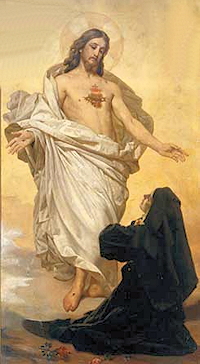
Today we celebrate The Solemnity of the Sacred Heart of Jesus. The Sacred Heart of Jesus is a devotional with long and historic provenance within Christianity, and in modern times has been established as a Solemnity for the universal Church.

Catechism of the Catholic Church 478:
"Jesus knew and loved us each and all during his life, his agony and his Passion, and gave himself up for each one of us: "The Son of God. . . loved me and gave himself for me" (Gal 2:20). He has loved us all with a human heart. For this reason, the Sacred Heart of Jesus, pierced by our sins and for our salvation (Cf. Jn 19:34), "is quite rightly considered the chief sign and symbol of that. . . love with which the divine Redeemer continually loves the eternal Father and all human beings" without exception (Pius XII, Enc. Haurietis aquas (1956): DS 3924; cf. DS 3812).

Today is the Solemnity of the Most Sacred Heart of Jesus, designated the Friday after the Second Sunday after Pentecost (Corpus Christi Sunday). Sixteenth century Calvinism and seventeenth century Jansenism preached a distorted Christianity that substituted for God's love and sacrifice of His Son for all men the fearful idea that a whole section of humanity was inexorably damned.

The Church always countered this view with the infinite love of our Savior who died on the cross for all men. The institution of the feast of the Sacred Heart was soon to contribute to the creation among the faithful of a powerful current of devotion which since then has grown steadily stronger. The first Office and Mass of the Sacred Heart were composed by St. John Eudes, but the institution of the feast was a result of the appearances of our Lord to St. Margaret Mary Alacoque in 1675. The celebration of the feast was extended to the General Roman Calendar of the Church by Pius IX in 1856.

Today is the World Day of Prayer for the Sanctification of Priests. The World Day of Prayer for the Sanctification of Priests takes place every year on the Solemnity of the Most Sacred Heart of Jesus.

The Solemnity was first celebrated in France. The liturgy was approved by the local bishop at the behest of St. John Eudes, who celebrated the Mass on August 31, 1670. The celebration was quickly adopted in other places in France. In 1856, Pope Pius IX established the Feast of the Sacred Heart as obligatory for the whole Church.

But the devotion to the Sacred Heart of Jesus is much older. The beginnings of a devotion of the love of God symbolized by the heart of Jesus are found in the fathers of the Church, including Origen, St. Ambrose, St. Jerome, St. Augustine of Hippo, St. Hippolytus of Rome, St. Irenaeus, St. Justin Martyr, and St. Cyprian. In the 11th century this devotion found a renewal in the writings of Benedictine and Cistercian monasteries. In the 13th century, the Franciscan St. Bonaventure’s work “With You is the Source of Life” (which is the reading for the Divine Office on the Solemnity of the Sacred Heart) began to point to the heart as the fountain from which God’s love poured into our lives. Also in the 13th century, there was the “Vitis Mystica” (the mystical vine) a lengthy devotional to Jesus, which vividly describes the “Sacred Heart” of Jesus as the font and fullness of love poured into the world. This work is anonymous, but most often attributed to St. Bonaventure.

At the end of the 13th century, St. Gertrude, on the feast of St. John the Evangelist, had a vision in which she was allowed to rest her head near the wound in the Savior’s side. She heard the beating of the Divine Heart and asked John if, on the night of the Last Supper, he too had felt this beating heart, why then had he never spoken of the fact. John replied that this revelation had been reserved for subsequent ages when the world, having grown cold, would have need to rekindle its love.

In the late 17th century the devotion was renewed and adopted elsewhere, especially following the revelations to St. Marguerite Marie Alacoque. The saint, a cloistered nun of the Visitation Order, received several private revelations of the Sacred Heart, the first on December 27, 1673, and the final one 18 months later. The stained glass window centered in the sanctuary dome recalls the Saint and her vision.

Initially discouraged in her efforts to follow the instruction she had received in her visions, Alacoque was eventually able to convince her superior of the authenticity of her visions. She was unable, however, to convince a group of theologians of the validity of her apparitions, nor was she any more successful with many of the members of her own community. She eventually received the support of the community’s confessor who declared that the visions were genuine. Alacoque’s short devotional writing, “La Devotion au Sacré-Coeur de Jesus” (Devotion to the Sacred Heart of Jesus), was published posthumously in 1698. The devotion was fostered by the Jesuits and Franciscans, but it was not until the 1928 encyclical “Miserentissimus Redemptor” by Pope Pius XI that the Church validated the credibility of Alacoque’s visions of Jesus Christ in having “promised her [Alacoque] that all those who rendered this honor to His Heart would be endowed with an abundance of heavenly graces.”
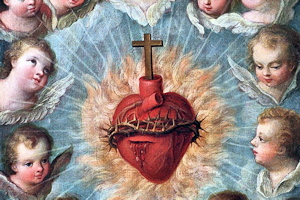
In the late 19th century, Sr. Mary of the Divine Heart received a message from Christ. This eventually led the 1899 encyclical letter Annum Sacrum in which Leo XIII decreed that the consecration of the entire human race to the Sacred Heart of Jesus should take place on June 11, 1899.

On the 100th anniversary of the Feast of the Sacred Heart in a landmark encyclical, Haurietis aquas (Latin: “You will draw waters”; written May 15, 1956), Pope Pius XII began his reflection by drawing from Isaiah 12:3, a verse which alludes to the abundance of the supernatural graces which flow from the heart of Christ. Haurietis aquas called the whole Church to recognize the Sacred Heart as an important dimension of Christian spirituality. Pius XII gave two reasons why the Church gives the highest form of worship to the Heart of Jesus. The first rests on the principle whereby the believers recognize that Jesus’ Heart is hypostatically united to the “Person of the Incarnate Son of God Himself.” The second reason is derived from the fact that the Heart is the natural sign and symbol of Jesus’ boundless love for humans. The encyclical recalls that for human souls the wound in Christ’s side and the marks left by the nails have been “the chief sign and symbol of that love” that ever more incisively shaped their life from within.

In a letter on May 15, 2006, Benedict XVI wrote: “By encouraging devotion to the Heart of Jesus, [we exhort] believers to open themselves to the mystery of God and of his love and to allow themselves to be transformed by it. After 50 years, it is still a fitting task for Christians to continue to deepen their relationship with the Heart of Jesus, in such a way as to revive their faith in the saving love of God and to welcome Him ever better into their lives.

As the encyclical states, from this source, the Heart of Jesus, originates the true knowledge of Jesus Christ and a deeper experience of His love. Thus, according to Benedict XVI, we will be able to understand better what it means to know God’s love in Jesus Christ, to experience Him, keeping our gaze fixed on Him to the point that we live entirely on the experience of His love, so that we can subsequently witness to it to others.
—Excerpted from Friar Musings

The Sacred Heart of Jesus
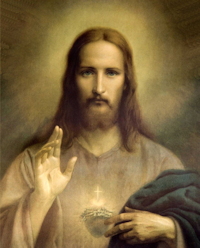
"Beloved brethren, since it had been ordained by a merciful Providence that the Church should be formed from the side of the crucified Christ and that the words of the Scriptures be fulfilled: They shall look upon Him whom they have pierced — a soldier armed with a lance opened the sacred Breast. The Blood mingled with water, which was shed from that pierced side, was the price of our salvation. Flowing from the hidden fount of the Sacred Heart, it gave to the sacraments their power of conferring the life of grace, and to those already living in Christ a draught of the living fount, gushing forth unto life eternal.

"Arise, therefore, O soul friendly to Christ! Cease not your vigil; bring close your lips, that you may draw waters from out the Savior's fountain. Oh, how good and how pleasant it is to dwell in this most Sacred Heart. Your Heart, dearest Jesus, is the great treasure, the precious jewel which we will find in the dug field of Your sacred Body. Who is there who would throw away this jewel? Rather would I throw away all my own jewels, my thoughts and my affections, and cast my cares upon Your Sacred Heart, which will nourish me without fail. I beg of You, sweet Jesus my God, place my prayer among those that You will answer. Draw me wholly into Your Heart. For unto this end Your side was pierced, that an entrance would lie open to us. Unto this end Your Heart was wounded, that detached from worldly tumult, we would be able to dwell in it.

"But above all, Your Heart was wounded so that a visible scar would enable us to see the invisible wound of Your love. For how could the ardor of Your love be better shown than by this, that not only Your Body but even Your very Heart was pierced with a lance? Truly the wounds of the flesh showed forth the wounds of the spirit. Who is there who would not love One so loving? My dearly beloved, let us pray that the Sacred Heart may deign to wound our heart still so hard, still so impenitent, and bind it with the sweet bonds of His love."
—St. Bonaventure



Tuesday, May 19, 2026

The United States bishops will consecrate America to the Sacred Heart of Jesus


US Bishops attend the 2018 plenary assembly in BaltimoreUS Bishops attend the 2018 plenary assembly in Baltimore 

US Bishops to consecrate America to Sacred Heart of Jesus for 250th anniversary

Ahead of the 250th anniversary of the signing of the Declaration of Independence, the Bishops of the United States will consecrate the country to the Sacred Heart of Jesus.

By Devin Watkins

The United States Conference of Catholic Bishops (USCCB) will hold its 2026 Spring Plenary Assembly in Orlando, Florida, on June 10-12.

As part of their assembly, the Bishops will concelebrate Mass and consecrate the United States of America to the Sacred Heart of Jesus.

The act of consecration will take place on Thursday, June 11, and the Bishops will hear reflections on the Sacred Heart ahead of the Mass.

The consecration comes as the US celebrates the 250th anniversary of the signing of the Declaration of Independence on July 4.

The initiative hopes to encourage broader Catholic participation in the commemoration and will be livestreamed on the USCCB YouTube channel.

Parishes and individual Catholics are being invited to take part through 250 Hours of Adoration and/or 250 Works of Mercy to prepare for the consecration.

In 2024, the late Pope Francis released his encyclical Dilexit nos (He loved us) on the human and divine love of the Sacred Heart of Jesus, highlighting the devotion as an antidote to modern superficiality.

Spring Plenary Assembly

The USCCB’s Spring Plenary Assembly will include public sessions on June 10 and 11, which will also be livestreamed, according to a press release.

Archbishop Paul Coakley of Oklahoma City will open the public portion of the plenary with an address, marking his first as President of the USCCB.

Archbishop Gabriele Giordano Caccia, Apostolic Nuncio to the United States, is also expected to address the Bishops.

The US Bishops are expected to vote on several items, including the causes of canonization of Msgr. Joseph Francis Buh and John Rick Miller.

The Committee on Divine Worship will present parts of a new edition of the Lectionary for Mass, as well as the 2025 Roman Missal–Liturgy of the Hours Supplement, for the Bishops’ approval.

The Bishops will also discuss a revision to the Charter for the Protection of Children and Young People, addressing elements they have identified as requiring further development.

According to the press release, the revision underscores the Bishops’ “continued commitment to addressing the prevention of abuse and ensuring the structures continue to be in place to respond to allegations.”

The Committee for the Protection of Children and Young People says the proposed changes attempt to balance sensitivity to victim-survivors with an awareness of due-process, rights of the accused, and Canon Law.

As the Church moves toward World Youth Day 2027 in Seoul, South Korea, the Bishops are expected to talk about the US Church’s participation.

They will also hear updates on Catholic prison ministry, implementation of the Synod, and engagement with the Intercontinental Guadalupan Novena, which begins on December 12.

Sunday, February 22, 2026

Pope Leo XIV celebrates Sunday Mass at the parish of the Sacred Heart of Jesus in Rome


Pope: Church must be a stronghold of charity in the contradictions of our time

Pope Leo XIV visits the parish of the Sacred Heart of Jesus in the neighbourhood of Castro Pretorio in Rome, close to the Termini train station and meets the parish community. In his homily, he invited them to be “the yeast of the Gospel in the dough" of an area marked by many difficulties.

By Edoardo Giribaldi

The wire of a phone charger dangles from an outlet, between the wooden confessionals built in the time of St. John Bosco, in the Basilica of the Sacred Heart of Jesus in Castro Pretorio in central Rome on Sunday, February 22, 2026.

Kicked aside by hurried steps, it’s easily forgotten, leaving eyes to wander elsewhere, as they’re attracted by the electric current that runs through the central nave of the parish run by the Salesian Order: Pope Leo XIV is passing by, as part of his second of five visits to parishes across the city in the time leading up to Easter.

“Closeness” and “charity,” he said in his homily, should be the barriers against the “widespread violence” marking the neighborhood, which too often appears in headlines for its darker news.

The Pope’s words recall the stories of refugees, the sick, and men and women burdened with wounds. “In just a few meters, one can touch the contradictions of this time,” he said, as in the neighborhood, near those most in need, there are also those rushing to catch a train at Termini station.

Perhaps it’s in that forgotten charger—left behind by someone without a home, or who only finds shelter for a night—that the truest sense of the “closeness” invoked by the Pope is found. A church that is not just a shelter by the altar, but a meal, or warm water, a plug to connect to for a few hours.


The Pope’s Arrival

It is the early hours of Sunday, February 22. On Via Marsala, where the church is located, the large atrium leading to the station is blocked, but the flow of faithful moves eagerly, filling the courtyard in front of the basilica.

A golden and white banner—the colors of the Vatican City flag—dominates the scene and says “Welcome Pope Leo XIV.” Next to it there is a framed panel featuring a close-up of the Pope and St. John Bosco in the background.

The sight of the faithful makes visible the “contradictions” the Pope spoke of in his homily during the Mass he presided over in the basilica. There are children from the catechism bundled up in large jackets and many representatives of the parish’s different associations and organizations that help those in need, such as for example the Listening Center, where those who seek it find psychological support for their distress. Or also the “Talent Bank,” a group of volunteers who distribute food and drinks to the homeless on Friday nights.

There are also religious sisters from the three congregations that are present in the parish community: the Daughters of Mary Help of Christians (Salesian Sisters of Don Bosco), the Franciscan Missionary Sisters of the Most Blessed Sacrament, and the Missionary Sisters of Christ the Risen One.

The wonder of those in need

At 8:15 a.m., the wait ends. An impromptu applause spreads like wildfire and phones rise up in the air. Pope Leo XIV enters the courtyard adjacent to the basilica.

The Pope extends his hand, holds their gazes. A couple of future spouses hold up a sign with a brief request, "We are getting married, will you bless us?" and Pope Leo does. He greets the crowds smiling at the children and also with the needy assisted by the parish.

“How wonderful to see all these children here!” the Pope said. “An applause for them! To live the joy of life, and how beautiful it is to be alive, to have this gift of life that the Lord gives us.”

In his opening greeting, he sees the same “warmth of welcome” praised by his predecessor, Pope Francis, during his visit to the same parish in 2014.

“We all know that the Lord wants to meet us, to welcome us, as much as this parish does! How beautiful it is to be in a place where everyone is welcome! Thank you all, thank you to this parish!” the Pope said.


“It is the love of Jesus, His mercy, that has called us together this morning”

Amid the applause in the courtyard, Pope Leo reflects on the name of the parish itself, which calls to mind the heart, “a symbol of love, of charity, of this boundless generosity of the Lord’s love.” This generosity that doesn’t know barriers and goes even beyond nationality, as many countries are represented in the thousand people gathered in the basilica’s courtyard.

“They represent this unity, communion, and brotherhood, this living together, which only Jesus can make possible,” the Pope highlighted in his greeting. “It is the love of Jesus, it is his mercy that has brought us together this morning.”

The Pope then greeted the Salesian community present. He reflected on the value of history, that does not only look at the past but also gives momentum to the current activities, in “this beautiful tradition of service, of charity, of working with young people.”

Rediscovering our freedoms

Among the crowd there are also five catechumens who will receive the sacraments at the Easter Vigil. The Pope, in the opening part of his homily during the Mass, points to them as a sign of a new beginning that concerns everyone.

“Especially in this Lenten season, we are called to rediscover the grace of Baptism as the source of life that dwells in us and dynamically accompanies us, in the utmost respect for our freedom,” he said.

He then spoke of the “drama” of man’s independence, the ancient temptation that runs through the garden of Eden and Jesus in the desert.

“The Gospel seems to answer the age-old dilemma: can I live my life to the fullest by saying “yes” to God? Or, in order to be free and happy, must I free myself from Him?” the Pope reflected.

The Church, a stronghold of closeness

These questions do not remain abstract, but they take shape once again in the concrete actions of those who, every day, choose to serve others through the charitable works organized by the parish.

It was Pope Leo XIII who asked St. John Bosco to build it “in a unique crossroads of the city, destined to become even more important over time,” the Pope explained.

He sees in each believer a “stronghold of closeness” in the face of the challenges that the Castro Pretorio neighborhood places before them.

In this regard, he highlighted how the neighborhood is home “to numerous young university students, commuters who come and go for work, immigrants seeking employment, and young refugees who have found, thanks to an initiative by the Salesians, the opportunity to meet Italian peers and carry out integration projects.”

The contradictions of the neighborhood

The Pope also focused on the “brothers who have no home,” those who knock on the Caritas shelter on Via Marsala and find a bed at the “Don Luigi Di Liegro” hostel.

“In just a few meters, one can touch the contradictions of this time: the carefreeness of those come and go with all the comforts and those without a roof; the many potentials for good and the widespread violence; the desire to work honestly and the illicit trades of drugs and prostitution,” the Pope said.

A gift for the Pope

The Pope also invited the community to be “the yeast of the Gospel in the dough of the territory.” The Mass was concelebrated by, among others, Cardinal Baldo Reina, Vicar General of Rome; the parish’s titular Cardinal Giuseppe Versaldi, Prefect emeritus of the Congregation for Catholic Education; Father Fabio Attard, the Rector Major of the Salesians; Father Roberto Colameo, the Superior of the Salesian Circumscription of Central Italy; Father Javier Ortiz Rodriguez, the parish priest.

Father Ortiz then addressed the Pope, giving him an icon of the Sacred Heart and thanking him for his pastoral visit. Father Ortiz said he hopes the visit will be a balm for the “social wounds” afflicting the neighborhood, but also a “restart of a pastoral project that will be like a high-speed train loaded with peace, hope, and Christian commitment to build community, reaching everyone.”

Before the Mass, Pope Leo visited the “Don Bosco's room” ("Camerette di Don Bosco") in the Church. And before returning to the Vatican, he paused in prayer before the Tabernacle.

The rooms are located behind the choir and sacristy, at the corner of Via Magenta and Via Vicenza. They served as the Saint's residence during his 20th and final trip to Rome, from April 30 to May 18, 1887. They were two modest rooms, one for sleeping and the other for receiving the many visitors who wished to see him and speak with him. The place was opened to the public in 1934, after St. John Bosco's canonization.

Friday, February 13, 2026

USCCB plans to really celebrate the 250th anniversary of our nation's independence


Catholic bishops to honor 250th anniversary of U.S. independence with adoration, works of mercy

U.S. parishes and other Catholic groups are expected to participate in the initiative ahead of the Fourth of July.


The Eucharist is displayed in a monstrance in St. Patrick’s Cathedral in New York City before a Eucharistic procession on Oct. 15, 2024. | Credit: Jeffrey Bruno

Tyler Arnold
February 12, 202


The U.S. Conference of Catholic Bishops (USCCB) is asking Catholics to participate in an initiative to honor the 250th anniversary of the signing of the Declaration of Independence through Eucharistic adoration and works of mercy.

“All Catholics are encouraged to join the bishops in praying for the unity and healing of our country,” a bishops’ guideline on the initiative reads.

Leading up to July 4, the bishops are encouraging individuals and parishes to contribute to 250 collective hours of adoration and 250 collective works of mercy as Americans approach the anniversary of the country’s formation.

The initiative also coincides with the lead up to the bishops’ reconsecration of the United States to the Sacred Heart of Jesus on the June 12 solemnity. The consecration is set to happen during a Mass at the Basilica of the National Shrine of the Immaculate Conception in Washington, D.C

Aaron Weldon, assistant director of the USCCB Committee for Religious Liberty, told EWTN News the initiative was born out of a desire “to do something to kind of celebrate in a prayerful way.” He said the bishops also wanted to “give Catholics a way to participate in the consecration.”

The USCCB published a guide with resources on how to participate, which suggests parishes can set up a Holy Hour with Eucharistic adoration on a weekly or monthly basis leading up to the Fourth of July.

“While 250 hours seems like a lot, each person present constitutes an hour prayed,” the guide states.

It provides resources for setting up Holy Hours dedicated to specific intentions, such as a Holy Hour for life or a Holy Hour for peace. It adds that parishes can also incorporate the Litany of the Sacred Heart of Jesus into the Holy Hour to prepare for the consecration.

“You may have other ways to invite members of your community to spend some time in prayer for our country with Jesus truly present in the Blessed Sacrament,” the guide adds.

For works of mercy, the USCCB guide states that individuals and groups can engage in existing activities in their parishes or start initiatives on a weekly or monthly basis leading up to the Fourth of July.

“Our works of mercy draw from the deep well of our faith and prayer, constantly reminding us that in tending to our brothers and sisters, we tend to Christ himself,” it states.

Works of mercy can include a variety of activities, such as assisting women who face a crisis pregnancy, donating to food pantries, sponsoring a refugee family, or volunteering at homeless shelters, among other things, according to the USCCB guide.

The USCCB is asking parishes to document their communities’ participation in the initiative and report to the bishops about ways in which people participated and fruits from the prayers and the actions.

Weldon said the bishops hope to “collect stories about the different ways that parishes … or small Catholic groups found a way to put these ideas into actions,” adding that the suggestions are “flexible,” so parishes and other Catholic groups can “do what works best for them.”

“I hope that we can start to hear back from people the different ways that people are putting some of these ideas into action,” Weldon said.

In September 2025, the White House launched the “America Prays” initiative, which also asks people to pray for the United States and its people leading up to the 250th anniversary of the signing of the Declaration of Independence.

Weldon said the USCCB initiative is separate and independent from that. He said the bishops’ consecration and the adoration and works of mercy offer “distinctly Catholic ways of celebrating” the 250th anniversary launched by the bishops.