Showing posts with label Joseph. Show all posts

Thursday, February 2, 2023

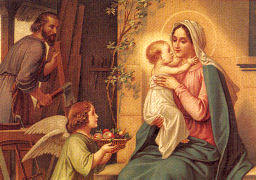
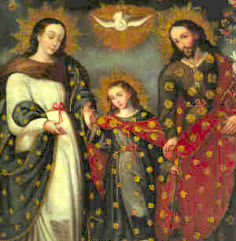
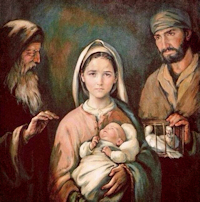
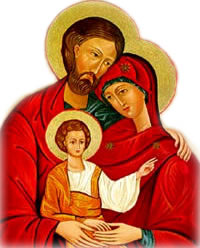
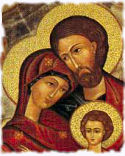
In large part, because of today's feast of the Presentation, February Catholic devotion is dedicated to the Holy Family


Month of the Holy Family

     
"May the Holy Family, icon and model of every human family, help each individual to walk in the spirit of Nazareth."
Highlights
Prayer of the Month
Consecration of the Family to the Holy Family
Lord Jesus Christ, Who, being made subject to Mary and Joseph, hallowed domestic life by Your ineffable virtues; grant that we, with the assistance of both, may be taught by the example of Your holy Family and may attain to its everlasting fellowship; Who lives and reigns world without end. Amen — Roman Missal
Prayer for a Happy Death
Grant unto us, Lord Jesus, ever to follow the example of Thy holy Family, that in the hour of our death Thy glorious Virgin Mother together with blessed Joseph may come to meet us and we may be worthily received by Thee into everlasting dwellings: Who lives and reigns world without end. Amen — Roman Missal
Documents
Websites

The month of February (Overview - Calendar) is dedicated to the Holy Family. The special devotion which proposes the Holy Family of Jesus, Mary, and Joseph as the model of virtue of all Christian households began in the 17th century. It started almost simultaneously in Canada and France: the Association of the Holy Family was founded in Montreal in 1663, and by the Daughters of the Holy Family in Paris in 1674. This devotion soon spread and in 1893 Leo XIII expressed his approval of a feast under this title and himself composed part of the Office. On account of the flight into Egypt this feast has been observed by the Copts from early times. The feast was welcomed by succeeding Pontiffs as an efficacious means for bringing home to the Christian people the example of the Holy Family at Nazareth, and by the restoration of the true spirit of family life, stemming, in some measure, the evils of present-day society.

In the words of His Holiness Pope Leo XIII, "Nothing truly can be more salutary or efficacious for Christian families to meditate upon than the example of this Holy Family, which embraces the perfection and completeness of all domestic virtues."

The Hidden Life of the Holy Family

The home of Nazareth is the school where we begin to understand the life of Jesus—the school of the Gospel. First, then, a lesson of silence. May esteem for silence, that admirable and indispensable condition of mind, revive in us...A lesson on family life. May Nazareth teach us what family life is, its communion of love, its austere and simple beauty, and its sacred and inviolable character...A lesson of work. Nazareth, home of the Carpenter's Son, in you I would choose to understand and proclaim the severe and redeeming law of human work. — Paul VI at Nazareth, January 5, 1964

Since the Holy Family observed the Jewish law in its perfection, we can deduce quite accurately what prayers they recited. The Psalms, of course, were the favorites. Three times a day Jesus, Mary, and Joseph said the Tephillah, "The Prayer," consisting of eighteen long invocations and blessings. Joseph (and later Jesus when He attained to manhood) was obliged to say the Shema, a sort of profession of faith in the one true God, twice daily.

A very interesting Jewish custom of prayer that must have been observed in the house at Nazareth was that of the Mezuzah, "the doorpost," and the "phylacteries," small square calfskin boxes with Scripture texts written on parchment inside them.

On the doorpost of the house at Nazareth was fastened a wooden tube containing a rolled parchment inscribed with the passage quoted above from the Book of Deuteronomy and another passage (11:13-21) citing the blessings of serving God. On entering and leaving the house the members of the Holy Family would piously touch this Mezuzah, saying, "May God keep my going out and coming in from now on and forevermore." All this was intended to show reverence for the word of God.

Such was the vocal and the more or less formal prayer which Jesus, Mary, and Joseph offered in their home at Nazareth. In their hearts, however, they prayed always. Just as the Heart of Jesus was constantly united with His divinity, so were the hearts of Mary and Joseph so closely bound to God that their every action was a prayer. — Excerpted from Reflections on the Life of Jesus, Mary, and Joseph, Francis L. Filas, S.J.

Imitation of the Holy Family

The Holy Family models for us what family life should exemplify. It is a school of virtue for both parents and children. There we find God, and learn how to connect with God and with others. The family is where love is freely given without self-interest. It is where we learn to love, to pray and to practice the gift of charity. Pope John Paul II has said, “The family, more than any other human reality, is the place in which the person is loved for himself and in which he learns to live the sincere gift of self” (Nov. 27, 2002).

We should ask ourselves if our own families model that of the Holy Family. We need to be open to God’s grace to value the positive and to accept our mistakes — and to be willing to rectify them. Parenting is a very challenging responsibility and at times errors are made despite the best intentions. Recognizing this, children should trust their parents and never forget that parents want only what is best for them.

Which leads us to what may be the most important family virtue — forgiveness. Living so intimately within the family nucleus naturally gives rise to unpleasant situations where someone is apt to be offended. St. Paul knew this when he told us to “bear with and forgive one another.” The health of our family may depend on how quickly we learn to forgive without harboring feelings of resentment.

No family can thrive and grow without constant work. Even the material details that take time and effort are essential to keeping the family strong. Everyone has to pull together for the good of the family — even to the point of putting ahead of our own needs and ambitions the happiness of other family members, setting aside our own selfish desires.

It is also important to pray as a family, especially the holy rosary. Prayer will help us to intensify our closeness with each other and to learn to forgive.

During this Year of the Eucharist it is essential to discover the relationship between the Eucharist and family life. Pope John Paul II wrote, “In the eucharistic gift of charity the Christian family finds the foundation and soul of its communion and its mission” (Letter on the Family, No. 57). — Excerpted from The Holy Family models what family life should be, Archbishop Charles J. Chaput, O.F.M. Cap.

Wednesday, February 1, 2023

The Feast of the Presentation of the Lord


Ordinary Time: February 2nd

Feast of the Presentation of the Lord

Other Commemorations: St. Catherine de Ricci, Virgin (RM) ; Other Titles: Candlemas


MASS READINGS

February 02, 2023 (Readings on USCCB website)

COLLECT PRAYER

Feast of the Presentation of the Lord: Almighty ever-living God, we humbly implore your majesty that, just as your Only Begotten Son was presented on this day in the Temple in the substance of our flesh, so, by your grace, we may be presented to you with minds made pure. Through our Lord Jesus Christ, your Son, who lives and reigns with you in the unity of the Holy Spirit, God, for ever and ever.

show

RECIPES (5)

show

ACTIVITIES (25)

show

PRAYERS (11)

show

LIBRARY (5)

show

BLOG & PODCASTS (10)


Entrance Antiphon, Cf. Ps 48 (47): 10-11:

Your merciful love, O God, we have received in the midst of your temple. Your praise, O God, like your name, reaches the ends of the earth; your right hand is filled with saving justice.


Alleluia Verse, Lk 2:32:

A light of revelation to the Gentiles, and glory for your people Israel.


Preface: the Mystery of the Presentation of the Lord:

It is truly right and just, our duty and our salvation,
always and everywhere to give you thanks,
Lord, holy Father, almighty and eternal God.

For your co-eternal Son was presented on this day in the Temple
and revealed by the Spirit
as the glory of the Israel and Light of the Nations.

And so, we, too, go forth, rejoicing to encounter your Salvation,
and with the Angels and Saints
praise you, as without end we acclaim:


Communion Antiphon, Cf. Lk 2:30-31:

My eyes have seen your salvation, which you prepared in the sight of all the peoples.


Today the Church celebrates the Feast of the Presentation of the Lord which occurs forty days after the birth of Jesus and is also known as Candlemas Day, since the blessing and procession of candles is included in today's liturgy. See the prayer's section for the full rite of the Procession and Blessing of Candles at Mass.

Founded by Pope St. John Paul II in 1997, today is the World Day of Prayer for Consecrated Life. He attached it to "Candlemas Day" because the consecrated men and women are to be the light in the world, imitating Jesus, the Light of the World. The World Day of Prayer is moved to the following Sunday to be celebrated in the parishes. See USCCB for more resources.

The previous (1962) liturgical calendar refers to this feast as the "Purification of Mary." This is known as a "Christmas feast" since it points back to the Solemnity of Christmas. Many Catholics practice the tradition of keeping out the Nativity creche or other Christmas decorations until this feast day.

On February 2nd another secular tradition unfolds, , known well to schoolchildren and adults alike. The fate of Spring hangs in the balance as a burrowing animal looks for its shadow. But where did this tradition come from? See the link below for an article that explains this tradition.


Thoughts on the Liturgy

Today's First Reading from the prophet Malachi 3:1-4 gives us an important insight to understand profoundly the mystery of the Lord’s Presentation in the Temple by Mary and Joseph, in accordance with the canons of Mosaic Law. The text, taken from the Prophet Malachi says, "I am sending my messenger to prepare the way before me; and suddenly there will come to the temple the Lord who you seek" (Mal 3:1). From all the Gospels, we know that it is the Precursor, St. John the Baptist who was born 6 months before Jesus, that God sent to prepare His way. Putting these evangelical facts together, we can comprehend the words of the Prophet Malachi. The Lord God promised that He would send a Precursor to prepare His way. Since there is only 6 months between the birth of St John the Baptist and Jesus it is clear that the prophecy meant that suddenly after the Precursor, the Lord Himself will come. So, soon after the Baptist’s birth, God entered His temple. Jesus’ presentation signifies God’s entrance to His temple. God made man entered His temple, presenting Himself to those who were really searching for Him.

Today’s Gospel from Luke 2:22-40 introduces us to different people and events that in themselves provide numerous lessons and themes for further reflection. First of all, Mary and Joseph respect the Mosaic Law by offering the sacrifice prescribed for the poor: a pair of turtledoves or two young pigeons.

Simeon and Anna were two venerable elderly people dedicated to prayer and fasting and so their strong religious spirit rendered them able to recognize the Messiah. In this sense we can see in the Presentation of Jesus in the Temple an extension of the ‘Pro Orantibus Day’ (For those who pray) that is celebrated on the feast of the Presentation of Mary (21 November). On this day, the Church demonstrates its gratitude to all those in the community that dedicate themselves in a privileged way to prayer, to those who have a particular religious vocation to the contemplative life. In the figure of the venerable Simeon, Jesus’ presentation in the temple, also reminds us that prayer and contemplation are not just a waste of time or an obstacle to charity. On the contrary, time could not be better spent than in prayer as true Christian charity is a consequence of a solid interior life. Only those who pray and offer penance, like Simeon and Anna, are open to the breath of the Spirit. They know how to recognize the Lord in the circumstances in which He manifests Himself because they possess an ample interior vision, and they have learned how to love with the heart of the One whose very name is Charity.
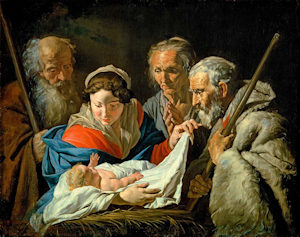
At the end of the Gospel Simeon’s prophecy of Mary’s sufferings is emphasized. Pope John Paul II taught that, ‘Simeon's words seem like a second Annunciation to Mary, for they tell her of the actual historical situation in which the Son is to accomplish his mission, namely, in misunderstanding and sorrow.’ (Redemptoris Mater, n16) The archangel’s announcement was a fount of incredible joy because it pertained to Jesus’ messianic royalty and the supernatural character of His virginal conception. The announcement of the elderly in the temple instead spoke of the Lord’s work of redemption that He would complete associating Himself through suffering to His Mother. Therefore, there is a strong Marian dimension to this feast and so in the previous Liturgical Calendar it is called the Purification of the Blessed Virgin Mary. This refers to the other aspect of the presentation that consists of the ritual purification of Jewish women after they had given birth. In Mary’s case this purification was not necessary, but it indicates the renewal of her total offering of herself to God for the accomplishment of His Divine Plan.

Simeon’s prophecy also announces that Christ will be ‘a sign of contradiction’. St Cyril of Alexandria, in one of his homilies, interpreted the words ‘sign of contradiction’ like a noble cross, as St Paul wrote to the Corinthians ‘a stumbling block to Jews and foolishness to Gentiles’ (1 Cor 1:23) […] It is a sign of contradiction in the sense that those who loose appear as foolish while in those who recognize its power [the cross] reveals salvation and life’ (cf. PG 77, 1044-1049).

—Excerpted from Congregation for the Clergy


Presentation of the Lord

The feast was first observed in the Eastern Church as "The Encounter." In the sixth century, it began to be observed in the West: in Rome with a more penitential character and in Gaul (France) with solemn blessings and processions of candles, popularly known as "Candlemas." The Presentation of the Lord concludes the celebration of the Nativity and with the offerings of the Virgin Mother and the prophecy of Simeon, the events now point toward Easter.

"In obedience to the Old Law, the Lord Jesus, the first-born, was presented in the Temple by his Blessed Mother and his foster father. This is another 'epiphany' celebration insofar as the Christ Child is revealed as the Messiah through the canticle and words of Simeon and the testimony of Anna the prophetess. Christ is the light of the nations, hence the blessing and procession of candles on this day. In the Middle Ages this feast of the Purification of the Blessed Virgin Mary, or 'Candlemas,' was of great importance.
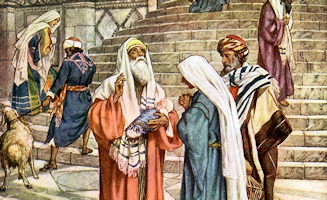
"The specific liturgy of this Candlemas feast, the blessing of candles, is not as widely celebrated as it should be, except of course whenever February 2 falls on a Sunday and thus takes precedence. There are two ways of celebrating the ceremony, either the Procession, which begins at a 'gathering place' outside the church, or the Solemn Entrance, celebrated within the church."

—From Ceremonies of the Liturgical Year


Until 1969, the ancient feast of the Presentation of Our Lord, which is of Oriental origin, was known in the West as the feast of the Purification of Our Lady, and closed the Christmas Cycle, forty days after the Lord's birth. This feast has for long been associated with many popular devotional exercises. The faithful:

  • gladly participate in the processions commemorating the Lord's entry into the Temple in Jerusalem and His encounter with God, whose house He had come to for the first time, and then with Simeon and Anna. Such processions, which in the West had taken the place of licentious pagan events, always had a penitential character, and were later identified with the blessing of candles which were carried in procession in honor of Christ, 'the light to enlighten the Gentiles' (Lk 2, 32);
  • are sensitive to the actions of the Blessed Virgin in presenting her Son in the Temple, and to her submission to the Law of Moses (Lk 12, 1-8) in the rite of purification; popular piety sees in the rite of purification the humility of Our Lady and hence, 2 February has long been regarded as a feast for those in humble service.

Popular piety is sensitive to the providential and mysterious event that is the conception and birth of new life. Christian mothers can easily identify with the maternity of Our Lady, the most pure Mother of the Head of the mystical Body—notwithstanding the notable differences in the Virgin's unique conception and birth.

These too are mothers in God's plan and are about to give birth to future members of the Church. From this intuition and a certain mimesis of the purification of Our Lady, the rite of purification after birth was developed, some of whose elements reflect negatively on birth.

The revised Rituale Romanum provides for the blessing of women both before and after birth, this latter only in cases where the mother could not participate at the baptism of her child.

It is a highly desirable thing for mothers and married couples to ask for these blessings which should be given in accord with the Church's prayer: in a communion of faith and charity in prayer so that pregnancy can be brought to term without difficulty (blessing before birth), and to give thanks to God for the gift of a child (blessing after birth).
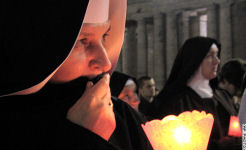
In some local Churches, certain elements taken from the Gospel account of the Presentation of the Lord (Lk 2, 22-40), such as the obedience of Joseph and Mary to the Law of the Lord, the poverty of the holy spouses, the virginity of Our Lady, mark out 2 February as a special feast for those at the service of the brethren in the various forms of consecrated life.

The feast of 2 February still retains a popular character. It is necessary, however, that such should reflect the true Christian significance of the feast. It would not be proper for popular piety in its celebration of this feast to overlook its Christological significance and concentrate exclusively on its Marian aspects. The fact that this feast should be 'considered [...] a joint memorial of Son and Mother' would not support such an inversion. The candles kept by the faithful in their homes should be seen as a sign of Christ 'the light of the world' and an expression of faith.

—Excerpted from Directory on Popular Piety and the Liturgy


Theme of Light

The Feast of the Presentation of the Lord's second major theme is Light. We are well familiar with the beautiful symbolism associated with light. Light means Christ and the supernatural life of grace. Today the Church, responding to Simeon's words, "The Light for the enlightenment of the Gentiles," keeps a genuine "light feast." (The feast was instituted to supplant the pagan Lupercalia, a licentious frolic featuring nocturnal torchlight parades. This explains why at the blessing of the candles and in the procession the celebrant and his ministers used to wear violet, the penitential color.)

Candles are blessed for liturgical use and are also distributed to the faithful. In homes they should be lighted on the occasion of family devotions, in times of storm, household crises, or other dangers; also at the Communion of the sick and at the administration of the Sacrament of the Anointing of the Sick. The Church, moreover, wishes these candles to remind us of our baptismal candles; for the candles we held at baptism signified our heavenly adoption and our duties in the lay priesthood of Christ. Year after year we again receive a baptismal candle so that "with burning lamp" we may hasten to meet the Bridegroom when He comes for the heavenly nuptials.

In the older missal, on two occasions during today's Mass the faithful would light their candles and hold them, at the Gospel and during the Canon until Communion. For in the Gospel and during the Canon Christ is present in a special way. It is the reason why at a High Mass lighted candles and burning incense are introduced. The message which the Church wishes to tell you is this: Actually, you ought to hold burning candles in your hands at every Mass; ordinarily, however, acolytes perform that function in your stead. This feast, however, the lay people had an opportunity to exercise the office of universal or lay priesthood.—Today's Mass, therefore, is truly a "Candle-Mass," practically the only in the entire year.
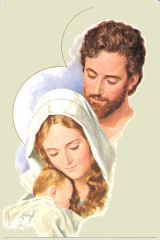
Thursday, December 29, 2022

Yes, the Feast of the Holy Family is on a Friday this year, in the Octave of Christmas


Christmas: December 30th

Feast of the Holy Family

Other Titles: Sixth Day within the Octave of the Nativity of the Lord (Christmas)


MASS READINGS

December 30, 2022 (Readings on USCCB website)

COLLECT PRAYER

Feast of the Holy Family: O God, who were pleased to give us the shining example of the Holy Family, graciously grant that we may imitate them in practicing the virtues of family life and in the bonds of charity, and so, in the joy of your house, delight one day in eternal rewards. Through our Lord Jesus Christ, your Son, who lives and reigns with you in the unity of the Holy Spirit, God, for ever and ever.

show

RECIPES (3)

show

ACTIVITIES (7)

show

PRAYERS (14)

show

LIBRARY (9)

show

BLOG & PODCASTS (2)


Mass Propers for the Feast of the Holy Family
Entrance Antiphon, Lk 2:16:

The shepherds went in haste, and found Mary and Joseph and the Infant lying in a manger.


Alleluia Verse, Col 3:15a, 16a:

Let the peace of Christ control your hearts; let the word of Christ dwell in you richly.


Preface II of the Nativity:

It is truly right and just, our duty and our salvation,
always and everywhere to give you thanks,
Lord, holy Father, almighty and eternal God,
through Christ our Lord.

For on the feast of this awe-filled mystery,
though invisible in his own divine nature,
he has appeared visibly in ours;
and begotten before all ages,
he has begun to exist in time;
so that, raising up in himself all that was cast down,
he might restore unity to all creation
and call straying humanity back to the heavenly Kingdom.

And so, with all the Angels, we praise,
as in joyful celebration we acclaim:


Communion Antiphon, Bar 3:38:

Our God has appeared on the earth, and lived among us.


Today is the Sixth Day in the Octave of Christmas. When there is no Sunday within the Octave of Christmas, the Feast of the Holy Family of Jesus, Mary and Joseph is celebrated on the Sixth Day of the Octave of Christmas.

Scripture tells us practically nothing about the first years and the boyhood of the Child Jesus. All we know are the facts of the sojourn in Egypt, the return to Nazareth, and the incidents that occurred when the twelve-year-old boy accompanied his parents to Jerusalem. In her liturgy the Church hurries over this period of Christ's life with equal brevity. The general breakdown of the family, however, at the end of the past century and at the beginning of our own, prompted the popes, especially the far-sighted Leo XIII, to promote the observance of this feast with the hope that it might instill into Christian families something of the faithful love and the devoted attachment that characterize the family of Nazareth. The primary purpose of the Church in instituting and promoting this feast is to present the Holy Family as the model and exemplar of all Christian families.

—Excerpted from With Christ Through the Year, Rev. Bernard Strasser, O.S.B.

Feast of the Holy Family—Day Six
Today is the feast day of the Holy Family, but also every family's feast day, since the Holy Family is the patron and model of all Christian families. Today should be a huge family feast, since it is devoted entirely to the Holy Family as a model for the Christian family life. As Rev. Edward Sutfin states:
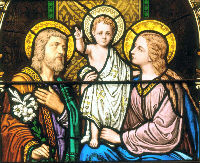
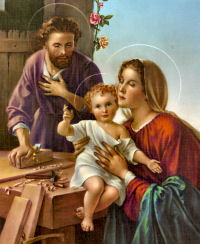
"The children must learn to see in their father the foster-father St. Joseph, and the Blessed Mother as the perfect model for their own mother. The lesson to be learned is both practical and theoretical, in that the children must learn how to obey and to love their parents in thought, word and action, just as Christ was obedient to Mary and Joseph. Helping mother in the kitchen and in the house work, and helping father in his odd jobs about the home thus take on a new significance by being performed in a Christ-like spirit." (True Christmas Spirit, ©1955, St. Meinrad Archabbey, Inc.)


The Holy Family
Marriage is too often conceived as the sacrament which unites a man and a woman to form a couple. In reality, marriage establishes a family, and its purpose is to increase the number of the elect, through the bodily and spiritual fecundity of the Christian spouses.

1. Every marriage intends children. Although Mary and Joseph were not united in a carnal way, their marriage is a true marriage: an indissoluble, exclusive union, wholly subordinated to the child. Mary and Joseph are united only in order to bring Jesus into the world, to protect and raise him. They have only one child, but he contains the whole of mankind, even as Isaac, an only child, fulfilled the promise made to Abraham of a countless progeny.

2. The purpose of every marriage is to establish a Christian family. The Holy Family observed the religious laws of Israel; it went in pilgrimage to Jerusalem every year with other Jewish families (Lk. 2:41). Jesus saddens and amazes his father and his mother because to their will and company he prefers "to be in his Father's house". Thus it may happen that God's will obliges the family to make disconcerting sacrifices. Yet every Christian family must live in harmony and in prayer, which are the pledges of joy and union.

3. "He remained obedient to them." Jesus was God. And through the fullness of grace Mary stood above Joseph. Nevertheless — if we except the event in the Temple — Joseph remained the head of the family; he took the initiative (as when the Holy Family fled to Egypt), and in Nazareth Jesus obeyed his parents.

—Excerpted from Bread and the Word, A.M. Roguet


Mass Readings for the Feast of the Holy Family, Cycle A:
The First Reading is from the Book of Sirach 3:2-6; 12-14. Although all the emphasis in these verse seems to be on the obligation of children to their parents, there is a profound lesson here for parents, too. "Like father like son" is an old and a true saying very often. If the parents fail to do what is right and just in the sight of God they can hardly complain if their children turn out disobedient to God and to them. The young learn more from example than from precept. Today, on this feast day, I would ask all parents to examine themselves and see how how they are fulfilling this grave responsibility—which God has placed on them. Are they preparing their children by word and example, especially by example, to be worthy citizens of heaven where they will be their parents' crown and glory?

The Second Reading is from the Letter of St. Paul to the Colossians 3:12-21. Ninety per cent of the first readers of St. Paul's Letter to the Colossians were pagans before their conversion. To practice the new Christian virtues was no easy task for people reared in the laxity and license of the paganism of their day. Yet they did practice these virtues and produced many saints and martyrs. Let us being in our own family circle to bring sanity back to our world. Let us have the true peace of Christ in our hearts and in our home, each one carrying out the task God has allotted to him. We shall not convert the world immediately but we shall have made a start. The world is the sum-total of its individual families.

The Gospel is from Matthew 2:13-15; 19-23. During this holy season of Christmas, Jesus Mary and Joseph should be remembered frequently by every Christian. To help us to remember them and above all to strive to imitate them, the Church has dedicated this Sunday to the memory of the Holy Family. Although they were God's closest friends, and although they were the holiest family that ever lived, or ever will live, on earth, they had more than their share of this world's troubles and cares. Today's Gospel story tells us of some of these earthly woes and sufferings. They had just settled in Bethlehem, and the Baby Jesus was only a few months old when, to avoid his murder at the hands of the murderous and jealous Herod, they had to flee from Bethlehem and become displaced persons in a foreign and pagan land.

The message of today's Gospel story is a message of encouragement and consolation for every one of us. If the Holy Family suffered such trials and hardships, surely we should be ready and willing to suffer and bear with the trials that God sends us for our own eternal welfare.

—Adapted from The Sunday Readings, by Fr. Kevin O'Sullivan, O.F.M.


The Holy Family: Jesus, Mary and Joseph
The devotion to the Holy Family was born in Bethlehem, together with the Baby Jesus. The shepherds went to adore the Child and, at the same time, they gave honor to His family. Later, in a similar way, the three wise men came from the East to adore and give honor to the newborn King with gifts of gold, frankincense, and myrrh that would be safeguarded by His family.

We can go further to affirm that in a certain sense Christ, Himself, was the first devotee of His family. He showed His devotion to His mother and foster father by submitting Himself, with infinite humility, to the duty of filial obedience towards them. This is what St Bernard of Clairvaux said in this regard, ‘God, to whom angels submit themselves and who principalities and powers obey, was subject to Mary; and not only to Mary but Joseph also for Mary’s sake [….]. God obeyed a human creature; this is humility without precedent. A human creature commands God; it is sublime beyond measure.’ (First Homily on the ‘Missus Est’).

Today’s celebration demonstrates Christ’s humility and obedience with respect to the fourth commandment, whilst also highlighting the loving care that His parents exercised in His keeping. The servant of God, Pope John Paul II, in 1989, entitled his Apostolic Exhortation, ‘Redemptoris Custos’ (Guardian of the Redeemer) which was dedicated to the person and the mission of Saint Joseph in the life of Christ and of the Church. After exactly a century, he resumed the teaching of Pope Leo XIII, for who Saint Joseph `...shines among all mankind by the most august dignity, since by divine will, he was the guardian of the Son of God and reputed as His father among men’ (Encyclical Quamquam Pluries [1889] n. 3).

Pope Leo XIII continued, ‘...Joseph became the guardian, the administrator, and the legal defender of the divine house whose chief he was.[…] It is, then, natural and worthy that as the Blessed Joseph ministered to all the needs of the family at Nazareth and girt it about with his protection, he should now cover with the cloak of his heavenly patronage and defend the Church of Jesus Christ.’ Not many years before, blessed Pope Pius IX had proclaimed Saint Joseph, ‘Patron of the Catholic Church’ (1870)

Almost intuitively, one can recognize that the mysterious, exemplary, guardianship enacted by Joseph was conducted firstly, in a yet more intimate way, by Mary. Consequently, the liturgical feast of the Holy Family speaks to us of the fond and loving care that we must render to the Body of Christ. We can understand this in a mystical sense, as guardians of the Church, and also in the Eucharistic sense. Mary and Joseph took great care of Jesus’ physical body. Following their example, we can and must take great care of His Mystical Body, the Church, and the Eucharist which He has entrusted to us. If Mary was, in some way, ‘the first tabernacle in history’ (John Paul II Ecclesia de Eucharistia, n. 55) then we the Tabernacle in which Our Lord chose to reside in person, in His Real Presence, was also entrusted to us. We can learn from Mary and Joseph! What would they ever have overlooked in the care of Jesus’ physical body? Is there something, therefore, that we can withhold for the right and adoring care of His Eucharistic Body? No amount of attention, no sane act of love and adoring respect will ever be too much! On the contrary, our adoration and respect will always be inferior to the great gift that comes to us in the Holy Eucharist.

Looking at the Holy Family, we see the love, the protection, and the diligent care that they gave to the Redeemer. We can not fail to feel uneasiness, perhaps a shameful thought, for the times in which we have not rendered the appropriate care and attention to the Blessed Eucharist. We can only ask for forgiveness and do penance for all the sacrilegious acts and the lack of respect that are committed in front of the Blessed Eucharist. We can only ask the Lord, through the intersession of the Holy Family of Nazareth, for a greater love for their Son Incarnate, who has decided to remain here on earth with us every day until the end of time.


Saturday, December 25, 2021

Feast Day of the Holy Family: JMJ


Christmas: December 26th

Feast of the Holy Family of Jesus, Mary and Joseph

Scripture tells us practically nothing about the first years and the boyhood of the Child Jesus. All we know are the facts of the sojourn in Egypt, the return to Nazareth, and the incidents that occurred when the twelve-year-old boy accompanied his parents to Jerusalem. In her liturgy the Church hurries over this period of Christ's life with equal brevity. The general breakdown of the family, however, at the end of the past century and at the beginning of our own, prompted the popes, especially the far-sighted Leo XIII, to promote the observance of this feast with the hope that it might instill into Christian families something of the faithful love and the devoted attachment that characterize the family of Nazareth. The primary purpose of the Church in instituting and promoting this feast is to present the Holy Family as the model and exemplar of all Christian families.

— Excerpted from With Christ Through the Year, Rev. Bernard Strasser, O.S.B.

The feast of St. Stephen, protomartyr, which is ordinarily celebrated today, is superseded by the Sunday liturgy.

Feast of the Holy Family - Day Two
Today is the feast day of the Holy Family, but also every family's feast day, since the Holy Family is the patron and model of all Christian families. Today should be a huge family feast, since it is devoted entirely to the Holy Family as a model for the Christian family life. As Rev. Edward Sutfin states:

"The children must learn to see in their father the foster-father St. Joseph, and the Blessed Mother as the perfect model for their own mother. The lesson to be learned is both practical and theoretical, in that the children must learn how to obey and to love their parents in thought, word and action, just as Christ was obedient to Mary and Joseph. Helping mother in the kitchen and in the house work, and helping father in his odd jobs about the home thus take on a new significance by being performed in a Christ-like spirit." (True Christmas Spirit, ©1955, St. Meinrad Archabbey, Inc.)


The Holy Family

Marriage is too often conceived as the sacrament which unites a man and a woman to form a couple. In reality, marriage establishes a family, and its purpose is to increase the number of the elect, through the bodily and spiritual fecundity of the Christian spouses.

1. Every marriage intends children. Although Mary and Joseph were not united in a carnal way, their marriage is a true marriage: an indissoluble, exclusive union, wholly subordinated to the child. Mary and Joseph are united only in order to bring Jesus into the world, to protect and raise him. They have only one child, but he contains the whole of mankind, even as Isaac, an only child, fulfilled the promise made to Abraham of a countless progeny.

2. The purpose of every marriage is to establish a Christian family. The Holy Family observed the religious laws of Israel; it went in pilgrimage to Jerusalem every year with other Jewish families (Lk. 2:41). Jesus saddens and amazes his father and his mother because to their will and company he prefers "to be in his Father's house". Thus it may happen that God's will obliges the family to make disconcerting sacrifices. Yet every Christian family must live in harmony and in prayer, which are the pledges of joy and union.

3. "He remained obedient to them." Jesus was God. And through the fullness of grace Mary stood above Joseph. Nevertheless — if we except the event in the Temple — Joseph remained the head of the family; he took the initiative (as when the Holy Family fled to Egypt), and in Nazareth Jesus obeyed his parents.

--Excerpted from Bread and the Word, A.M. Roguet

The Holy Family: Jesus, Mary and Joseph

The devotion to the Holy Family was born in Bethlehem, together with the Baby Jesus. The shepherds went to adore the Child and, at the same time, they gave honor to His family. Later, in a similar way, the three wise men came from the East to adore and give honor to the newborn King with gifts of gold, frankincense, and myrrh that would be safeguarded by His family.

We can go further to affirm that in a certain sense Christ, Himself, was the first devotee of His family. He showed His devotion to His mother and foster father by submitting Himself, with infinite humility, to the duty of filial obedience towards them. This is what St Bernard of Clairvaux said in this regard, ‘God, to whom angels submit themselves and who principalities and powers obey, was subject to Mary; and not only to Mary but Joseph also for Mary’s sake [….]. God obeyed a human creature; this is humility without precedent. A human creature commands God; it is sublime beyond measure.’ (First Homily on the ‘Missus Est’).

Today’s celebration demonstrates Christ’s humility and obedience with respect to the fourth commandment, whilst also highlighting the loving care that His parents exercised in His keeping. The servant of God, Pope John Paul II, in 1989, entitled his Apostolic Exhortation, ‘Redemptoris Custos’ (Guardian of the Redeemer) which was dedicated to the person and the mission of Saint Joseph in the life of Christ and of the Church. After exactly a century, he resumed the teaching of Pope Leo XIII, for who Saint Joseph ‘...shines among all mankind by the most august dignity, since by divine will, he was the guardian of the Son of God and reputed as His father among men’ (Encyclical Quamquam Pluries [1889] n. 3). Pope Leo XIII continued,‘... Joseph became the guardian, the administrator, and the legal defender of the divine house whose chief he was.[…] It is, then, natural and worthy that as the Blessed Joseph ministered to all the needs of the family at Nazareth and girt it about with his protection, he should now cover with the cloak of his heavenly patronage and defend the Church of Jesus Christ.’ Not many years before, blessed Pope Pius IX had proclaimed Saint Joseph, ‘Patron of the Catholic Church’ (1870)

Almost intuitively, one can recognize that the mysterious, exemplary, guardianship enacted by Joseph was conducted firstly, in a yet more intimate way, by Mary. Consequently, the liturgical feast of the Holy Family speaks to us of the fond and loving care that we must render to the Body of Christ. We can understand this in a mystical sense, as guardians of the Church, and also in the Eucharistic sense. Mary and Joseph took great care of Jesus’ physical body. Following their example, we can and must take great care of His Mystical Body, the Church, and the Eucharist which He has entrusted to us. If Mary was, in some way, ‘the first tabernacle in history’ (John Paul II Ecclesia de Eucharistia, n. 55) then we the Tabernacle in which Our Lord chose to reside in person, in His Real Presence, was also entrusted to us. We can learn from Mary and Joseph! What would they ever have overlooked in the care of Jesus’ physical body? Is there something, therefore, that we can withhold for the right and adoring care of His Eucharistic Body? No amount of attention, no sane act of love and adoring respect will ever be too much! On the contrary, our adoration and respect will always be inferior to the great gift that comes to us in the Holy Eucharist.

Looking at the Holy Family, we see the love, the protection, and the diligent care that they gave to the Redeemer. We can not fail to feel uneasiness, perhaps a shameful thought, for the times in which we have not rendered the appropriate care and attention to the Blessed Eucharist. We can only ask for forgiveness and do penance for all the sacrilegious acts and the lack of respect that are committed in front of the Blessed Eucharist. We can only ask the Lord, through the intersession of the Holy Family of Nazareth, for a greater love for their Son Incarnate, who has decided to remain here on earth with us every day until the end of time.

Thursday, April 30, 2020

The feast of St. Joseph the Worker

Feast of St Joseph the Worker: Affirming the Dignity of All Work


During an apostolic visit to Africa in 2009 Pope Benedict XVI reflected on St. Joseph and what he teaches us. He often uses the Patron of the Universal Church - his namesake (Joseph Ratzinger) - as an example. He told the faithful gathered in the Basilica of Mary Queen of Apostles in Cameroon:
"I ... encourage you to look to Saint Joseph. When Mary received the visit of the angel at the Annunciation, she was already betrothed to Joseph. In addressing Mary personally, the Lord already closely associates Joseph to the mystery of the Incarnation. Joseph agreed to be part of the great events which God was beginning to bring about in the womb of his spouse."

"He took Mary into his home. He welcomed the mystery that was in Mary and the mystery that was Mary herself. He loved her with great respect, which is the mark of all authentic love. Joseph teaches us that it is possible to love without possessing. In contemplating Joseph, all men and women can, by God's grace, come to experience healing from their emotional wounds, if only they embrace the plan that God has begun to bring about in those close to him, just as Joseph entered into the work of redemption through Mary and as a result of what God had already done in her."

"Joseph was caught up at every moment by the mystery of the Incarnation. Not only physically, but in his heart as well, Joseph reveals to us the secret of a humanity which dwells in the presence of mystery and is open to that mystery at every moment of everyday life. In Joseph, faith is not separated from action. His faith had a decisive effect on his actions. Paradoxically, it was by acting, by carrying out his responsibilities, that he stepped aside and left God free to act, placing no obstacles in his way. Joseph is a "just man" (Mt 1:19) because his existence is "ad-justed" to the word of God."

On May 1 the Universal Church honors this Patron for his witness to the dignity of human work. During the last years of his service, Blessed John Paul II addressed leaders of the "Catholic Action" movement in Italy on the Feast of St. Joseph the Worker. He used a poignant expression, the "Gospel of Work". In explaining what he meant he developed a theme deeply rooted in the Sacred Scriptures, expounded upon in the Christian Tradition and desperately needed in this age. In 1981 he had authored an Encyclical letter entitled "On Human Work" which presented the Christian vision of the dignity and meaning of human work.

In the industrial age men and women were often reduced to instruments in a society that emphasized "productivity" over the dignity of the worker. The technological age promised something different but failed to deliver. Human beings are still reduced to human doings rather than human beings. To come to a new understanding of the dignity of human labor requires what St Paul rightly called a "renewal of the mind" (See, Romans 12:2).


John Paul told those assembled that because work "has been profaned by sin and contaminated by egoism" it is an activity that "needs to be redeemed." He reminded them that "Jesus was a man of work and that work enabled him to develop his humanity". He emphasized that "the work of Nazareth constituted for Jesus a way to dedicate himself to the 'affairs of the Father,' witnessing that "the work of the Creator is prolonged" through work and that therefore ".according to God's providential plan, man, by working, realizes his own humanity and that of others: In fact, work 'forms man and, in a certain sense, creates him.."

He called them to be rescued "from the logic of profit, from the lack of solidarity, from the fever of earning ever more, from the desire to accumulate and consume." When the focus of work becomes subjected to what he called "inhuman wealth" it becomes a "seductive and merciless idol." That rescue occurs when we "return to the austere words of the Divine Master: 'For what does it profit a man if he gains the whole world and loses or forfeits himself?'"
Finally, he proclaimed that the "divine Worker of Nazareth" also "reminds us that 'life is more than food' and that work is for man, not man for work. What makes a life great is not the entity of gain, nor the type of profession, or the level of the career. Man is worth infinitely more than the goods he produces or possesses."

This "Gospel of Work" needs to be proclaimed anew in an age reeling from the near collapse of a banking system corrupted by greed and the rejection of the dignity of every human person. On Friday, April 30, 2010, Pope Benedict, mindful of the pending Feast of Joseph the Worker, addressed a Vatican conference on the theme "Crisis in a Global Economy. Re-planning the Journey."
He explained  the Social teaching of the Catholic Church that the dignity of human work derives from its relationship to the human person. He affirmed that economies should be at the service of the person, the family and the common good. His treatment of these themes in "Caritas in Veritate" (Charity in Truth) must be seriously examined by Catholics who hope to inform their thinking on economic issues, first, with the teaching of the Church.

The Catholic Catechism reminds us: "Human work proceeds directly from persons created in the image of God and called to prolong the work of creation by subduing the earth, both with and for one another. Hence work is a duty: "If any one will not work, let him not eat." Work honors the Creator's gifts and the talents received from him. It can also be redemptive. By enduring the hardship of work in union with Jesus, the carpenter of Nazareth and the one crucified on Calvary, man collaborates in a certain fashion with the Son of God in his redemptive work. He shows himself to be a disciple of Christ by carrying the cross, daily, in the work he is called to accomplish."

"Work can be a means of sanctification and a way of animating earthly realities with the Spirit of Christ. In work, the person exercises and fulfills in part the potential inscribed in his nature. The primordial value of labor stems from man himself, its author and its beneficiary. Work is for man, not man for work. Everyone should be able to draw from work the means of providing for his life and that of his family, and of serving the human community. The primordial value of labor stems from man himself, its author and beneficiary. By means of his labor man participates in the work of creation. Work united to Christ can be redemptive."

A Catholic vision views work through the Incarnation of Jesus Christ. God Incarnate became a worker! The dignity of this God become Man elevates the basic goodness of all human work. The early Church Father and Bishop Irenaeus expressed the profundity of this all when he said: "Whatever was not assumed was not healed!"


Because the entire human experience was assumed by Jesus, work was transformed by Christ the worker! As a child, Jesus learned from Joseph the Worker how to work with wood. He would later climb upon a wooden cross to re-create all humanity in the great work of redemption. All of the work undertaken by Jesus was joined to His Heavenly Father's work. That is the same relationship we have with the Father now through Him.

Though there is biblical support that the toil and drudgery or "sweat" of work is connected to the fracture in the order of the universe which was occasioned by sin (see Gen 3:19) work itself is not the punishment for sin. Rather, for the Christian, work can become a participation in the continuing redemptive work of Jesus. He was always doing the "work" of the One who sent Him (John 9:3-4) and we are invited by grace to now do the same.

The early Christians' worship became known as "liturgy" which meant the "work" of the Church. For them the world was not a place to be avoided but their workshop! They were there to bring all to Baptism and inclusion in Christ and to prepare the world for His return. The "Paschal mystery" began a process of transformation not only in the followers of Jesus but also in the very cosmos created through Him and for Him. It is now being recreated in Him. The work of Jesus continues now through His Body, the Church, placed in that creation as a seed of its transfiguration.


All things were created in Christ (see Col 1:15-20) and are being re-created as His work continues through His Body, the Church of which we are members. The unfolding of all of this is a what St. Paul calls a "plan" and a "mystery", to bring all things together under heaven and on earth in Him (e.g. Eph 1: 9-10).For the Christian work is an invitation to participate in that plan. No matter what we are doing as work we are to "do it as unto the Lord" (see Col 3). That choice enables it to change the world both within us and around us.

This plan includes all work - not just what is often called the "spiritual stuff." God Incarnate, Jesus, did not just do what is too often called the "spiritual stuff." All human work sanctifies us and changes the world. St. Paul captures the hope of all creation when, in the eighth chapter of his letter to the Romans he reminds us that all of creation "groans" for the full revelation of the sons and daughters of God.
 
We can have a new relationship to the entire created order beginning now because we live in the Son, through whom and for whom, it was all created and is being re-created. That is why these insights from John Paul II and Benedict are so important. There truly is a "Gospel of Work" we experience when we embrace our work with a mind renewed by the Holy Spirit.

I am old enough to remember the days when on May 1st Communist Nations paraded their weapons of destruction through the streets of major cities promising a workers' paradise through their counterfeit ideology. It was during this time that the Church first set aside this Feast of Joseph to make a prophetic cultural statement.


She proclaimed a different way, the Gospel of Jesus Christ with its "Gospel of Work". On this Feast of St. Joseph the Worker we must once again take up this task. Let us rediscover the creative and redemptive value of all human work when it is joined to the continuing work of the Gospel. Let us proclaim again in our time the "Gospel of Work."

We need to turn to the teaching of the Church on the dignity of work - and the worker- as we consider all of the implications of this important policy concern as a Nation. On this Feast of Joseph the Worker, let us seek the intercession of Patron of the Universal Church and follow his example, recognizing that all human work participates in the workshop of Nazareth. Let us reflect on Pope Benedict's words "In Joseph, faith is not separated from action. His faith had a decisive effect on his actions." Let the same be said of each of us.