Showing posts with label Hillary Clinton. Show all posts

Friday, November 11, 2016

Trump is now the President elect? Now what?

So Donald Trump strung enough victories together state by state to win the necessary 270 electors to become our nations 45th President.  We all know by now that the election was close and in fact, Mrs. Clinton will carry the popular vote by somewhere north of 500,000 votes.  For the second time in 16 years, we have a new President that did not win the popular vote.  By the way, that's the way it works.  Everyone who signs up for this gig by putting themselves out there as a Presidential candidate knows the rules up front.  If the campaign was difficult, the coming days may be difficult in some places as evidenced by the demonstrations that have been filled with anarchy, vandalism and violence.  What is incredibly under-reported is that not every one feels this way and the great majority will not act this way.  I am buoyed by the graciousness in defeat of Mrs. Clinton and the vast majority of her supporters, some of them family members and friends.  I am also buoyed that President-elect Trump has set a proper tone in victory.  I trust that among his many supporters are none who are given to gloating and a lack of charity in victory.  We also should follow the lead of President Obama who clearly is putting country ahead of personal feelings.  He too has been most gracious since election night.

As for me, who has expressed here on this blog my angst with this whole election process, my disappointment in the choice of candidates and the tenor and tone of the campaign, I now need to answer personally, now what?  What am I committed to do now that the election is over?

Since my "being" includes that of an ordained member of the Catholic clergy, I consider my office as Permanent Deacon in my answer to my own question.  I personally commit to being a better me and to continue to honor and respect others as God calls us to do all the time.  I am aware that possibly half of the people I encounter and interact with voted for Trump and half voted for Clinton.  There will be equal measures of dignity and respect for all.

Since I am staunchly Pro-Life, I will watch carefully for movement toward eliminating Roe v Wade.  As difficult as this will be, it is a worthy battle to fight.  I will support all efforts to rid this nation of Planned Parenthood, a full-time front as a "women's clinic" and nothing more than the most prolific baby killing factory in our nation.  I will be more vocally Pro-Life in my life and my ministry as a Deacon.  And being Pro-Life means never victimizing women who feel the need to end the life of another, they must be prayed for and supported in any and all attempts to keep the baby.  I will learn more about projects like Rachel's Vineyard and adoption programs.  Since I am staunchly Pro-Life, I will be a voice for ending the death penalty.  No, I do not weight the death penalty equally as abortion, I get the differences.  That, however, does not change my commitment to end this practice that St. Pope JPII said should never be needed in a great nation such as ours.  I will watch the Trump administration closely on this one and double my advocacy for an end of the death penalty.  I will also be a voice and a worker in the vineyard that the poor be protected and helped appropriately, not forgetting my personal role and that of the church in caring for the "least of my brethren".  That reminds me that I must fight for the religious liberty of the Church to be able to fully and completely carry on it's ministries and teachings without undue influence and restriction from the government.

Now that the election is over, and because I am a Permanent Deacon in the Catholic Church, I will recommit myself to honoring marriage as one man, one woman in a covenant with God that is always open to children.  I will work to explain the wisdom of the Church's teaching and will work equally hard to respect the dignity of all peoples with same-sex attraction.  But for this Catholic Deacon, I fully support the Biblical and Traditional teaching on marriage.  I will walk more closely with every couple I prepare for marriage and try harder that my own marriage to Wendy, about to be 40 years strong, serve as a Christian witness to others.

I recommit myself to my own prison ministry and to advocate for the inmate among people of faith and goodwill.  I hope to help others understand what this means in the context that these are people who have been convicted of a crime but still deserve a chance to deepen or develop a relationship with God while being treated with dignity and respect. 

I will recommit to a prayer life that includes the Divine Office for the universal Church and to always pray for those who ask prayers of me.  When praying for our nation I will pray for our President and our legislators.  I will also pray for those who stand in opposition to the rule of law and advocate for those positions that defy the Church and the common good.  I will also commit myself to living life everyday as a living prayer.  Treat everyone with dignity and respect, be kind more often and be nice.  This will require that I grow in the virtue of patience.  I will read my Bible more and live a life informed by Holy Scripture.

At a personal level, I will try to be an example of enthusiasm and hopefulness.  I must work harder to not give in to a spirt of despair.  And I will work harder to be a witness to the inherent good in this nation and in each one of us.

The election is over, we must come together.  It will start with each one of us individually and I know it must start with me.  Let's get started then, right here, right now!

Friday, October 28, 2016

Many Catholic believe time to end the "Al Smith Dinner"

Cardinal Dolan confesses: Charity dinner with Trump and Clinton was tough
  • By DAVID GIBSON Religion News Service
NEW YORK • The fallout from last week’s Al Smith Dinner is continuing, and not just for Donald Trump, whose cringe-worthy comedy at the traditional Catholic charity roast earned him the first boos in the history of the glitzy gala.
While some on the left were upset that the host, New York Cardinal Timothy Dolan, even allowed the Republican nominee a seat at the white-tie fundraiser, many on the right were angry — as they have been in past election cycles — that the archbishop also invited Hillary Clinton because she, like many previous Democratic nominees, supports abortion rights.
Now a potent voice among Catholic conservatives is arguing that “the Al Smith Dinner has become the Al Smith Embarrassment” and should be scrapped altogether.
“It’s time to give thanks for what it once did — and then give it a decent burial,” George Weigel wrote in a column on Wednesday published at First Things, a conservative journal of religion and politics.
Weigel argued that not only will the famous political roast inevitably showcase a Democrat who supports abortion rights, but it evokes an era when Catholics were striving to show they belonged.
Today, he said, the event’s “seeming indifference to grave moral issues are an impediment” to genuine evangelization, and the $6 million that the Al Smith extravaganza raises could easily be found elsewhere.
A day earlier, another conservative commentator also said “it’s time to question whether the Al Smith dinner should be abandoned.”
“The implicit message is that although we may differ on some superficial issues, deep down we’re all friends who agree on the really important issues,” wrote Phil Lawler, editor of the Catholic news site CatholicCulture.org. “Well, frankly, we aren’t.”
But the person whose opinion probably matters most isn’t having any of it.
“The event is great and nothing can ruin the event,” Dolan said Tuesday on his weekly radio program on The Catholic Channel on SiriusXM. “In my mind, it’s America and the church at their best.”
Dolan stressed, as he has before, that the Alfred E. Smith Memorial Dinner, as it is formally known, not only raises money for an important cause but it shows how the church can bring foes together, even two as antagonistic as Trump and Clinton.
The cardinal did concede that the Oct. 20 event “maybe let us down a bit” because the candidates were not as self-deprecating in their humor as the ground rules call for; the benefit, which has run for more than 70 years, is supposed to be about “light humor and political savvy” and aims to provide a brief respite near the end of an intense presidential contest.
Pause
Current Time 0:00
/
Duration Time 0:00
Remaining Time -0:00
Stream TypeLIVE
Loaded: 0%
Progress: 0%
0:00
Fullscreen
00:00
Mute
Playback Rate
    1
    The candidates’ routines this time, however, “really almost became a stump speech, they almost really became a partisan speech, and that’s not the best,” said Dolan, who was raised in St. Louis.
    The booing for Trump, who delivered his remarks first and was widely blasted for ripping Clinton without being terribly funny, was unprecedented, Dolan said. It put a damper on “the spirit of the evening.”
    But he stressed that the event still rose above all that.
    Behind the scenes, for example, the two candidates — who couldn’t bring themselves to shake hands at the third and final presidential debate a night earlier — were brought together by the cardinal during a brief pre-dinner prayer.
    “They were both icy from the beginning, you could tell,” Dolan said. “They’re not on each other’s Christmas card list, I can tell you that. You could tell those two had a rather, I’d say, frigid relationship, more than icy.”
    But after the prayer Trump turned to Clinton and said: “You are one tough, talented lady.”
    Clinton, apparently surprised by praise from the man who had called her “a nasty woman” the night before, responded: “And you and I must work together no matter what happens in the election.”
    Then on the dais at the dinner, the famously gregarious Dolan said he did his best to thaw things. And it seemed to work at least briefly when it suddenly dawned on him that both nominees are Protestants who have daughters (Chelsea Clinton and Ivanka Trump) who married Jewish men.
    “And they kind of had a pleasant discussion about this,” Dolan said. “So you try. But I don’t know how successful it was.”
    The Al Smith Dinner is named after the first Catholic to head a major party ticket (Smith was trounced by Herbert Hoover in 1928, in large part due to anti-Catholicism), and the proceeds go to a charitable foundation that is also named after Smith.
    In an election year, the archbishop of New York usually invites both presidential candidates for an evening of jokes and self-deprecating humor in honor of Smith, who was known as “the happy warrior.”

    Thursday, October 20, 2016

    Trump and Clinton at Al Smith Dinner

    Day after debate, Trump, Clinton square off again at roast   


    Associated Press


    UPDATE: After earning hearty laughs for many of his early jokes at the annual Al Smith dinner, Donald Trump appeared to lose the crowd as he crossed the line from jokes to deeply personal insults aimed at rival Hillary Clinton.
    Trump was repeatedly booed when he described Clinton as corrupt and latched onto information contained in hacked emails from her staff. That included a hit on Clinton for "pretending" not to hate Catholics as she sits at a Catholic charity event.

    EARLIER: NEW YORK (AP) — Bitter presidential rivals Hillary Clinton and Donald Trump have one more face-to-face showdown before Election Day. And they're supposed to make it funny.
    The venue Thursday night just 24 hours after their third and final debate is the annual Alfred E. Smith Memorial Foundation Dinner in New York, a white-tie gala that every four years becomes a showcase for presidential politics. Tradition dictates that the candidates deliver humorous remarks poking fun at each other and themselves, a jovial custom that seems hard to envision amid such an ugly campaign.
    Trump regularly calls Clinton, "Crooked Hillary," says he'd put her in jail if he wins the presidency, and declared during Wednesday's debate that she was "a nasty woman." Clinton says Trump lives in his own reality, is running a "hateful, divisive campaign" and lacks the temperament to be president.
    They sat one seat apart for the evening, with New York's Cardinal Timothy Dolan acting as the only buffer. And when they entered and took their seats, they did not shake hands or make eye contact.
    Cardinal Timothy Dolan, center, Democratic presidential candidate Hillary Clinton, left, Republican presidential candidate Donald Trump, right, smile during the invocation at the 71st Annual Alfred E. Smith Memorial Foundation Dinner Thursday, Oct. 20, 2016, in New York.© (AP Photo/Frank Franklin II) Cardinal Timothy Dolan, center, Democratic presidential candidate Hillary Clinton, left, Republican presidential candidate Donald Trump, right, smile during the invocation at the 71st Annual Alfred E. Smith… Both took some early heat from the night's master of ceremonies, Alfred E. Smith IV, the event's namesake's great-grandson. Smith joked that Trump approached Clinton before the event and asked how she was doing, to which Smith responded "I'm fine but now get out of the ladies' dressing room."
    Trump laughed at the joke, and again when Smith made another joke about the leaked video which captured Trump using vulgar language, saying while the celebrity businessman was "sitting next to a man in a robe, but this is not a locker room. Watch your language!"
    Smith also teased Clinton, noting that "titans of Wall Street" were in attendance, but told her to restrain herself from seeking donations and to "remember the children."
    The unprecedentedly bitter campaign between Clinton and Trump could threaten the ecumenical goodwill that has defined previous roasts. Since 1960, at least one of the major party nominees has appeared at nearly every election year dinner, which is traditionally the last time the nominees share a stage before voters go to the polls.
    Four years ago, President Barack Obama and Mitt Romney set aside their differences to trade (mostly) warm jokes. Romney, scanning the well-heeled crowd in the gilded Waldorf-Astoria ballroom, joked that the event's white-tie attire finally gave him a chance to publicly don what "Ann and I wear around the house." Obama, meanwhile, used his speech that year to look ahead to an upcoming debate on foreign policy, previewing his argument by saying "Spoiler alert: we got Bin Laden."
    The roast might feel familiar to Trump, who infamously glowered through Obama's jokes at his expense during the 2011 White House Correspondents Dinner and is not known for being self-deprecating. Last weekend, he tweeted that he did not appreciate Saturday Night Live's portrayal of him in a sendup of the candidates' performances in the second presidential debate.
    This is the first time that both party's nominees hail from New York State as a crowd of about 1,500 gathers for the distinctly Gotham event, held each October. Attendees pay between $3,000 and $15,000 to attend the dinner, which raises about $5 million to provide services for impoverished children, Zwilling said.
    The dinner is named after the former New York governor, who was the first Catholic to receive a major party nomination for president when he unsuccessfully ran in 1928. And fittingly for an event named after a man nicknamed "The Happy Warrior," the occasion has produced dozens of memorable presidential jokes.
    In 2000, then-Texas Governor George W. Bush gazed upon the glitzy gathering and declared: "This is an impressive crowd, the haves and the have-mores. Some people call you the elite. I call you my base."
    That same year, Vice President Al Gore touted his campaign trail ability to weave in stories "of real people in the audience and their everyday challenges."
    "Like the woman here tonight whose husband is about to lose his job," Gore continued. "She's struggling to get out of public housing and get a job of her own. Hillary Clinton, I want to fight for you."
    And in 2008, John McCain joked about the exalted manner in which the media venerated Obama, noting that "'Maverick' I can do, but 'Messiah' is above my pay grade." But he wound down his remarks with a note of grace that, to this point, has been largely absent from the 2016 campaign.
    "I can't wish my opponent luck," McCain said, turning toward Obama, "but I do wish him well."

    Wednesday, October 12, 2016

    Emails reveal the all too familiar disdain, hate by those affiliated with the Clinton campaign of Holy Mother Church

    Clinton campaign under fire for critical emails on Catholic Church

    Clinton campaign under fire for critical emails on Catholic Church
    Democratic presidential candidate Hillary Clinton speaks to members of the media while aboard her campaign plane in St. Louis, Oct. 9, (AP Photo/Andrew Harnik.)
    The groups Catholic Vote and the Catholic League both quickly put out statements of protest after revelations of hacked e-mails among Clinton campaign advisers seen as hostile and mocking towards "conservative" Catholics, especially on issues of democracy and gender equality.
    In a campaign that keeps getting stranger by turns, Hillary Clinton’s presidential campaign drew sharp criticism from Catholics this week for emails from campaign staffers seen as mocking and hostile to the Catholic faith.
    The groups Catholic Vote and the Catholic League both quickly put out statements of protest.
    Catholic League’s Bill Donahue said Clinton had a “moral obligation” to “sanction” her staffers.
    Catholic Vote, a group which last week took Donald Trump to task for his widely publicized remarks about women, this week took on the Clinton campaign for comments its senior staff made about Catholics.
    At issue was an email exchange that included the Clinton campaign’s director of communications, Jennifer Palmieri. The exchange was released by the anti-secrecy group Wikileaks as part of its release of John Podesta’s hacked emails.
    In the emails, which copy Podesta, Clinton’s campaign chair, Center for American Progress senior fellow John Halpin derides Rupert Murdoch and Wall Street Journal editor Robert Thompson for raising their children Catholic.
    Halpin’s email goes on to assert that the Catholicism of socially conservative Catholics is “an amazing bastardization of the faith.” He adds: “They must be attracted to the systematic thought and severely backwards gender relations and must be totally unaware of Christian democracy.”
    In her email, Palmieri, who served as President Obama’s director of communications before assuming her role in the Clinton campaign replies in a way seen as insulting to both Catholics and Evangelicals.
    She wrote: “I imagine they think it is the most socially acceptable politically conservative religion. Their rich friends wouldn’t understand if they became evangelical.”
    In a statement, Brian Burch of Catholic Vote said: “Everyone has a unique faith journey, and it’s just insulting to make blanket statements maligning people’s motives for converting to another faith tradition. Had Palmieri spoken this way about other groups she would dismissed. Palmieri must resign immediately or be fired.”
    In another email exchange, John Podesta, Clinton’s campaign chair, talked about starting various groups in order to fundamentally change the Catholic Church.
    Writing to Podesta, Sandy Newman of Voices for Progress - a non-Catholic - writes: “There needs to be a Catholic Spring, in which Catholics themselves demand the end of a middle ages dictatorship and the beginning of a little democracy and respect for gender equality in the Catholic Church.”
    Newman adds: “I have not thought at all about how one would ‘plant the seeds of the revolution,’ or who would plant them.”
    Podesta agreed that this was necessary, and noted he helped begin two groups to do as Newman suggests. Podesta wrote: “We created Catholics in Alliance for the Common Good to organize for a moment like this. But I think it lacks the leadership to do so now. Likewise Catholics United. Like most Spring movements, I think this one will have to be bottom up.”
    That email exchange, like Palmieri’s, drew swift denunciations from a number of Catholic commentators as well.
    Less commented on have been Clinton’s own emails dealing with the Catholic Church that have been made public by the State Department.
    In one 2012 email exchange, Neera Tanden, formerly a Clinton staffer, sends Clinton an article she wrote for The New Republic. The article discusses how Clinton - in a meeting attended by Tanden, Planned Parenthood, and others - hit upon the idea of putting contraception into health plans.
    “And if that debate took place in a way that demonstrated the extremes of the anti-choice position-so be it,” states Tanden’s article.
    Tanden’s article makes clear its unhappiness with Catholic resistance to the HHS contraception, sterilization and abortifacient mandate, and notes that strategy of using contraception as a wedge issue “was also successful as a political cudgel, helping isolate extreme anti-choice advocates from the mainstream.”
    Clinton replied: “ Can you believe we are still fighting this battle?”
    Emails are not the only issue the Clinton campaign has faced with Catholics.
    According to the Daily Beast Clinton’s running mate has been taken to task for his political positions in opposition to Catholic teaching and for his association in the 1980s with a Marxist revolutionary priest, who advocated armed revolution.
    The priest, Father James Carney, a former Jesuit whom Tim Kaine visited in Nicaragua, was killed - with possible CIA complicity - three years after that meeting. He was serving as “chaplain” to a force of nearly 100, many with Cuban training, that invaded Honduras from Nicaragua under the command of a former co-revolutionary of Che Guevara’s Bolivian expedition.

    Monday, August 29, 2016

    Trump has a Catholic problem; I get it but shouldn't Catholics have a Clinton problem too

    Donald Trump has a massive Catholic problem
    The Washington Post

    Much has been made of Donald Trump's problems with a few voting groups — female voters, blacks and Hispanics, and young voters, in particular. And, to be sure, they are all problems.
    But relatively speaking, his biggest problem actually appears to be with a different group: Catholics.
    Yes, the man who once feuded with the pope (how soon we forget that actually happened) is cratering among Catholics.
    Back in 2012, GOP nominee Mitt Romney lost the Catholic vote by just 2 points, 50 percent to 48 percent. And the GOP has actually won the Catholic vote as recently as 2004 and in 5 of the last 10 presidential elections.
    But Trump trails among Catholics by a huge margin. A new poll from the Public Religion Research Institute released this week shows him down 23 points, 55-32.
    A Washington Post-ABC News poll released earlier this month painted an even worse picture for Trump's Catholic support. He was down by 27 points, 61-34.
    If you compare the difference between Romney's margin among Catholics in 2012 and Trump's margin among Catholics this year, the 25-point difference is tied for the biggest shift of any demographic group in the Post-ABC poll.
    (The only group that matches that 25-point shift is white, college-educated women. Romney won them by 6 points; Trump trails by 19.)
    Trump's deficits among non-whites and young voters, by contrast, are similar to where Romney and Republicans have been in recent years. The Post-ABC poll, in fact, showed Hillary Clinton failing to match Obama's margin among nonwhites — though not in a statistically meaningful way — while her margin among young voters ages 18-to-29 was three points better.
    These are groups, in other words, that Republicans don't expect to do well with. And they still don't.
    But Catholics have long been a swing vote in presidential elections, and right now they're swinging hard for Clinton.
    It's also hard to overstate just how significant Trump's poor performance among Catholics is. That's because they comprise about one-quarter of voters in the United States (25 percent in 2012 exit polls) and are about as big a voting bloc as non-whites (28 percent) and independents (29 percent).
    While we often look at how Trump is doing worse than Romney among Hispanics, we're really talking about the difference between Trump taking 45 percent of the vote and 46 percent — or maybe 49.5 percent or 50.5 percent. That's because Hispanics are only about 10 percent of the electorate, and the GOP's share of that vote is likely to be between 20 and 35 percent or so.
    When talking about Catholics, though, Trump is basically adding 5 to 7 percentage points to Clinton's overall margin. If 25 percent of the electorate is Catholic, Clinton is currently taking 14 to 15 points worth of that chunk, while Trump is taking 8 or 8.5 points. And this is a group, again, that is usually close to tied.
    The reasons for Trump's struggles among this group are open to interpretation. Perhaps Pope Francis' criticism of Trump and Trump's surprisingly confrontational response have turned off Catholics to Trump's candidacy.
    "A person who thinks only about building walls, wherever they may be, and not building bridges, is not Christian," the pope said in February when asked about Trump's border wall.
    As the Religion News Services' John Gehring recently posited, it could also have something to do with Trump's immigration policies:
    "Part of Catholics' DNA is an appreciation for how Irish and other immigrants toiled and thrived in the shadow of a suspicious, fiercely anti-Catholic culture dominated by white Anglo-Saxon Protestants.
    "When Trump calls for a religious test for Muslims entering the country; questions the faith of Hillary Clinton, President Obama and Mitt Romney; and demonizes undocumented immigrants as 'rapists,' it's a reminder of the ugly nativism that Catholics once faced.
    "While this contemporary strain of old xenophobia is particularly felt by Latinos who increasingly are the face of the Catholic Church in the United States, many white Catholics surely take pride in family stories of grandparents and great-grandparents who were strangers in a new land. Trump has dug himself a deep hole he is unlikely to climb out of with these voters."
    But whatever the cause, Trump's struggles among Catholics remains one of the really undersold story lines of the 2016 election.

    Saturday, August 13, 2016

    A prominent Archbishop shares personal thoughts about the elections and what should a faithful Catholic do

    Some personal thoughts on the months ahead


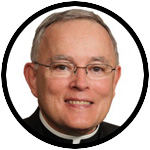
    Archbishop Charles Chaput, O.F.M. Cap.
    Archbishop Charles Chaput, O.F.M. Cap.

    My column this week is a collection of personal comments.  Read it as thoughts from a brother in the faith, not as teachings from an archbishop.
    Presidential campaigns typically hit full stride after Labor Day in an election year.  But 2016 is a year in which two prominent Catholics – a sitting vice president, and the next vice presidential nominee of his party — both seem to publicly ignore or invent the content of their Catholic faith as they go along.  And meanwhile, both candidates for the nation’s top residence, the White House, have astonishing flaws.
    This is depressing and liberating at the same time.  Depressing, because it’s proof of how polarized the nation has become.  Liberating, because for the honest voter, it’s much easier this year to ignore the routine tribal loyalty chants of both the Democratic and Republican camps.  I’ve been a registered independent for a long time and never more happily so than in this election season.  Both major candidates are – what’s the right word? so problematic – that neither is clearly better than the other.
    As Forbes magazine pointed out some months ago, the Republican candidate is worth roughly $4.5 billion.  The Democratic candidate is worth roughly $45 million.  Compare that with the average American household, which is worth about $144,000.  The median U.S. income is about $56,000.  Neither major candidate lives anywhere near the solar system where most Americans live, work and raise families.  Nonetheless, we’re asked to trust them.
    That’s a big ask.  One candidate — in the view of a lot of people — is an eccentric businessman of defective ethics whose bombast and buffoonery make him inconceivable as president.  And the other – in the view of a lot of people – should be under criminal indictment.  The fact that she’s not – again, in the view of a lot of people — proves Orwell’s Animal Farm principle that “all animals are equal, but some are more equal than others.”
    So what are we to do this election cycle as Catholic voters?  Note that by “Catholic,” I mean people who take their faith seriously; people who actually believe what the Catholic faith holds to be true; people who place it first in their loyalty, thoughts and actions; people who submit their lives to Jesus Christ, to Scripture and to the guidance of the community of belief we know as the Church.
    Anyone else who claims the Catholic label is simply fooling himself or herself — and even more importantly, misleading others.
    The American bishops offer valuable counsel in their document Forming Consciences for Faithful Citizenship (available from the USCCB), and this year especially, they ask us to pray before we vote. This is hardly new “news.” Prayer is always important. In a year when each Catholic voter must choose between deeply flawed options, prayer is essential. And prayer involves more than mumbling a Hail Mary before we pull the voting booth lever for someone we see as the lesser of two evils. Prayer is a conversation, an engagement of the soul with God.  It involves listening for God’s voice and educating our consciences.
    It’s absurd – in fact, it’s blasphemous – to assume that God prefers any political party in any election year.  But God, by his nature, is always concerned with good and evil and the choices we make between the two.  For Catholics, no political or social issue stands in isolation.  But neither are all pressing issues equal in foundational importance or gravity.  The right to life undergirds all other rights and all genuine social progress.  It cannot be set aside or contextualized in the name of other “rights” or priorities without prostituting the whole idea of human dignity.
    God created us with good brains.  It follows that he will hold us accountable to think deeply and clearly, rightly ordering the factors that guide us, before we act politically.  And yet modern American life, from its pervasive social media that too often resemble a mobocracy, to the relentless catechesis of consumption on our TVs, seems designed to do the opposite.  It seems bent on turning us into opinionated and distracted cattle unable to gain mastery over our own appetites and thoughts.  Thinking and praying require silence, and the only way we can get silence is by deciding to step back and unplug.
    This year, a lot of good people will skip voting for president but vote for the “down ticket” names on their party’s ballot; or vote for a third party presidential candidate; or not vote at all; or find some mysterious calculus that will allow them to vote for one or the other of the major candidates.  I don’t yet know which course I’ll personally choose.  It’s a matter properly reserved for every citizen’s informed conscience.
    But I do know a few of the things I’ll be reading between now and November.  The list is not exclusive or comprehensive.  But this year these particular titles seem especially urgent:
    1. Living the Gospel of Life. This 1998 pastoral letter of the U.S. bishops remains the best brief guide to American Catholic political reflection yet produced.
    2.  Resurrecting the Idea of a Christian Society by R.R. Reno (Regnery) and It’s Dangerous to Believe: Religious Freedom and Its Enemies by Mary Eberstadt (HarperCollins). Both of these books are new, important, a key to understanding the current moment in our national life, and deeply engaging.  They need to be discussed and shared widely.
    1. And finally two essays by the late, great Czech writer, Václav Havel, “Politics and Conscience” and “The Power of the Powerless.” Both are collected in Open Letters: Selected Writings, 1965-1990 (Vintage Books).  Havel was not (to my knowledge) a religious believer, and he wrote as a dissident during an era of Soviet Bloc repression.  But his commitment to what he called “living in the truth,” and his understanding and critique of the weaknesses in Western societies like our own – not just Marxist ones – were remarkable.  They remain relevant right now, today.
    The next few months will determine the next decade and more of our nation’s life.  We need to be awake, we need to clear our heads of media noise, and we need to think quietly and carefully before we vote.  None of us can afford to live the coming weeks on autopilot.