Showing posts with label Cardinal Turkson. Show all posts

Monday, May 26, 2025

Pope Leo XIV greets African pilgrims today after Mass in St. Peter's Basilica


Pope Leo XIV takes a group photo with those who attended the Mass in St. Peter's Basilica on May 26, 2025Pope Leo XIV takes a group photo with those who attended the Mass in St. Peter's Basilica on May 26, 2025 

Pope: May every baptized Christian feel called to be a sign of hope in our world

As pilgrims and representatives of the African continent celebrate Mass in St. Peter’s Basilica, Pope Leo XIV makes a surprise visit and invites everyone to live our faith as a sign of hope in our world.

By Devin Watkins

Cardinal Peter Kodwo Appiah Turkson celebrated Mass in St. Peter’s Basilica on Monday afternoon for Ambassadors of African nations who are accredited to the Holy See, along with several people taking part in the Jubilee pilgrimage.

At the end of the Mass, which came a day after the 62nd Africa Day, Pope Leo XIV made an unannounced appearance to greet the delegations and offer his encouragement.

In his off-the-cuff remarks, spoken in English, the Pope said the 2025 Holy Year inspires us all and invites us all to look for hope, but also to be signs of hope.

He said it is important for each and every baptized person feel himself or herself called by God to be a sign of hope in the world today.

Faith gives Christians strength, he continued, noting that our faith enables us to see the light of Jesus Christ in our lives and to understand how important it is to live our faith, not only on Sundays, not only during a pilgrimage, but each and every day.

Pope Leo said faith allows us to be filled with the hope that only Jesus Christ can give us.

He expressed his hopes that all of us together will continue to walk united as brothers and sisters to praise our God, to recognize that everything we have and everything we are is a gift from God, and to place those gifts at the service of others.

The Pope then thanked the Ambassadors and pilgrims for living their own faith in Jesus Christ.

He said the group was well accompanied by Cardinal Turkson, Chancellor of the Pontifical Academies of Sciences and Social Sciences, Cardinal Francis Arinze, Prefect Emeritus of the (then-) Congregation for Divine Worship and the Discipline of the Sacraments, and Archbishop Fortunatus Nwachukwu, Secretary of the Dicastery for Evangelization.

In conclusion, Pope Leo XIV invited everyone to join his prayer for the group: Thank you, Lord Jesus, and may your name be praised.

Wednesday, January 17, 2024

Pope Francis talks economics and development needing a moral compass


Sign of the World Economic Forum in DavosSign of the World Economic Forum in Davos  (AFP or licensors)

Pope to Davos Economic Forum: Development needs a moral compass

In a message to the 2024 World Economic Forum in Davos, Pope Francis urges business and world leaders to ensure that economic development benefits everyone and remains tied to solidarity.

By Devin Watkins

Titans of global business and politics are rubbing shoulders this week in Davos, Switzerland, under the theme: “Rebuilding Trust.”

To remind world leaders of their duty toward all of humanity, Pope Francis sent a message to the 2024 World Economic Forum, which was read out on Tuesday by Cardinal Peter Turkson and released on Wednesday.

In his message, the Pope said the greatest challenge facing humanity is to ensure peaceful coexistence and integral development for everyone.

“It is my hope,” he said, “that the participants in this year’s Forum will be mindful of the moral responsibility that each of us has in the fight against poverty, the attainment of an integral development for all our brothers and sisters, and the quest for a peaceful coexistence among peoples.”

Choppy global waters

Pope Francis noted that the Davos event takes place this year in “a very troubling climate of international instability.”

The Forum, he added, offers the chance for world leaders to explore innovative ways to build a better world, and he urged them to find ways to foster “social cohesion, fraternity, and reconciliation” among all people.

The Pope lamented the wars and prolonged conflicts that are lacerating parts of the world, many of which are wreaking death and destruction among civilians.

“The peace for which the peoples of our world yearn cannot be other than the fruit of justice,” he said. “Consequently, it calls for more than simply setting aside the instruments of war; it demands addressing the injustices that are the root causes of conflict.”

Rising inequality

Referring to the causes of conflict, the Pope pointed to the prevalence of hunger and the exploitation of natural resources, even as some parts of the world waste food and a select few get rich off of extractive industries.

He also condemned the “widespread exploitation of men, women, and children forced to work for low wages and deprived of real prospects for personal development and professional growth.”

“How is it possible,” he wondered, “that in today’s world people are still dying of hunger, being exploited, condemned to illiteracy, lacking basic medical care, and left without shelter?”

Moral compass to guide globalization

Globalization has a profoundly moral dimension, said Pope Francis, adding that development requires a moral compass to guide discussions that shape the future of the international community.

He invited businesses and states to work together to promote “far-sighted and ethically sound models of globalization”.

Development, said the Pope, “must entail subordinating the pursuit of power and individual gain, be it political or economic, to the common good of our human family, giving priority to the poor, the needy and those in the most vulnerable situations.”

Development spread to all

Finally, Pope Francis called for business leaders and politicians to prioritize the equitable distribution of progress, so that people who are economically disadvantaged may reap the benefits of global growth.

“Authentic development must be global, shared by all nations, and in every part of the world, or it will regress even in areas marked hitherto by constant progress.”

Tuesday, October 18, 2022

Hunger across the globe currently impacts 828 million human beings


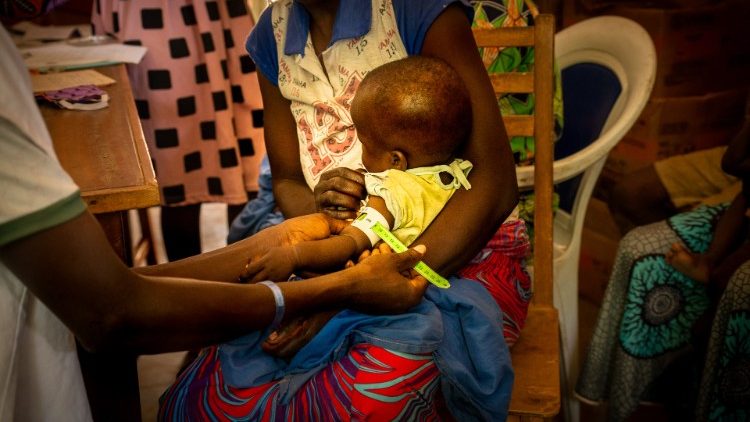
A health worker at a health center in the Central African Republic measures the circumference of a child's arm to see if the child is malnourished.A health worker at a health center in the Central African Republic measures the circumference of a child's arm to see if the child is malnourished.  (AFP or licensors)

'Leaving No One Behind: Better Production, Food, Environment'

The Permanent Observer Mission of the Holy See to FAO, IFAD and WFP, the Rome Forum of Catholic-inspired Non-Governmental Organizations, and the UNESCO Chair in Bioethics and Human Rights, established at the Pontifical Athenaeum Regina Apostolorum and the European University of Rome, are organizing a day of study on hunger worldwide, and other timely themes, with high-level participation in Rome later this month.

By Vatican News Staff Reporter

"Leaving No One Behind: Better Production, Better Food, Better Environment, and Better Life for Everyone" is the mission and title of a Rome-based Seminar set to take place on 27 October.

The day of study, to reflect on these topics "that are more timely than ever," is being organized by the Permanent Observer Mission of the Holy See to FAO, IFAD and WFP; the Rome Forum of Catholic-inspired Non-Governmental Organizations; and the UNESCO Chair in Bioethics and Human Rights, established at the Pontifical Athenaeum Regina Apostolorum and the European University of Rome.

In conjunction with World Food Day 2022, the event will address the importance of leaving no one behind and aiming for better production, better nutrition, a better environment, and a better life, in order to overcome poverty and growing inequalities and put humanity back on a path that takes into account long-term development, inclusive economic growth, and the well-being of the planet.

Hunger, a harsh reality for 828 million

“The 2022 edition of the State of World Food Security and Nutrition (SOFI) Report, published jointly by FAO, IFAD, UNICEF, WFP and WHO on July 6, highlighted how hunger, which the International Community had pledged to defeat by 2030, is still a reality for 828 million people.”

It is estimated that in 2030 nearly 670 million people, that is roughly 8 percent of the world's population, will still suffer from hunger.

Pope Francis' appeals

Pope Francis repeatedly insists how urgent it is to end the scourge of hunger through concrete actions and courageous policies.

One can recall his strong words in his message to the Pre-Summit on Food Systems in 2021 organised by the UN in Rome from 26 - 28 July 2021.

“If we are to guarantee the fundamental right to an adequate standard of living and meet our commitments to achieve Zero Hunger, it is not enough to produce food. We need a new mindset and a new holistic approach, and must plan food systems that protect the Earth and keep the dignity of the human person at the centre; that ensure enough food globally and promote decent work locally; and that feed the world today, without compromising the future.”

Unprecedented cooperation required to confront urgent need

The aim of this meeting, the organizers state, is "to reflect on the urgent need to transform the way we produce and consume food, for ourselves and for our planet, knowing that this will require unprecedented cooperation. We will do so, moving from a theoretical perspective, dwelling on actions to be taken for better production, better food, a better environment, and a better life for each human being."

The participants will focus on concrete experiences highlighting how the development of innovative ideas, the creation of strategic partnerships, and a deep concern for those who are least in the world, are preparatory to the change for which we hope, "to prepare the tomorrow of all, without discarding anyone: everyone's. For without an overall vision there will be no future for anyone," as Pope Francis said during his 19 April 2020 Divine Mercy homily.

The programme

From the Vatican, Cardinal Peter Turkson, Chancellor of the Pontifical Academy of Sciences, will speak about "one human family, food for all as food justice," while Dr. Stefano Zamagni, President of the Pontifical Academy of Social Sciences, will discuss "what Institutions are, today, urgently needed to reach food security." 

Dr. Jyotsna Puri, Associate Vice President of IFAD, will discuss "food security in an era of conflict and climate change;" Dr. Maximo Torero Cullen Chief Economist at FAO will reflect on "a systems vision to achieve a better life for all actors of the agrifood systems;" and Dr. Luigi Sbarra, Secretary General of the ICFTU," will focus on "in decent work, the bud of the common good." 

Moreover, "the human right to integral human development that ensures food and environment for the vulnerable," will be explored by Prof. Alberto Garcia Gomez, Dean of the Faculty of Bioethics of the Pontifical Athenaeum Regina Apostolorum in Rome, and "healthy and sustainable nutrition," will be explained by Prof. Manon Khazrai, Professor of Human Nutrition at the Faculty of Food Science and Human Nutrition in Rome-located University Campus Bio Medico.

Dr. Francesca Benigno, Federation of Christian Organizations International Voluntary Service (FOCSIV) will be speaking on "agroforestry and land rights advocacy" based on her experience in Myanmar, and Dr. Lia Zervino, of the World Union of Catholic Women's Organizations (UMOFC), will discuss "women's engagement to ensure a more inclusive future."

Dr. Vincenzo Conso, Coordinator of the Rome Forum of Catholic-inspired NGOs, will moderate the event; and Fr. José Enrique Oyarzun, L.C., Rector of Regina Apostolorum, will welcome the participants to the study day.

Msgr. Fernando Chica Arellano, Permanent Observer of the Holy See to FAO, IFAD and WFP, is to offer concluding remarks.

Tuesday, April 5, 2022

New responsibilities for Cardinal Turkson


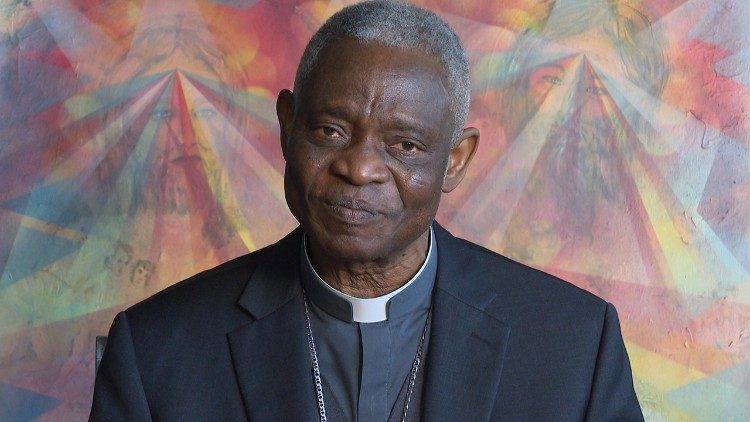
Cardinal TurksonCardinal Turkson  (@VaticanMedia)

Cardinal Turkson Chancellor for Pontifical Academies for Sciences and Social Sciences

Pope Francis appoints Cardinal Peter Turkson as the new Chancellor of both the Vatican’s Pontifical Academy of Sciences and the Pontifical Academy of Social Sciences.

By Linda Bordoni

Pope Francis has chosen Cardinal Peter Kodwo Appiah Turkson to head the Pontifical Academy of Sciences and the Pontifical Academy of Social Sciences.

He succeeds Argentine Bishop Marcelo Sánchez Sorondo, who will be 80 years old on September 8 and who has held these posts since 1998.

73-year-old Cardinal Turkson is the Prefect emeritus of the Dicastery for Promoting Integral Human Development.

Long service in the Church

Cardinal Turkson who is also the Archbishop emeritus of Cape Coast, in Ghana, is the first Ghanaian Cardinal. He was ordained a priest for the Archdiocese of Cape Coast on July 20, 1975, at St. Francis De Sales Cathedral. He continued his studies in Rome at the Pontifical Biblical Institute, earning a license in Sacred Scripture. He also holds master degrees in Theology and Divinity.

He was appointed Metropolitan Archbishop of Cape Coast by Pope St. John Paul II in 1992 and received episcopal ordination the following year. He was president of the Ghanaian Conference of Catholic Bishops from 1997 to 2004 and after holding various posts, in 2009, at the conclusion of the II Special Assembly for Africa of the Synod of Bishops for which he was General Rapporteur, Pope Benedict XVI appointed him as President of the Pontifical Council for Justice and Peace. In September 2013, Pope Francis confirmed him at the head of that Pontifical Council which later became the Dicastery for Promoting Integral Human Development.

The Pontifical Academies of Social Sciences and of Sciences

Both the Pontifical Academies of Social Sciences and of Sciences have their headquarters inside the Vatican in the Casina Pio IV. They are part of the 10 Pontifical Academies operated by the Holy See to study and promote events on various subjects that are of interest to the Vatican.

The Pontifical Academy of Social Sciences was established in 1994 by Pope St. John Paul II to promote “the study and progress of the social sciences, primarily economics, sociology, law and political science.”

The Pontifical Academy of Sciences was founded in 1603, and at the time was the first exclusively scientific academy in the world.

Tuesday, October 5, 2021

Prominent Cardinal says don't deny Communion to Joe Biden


Top Vatican cardinal says Biden should not be denied Communion

Cardinal Turkson says denying the sacrament should only take place in "extreme cases"

 
This article appears in the Bishops, Biden and Communion feature series. View the full series.

cardinal-peter-turkson-vatican-secretary-of-immigration-the-environment-civil-rights-axios-co-founder-mike-allen.jpg

Cardinal Peter Turkson, left, is interviewed by Axios journalist Mike Allen, right. (photograph courtesy of HBO)

ROME — U.S. President Joe Biden should not be denied Communion, said Cardinal Peter Turkson, warning that the denial of the sacrament should only take place in "extreme cases."

"The Eucharist should not in any way become a weapon," Turkson said in an interview with AXIOS on HBO, which aired Oct. 3. "If you say somebody cannot receive Communion, you are basically doing a judgment that you are in a state of sin."

When asked directly by journalist Mike Allen if that applied to Biden, only the second Catholic president in U.S. history, Turkson replied "no." In discussing the "extreme cases," Turkson offered an example of a priest denying Communion to a known murderer, which he implied would be a legitimate grounds for denying it. 

The Ghanian cardinal's remarks come ahead of a high stakes meeting of U.S. bishops next month where the body is expected to vote on a new document on "eucharistic coherence." The controversial document is being drafted in response to calls from some conservative Catholic bishops to deny Communion to Biden and other Catholic politicians who support legal abortion. The Vatican has previously urged caution on proceeding ahead with such a proposal. 

While not directly weighing in on the situation in the United States, Pope Francis said last month that priests and bishops should be pastoral and not political when it comes to the issue of Communion. The pope also said he had never denied the sacrament to anyone.

"What should a shepherd do? Be a shepherd and not going around condemning or not condemning," Francis said. "They must be a shepherd with God's style. And God's style is closeness, compassion and tenderness."

Turkson, who heads the Vatican's Dicastery for Promoting Integral Human Development and works in close collaboration with Pope Francis, went on to address a number of other topics in the wide-ranging interview, including climate change, women's ordination, the U.S. withdrawal from Afghanistan, racism and the COVID-19 pandemic. As the two men bounced from topic to topic, they appeared to be talking over each other at various points in the exchange. 

"They can and they need to do more," said Turkson of the vaccine distribution efforts of larger, wealthier countries. 

The cardinal said he wanted "to encourage heads of state and leaders in Africa to also explore traditional therapies for this," saying that if "local heads of state were to promote local herbal medication, our dependence will not be 100% on vaccines." He did not deny the effectiveness of vaccines. 

Turkson is the head of the Vatican's COVID-19 commission, established in April 2020, and has previously argued that the world must reject "vaccine nationalism" and instead embrace a mindset of global solidarity when it comes to vaccine access. 

On racism in the Catholic Church, Turkson acknowledged that "certainly, the church can do more." 

"There was a time when church institutions owned slaves because it was the turn of the time, as it were," he said. 

When asked what the church should do to make up for that, he said that "What is past is past. Reparation if it can be made, can be made. But then it, it's also a call for the resolve to not repeat past errors." 

The cardinal said he faces no personal struggles with the church's teaching against ordaining women to the priesthood. He went on to wonder aloud whether it is a question of rights. 

"Not even men who are ordained consider that to be a right," he said. When asked his response to the fact that women make up half of the human population, he said that "if anybody would answer that to me and say, 'You're depriving them of rights,' then I would be worried about denying anybody, right? Because to deny anybody's right, it also diminishes dignity."

On Afghanistan, the cardinal said he "is not judging anybody," but looking back to the initial invasion in 2001, he said the "U.S. went in there with vengeance."

"If U.S. had gone in first not even with a militant posture but to talk, we'd be living with a completely different situation now," he added.

Tuesday, July 16, 2019

Last Sunday was Sea Sunday; asking that all seafarers be protected and safe(Look up the Stella Maris ministry here in ANO)

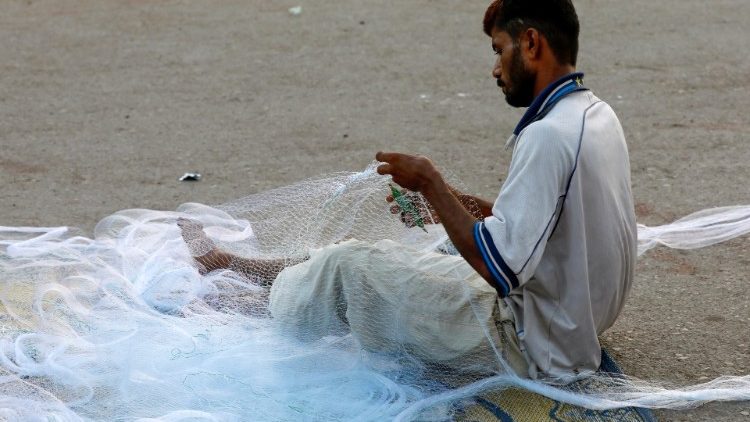
A man prepares fishing net along a road near the port area in Karachi, Pakistan A man prepares fishing net along a road near the port area in Karachi, Pakistan 


Sea Sunday: Holy See calls for the protection of the rights of seafarers


In a message marking the annual celebration of ‘Sea Sunday’, the Holy See calls for the protection of the rights of all people working at sea.


By Linda Bordoni
Today is Sea Sunday. It’s a day set aside each year to remember and pray for seafarers, their families and all who support them.
Pope Francis marked the occasion with a tweet saying that he is praying for seafarers and fishermen them and their families, and encouraging every effort to protect and safeguard their human rights.

Cardinal Peter Turkson, Prefect of the Vatican Dicastery for Promoting Integral Human Development issued a message calling on “International Organizations together with proper government authorities and the different players of the maritime world to renew their efforts to protect and safeguard the rights of all people working at sea”.

The crucial role of seafarers in our lives

Highlighting the crucial role of seafarers in our daily lives, thanks to whose work we receive most of the possessions we have in our houses, “not to mention the fuel for our cars, the clothes we wear, and many other items are all made in distant parts of the world and brought to us by seafarers” Cardinal Turkson said it is proper that we pause for a moment to reflect how important and crucial seafarers are for our comfort and well-being.
For this reason, he notes, in various Christian Churches around the world the second Sunday of July is traditionally set aside as Sea Sunday. A day in which “the faithful are requested to remember and pray for the 1.5 million seafarers who criss-cross the oceans and the seas, transporting almost 90% of goods from one nation to another”.

Seafarers live lives of challenges and hardships

Cardinal Turkson remarked on how for months at a time, seafarers live in confined spaces,  away from their families and loved ones and deal with issues such as delayed salaries, tough working conditions, the threat of piracy and even terrorist attacks.  
He said that in the case of maritime accidents, seafarers are often criminalized and detained without effective legalprotection and the benefit of fair treatment, and noted that “in a precarious mix of nationalities, cultures and religions the opportunities to interact socially with reduced number of crewmembers on board have diminished,” while “isolation and depression, combined with a lack of a supportive environment, affects the mental health of seafarers, sometimes with tragic and heartbreaking consequences for their families, crewmembers and ship-owners”.

Conventions and legislation

While acknowledging that ratification and implementation of several international Conventions and legislation have improved working and living conditions on board a great number of commercial vessels, the Cardinal says that there are many cases in which “unscrupulous ship owners take advantage of less stringent enforcement of the law”.

Appeal for protection of rights

Cardinal Turkson goes on to reiterate his call “on International Organizations together with proper government authorities and the different players of the maritime world to renew their efforts to protect and safeguard the rights of all people working at sea”.
He also offers encouragement to the chaplains and volunteers of Stella Maris/Apostleship of the Sea, urging them to “be vigilant and approach each seafarer and fisherman with the same committed spirit that animated the pioneers of our ministry when almost hundred years ago, on 4th October 1920, they decided to revive and restructure the widespread ministry of the Catholic Church for the people of the sea”.

Speak the language of Christian love

“In the faces of seafarers from different nations,” he says, “I invite you to recognize the face of Christ in your midst. In the confusion of languages, I recommend you to speak the language of Christian love that welcomes everyone and excludes no one.”
And quoting from Pope Francis, the Cardinal says:  Confronted with abuses, I urge you not be afraid to denounce injustices and advocate “to work together to build the common good and a new humanism of work, to promote work that respects the dignity of the person who does not only look at profit or production needs but promotes a dignified life knowing that the good of the people and the good of the company go hand in hand.”