Showing posts with label liturgical calendar. Show all posts

Wednesday, May 13, 2026

It's been 40 days since Easter, when do we celebrate the Ascension of the Lord? Depends on where you live!


Ascension Thursday or Ascension Sunday?


Find out when the Solemnity of the Ascension is observed in the different Dioceses of the United States.

Throughout the United States the Solemnity of the Ascension has different observances. Depending on what diocese your state is in, the celebration of the feast might actually fall on different days.

So what's the deal? How can a feast day fall on different days?

Traditionally the feast is celebrated exactly 40 days after Easter. That's the origin of "Ascension Thursday."

Following the liturgical reforms begun by the Second Vatican Council, it became possible for the different national conferences of Catholic bishops to transfer the feast. The "General Norms for the Liturgical Year and the Calendar" - issued in Rome on February 14, 1969 - states:

"In those places where the solemnities of Epiphany, Ascension, and Corpus Christi are not observed as holydays of obligation, they are assigned to a Sunday, which is then considered their proper day in calendar."

Holy Days of Obligation

In the United States the following six Holy Days of Obligation are observed throughout the country: 1) Solemnity of Mary, Mother of God, 2) Ascension of the Lord, 3) Assumption of the Virgin Mary, 4) All Saints' Day, 5) Immaculate Conception of the Virgin Mary, 6) Christmas.

You might be surprised to see Easter Sunday, Palm Sunday, and Ash Wednesday missing from the list. Since Easter and Palm Sunday both fall on Sunday, we're bound by the normal Sunday obligation to attend Mass on those days. The fact that so many people show up for Ash Wednesday without it being "required" is worth further reflection...but we digress.

Decision of the US bishops

In 1991, the US bishops decided to permit different Ecclesiastical Provinces to make the decision to transfer the Solemnity of the Ascension of the Lord to the Seventh Sunday of Easter or to observe the feast on the customary Thursday. (An Ecclesiastical Province is the grouping of dioceses which are set under an archdiocese; the bishops of these dioceses are "headed" by the archbishop, called a "metropolitan bishop").

In accord with the provisions of canon 1246, §2 of the Code of Canon Law, which states: "... the conference of bishops can abolish certain holy days of obligation or transfer them to a Sunday with prior approval of the Apostolic See," the National Conference of Catholic Bishops of the United States decrees that the Ecclesiastical Provinces of the United States may transfer the Solemnity of the Ascension of Our Lord and Savior Jesus Christ from Thursday of the Sixth Week of Easter to the Seventh Sunday of Easter according to the following procedure.

Ascension on Thursday

Accordingly, these Ecclesiastical Provinces in the United States have chosen to continue to observe the Solemnity of the Ascension on Thursday: Boston, Hartford, New York, Omaha, and Philadelphia. The decision impacts 9 different U.S. states overall.

After several years of transferring the solemnity to Sunday, in March 2022, the bishops of the Ecclesiastical Provinces of New Jersey decided to transfer the solemnity permanently to Sunday in their respective dioceses.

Additionally the Anglican Ordinariate, the Personal Ordinariate of the Chair of Saint Peter, observes the feast on Thursday, regardless of the geographic location of their parishes.

Friday, January 9, 2026

A look ahead: upcoming papal liturgies with Pope Leo XIV


2025.12.25 Santa Messa di Natale

Vatican releases calendar of upcoming papal liturgies

The Office for the Liturgical Celebrations of the Supreme Pontiff has released Pope Leo’s calendar for January and February, with the Pope scheduled to preside at liturgies for the Conversion of St Paul, the Presentation of the Lord, and Ash Wednesday.

By Christopher Wells

Over the course of the next two months, Pope Leo XIV will preside at liturgies for the feasts of the Conversion of St Paul, the Presentation of the Lord, and Ash Wednesday, according to the calendar released Friday by the Office for the Liturgical Celebrations of the Supreme Pontiff.

During the first week of Lent, the Holy Father will also take part in the traditional Lenten Spiritual Exercises along with the Roman Curia.

Solemnity of the Conversion of Saint Paul

On January 25, Pope Leo will go to the Basilica of Saint Paul Outside the Walls, where he will preside at Second Vespers for the Solemnity of the Conversion of Saint Paul.

The liturgy will mark the conclusion of the 59th Week of Prayer for Christian Unity, which this year is focused on a passage from St Paul’s Letter to the Ephesians: “There is one body and one Spirit, just as you were called to the one hope of your calling” (Eph 4:4).

Feast of the Presentation of the Lord

For the Feast of the Presentation of the Lord, commemorating the presentation of Jesus in the Temple forty days after His birth, the Holy Father will celebrate Holy Mass in the Basilica of Saint Peter on February 2.

The feast is also the occasion of the thirtieth World Day of Consecrated Life, an opportunity for gratitude and renewal for all consecrated men and women.

“This day, established by St. John Paul II, is an invitation to rediscover the beauty of consecrated life as a gift to the Church and the world,” says the Dicastery for Institutes of Consecrated Life and Societies of Apostolic Life. “The celebration also aims to be an occasion to renew the missionary commitment of consecrated persons, together with the Holy Father.”

Ash Wednesday

Ash Wednesday, the beginning of Lent in the Latin Rite, occurs in 2026 on February 18. Following an ancient tradition revived in the 20th century by Pope St John XXIII, Pope Leo will celebrate Holy Mass with the benediction and imposition of Ashes at the Basilica of Santa Sabina on the Aventine Hill in Rome.

The liturgy will begin with the “Statio” at the nearby Church of Sant’Anselmo, and the penitential procession to the Basilica.

Spiritual Exercises

The customary Spiritual Exercises of the Holy Father and of the Roman Curia take place during the first week of Lent, beginning Sunday, 22 February, and concluding on Friday, 27 February.

This year, the Spiritual Exercises are expected to take place in the Apostolic Palace. 

Office for the Liturgical Celebrations of the Supreme Pontiff

Pope Francis’ Apostolic Constitution on the Roman Curia, Predicate Evangelium, explains that “The Office for the Liturgical Celebrations of the Supreme Pontiff is responsible for preparing whatever is needed for the liturgical and other sacred celebrations in the Vatican at which the Roman Pontiff, or – in his name and by his mandate – a Cardinal or a Prelate presides, participates or assists, and for supervising them according to the current prescriptions of liturgical law. It also arranges everything necessary or useful for their dignified celebration and for the active participation of the faithful” (PE, art. 231).

The current Master of Papal Liturgical Celebrations is Archbishop Diego Ravelli.

Tuesday, February 11, 2025

St. Teresa of Calcutta now has feast day inscribed in the General Roman Calendar


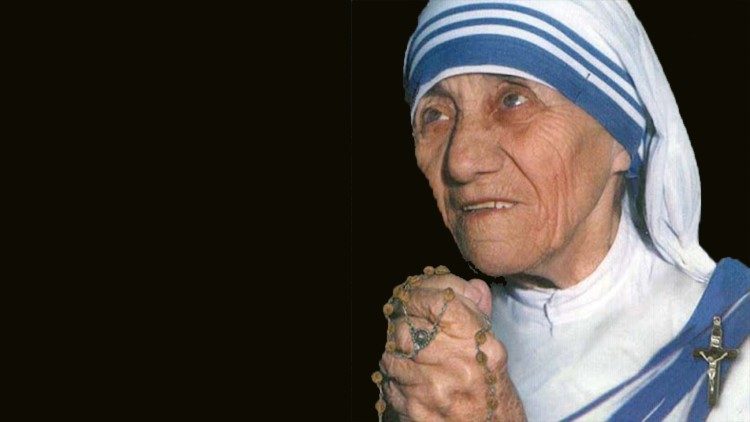
Mother Teresa of Calcutta (file photo)Mother Teresa of Calcutta (file photo) 

St. Teresa of Calcutta’s feast day inscribed in Roman Calendar on September 5

The Dicastery for Divine Worship and the Discipline of the Sacraments releases the decree inscribing St. Teresa of Calcutta in the General Roman Calendar, along with the liturgical texts to accompany her feast day on September 5.

By Devin Watkins

Mother Teresa of Calcutta was “a beacon of hope, small in stature but great in love, a witness to the dignity and privilege of humble service in the defence of all human life and of all those who have been abandoned, discarded and despised even in the hiddenness of the womb.”

Cardinal Arthur Roche, Prefect of the Dicastery for Divine Worship and the Discipline of the Sacraments, offered that praise of St. Teresa on Tuesday.

The Cardinal Prefect released a comment to accompany the decree inscribing St. Teresa of Calcutta into the General Roman Calendar.

The decree was accompanied by the liturgical texts (in Latin) to guide the faithful in praying the Liturgy of the Hours and the celebration of Mass.

Her feast day will be celebrated as an optional liturgical memorial annually on September 5, the date of her death in 1997.

Mother Teresa was born in Skopje on August 26, 1910 as Anjezë Gonxhe Bojaxhiu. She professed solemn vows as a Sister of Loreto in Calcutta, India, in 1937. In 1950, she left the Sisters of Loreto to found the Missionaries of Charity, which now numbers over 6,000 sisters active in 130 countries who serve those most in need.

Mother Teresa was awarded the Nobel Peace Prize in 1979, and Pope St. John Paul II beatified her on October 19, 2003.

Pope Francis canonized her on September 4, 2016 during the Extraordinary Jubilee of Mercy.

‘Witness of hope’

In his comment released on Tuesday, Cardinal Roche said Pope Francis requested her insertion in the Roman Calendar in response to the requests of bishops, religious, and the lay faithful.

He noted that her holiness and spirituality reveals to the faithful an “outstanding witness to hope for those who had been discarded in life.”

At the Mass of Canonization for St. Teresa on September 4, 2016, Pope Francis called her a conduit of divine mercy that illumines the darkness that surrounds us.

“Her mission to the urban and existential peripheries,” noted the Holy Father in his homily, “remains for us today an eloquent witness to God’s closeness to the poorest of the poor.”

Reflecting on the liturgical texts released on Tuesday, Cardinal Roche said the Collect prayer focuses on the presence of the Cross of Christ in the needs of the poor.

The First Reading for the optional memorial Mass comes from Isaiah and relates to the “fast that is pleasing to God”.

The Gospel, he added, underlines the revelation of the mysteries of the Kingdom of God to little ones.

The Liturgy of the Hours contains part of a letter Mother Teresa wrote to Fr. Joseph Neuner in 1960 about her struggle with what St. John of the Cross termed the “Dark Night of the Soul.”

“Opening her soul,” concluded Cardinal Roche, “she manifests the darkness of God’s absence through which she lived for many years yet joyfully offered to God, so that, bearing faithfully this trial, many souls may be enlightened.”