Showing posts with label evangelization. Show all posts

Friday, July 31, 2026

As we move into August, introducing Pope Leo's monthly intention


Pope's August prayer intention: 'for evangelization in the city'

Pope Leo XIV releases his prayer intention for the month of August, and invites Catholics to pray 'for evangelization in the city,' so that the Lord may accompany the millions who seek meaning amid noise and haste.

By Deborah Castellano Lubov

Pope Leo XIV has urged Catholics across the globe to join him this August in praying for evangelization in the city.

He released the monthly “Pray with the Pope” video on Friday, which is prepared by the Pope’s Worldwide Prayer Network.

In his prayer, Pope Leo asks the “Good Shepherd” who “walks through our streets and squares,” to “enter tall buildings and humble neighborhoods,” and to “silently accompany millions” of people who “seek meaning amid noise and haste.”

The Chicago-born Pope acknowledges that while cities are meant to be places of “freedom and opportunity,” they can also become “spaces of anonymity and isolation.”

Thus, he expressed his hope that urban environments may provide “fertile ground" for proclaiming the Gospel.

The Holy Father also prayed that the faithful make “simple and loving gestures,” and do so together as a community that “goes forth,” and combats indifference and isolation with presence and fraternity.

Today, almost 45% of the world’s population lives in urban areas. Demographic growth has led to a high concentration of people, generating social and community challenges, including loneliness that affects the mental health of many people, especially young people.

The Pope’s Worldwide Prayer Network

Founded in 1844 as the Apostleship of Prayer, the Pope’s Worldwide Prayer Network is a Pontifical Work entrusted to the Society of Jesus.

In December 2020, Pope Francis established this Pontifical Work as a Vatican Foundation and approved its final statutes in July 2024.

It is present in over 92 countries, forming a spiritual community of more than 22 million people who seek to live each day with availability to God’s mission.

At the center of its mission are the monthly prayer intentions of the Pope, inviting its members to focus on the pressing challenges facing humanity and the Church’s mission. 

Tuesday, June 30, 2026

Peter's Pence rakes in almost $ 66 million in donations but spends $ 68 million, helping support 74 countries


2026.06.17 Udienza Generale

Peter’s Pence 2025: €54.5 million to support Pope’s mission of charity

The 2025 Annual Disclosure for Peter’s Pence shows that offerings made to the Holy Father sustained his service to the universal Church and supported projects of direct assistance in 74 countries.

Vatican News

Peter’s Pence received €57.6 million in income in 2025, while expenses borne by the Fund amounted to €59.8 million, according to the 2025 Annual Disclosure.

The report explains that Peter’s Pence receives offerings made to the Holy Father in order to sustain his mission for the universal Church and support numerous initiatives in favor of those most in need.

Although expenses exceeded income by €2.2 million, the report notes that the deficit was due to fluctuations in foreign exchange rates.

Donations received amounted to €54.5 million. They came through three main channels: the diocesan collection held on the Solemnity of Saints Peter and Paul, direct offerings, and inheritance legacies.

The largest share came from dioceses, which contributed €34.7 million, or 63.6 percent of the total. Private donors gave €5.4 million, while foundations contributed €13 million and religious institutes €1.4 million.

Among donations from dioceses and private individuals, the United States accounted for the largest amount, with €14.2 million, followed by Italy with €3.1 million and Brazil with €2.1 million.

Supporting the Pope’s apostolic mission

In 2025, Peter’s Pence made contributions totaling €54.5 million.

Of this amount, €41.2 million was allocated to support the activities of the Holy See in service of the Holy Father’s apostolic mission, while €13.3 million was directed toward projects providing direct assistance to those in need.

The report notes that expenses connected with supporting the Holy Father’s mission totaled €404.5 million in 2025. Peter’s Pence covered approximately 10 percent of that amount.

These activities include support for local Churches in difficulty and in specific contexts of evangelization, worship, message diffusion, apostolic nunciatures, charitable service, the preservation of historic patrimony, academic institutions, human development, education, science and culture, and initiatives related to life and family.

Projects in 74 countries

The Peter’s Pence Fund also financed 252 direct assistance projects in 74 countries, for a total of €13.3 million.

These projects were grouped into three areas: extending the evangelizing presence, social projects, and support for the evangelizing presence.

Funding included the construction of churches, convents, pastoral centers, classrooms and schools, as well as aid for Gaza, support for local communities, and assistance to Churches in mission countries and areas of special need.

Africa received the largest share of direct assistance funding, with €5.2 million for 73 projects. Asia received €3 million, Europe €2.6 million, the Americas €2.4 million, and Oceania €100,000.

The report also notes that, in Europe, several scholarships were awarded to priests, seminarians and religious from Africa, Latin America and Asia to study at pontifical universities, and humanitarian aid was provided for the Ukrainian population.

The report closes with Pope Leo XIV’s appeal: “Help us, one and all, to build bridges through dialogue and encounter, joining together as one people, always at peace.”

Friday, June 5, 2026

A look ahead at Pope Leo's visit to Spain which begins tomorrow


File photo of Pope Leo XIV's pastoral visit to Acerra, Italy, on May 23, 2026File photo of Pope Leo XIV's pastoral visit to Acerra, Italy, on May 23, 2026  (@VATICAN MEDIA)Editorial

Evangelization and closeness to migrants: A journey into the heart of Europe

Our Editorial Director reflects on the challenges of Pope Leo XIV's Apostolic Journey to Spain on the centenary of the death of Venerable Antoni Gaudí, the architect of the Sagrada Família, which will see the Pope visit Madrid, Barcelona, and the Canary Islands.

By Andrea Tornielli

The seven-day Journey that Pope Leo XIV is preparing to undertake in Spain, which will take him to the capital Madrid, then Barcelona, and finally, the Canary Islands, is a pilgrimage into the heart of Europe. Rather, it is an Apostolic Journey whose three stages encapsulate the major challenges facing the Church on the continent.

This visit follows Pope Leo's Apostolic Journeys to Türkiye and Lebanon, which were rich in ecumenical significance and dedicated to peace in the Land of the Cedars, where in recent months a devastating conflict has ravaged the population affected by Israeli bombardments.

It also follows his one-day Journey to the Principality of Monaco and the eleven-day Apostolic Journey in April to four African countries, a “missionary” pilgrimage which Pope Leo has said he wanted to be the first Apostolic Journey of his pontificate.

As Pope Leo embarks on his next Apostolic Journey on Saturday, the Successor of Peter now encounters a deeply polarized European society in the nation of Spain.

The first stop, Madrid, will be particularly marked by his meeting with members of Parliament. It will be an important opportunity to recall the perspective from which the Church views politics and commitment to the common good.

Today, this perspective is far removed both from any form of political alignment and from any attempt, encouraged by secularist ideology, to reduce Christian faith to a purely private and interior experience.

It is far removed from political alignment, because the Church, in order to remain true to herself and proclaim the Gospel, cannot and must not rely on power, establishing ties that ultimately obscure its mission. It is far removed from inward-looking religiosity, because faith is incarnational, and Christians are called to bear witness to the Gospel through concrete efforts to make society more humane, more just, and more attentive to those on the margins.

The Church in Spain, called to bear witness to a polyphonic unity in this age of polarization and confrontation, has endured, together with the entire Iberian people, the tragedy of civil war during the last century. Some of those wounds have not yet fully healed.

The question of how the Gospel is proclaimed today within a society deeply shaped by a great Christian tradition that forged its identity, yet which now appears increasingly secularized, will run throughout the Bishop of Rome's entire pilgrimage.

In Barcelona, the visit to the magnificent Basilica of the Sagrada Família, during which Pope Leo will inaugurate the tallest tower, dedicated to Jesus Christ, contains a possible answer: through the language of beauty.

The Church has always spoken to everyone through art, and particularly through images. Throughout the centuries, countless lessons in the faith have been conveyed through frescoes, mosaics, and sculptures.

The Sagrada Família, the fruit of the faith and genius of a Catalan architect who died one hundred years ago and is now on the path to sainthood, stands as a powerful example of this language of beauty. Anyone who stands before the basilica is guided on a journey through the very essence of the Christian faith.

The lesson of Venerable Antoni Gaudí is therefore profoundly relevant today, especially in our own time and for Europe, where the transmission of faith within the family has effectively been interrupted and where primary evangelization can no longer be taken for granted.

Finally, the stop in Gran Canaria and Tenerife will allow the Pope to witness firsthand the drama experienced by migrants. 

Those who survive the crossing arrive at Europe’s doors, even though the continent often fails to respond to this crisis in a coordinated and organized way, leaving the countries most exposed to handle it on their own—Spain is certainly one of them.

It is well known that a visit to the Canary Islands was a desire expressed by Pope Francis, a desire that his successor, Pope Leo, is now bringing to fulfillment.

Last October, Pope Leo XIV published the Apostolic Exhortation Dilexi te, the fruit of work that had begun during the previous pontificate. That text highlighted the connection between Christ's love and His call for us to draw close to the poor, the marginalized, the suffering, and the “strangers” mentioned by Jesus in the Gospel.

In Pope Leo's encyclical Magnifica humanitas, the Pope calls on us “to look at the world from a lower position: through the eyes of those who suffer rather than the mighty; to view history through the eyes of the little ones, rather than through the perspective of the powerful; to interpret the events of history from the viewpoint of the widow, the orphan, the stranger, the wounded child, the exile and the fugitive.”

The Pope's stop in the Canary Islands therefore enters into the living reality of the sufferings of the least among us, issuing a call to Christians to bear evangelical witness.

At the same time, it is a call to responsibility for everyone: the responsibility to remain human.

Tuesday, June 2, 2026

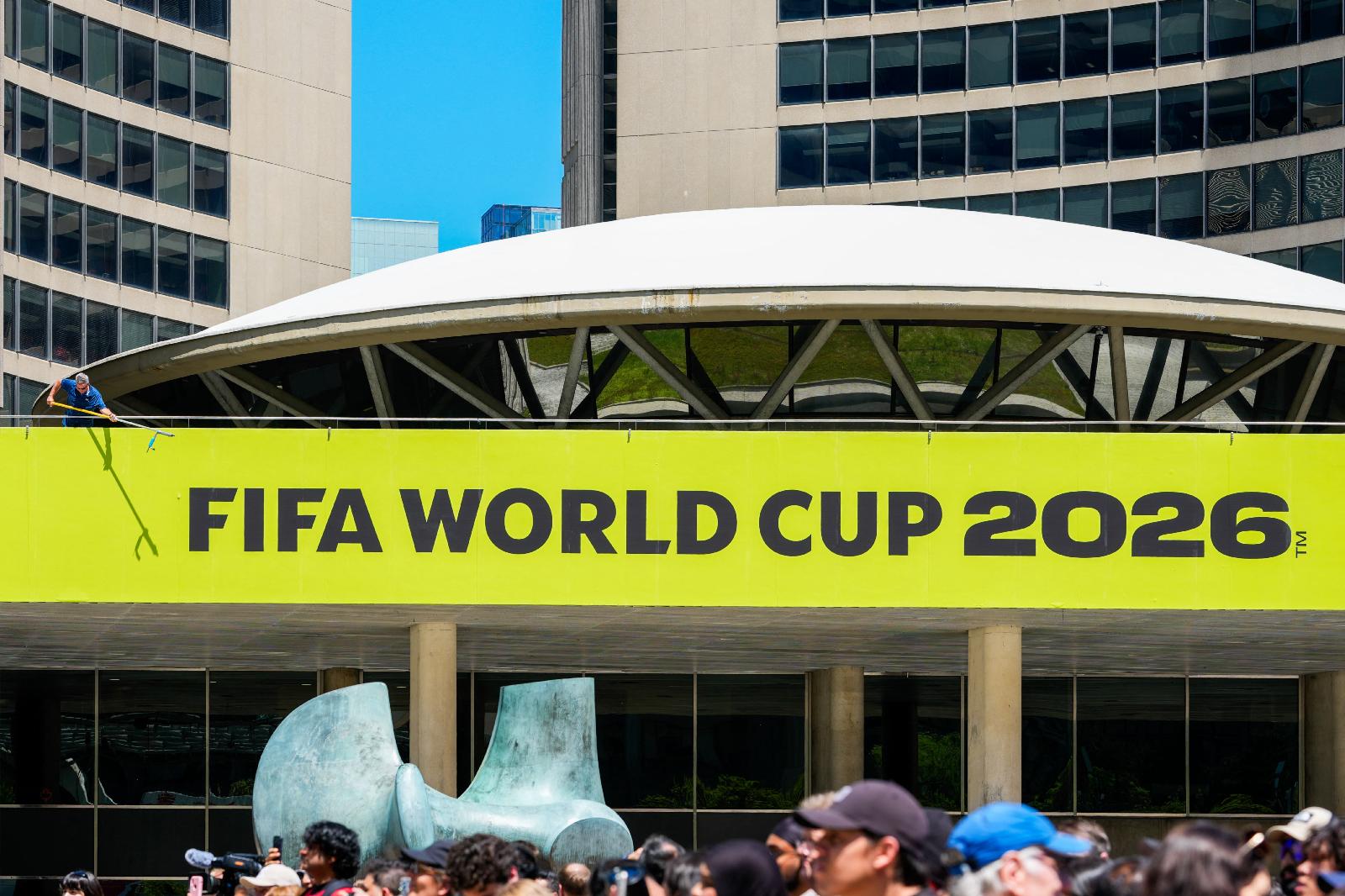
Catholic Dioceses across USA plan special outreach as the FIFA World Cup begins


US dioceses see World Cup as opportunity for pastoral outreach, global encounter

 June 1, 2026

(OSV News) — As the 2026 FIFA World Cup approaches, Catholic dioceses across the United States are preparing for what many see as both a pastoral opportunity and an unprecedented moment of global encounter.

The tournament — set to be played across the United States, Canada and Mexico — will be the largest in FIFA history, featuring 48 teams and 104 matches.

In the United States, 11 host cities will stage games from June 11 to July 19, with the championship scheduled for July 19 at MetLife Stadium in East Rutherford, New Jersey, which sits just across the Hudson River from New York City.

The 11 U.S. host cities: Atlanta, Boston, Dallas, Houston, Kansas City in Missouri and Kansas, Los Angeles, Miami, Philadelphia, the San Francisco Bay Area, Seattle and the New York/New Jersey metro area.


Across these cities, Catholic leaders are already preparing for the convergence of international visitors, local parish life and public witness.

Kansas City World Cup outreach efforts bridge state lines

In Kansas City, a coordinated effort known as OneKC Catholic — a joint initiative of the Archdiocese of Kansas City in Kansas and the Diocese of Kansas City-St. Joseph — has been created to prepare for the influx.

According to its overview, OneKC Catholic is “an effort of evangelization, hospitality, and charity aimed at welcoming visiting Catholics to the KC metro area.”

It adds: “Whether you are visiting, passing through or considering making the Kansas City area your home, our Catholic parishes are ready to welcome you.”

The initiative includes coordinated parish listings, multilingual resources, and collaboration with Catholic Charities on hospitality and planning during the tournament. A kickoff Mass is planned with Bishop James V. Johnston of Kansas City-St. Joseph and Archbishop W. Shawn McKnight of Kansas City in Kansas.

Catholic Atlanta initiatives for World Cup include outreach, hospitality, public safety

In Atlanta, the archdiocese has also begun preparations that combine outreach, hospitality and public safety awareness.

Maureen Smith, chief communications officer for the Archdiocese of Atlanta, told OSV News that the city initiated early coordination with the Church.

“The City of Atlanta approached one of our pastors early in the planning process to let him know about training for faith leaders in how to recognize and respond to human trafficking,” Smith said. “Experts in human trafficking tell us there is always an increase in activity during large sporting events, so we felt like this was an appropriate and important place to start with our own planning.”

Smith also described a broader effort to welcome international visitors through parish engagement.

“We also wanted to offer a welcome to fans and teams who are coming to Atlanta for the World Cup matches,” she said. “We sponsored a contest for a Catholic artist to design a two-inch sticker welcoming guests. We will provide stickers to the parishes and encourage them to get photos of fans with their stickers at church.”

Parishes will also promote Masses in multiple languages, including Portuguese, Haitian Creole, and Spanish, with social media outreach to help visitors locate worship opportunities.

Pastoral and hospitality outreach occurring across the U.S.

Other host cities are developing their own pastoral and hospitality responses.

In Houston, an official World Cup 2026 resource page created by the Archdiocese of Galveston-Houston offers access to Mass, confession and Eucharistic adoration in the city, along with a parish locator tool to assist international visitors. Local ministries are also preparing hospitality and fellowship outreach during the tournament.

In Seattle, Catholic leaders have coordinated pastoral care initiatives focused on travelers and migrants, alongside public prayer efforts for peace during a period of global tension involving some participating nations.

In San Francisco’s host region, Mission Santa Clara on the campus of Santa Clara University has been highlighted as a Catholic focal point tied to the tournament’s presence in the Bay Area.

In Miami, Catholic communities are preparing for a large influx of international visitors, with emphasis on multilingual access to the sacraments and parish hospitality. The archdiocese has also noted the Catholic heritage connected to the World Cup’s origins, including FIFA founder Jules Rimet, a devout Catholic who envisioned the tournament as a means of fostering international fraternity.

In Dallas, Catholic institutions such as the University of Dallas and parish networks are preparing volunteer participation in tournament-related roles, including FIFA-linked programs such as player escort opportunities.

In Philadelphia, preparations include awareness that World Cup matches will coincide with the 250th anniversary of the United States on July 4, adding a unique national and civic dimension to the city’s hosting role.

In Boston, Catholic communities are preparing for international visitors through parish outreach and hospitality coordination tied to the expected influx of fans.

In Los Angeles, SoFi Stadium will host multiple matches, including games featuring the United States team. Local Catholic communities are preparing for large-scale visitor engagement and multilingual pastoral outreach.

A universal Church response

Underlying many of these efforts is a shared theological reflection on universality.

The Catholic tradition itself is rooted in the word katholikos, meaning “universal” or “according to the whole.”

That meaning resonates strongly in the episcopal motto of Pope Leo XIV: “In Illo uno unum” (“In the One, we are one”), drawn from St. Augustine’s exposition on Psalm 127.

Augustine’s reflection — “although we Christians are many, in the one Christ we are one” — has often been cited in discussions of global gatherings marked by cultural and national diversity.

In that sense, Catholic leaders note, the World Cup becomes more than a sporting event. It becomes a lived image of encounter: nations gathered, languages interwoven, cultures present in one shared space.

For Catholic communities across those 11 cities, the weeks ahead represent both preparation and invitation — preparation for the practical demands of hosting the world, and invitation to live out a vision of hospitality rooted in faith.

As OneKC Catholic’s mission states, the goal is simple: that visitors “feel known, welcomed, and connected.”

In that spirit, dioceses across the United States are approaching the World Cup not only as an international event, but as a moment of encounter — between Church and world, between local parish and global visitor, and, for many, between hospitality and grace.

Friday, May 22, 2026

A Eucharistic Pilgrimage starting in St. Augustine, Florida; site of 1st Catholic Mass in America


National Eucharistic Pilgrimage’s Florida kickoff roots US history in the Mass

A file photo shows the historic chapel of the Shrine of Our Lady of La Leche at Mission Nombre de Dios in St. Augustine, Fla., with the statue of the nursing and watchful mother of Jesus. (OSV News photo/St. Augustine Catholic)

Before the Declaration of Independence was boldly signed in 1776, before pilgrims feasted at what became popularly regarded as the “First Thanksgiving” in 1621, there was St. Augustine, Florida. 

The coastal Florida city was founded in 1565 by Spanish Catholic explorer Pedro Menéndez de Avilés, is celebrated as the longest continually inhabited European-founded city in the U.S. and is home to the United States’ oldest continuously operating parish, the Cathedral Basilica of St. Augustine. 

It is also the May 24 starting point for the 2026 National Eucharistic Pilgrimage, themed “One Nation Under God” in honor of America’s 250th year.

The pilgrimage begins on the historic grounds of America’s oldest Marian shrine: the National Shrine of Our Lady of La Leche at Mission Nombre de Dios, which Bishop Erik T. Pohlmeier of St. Augustine has described as “the oldest site of continuous Catholic presence in the United States.”

With its founding, St. Augustine became the site of an early Mass in what is now the United States, celebrated in 1565 to commemorate the landing of a Spanish explorer, his crew and Catholic clergy.

“As we focus this year on the Declaration of Independence and the 250th anniversary of that, St. Augustine helps us begin not with politics, but with worship,” said Jason Shanks, National Eucharistic Congress president. “And I think that’s critically important.”


Oldest US Marian shrine

Both the shrine and the mission, its caretakers say, “stand as living witnesses” not just to the founding of St. Augustine, but also to the practice of the Mass in the United States. The site roots its history in the landing of Spanish Admiral Pedro Menéndez de Avilés. In 1565, his crew sighted land on Aug. 28, the feast of St. Augustine, and Menéndez came ashore Sept. 8. The admiral claimed the land for Spain, “establishing the settlement that would become the first permanent European settlement in what is now the continental United States,” according to the shrine’s website.

Soon after landfall, the expedition’s chaplain, Father Francisco López de Mendoza Grajales, celebrated a Mass of thanksgiving.

The shrine and mission grounds, known as “The Sacred Acre,” still yield discoveries, said the shrine’s rector, Father Timothy Lindenfelser.

“We’re constantly doing archaeological excavations. Most recently, we found the foundations of the Franciscan church that was on the property. That was found with burials of Indigenous people around it, and then the kitchen that was connected to it,” he said. “Every time we do a renovation or do archaeological digs, we’re always finding new things.”

A graphic depicts the 2026 route of the National Eucharistic Pilgrimage, which begins May 24 in St. Augustine, Fla., and ends in Philadelphia July 5. (OSV News graphic/National Eucharistic Congress)


Continued Catholic presence

The mission and shrine’s website describe Father Francisco’s Mass as the “first Catholic Mass of Thanksgiving in what is now the United States, establishing the first parish and planting the roots of the Catholic faith in the New World.”

However, “we do not claim to be the first Catholic Mass in what is today the United States,” said Father Lindenfelser. “The first that’s documented would have been in Pensacola in 1559. The Spanish established a settlement there, so we know there were priests and Mass was celebrated. But the settlement didn’t last.”

Kathleen Bagg, the Diocese of St. Augustine’s communications director, elaborated, telling OSV News, “What makes St. Augustine historically significant is that the Sept. 8, 1565, Mass of Thanksgiving was connected to the founding of the first permanent European settlement in what is now the continental United States, and to a Catholic community whose presence has continued into the present day.”

“The phrase ‘first Catholic Mass of Thanksgiving in what is now the United States’ is intended as a historical distinction connected to the founding of St. Augustine, rather than a claim that no earlier Masses had ever been celebrated elsewhere in territories that later became part of the United States,” she said.


Determining first Mass in future US ‘tricky’

If the wording seems intentionally careful, it is because there is some historical wrestling over the location of the first Mass celebrated in what would become the United States of America. 

“There are a whole series of Spanish expeditions into Florida and elsewhere in the Southeast, long before Pensacola was established in 1559,” said J. Michael Francis, a history professor and chair of Florida studies at the University of South Florida.

He noted expeditions led by Juan Ponce de León — the first of which made landfall in 1513, probably south of Cape Canaveral — as well as subsequent expeditions, and the settlement of San Miguel de Guadalupe.

“It hasn’t been located archaeologically,” Francis told OSV News, “but it was likely somewhere in present-day South Carolina in 1526. That settlement lasted for less than one year — but assuredly there were many Masses said at San Miguel. Then you have the 1539 Hernando de Soto expedition, and there were likely dozens — if not hundreds — of Masses said between 1539 and 1543 during the course of that expedition.

“So,” he emphasized, “this is where it gets really tricky.”


Accounts vary

The 1565 Mass at St. Augustine, held on the feast of the Nativity of Mary, “is often attributed to an account written by the priest” — Father Francisco López de Mendoza Grajales — “who allegedly said that Mass. But he never says that in his account. What he says is that on Sept. 8, 1565 — when Menéndez, the founder of St. Augustine, comes ashore — they greet him singing the ‘Te Deum laudamus,'” a hymn of rejoicing.

Father López, Francis continued, “said Menéndez — and all of the others with him — approached him on their knees, and they kissed the cross. … But he never specifically says, ‘I said Mass.’ He says there were ‘other ceremonies.’ There’s another account — that has been attributed to Pedro Menéndez de Avilés’ brother-in-law — in which he says that on that day, Menéndez ordered that a solemn Mass be said.

“So, what often happens with these kinds of stories is that different sources get conflated,” Francis stressed.


‘A great place of evangelization’

Bagg pointed out what she described as another “important historical nuance.”

“While St. Augustine remained continuously inhabited as a city, Catholic parish life was interrupted during the British period (1763–1784), when Spanish clergy departed and public Catholic worship ceased until the arrival of the Minorcans and Father Pedro Camps in 1777,” she told OSV News. “Even with that interruption in sacramental life, the broader Catholic presence associated with the founding of St. Augustine and Mission Nombre de Dios remains foundational in American Catholic history.”

Ultimately, the St. Augustine site remains a place of witness. When the tourist trolleys stop at the National Shrine of Our Lady of La Leche at Mission Nombre de Dios, Father Lindenfelser says visitors often find themselves deeply affected.

“Many people have come back to the faith,” he said. “Some people have for the very first time heard the message of the Gospel, just because they were sitting there — and one of the chaplains or one of the staff, we come up and talk to them,” Father Lindenfelser said. 

“So, it’s still today a great place of evangelization,” he added, “by just being present to those who come.”

Thursday, March 26, 2026

At the recent meeting with Pope Leo XIV, permission given to rename the soon to be renovated Cathedral Rectory: the Pope Leo XIV Center for Evangelization


In collaboration with campaign chair Mrs. Gayle Benson, the CCF hosts the “Our City, Our Cathedral” campaign fund on behalf of the Cathedral and the Archdiocese to ensure its care for generations to come.

That is why I am honored to share this historic news with you.