Showing posts with label Cyprus. Show all posts

Wednesday, December 8, 2021

At today's Angelus looking back on Greece and Cyprus


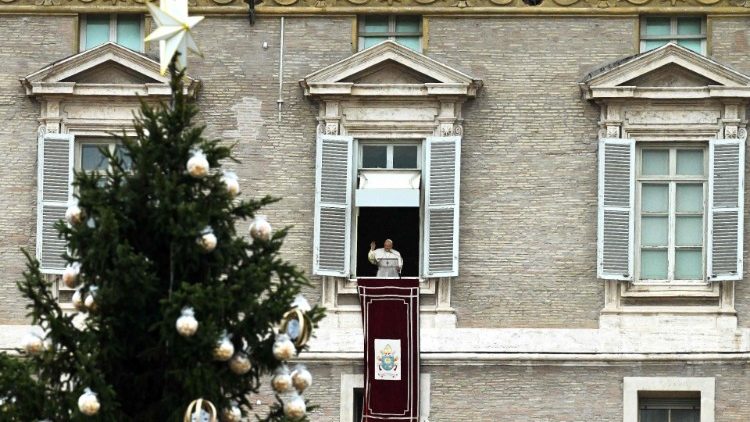
Pope Francis waves to the faithful during the Angelus on WednesdayPope Francis waves to the faithful during the Angelus on Wednesday  (AFP or licensors)

At Angelus, Pope recalls Apostolic Journey to Cyprus and Greece

Following the recitation of the Angelus for the solemnity of the Immaculate Conception, Pope Francis looked back on his Apostolic Journey to Cyprus and Greece, which concluded on Monday.

By Christopher Wells

Pope Francis thanked God for his recent “pilgrimage” to Cyprus and Greece, and expressed his gratitude to all those who accompanied him with prayer, and to the people of the two “beloved countries,” including civil and religious authorities, “for the affection and kindness with which they welcomed me.”

A pearl of the Mediterranean

Speaking at the conclusion of the Angelus on Wednesday, the Holy Father described Cyprus as “a pearl of the Mediterranean, a pearl of rare beauty,” that nonetheless, “bears the wounds of barbed wire, the pain of a wall that divides it.”

He said he felt like part of a family in Cyprus, noting especially his meeting with Cypriot Orthodox primate Chrysostomos II. Pope Francis said all Christians are children of the Church of Christ, “which accompanies us, protects us, makes us go forward – brothers all!”

The Pope expressed once again his hope that Cyprus would be a “a laboratory of fraternity,” where everyone, but especially the poor, the discarded, and migrants can be welcomed. He repeated, too, that “we cannot remain silent, we cannot turn away,” from the plight of migrants. Instead, we must “look into” the eyes and faces of those who suffer, in order to overcome our indifference.


The memory of Europe

Pope Francis also recalled with gratitude the “fraternal welcome” he received in Greece. “In Athens,” he said, “I felt immersed in the greatness of history, in the memory of Europe: humanism, democracy, wisdom, faith.”

The Pope pointed, too, to his experience of “the mystique of the whole,” as he met with Catholic bishops and members of the Catholic community, especially during Mass on Sunday.

And he recalled “the gift of embracing” Orthodox Greek primate Ieronymos in reciprocal visits during the journey. “I cherish this fraternity in my heart,” he said, while entrusting “to the Holy Mother of God the many seeds of encounter and hope that the Lord scattered on this pilgrimage.” Pope Francis asked for continued prayers “that they may continue to germinate and flourish in trust.”

Guides on the path of holiness

During his remarks following the Angelus, the Holy Father also noted the conclusion of the Year of St Joseph, Patron of the Church, as well as the conclusion of the Jubilee of Loreto on Friday. “May the grace of these events continue to work in the lives of our communities,” he said. “May the Virgin Mary and St Joseph guide us on the path to holiness.”

Monday, December 6, 2021

Conclusion of the Papal trip to Greece and Cyprus and visit with Mother Mary


Pope concludes Greece & Cyprus journey with visit to St. Mary Major

Pope Francis returns to Rome at the end of his Apostolic Journey to Cyprus and Greece, praying at the feet of Our Lady for the many people he met during his visit.

By Francesca Merlo

Pope Francis’s 35th Apostolic Visit abroad has come to an end. He concluded his 6-day trip to Cyprus and Greece with a meeting with Greece's young people, before he was sent off with an official departure ceremony from Athens airport.

The journey from Athens to Rome's Ciampino airport takes just over two hours, during which time the usual in-flight press conference takes place with journalists on board the papal plane.

On the car ride back to the Vatican, the Pope stopped off at the Basilica of St. Mary Major to pray briefly at the feet of the ancient Roman icon of Mary Salus Populi Romani.

According to the Holy See Press Office, Pope Francis entrusted the many "encounters, faces, and painful stories of the past days" to Our Lady.

Opportunity for unity

Pope Francis’ trip has been a significant one for Greeks, who saw the Pope's visit as a message for Christian unity for a country with a Catholic minority and an Orthodox majority.

The Pope, in fact, met with a delegation from the Greek Orthodox Church, in which he recalled the metaphor of the age-old olive trees present in Greece, comparing their deep and sustaining roots to the shared, apostolic roots of Christianity which have endured over the centuries.

He also met privately with the Orthodox Primate, Ieronymos II, Archbishop of Athens and All Greece, who paid him a courtesy visit at the Apostolic Nunciature on the eve of his departure back to Rome.


Migration

Another important aspect of the Pope’s journey was his visit to the Greek island of Lesbos, which he had previously been to in 2016.

The Pope often appeals for humanity for the migrants attempting to cross borders and seas in search for a better life, and the island of Lesbos has seen throusands of migrants and refugees as they reach the island in an attempt to travel to Europe.

During a meeting with some of those currently living in camps on the island, Pope Francis asked every man and woman, “to overcome the paralysis of fear, the indifference that kills, the cynical disregard that nonchalantly condemns to death those on the fringes.”

Young people 

The meeting with young people at the Saint Dionysius School of the Ursuline Sisters in Athens closed a journey that aimed to give impetus to the new generations grappling with a future marked by uncertainties and fears.

One young man, Filippo Parusis, described the Pope’s visit as important “even for those who do not believe”.

He told Vatican News' Massimiliano Menichetti in Athens that because the Pope is someone who cares about “all of the different communities of this world”, having him visit and share his messages is a wonderful opportunity, especially for "a young man who is interested in the social problems of the world."

Friday, December 3, 2021

Papal Ecumenical Prayer Service in Cyprus


Pope at Ecumenical Prayer: May the Lord awaken our consciences!

Pope Francis concludes his Apostolic Journey to Cyprus with an Ecumenical Prayer service with migrants, where he reflects on God’s dream for a “world of peace, in which all His children live as brothers and sisters.”


By Christopher Wells

Sharing a moment of Ecumenical Prayer with migrants during his final event in Cyprus, Pope Francis said that through their testimonies, “God is revealing His Kingdom, His Kingdom of love, justice, and peace to the little ones.”

No longer strangers

Four migrants from different parts of the world shared their stories, bearing witness to their own identity, to the wounds of hate they have suffered, to their journeys, and to their dreams. Listening to them, Pope Francis said, “we better understand the prophetic power of the word of God, who tells us… ‘You are no longer strangers and aliens, but you are fellow citizens with the saints and also members of the household of God’.”

A mirror for Christians

The Pope said the migrants’ stories “are like a ‘mirror’ held up to us, to our Christian communities, reminding us that we too are asked about our identity. They remind us “that hate has also poisoned relations between us Christians… that we are journeying from conflict to communion… that God speaks to us through our dreams.”

God “asks us not to be content with a divided world, divided Christian communities,” the Pope said, “but to journey through history drawn by His own dream: the dream of a humanity freed of walls of division, freed of hostility, where there are no longer strangers, but only fellow citizens.”

Becoming a workshop of fraternity

Pope Francis expressed his hope that Cyprus, an island “marked by a painful division,” might become “by God’s grace, a workshop of fraternity.” For this to happen, he said, two things are necessary: “an effective recognition of the dignity of every person,” and a trusting openness to God the Father of all.”

The Holy Father said, “If these two things can happen, the dream can translate into daily journey, made up of concrete steps from conflict to communion, from hate to love.” It is, he said, “A patient journey, which day by day leads us to the land God has prepared for us: The land where, if people ask, ‘Who are you?’ you can readily respond, ‘I am your brother’, ‘I am your sister’.”

“We cannot remain silent!”

Pope Francis concluded his address with an impassioned plea to overcome the modern indifference to the suffering experienced by migrants. He deplored the fact that we have gotten used to reading about the tragedies that occur every day.

I’m sorry, but I want to say what is in my heart!” the Pope said. He lamented that people seeking food, help, freedom, and brotherhood encounter only barbed wire. “May the Lord awaken the conscience of all us in the face of such things, Pope Francis said. “Please forgive me for telling things as they are, but we cannot remain silent and look the other way in this culture of indifference!”

Pope Francis celebrates Mass in Cyprus


Pope at Mass in Cyprus: Only together can we be healed from blinding darkness

Pope Francis refers to the parable of the two blind men from Mark's Gospel to urge Cypriots to follow three steps in order to be freed of a similar darkness in which we often find ourselves.


By Francesca Merlo         

Addressing the faithful in Nicosia's “GSP Stadium” for Holy Mass in Cyprus, Pope Francis recalled a passage from Mark's Gospel, in which as Jesus passed by, two blind men cried out "Have mercy on us, Son of David". The Pope noted that the two men are blind, yet they realise that Jesus is the Messiah who has come into the world. They can help us, during this advent season, "to welcome the Lord when he comes", said the Pope. 

 Step one: going to Jesus 

Pope Francis noted that the first step is that the two "went to Jesus for healing". Although they cannot see him, he said, "they hear his voice and follow his footsteps". The two men in the Gospel trusted in Jesus, he continued, and so "they followed him in search of light for their eyes".

The Pope noted that the two trusted in Jesus because "they realise that, within the darkness of history, he is the light that brightens the “nights” of the heart and the world". He stressed that we too have a kind of “blindness” in our hearts, and like the two blind men are often immersed in the darkness of life. Often we would rather remain closed in on ourselves, alone in the darkness, feeling sorry for ourselves and content to have sadness as our companion, but instead we must go to Jesus, said the Pope. Let us give Jesus the chance to heal our hearts. 

Step two: sharing their pain

The next step, continued the Pope, is that "they shared their pain". They ask for help together, said the Pope. "This is an eloquent sign of the Christian life and the distinctive trait of the ecclesial spirit: to think, to speak and to act as “we”, renouncing the individualism and the sense of self-sufficiency that infect the heart".

These two blind men have much to teach us, continued the Pope. "Each of us is blind in some way as a result of sin", he explained, adding that this "prevents us from “seeing” God as our Father and one another as brothers and sisters". This sin distorts reality, continued the Pope, but if we bear our inner blindness alone, we can become overwhelmed. "We need to stand beside one another, to share our pain and to face the road ahead together", he said.

Renew our sense of fraternity

Dear brothers and sisters, continued the Pope. "Faced with our own inner darkness and the challenges before us in the Church and in society, we are called to renew our sense of fraternity". If we remain divided we will never be completely healed of our blindness", he stressed.  Healing takes place when we carry our pain together, when we face our problems together, when we listen and speak to one another.

Step three: the Good News

The third, and final step, continued the Pope, is "they joyfully proclaimed the Good News". After Jesus had healed the two blind men, the two "began to spread the good news to the entire region". There is a bit of irony in this, noted the Pope. "Jesus had told them to tell no one what had happened, yet they do exactly the opposite". Their intention was not to disobey the Lord, said the Pope. "They were simply unable to contain their excitement at their healing and the joy of their encounter with Jesus". This, he added, "is another distinctive sign of the Christian".

Bringing his homily to an end, the Pope thanked all thos present in the Nicosia stadium for living "with joy" the liberating message of the Gospel, and encouraged them to "keep advancing on this path". Like the two blind men in the Gospel, "let us once more encounter Jesus, and come out of ourselves to be fearless witnesses of Jesus to all whom we meet!" 

"Brothers and sisters, the Lord Jesus is also passing through the streets of Cyprus, hearing the cries of our blindness", stressed the Pope. "He wants to touch our eyes and hearts and to lead us to the light, to give us spiritual rebirth and new strength". Let us renew our faith in him, concluded the Pope, "Let us say to him: Jesus, we believe that your light is greater than our darkness; we believe that you can heal us, that you can renew our fellowship, that you can increase our joy".

Thursday, December 2, 2021

Pope Francis 1st meeting with clergy and religious in Cyprus


Pope Francis meets with Catholic Bishops, Priests, Religious and Catechists in Nicosia's Maronite Cathedral of Our Lady of GracePope Francis meets with Catholic Bishops, Priests, Religious and Catechists in Nicosia's Maronite Cathedral of Our Lady of Grace  (Vatican Media)

Pope calls on Cypriot Church to welcome change and diversity with patience

In the first official discourse of his Apostolic visit to Cyprus and Greece, Pope Francis addresses Bishops, Priests, Men and Women Religious, and Catechists, inviting them to be patient as they go forth in a spirit of fraternity, forgiveness, mercy, and openness.

By Linda Bordoni

A “patient” church is the one best suited for the reality in Cyprus, “a church that does not allow itself to be upset and troubled by change, but calmly welcomes newness and discerns situations in the light of the Gospel.”

This is Pope Francis’ vision and encouragement for Catholic clergy, religious, and catechists gathered in Nicosia’s Maronite Cathedral of Our Lady of Grace at the start of his Apostolic visit to Cyprus.

Addressing representatives of all the Catholic Rites present in Cyprus – the Latin Rite, the Maronites and the Armenian Catholics – the Pope upheld the wealth of their diversity and urged them to persevere “without growing weary or discouraged.”

Amongst those to welcome him were the Maronite Archbishop of Cyprus Selim Sfeir,  the Maronite Patriarch of Antioch Bechara Boutros Rai, and the Latin Patriarch of Jerusalem Pierbattista Pizzaballa.

Lebanon

Greeting representatives of the Maronite Church, the Pope spoke of his concern for crises currently crippling Lebanon: “I am sensitive to the sufferings of a people wearied and tested by violence and adversity. I carry in my prayer the desire for peace that rises from the heart of that country.”

The patience of St. Barnabas

Getting to the heart of his message, the Pope reflected on the heritage of Cyprus’s patron, Saint Barnabas, whom, he said, was a man of faith and wisdom, whose attitude was one of utmost patience: “the patience to keep moving forward; the patience to enter into the lives of hitherto unknown individuals; the patience to accept what was new without rushing to judgment.”

Barnabas, he continued, also had the patience of discernment, the patience to “study” other cultures and traditions, the patience of accompaniment, shown by how he accompanied newcomers to the faith by taking them by the hand and dialoguing with them.

The open arms of the Cypriot Church

Pope Francis encouraged those present to continue in this path, welcoming newness and discerning situations in the light of the Gospel.

He upheld the work carried out on the island as it welcomes “new brothers and sisters arriving from other shores of the world,” never leaving anyone bereft of its loving embrace.

A message for the Church throughout Europe

“This is also an important message for the Church throughout Europe, marked by the crisis of faith. It does little good to be impulsive and tempestuous, nostalgic or querulous; instead, we do well to march forward, reading the signs of the times as well as the signs of the crisis,” he said.

The Pope also called on priests to be patient in proclaiming the Gospel to the next generation, and on bishops to be patient in being close to their priests and in encountering our brothers and sisters of other confessions.

He asked them to cultivate a culture of forgiveness and mercy and the capacity to have open ears and hearts for different spiritual sensibilities, different ways of expressing the faith, different cultures.

The Church, he said, “does not want to reduce everything to uniformity, but to integrate with patience.”

The need for a fraternal Church

Pope Francis went on to highlight the significance of Barnabas’ encounter with Paul of Tarsus, “an approach of friendship and sharing of life.” He urged those present to take up the history of others, “taking the time to get to know them without labeling them, bearing them on our shoulders when they are tired or wounded, as the good Samaritan did. This is fraternity, and it is our second word.”

He recalled the time the two apostles, who had journeyed together evangelizing the eastern Mediterranean region, had a disagreement and went their separate ways.

However, the Pope noted, although they had different ideas, there was no rancour between them: “This is what fraternity in the Church means: we can argue about visions, sensibilities, and differing ideas.”

“We need a fraternal Church,” the Holy Father reiterated, “one that is an agent of fraternity in our world,” inviting us not to experience diversity as a threat to identity.

Brothers and sisters, all of us!

We are brothers and sisters loved by a single Father, the Pope said, noting that the Church in Cyprus is immersed in the Mediterranean, "a sea rich in history, a sea that has been the cradle of many civilizations, a sea from which today many individuals, peoples, and cultures from every part of the world still disembark.”

He concluded by urging them to remind everyone, and Europe as a whole, “that we need to work together to build a future worthy of humanity, to overcome divisions, to break down walls, to dream and work for unity.  We need to welcome and integrate one another, and to walk together as brothers and sisters, all of us!”

Pope Francis arrives in Cyprus


Pope arrives in Cyprus on 1st leg of Apostolic Journey

Pope Francis is in Nicosia, kicking off the 35th Apostolic Journey abroad of his pontificate, December 2 to 6. After 2 days in Cyprus, he will proceed to Greece before flying back to Rome on Monday.

By Vatican News staff reporter

Pope Francis has begun his apostolic journey to the eastern Mediterranean region, flying first to Cyprus in his two-nation visit.  After a 3-hour flight from Rome on an A320 plane of Italy’s new state-owned flag carrier ITA Airways, he touched down at Larnaca airport in Cyprus at 3:00 pm in the afternoon.

Arrival in Larnaca

After the Pope’s plane stopped in front of the “Head of State Executive Terminal”, Apostolic Nuncio to Cyprus Archbishop Tito Yllana went up the steps to greet the Pontiff inside the aircraft.  Awaiting him on the red carpet on the tarmac, at the foot of the steps, was the Speaker of the House of Parliament, Annita Demetriou, accompanied by 3 children in traditional dresses, who offered him flower bouquets in welcome.  Present also were also several Church dignitaries.  After the guard of honour to the playing of band music, the Pontiff and the President of the Parliament introduced members of their respective delegations.

Present on the tarmac were also many children holding the Vatican and Cypriot flags, whom the Pope greeted as they cheered: "We love you".  One of them held a banner with the words, "Pope Francis, symbol of peace". 

There were no speeches at the airport but the Pope and Demetriou talked a while inside the terminal.  The Holy Father was then driven some 50 kilometres to the Cathedral of Our Lady of Graces in the capital Nicosia, the see of the Maronite Catholic Archdiocese of Cyprus, where he was to address priests, religious, deacons, catechists and ecclesial associations and movements of Cyprus.

The East Mediterranean

This is the second visit by a Pope to Cyprus after that of Pope Benedict XVI in 2010.  The motto of Pope Francis’ trip to the Mediterranean island is, “Comforting each other in the faith”, taken from the First Letter of St. Paul to Timothy. The Acts of the Apostles explains that the name of Saint Barnabas means “son of consolation”.

Eighty per cent of Cyprus’ 850,000 people are Christians, with Catholics numbering some 38,000, or about 4.47 per cent of the population.  Muslims make up 2 per cent. The vast majority of Cypriots identify themselves as Greek Orthodox. Many of the Christians trace their roots to the Crusaders who settled there after the fall of Jerusalem in the 12th century.

St. Paul stopped off in Cyprus in the first century AD and converted the island’s Roman governor Sergius Paulus to Christianity.

Last week, the Holy Father released a video message to the people of Cyprus and Greece in which he set the tone of his visit.  “I am preparing to come as a pilgrim to your magnificent lands, blessed by history, culture and the Gospel,” the Pope said on November 27.  He said he was coming to them with joy, precisely in the name of the Gospel, in the footsteps of the first great missionaries of those lands, especially the Apostles Paul and Barnabas. “It is good to return to the origins and it is important for the Church to rediscover the joy of the Gospel,” he said.


The visit to the two nations has an ecumenical tone.  Besides going to strengthen the faith of the small Catholic communities, he said he will also meet the local heads of the Orthodox Churches in “apostolic fraternity”. 

Describing Cyprus as “the outpost of the Holy Land on the continent” and “Greece, the home of classical culture,” he said his visit would be an opportunity to drink from the ancient wellsprings of Europe.  Europe, he said, cannot ignore the Mediterranean, which has seen the spread of the Gospel and the development of great civilizations. 

However, he lamented that today the Mediterranean Sea has become a great cemetery, with refugees and migrants swallowed up in its waves as they flee war and poverty. “As a pilgrim to the wellsprings of humanity,” the Pope said, he will re-visit migrants and refugees in the Greek island of Lesbos, convinced that "the sources of common life will only flourish again in fraternity and integration".

Tuesday, November 30, 2021

Ahead of Papal trip to Cyprus


Faithful members sing during a liturgy at the Church of St. George in Kormakitis, Cyprus.Faithful members sing during a liturgy at the Church of St. George in Kormakitis, Cyprus. 

Cyprus Church awaits the Pope with joy, love and synodality

Ahead of Pope Francis' visit to Cyprus and Greece, 2-6 December, Cypriot priest Father Ibrahim Khita of Limassol spoke to Vatican News about how they are preparing for the papal visit.

By Robin Gomes

“We hope that we will have new life, a good life full of peace and full of love.”  Cypriot Maronite priest Father Ibrahim Khita made the comment, expressing what all the people of Cyprus expect from the visit of Pope Francis to them, December 2 to 4. 

From Cyprus, the Holy Father will proceed to Greece before flying back to Rome on December 6, in what is the 35th foreign apostolic visit of his pontificate. 

Father Khita, who is parish priest of St. Charbel Church in Limassol, some 88 kilometres southwest of the capital Nicosia, told Christine Seuss that they started the preparations 3 weeks after the announcement of the papal visit. 

Pope is coming for everyone

They have set up 3 committees with the Apostolic Nuncio and his charge d’affaires is heading the Coordination Committee that oversees the entire preparation.

Father Khita heads the Liturgical Committee, which is in charge of the Pope’s Mass at GSP Stadium in Nicosia on 3 December. The Media Committee, he said, is working hard and doing a good job. 

For the past week, all the committees have been working “day and night” to complete the preparations “with joy and love” in the spirit of synodality. 

Father Khita said they are trying to live this synodality together, not as separated Churches because Jesus is one and all are united in Him.  In this regard, the priest pointed out that Pope Francis in his video message on Sunday to the people of Cyprus said that he was coming “not just to see the Catholics but to see the Catholics, the Orthodox, the migrants” and everyone.

As they are approaching the day of his arrival, they “need to be one in Jesus Christ”.  The message of the Holy Father is for every Christian and human being to live a life of love and peace among the people.  Cypriots hope that they will have a new and good life full of peace and love.


The Pope’s 5-day visit to the two Mediterranean countries includes stops in Nicosia, in Cyprus, the Greek capital, Athens and the Greek island of Lesbos, where he will visit refugees and migrants, as he did in 2016.

In the footsteps of the apostles

This will be the second visit by a Pope to Cyprus after that of Pope Benedict XVI in 2010.

The logo of the Cyprus visit represents the map of the island, with Pope Francis and Saint Barnabas, the patron saint of the island and companion of Saint Paul, in the foreground. An olive branch and an ear of wheat tied together symbolize peace and fellowship. The theme of the trip is “Comforting each other in the faith” (1Th 5, 11), which recalls the meaning of the name of Saint Barnabas, “son of consolation” (cf. Act 4,36).

Eighty percent of Cyprus’ 850,000 people are Christians, with Catholics numbering some 38,000, or about 4.47% of the population. Muslims make up 2%. The vast majority of Cypriots identify as Greek Orthodox. Many of the Christians trace their roots back Crusaders who settled there after the fall of Jerusalem in the 12th century.

St. Paul stopped off in Cyprus in the first century AD and converted the island’s Roman governor Sergius Paulus to Christianity.

Pope’s programme

Pope Francis begins the some 42-hour visit to Cyprus on Thursday. He will land at Larnaca airport at 3:30 pm, where he will be given an official welcome. He will later meet priests, consecrated persons, deacons, catechists, and members of Church associations at Nicosia’s Maronite Cathedral of Our Lady of Grace. At 5:15 pm he will be welcomed by the Cypriot President at his palace in the capital, where he will later address local authorities, civil society and the diplomatic corps.

On Friday morning, the Pope will make a courtesy visit to His Beatitude Chrysostomos II, Orthodox Archbishop of Cyprus at the Orthodox Archbishopric of Cyprus in Nicosia, followed by a meeting with the Holy Synod at the Orthodox Cathedral in Nicosia. Later in the morning, he will preside over a Mass at the “GSP Stadium” in Nicosia. In the afternoon he will hold an Ecumenical Prayer with Migrants at the Parish Church of the Holy Cross in Nicosia.

On Saturday, the Pope leaves for Athens, Greece, the second leg of this apostolic journey.