Showing posts with label Colombia. Show all posts

Wednesday, August 12, 2026

Pope Leo XIV sends financial assistance to earthquake ravaged Colombia


Aftermath of the earthquake in Cali, ColombiaAftermath of the earthquake in Cali, Colombia  (Sergio Acero)

Pope sends financial aid to areas of Colombia hit by earthquake

Pope Leo makes an initial emergency donation to the dioceses in Colombia affected by Monday's 7.4-magnitude earthquake.

By Salvatore Cernuzio 

Pope Leo has expressed his solidarity with the people of Colombia, devastated by the powerful 7.4-magnitude earthquake that struck the western part of the country. His closeness was conveyed in his remarks during Wednesday’s General Audience, held on August 12, when he renewed his condolences and prayers for the victims, rescue workers and the entire Colombian people.

The Pope's solidarity has also taken concrete form through an initial emergency financial contribution sent by the Pope through the Dicastery for the Service of Charity. The funds are intended for dioceses affected by the earthquake and follow on from discussions between the Prefect of the Dicastery, Archbishop Luis Marín de San Martín, the Apostolic Nunciature, and the local Bishops’ Conference.

The Pope’s appeal

Yesterday, as Civil Protection teams and other emergency services searched through the rubble of collapsed buildings and churches and issued initial estimates of the death toll — more than 200, according to the latest figures — the Pope sent a telegram expressing his sorrow and solidarity with the entire country. 

Today, at the General Audience, the Pope again expressed his “solidarity” with “our brothers and sisters in Colombia who have suffered the consequences of the recent earthquake, which has caused many deaths and injuries, as well as extensive material damage.”

While praying to the Lord “for the eternal repose of the deceased,” Leo also assured his listeners of his prayers for the victims and their families, and “all those who have mobilized in rescue and assistance operations.”

Emergency aid

As he did for Venezuela, which was also struck by a powerful earthquake in June, the Pope immediately sent an initial financial contribution to Colombia as a concrete sign of solidarity in this time of emergency. 

The sum of €100,000 was sent directly to the National Secretariat for Social Pastoral Care – Caritas Colombia, which serves as the Church's centralized coordination center for the collection and distribution of aid. The organization will ensure that the assistance reaches the dioceses affected by the earthquake. 

The amount was agreed upon with the recipients and represents a first contribution intended to address the most immediate needs. Further concrete assistance will follow as needs are identified and promptly communicated to the Dicastery.

Alms and the ‘family of God’

Indeed, dialogue begun in the first hours after the disaster continues between Apostolic Almoner Archbishop Luis Marín de San Martín and the president of the Colombian Bishops’ Conference, Cardinal Francisco Javier Múnera Correa, who has briefed him on the situation in the affected areas.

Meanwhile, a report is being prepared to assess the most urgent needs, again at the initiative of the Dicastery for the Service of Charity. “The Church is the family of God,” the Prefect said, “a Church attentive to suffering and need, responding with fraternity and effectiveness.”

Tuesday, August 11, 2026

The Catholic Bishops of Colombia cry out for help, prayers as powerful earthquake hits the western parts of this South American nation


Devastating earthquake in ColombiaDevastating earthquake in Colombia  (AFP or licensors)

Colombian Bishops appeal for solidarity after devastating earthquake

The powerful earthquake struck the west of the country and was felt across much of Colombia. The death toll so far stands at more than 130 confirmed fatalities, with nearly 600 people injured. Pereira is the city with the highest number of casualties, while in Manizales buildings, hospitals, schools and places of worship have been damaged. Six airports have been closed for safety inspections. Search and rescue operations are continuing.

By Stefano Leszczynski

A powerful earthquake struck western Colombia yesterday, 10 August, leaving more than 130 people dead and 570 confirmed injured, with many still missing.

Extensive damage has been reported in several cities, while emergency teams continue to search for people who may remain trapped beneath collapsed buildings.

The earthquake, initially measured at magnitude 7.4 according to assessments released in the hours following the event, had its epicentre in the area of San José del Palmar, in the department of Chocó, in the west of the country. The tremor was felt across a large part of Colombia and beyond the country's borders.

Pereira the hardest-hit city

The most serious situation is reported in Pereira, one of the main population centres in western Colombia. The priority remains reaching people who may be trapped under the rubble and securing damaged buildings. The earthquake affected a very large area, making an overall assessment of the damage more difficult because of the impact of the tremor on infrastructure and communications.

The consequences have been particularly severe in Manizales. According to initial reports, more than ten buildings were completely destroyed, while more than twenty residential structures sustained damage of varying degrees. Hospitals, schools and churches were also affected. Damage was reported at Manizales Cathedral, one of the city's principal religious landmarks. Images and initial accounts from the affected areas show rubble in the streets and damaged structures, while authorities are urging residents to stay away from buildings considered unsafe.

The earthquake also caused collapses in Cali, where rescue teams have intervened at several locations across the city. Initial reports indicate that people were trapped beneath the rubble and that healthcare facilities were damaged. Injuries and infrastructure damage have also been reported in Quibdó, the capital of the department of Chocó.

The local Church responds

The presidency of the Colombian Bishops' Conference expressed its solidarity and prayers for the victims, those still missing, the injured and the affected families, entrusting the work of rescuers to God.

The Bishops said that this is an emergency of such magnitude that it cannot be faced individually but requires the country to recognize itself as one family and to respond to suffering with generosity, responsibility and solidarity.

The Bishops of the affected areas have issued numerous appeals for mobilisation. At the humanitarian level, food banks have launched campaigns to collect aid to be distributed among survivors.

Six airports closed

The earthquake has also disrupted transport links. Colombia's Civil Aviation Authority, Aerocivil, ordered operations suspended at six airports in western Colombia: Pereira, Manizales, Quibdó, Armenia, Cartago and Buenaventura.

The decision was taken to allow inspections of runways, terminals and other airport infrastructure affected by the powerful tremor. Flights will remain suspended until the necessary checks have been completed to ensure the safety of operations.

The measure could further complicate the delivery of aid to the hardest-hit areas, just as emergency teams and healthcare facilities are being mobilised.

Tremor felt across much of the country

The earthquake was initially assessed by the Euro-Mediterranean Seismological Centre at a lower magnitude, before being revised upwards. Subsequent estimates put the event at magnitude 7.4, with its epicenter in the area of San José del Palmar, in the department of Chocó.

The earthquake was strongly felt in numerous locations across western and central Colombia. The ground also shook in the capital, Bogotá, while the tremors were felt beyond Colombia's borders, particularly in some areas of neighboring countries.

Colombia lies in a region characterized by significant seismic activity, linked to the interaction of several tectonic plates. The western Andean region is particularly exposed.

The country still remembers the devastating earthquake that struck the Eje Cafetero on 25 January 1999, killing more than a thousand people and causing enormous damage, particularly in Armenia, but also in Pereira and numerous other towns across the region.

Search operations continue

In the hardest-hit cities, the emergency is still unfolding. Firefighters, civil protection teams, medical personnel and security forces are concentrating their efforts on searching for missing people and assisting those forced to leave homes and other structures considered unsafe.

Authorities are also assessing the stability of hospitals, schools, churches, homes and public infrastructure. The true scale of the disaster will only become clear once assessments have been completed in the areas closest to the epicentre.

In Pereira, where the highest number of victims has so far been recorded, rescue operations continue amid the rubble.

Wednesday, February 11, 2026

Pope Leo XIV calls for prayers for Europe, for World Day of the Sick, and preparation for Lent


Pope Leo XIV at General AudiencePope Leo XIV at General Audience  (@Vatican Media)

Pope Leo prays for overcoming tensions, rediscovering unity in Europe

During his weekly General Audience, Pope Leo calls Europe to overcome tensions and rediscover unity, prays for the sick, remembers those suffering from severe flooding in Colombia, and offers advice on how to prepare for Lent.

By Vatican News

Saints Cyril and Methodius, apostles of the Slavs and Patrons of Europe, can help renew the spiritual vitality of the European continent, Pope Leo reflected as he greeted Polish pilgrims present at the General Audience on February 11, 2026. 

He recalled how the two saints, whose liturgical memorial is observed on 14 February, are the “fathers of Christianity, of language and of the culture of the Slavic peoples.”

The Pope invited the faithful to return to their apostolic work, as encouraged by Saint John Paul II, in order to contribute to the building of a new unity in Europe, capable of overcoming religious and political tensions, divisions and antagonisms.

Prayer for the sick

Recalling today marks the World Day of the Sick, the Pope entrusted the sick and their families to the care of the Blessed Mother.

To mark the occasion, as Pope Leo arrived in the Vatican's Paul VI Hall, he lit a candle before the statue of the Blessed Virgin of Lourdes on the day of her liturgical memorial. He also expressed that he would go today to the Grotto of Lourdes in the Vatican Gardens to light a candle "as a sign of my prayer for all the sick, whom today, on the World Day of the Sick, we remember with particular affection.”

Speaking in Spanish, Pope Leo recalled that this year the World Day was being celebrated at a place particularly dear to him, the Shrine of Our Lady of Peace in Chiclayo, Peru. “I unite myself spiritually,” he said, noting that he had sent Cardinal Michael Czerny, Prefect of the Dicastery for Promoting Integral Human Development, there for the occasion.

The Pope also entrusted to Mary all killed and impacted by severe flooding in Colombia, while urging the entire community to support the affected families through charity and prayer.

Time of prayer as Lent approaches

Looking ahead to the beginning of Lent, the Pope noted in English that the season will start next Wednesday. He described it as a time to deepen our knowledge and our love of the Lord, to examine our hearts and our lives, and to refocus our gaze on Jesus and His love for us.

Pope Leo XIV concluded by expressing the hope that the days of prayer, fasting and almsgiving would be a source of strength as Christians strive each day to take up their cross and follow Christ.

Thursday, May 22, 2025

Pope Leo XIV issues first promulgation for three new Venerables; on way to Santhood


Bishop Alejandro Labaka Ugarte, one of the newly declared Venerables, was killed by Indigenous people in Ecuador in 1987.Bishop Alejandro Labaka Ugarte, one of the newly declared Venerables, was killed by Indigenous people in Ecuador in 1987. 

Three new Venerables: two missionaries in Ecuador and one Indian bishop

Pope Leo XIV authorizes the promulgation of various decrees for three Servants of God: Colombian Sister Agnese Arango Velásquez, Indian Bishop Matthew Makil, and Spanish Bishop Alessandro Labaka Ugarte.

By Alessandro De Carolis

A woman and two men of peace — this how to describe the lives of the of the three new Venerables whose decrees of recognition were approved on May 22 by Pope Leo XIV during an audience with Cardinal Marcello Semeraro, Prefect of the Dicastery for the Causes of Saints.

Two of them offered their lives in martyrdom for the faith — a violent death in the Ecuadorian rainforest while defending the rights of Indigenous peoples.

A Bishop with a missionary soul

Alejandro Labaka Ugarte, born in 1920, was from Beizama in northern Spain. From a young age, he felt a call to be a missionary. After being ordained a priest in 1945, the superiors of the Capuchin Order — which he had entered in 1937 under the religious name Brother Manuel — sent him to China.

Around ten years later, he and other missionaries were expelled by the Maoist regime. He then went to Ecuador, where he served as a parish priest and held various other roles, including that of apostolic prefect, actively involved in evangelizing the Huaorani people.

In 1984, Brother Manuel was consecrated a bishop and continued his mission among the Indigenous, also establishing contact with the Tagaeri ethnic group. It was a time of intense tension. Oil companies moved through the region like predators, clearing forests in search of black gold.

For Brother Manuel, now Bishop Ugarte — known for his ability to mediate and reconcile — the priority became protecting the rights of the Tagaeri. It was during this mission that he met Sister Inés.

A religious sister among the Indigenous

Sister Inés Arango Velásquez was 40 years old when, in 1977, she took part in the first missionary expedition of the Capuchin Tertiary Sisters of the Holy Family to Aguarico, Ecuador. A native of Colombia, she was born in Medellín in 1937 and entered the congregation in 1955, completing her formation there.

After her perpetual vows, she dedicated herself to teaching and, once in Ecuador, traveled to various communities, eventually becoming a superior. She devoted herself to evangelizing the Huaorani under the guidance of, among others, Brother Manuel. Sister Inés also became deeply aware of the dire situation facing the Tagaeri, who had become targets for oil and logging companies.

Killed in defense of the least

As bishop, Brother Manuel hoped to avoid a violent confrontation with mercenaries from these companies by personally initiating dialogue with the Indigenous people.

He was joined by Sister Inés, and both — fully aware of the risks involved in approaching a tribe known to be hostile to outsiders — were flown by helicopter on the morning of July 21, 1987, to a designated meeting point. The next day, another helicopter arrived to pick them up, but instead found their bodies — pierced with spears and arrows.

For both of them, it was a conscious offering of their lives in fidelity to their mission, as also reflected in the letter Sister Inés had written the day before their departure, which read almost like a last testament. Their deaths left a powerful impact and have contributed to an enduring reputation for holiness that continues to this day.

Bishop and Peacemaker in India

The story of the third Venerable is that of the Indian Matthew Makil, bishop and founder of the Sisters of the Visitation of the Blessed Virgin Mary. Born in 1851 in Manjoor to a well-off Christian family, he became a priest in 1865 and served in parish ministry until he was appointed Vicar General of Kottayam in 1889.

Three years later, he founded a religious congregation whose primary mission was the education of girls. His pastoral ministry was vibrant and dynamic, eventually leading to his appointment as Apostolic Vicar of Changanacherry in 1896.

He actively promoted catechetical formation, school education, the creation of religious organizations and associations, and the fight against poverty, which afflicted much of society at the time. He also encouraged vocations to consecrated life.

Moreover, he did not allow himself to be discouraged by local conflicts, which at times flared up violently, between the “northerners” (who considered themselves descendants of the community founded by Saint Thomas the Apostle) and the “southerners” (who saw themselves as successors of Mesopotamian migrants). Bishop Matthew Makil was guided by his episcopal motto: “God is my hope.”

With his calm and conciliatory manner, he worked tirelessly to bring peace between these two rival communities. His efforts culminated in a proposal submitted to the Holy See in 1911 to divide the Vicariate of Changanacherry into two distinct vicariates: one for the “southerners” and one for the “northerners.”

Pope Pius X accepted the proposal and created the Vicariate of Kottayam for the “southerners,” entrusting its leadership to Bishop Makil, the architect of the initiative.

Bishop Matthew Makil dedicated himself fully to this mission until his death in January 1914, following a brief illness.

Monday, June 10, 2024

Many reasons to pray for Priests; in this case a Priest is murdered in Colombia


Priest’s murder in Colombia shocks Catholic, civic communities

Eduardo Campos Lima


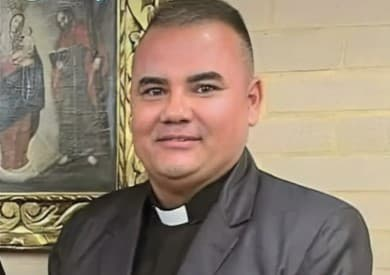
Father Ramon Montejo of Colombia, murdered on June 4, 2024. (Credit: Facebook capture.)


SÃO PAULO, Brazil  – Both Catholic and civil leaders in Colombia have reacted with outrage to the brutal June 4 slaying of a Catholic priest in the country’s northeast, during an apparently botched robber which may also have had a personal motive.

Father Ramon Montejo, 45, was approached by two men at a parking lot in the Jesus Cautivo neighborhood of the city of Ocaña, located on the border with Venezuela, as he prepared to take his car and go to the church in Buenavista, another district in the urban area.

An altercation ensued and the men stabbed Montejo several times. CCTV footage shows the moment when the priest is hit and ran over by his own truck, which had been taken by his murderers.

Later that day, the police captured two suspects, José Antony Montilla Jovito, 29, and Misael Rodolfo Valdez Pedrosa, 21. Both of them are Venezuelan nationals who worked at parking lots in Ocaña.

According to the local press, the authorities initially suspected that the perpetrators only wanted to steal Montejo’s truck and ended up killing him after he resisted the robbery.

With the inquiry’s progress, however, the investigators allegedly discovered that the priest previously knew Jovito and even tried to help him in the past. The crime was supposedly motivated by revenge, but no further details have been disclosed by the police yet.

Montejo’s funeral was celebrated in Teorama, a nearby municipality, and drew many of his colleagues, seminarians, and parishioners. On the same day, his community in Ocaña, along with clergy members and local authorities, promoted a ceremony in his honor and asked for peace.

“That’s a terribly painful occurrence, given the way things happened. We all have to keep working and be encouraged to act like peace builders,” Archbishop Jorge Alberto Ossa Soto of Nueva Pamplona, in charge of Ocaña, told the local Provincia TV after the celebration.

Emiro Cañizares, Ocaña’s mayor, affirmed that “Fr. Ramon’s killing is an attack on peace-building.”

“He was a person that has always accompanied during difficult times the several families that had relatives kidnapped,” he told Provincia TV.

Besides acting as a community leader in Ocaña, Montejo was involved in several humanitarian initiatives, including in issues involving kidnappings. A widespread problem in Colombia, abductions of civilians have been more and more common in the region of Ocaña. Several armed organizations are generally responsible, including left-wing guerrillas.

“He would act as a mediator and help the victims to be released. At the same time, he had a deep commitment to the victims’ families,” Father Hector Henao, a long-time peace negotiator in Colombia who knew Montejo, told Crux.

Henao added that Montejo was admired in his region due to his work “amid the complexities that there are in that part of the country,” especially poverty, immigration, and violence.

“The murder’s circumstances are still being investigated by the authorities and we haven’t received concrete information yet. The community is shocked with such a violent attack,” Henao declared.

Ossa Soto released a statement on the same day of the killing in which he condemned the “irrational violence that took the life of a priest who dedicated his life to spreading Jesus Christ’s message of peace and love.”

“We categorically repudiate a barbaric act that attacked not only the life of a human being, but also the fundamental principles of coexistence and humanity,” the declaration read.

Ossa Soto concluded the statement by asking the authorities to promote a deep investigation on Montejo’s killing and the churchgoers to keep the priest’s memory alive and “continue to work for actions that incentivize peace, reconciliation, and respect to life.”

Carlos Ruiz Massieu, the special representative of the United Nations’ Secretary-General for Colombia and Head of the United Nations Verification Mission in the South American country, issued a statement on Jun. 7 along with the delegation for Church-State relations concerning Montejo’s death.

“We energetically repudiate that act of violence and express our most sincere condolences to his family, his parish community, and to the Diocese of Ocaña,” it read.

A security committee was set up in Ocaña, gathering local authorities of the Executive power, the police, and the Army. The group promised it will be able to present news on the case anytime soon.

Tuesday, January 30, 2024

Extreme violence against Catholic nun in Colombia


Religious Sister Severely Beaten Up

 And Sexually Assaulted

 In Colombia


(OSV News) — The brutal aggression and sexual assault of a nun on the outskirts of Medellín, the capital of Colombia’s mountainous Antioquia province, has spurred outrage in the Colombian church, which is now demanding a full investigation into the attack and lamented the frequent acts of violence against women in the South American country.

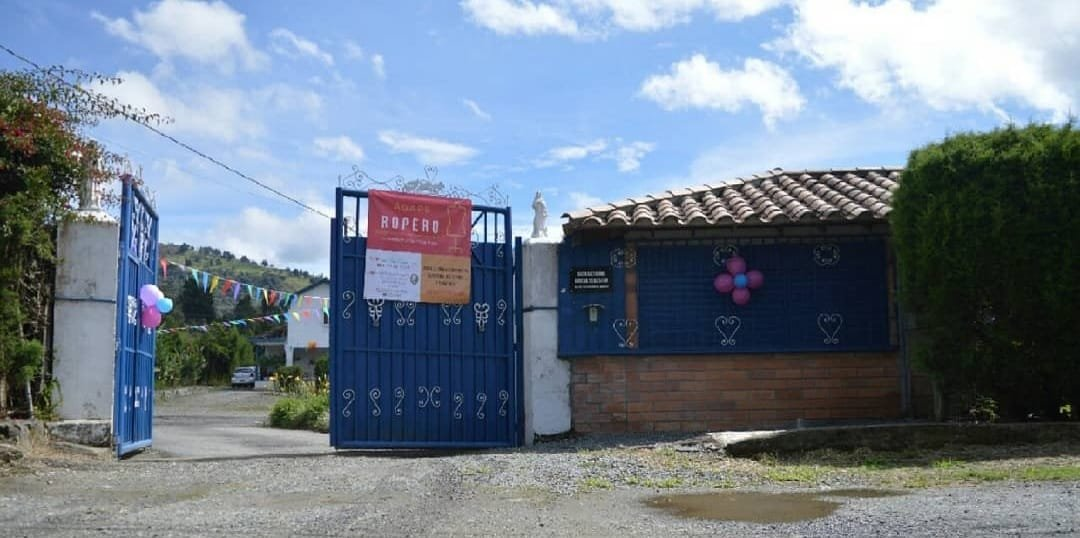
The horror of the religious community began the evening of Jan. 22 when a 31-year-old nun, whose name has not been released, failed to come to the refectory for dinner, and her colleagues went to look for her on the property of their monastery in the rural zone of Medellín, one of the largest Colombian cities. 

After almost an hour of searching, worried by a lone shoe left in the area, they found the sister in the woods near a ravine close to their house. She had been stripped of her habit, had her neck and hands tied with a chain, was disoriented and exhibited several signs of assault, including of a sexual nature.

The criminals also stole two debit cards she was carrying. The nun was taken to a hospital and is undergoing treatment in an intensive care unit. The medical team confirmed that she was sexually violated. 

On Jan. 25, Medellín authorities announced they had identified two suspects and were trying to find them.

The monastery houses 10 nuns, who are members of a Colombian congregation founded in 1939 by the late Bishop Miguel Ángel Builes of Santa Rosa de Osos, Colombia, named Teresitas Contemplativas del Santísimo (Contemplative Thérèses of the Blessed Sacrament, a name inspired by St. Thérèse of Lisieux). They live a secluded life and access to the monastery is restricted.

The Conference of Religious of Colombia released a statement Jan. 25, lamenting the tragedy and expressing their full solidarity with the sister and her colleagues.

The letter said that in Colombian society “doors continue to be open for such manifestations of violence against women.” The conference asked the authorities to conduct a serious investigation into the assault, in order to avoid it becoming “one more case that remains unpunished.”

“We consider that any abuse, aggression, mistreatment or form of violence against women is abominable from every point of view, especially, in our case, against religious women,” the document read.

Father Jaime Humberto Henao, who heads the Archdiocese of Medellín’s Social Pastoral Ministry, told OSV News that the city is not the same “powder keg” it used to be in the 1980s, when drug lord Pablo Escobar terrorized the whole region.

“Medellín recovered from that atrocious situation. Now, there is a mafia that exports drugs to Mexico and other criminal activities. But we don’t see the confrontations that were common in the 1980s,” he said.

The rural district where the monastery is located, called San Cristóbal, is mostly occupied by farmers and violent occurrences are not usual, Father Henao said.

He affirmed that there are around 4,500 nuns in Medellín and a “serious incident like that deeply impacts that whole group.”

“Nuns are highly respected and admired in the city. A crime like that is very surprising,” he remarked, adding that the attackers were probably under the influence of drugs.

According to Father Henao, the church and other social organizations must “keep raising awareness against violence, especially violence against women,” he concluded.

Eduardo Campos Lima writes for OSV News from São Paulo.