Chair of US bishops' 'pro-life' committee wants Catholics to see abortion's impact on families
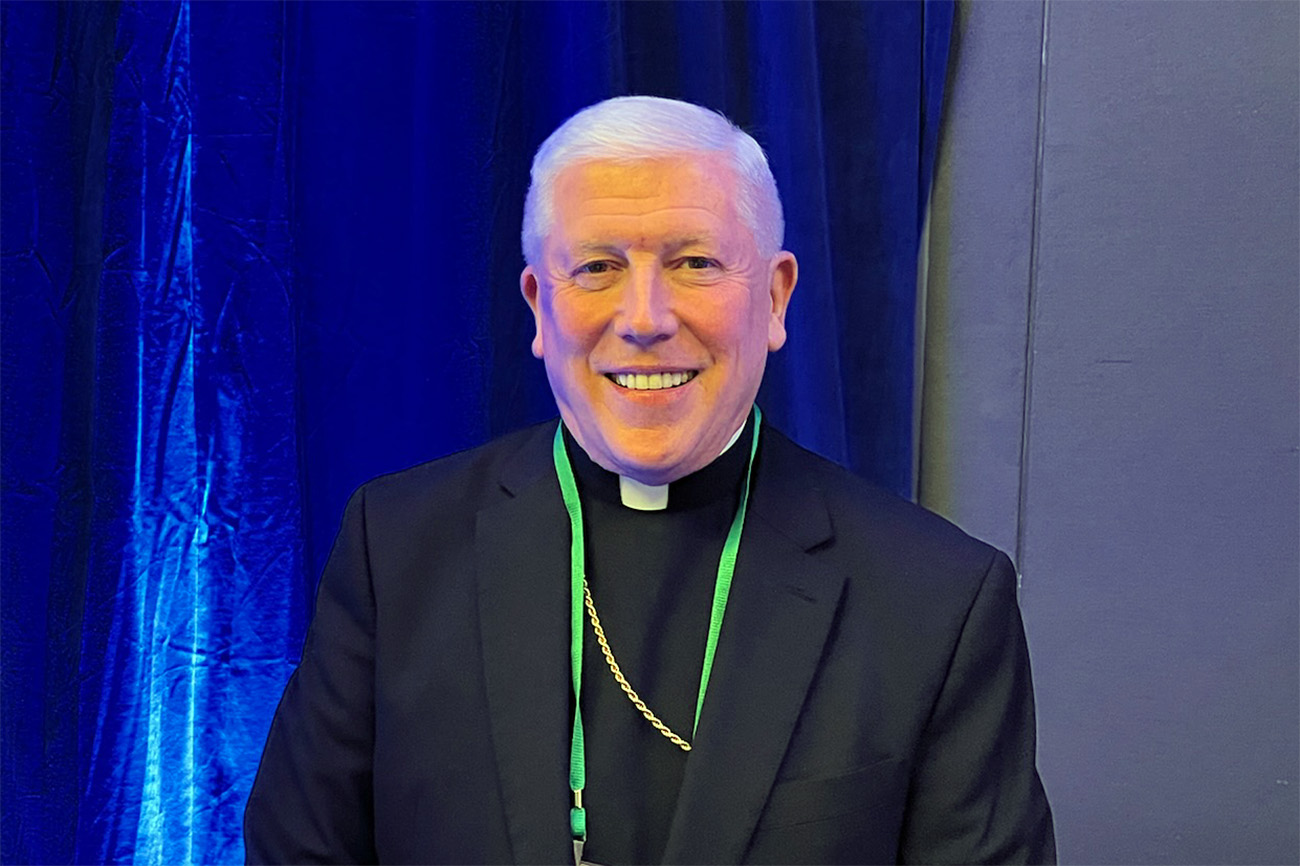
BALTIMORE (RNS) — Toledo, Ohio, Bishop Daniel Thomas took the reins from Arlington, Virginia, Bishop Michael Burbidge on Wednesday (Nov. 13).
Aleja Hertzler-McCain
November 19, 2024
BALTIMORE (RNS) — Ever since the 2022 Dobbs v. Jackson Women’s Health Organization Supreme Court case struck down the national right to abortion, anti-abortion advocates, including the Unites States’ Catholic bishops, have struggled to gain voters’ support in limiting access to the procedure at the state level.
On Election Day, abortion rights amendments passed in seven of 10 states, extending an unbroken series of losses for abortion foes dating back to Kansas’ amendment battle in 2022. Even as Florida’s amendment failed to pass (along with South Dakota’s and Nebraska’s), Floridians — 57% of whom voted “yes” — only narrowly missed hitting the 60% required for approval.
American Catholic voters have undoubtedly been part of the abortion access amendments’ success. Surveys find that about 6 in 10 Catholics support keeping abortion legal, in defiance of Catholic teaching and despite their bishops’ identifying it in 2019 as their “preeminent priority.”
How the bishops navigate this landscape will depend in part on Toledo, Ohio, Bishop Daniel Thomas, who was elected last fall to lead their Committee on Pro-Life Activities and began his three-year term on Wednesday (Nov. 13).
In electing Thomas by an almost two-thirds majority, the bishops declined to elevate San Francisco Archbishop Salvatore Cordileone, who had banned former House Speaker Nancy Pelosi from receiving Communion over her backing of abortion rights. Their decisive vote was seen as a rejection of the more militant and strident position on the issue.
But the Toledo bishop, who celebrated his 10th anniversary in his diocese last month, calling his service 10 years of “unmerited grace,” intends to advance the conference’s opposition to abortion. He has served as a consultor to the Committee on Pro-Life Activities since 2016, becoming a member in 2022. In July, he led a breakout session at the National Eucharistic Congress on “Christ’s Eucharistic Love and Mercy: Our Source for Healing After Abortion.”
On the first day of the bishops’ recent meeting in Baltimore, Thomas sat down with RNS for an interview, and he echoed some of the rhetoric of his predecessor, Bishop Michael Burbidge of Arlington, Virginia, who called abortion rights amendments “extreme.” This interview has been lightly edited for length and clarity.
What is your strategy for leading this committee?
The first strategy, of course, is the gospel of life of Jesus Christ. We take our word directly from Jesus: “I am the way, the truth, and the life.”
Then the strategy is for us to try to promote life, the dignity and sanctity of every human life, from conception until natural death. Of course, the strategy itself is to use everything in our means to announce that reality, to defend that reality, to offer our service, our advocacy, our education, all through the conference for the good of all the dioceses and obviously the shepherds throughout the United States.
So the effort is to literally provide that resource to them, and then also to provide a united national voice because it’s the national conference of Catholic bishops.
Kansas City, Kansas, Archbishop Joseph Naumann, a former chair of the Pro-Life Activities Committee, said earlier today that the results of abortion rights ballot initiatives should be a wake-up call for the conference. Do you see it that way? What is your response to Catholics who voted for abortion rights?
The strategy is going to have to be, how do we best address those realities? How do we best address our Catholics who perhaps, for one reason or another, simply don’t understand really how radical some of these ballot initiatives have been. We want to be able to inform and to evangelize and to equip Catholics so they can best understand what it is we believe about the human person, what it is we believe about a conception — that this is a human being, that this is a child of God, and that we can help those understand not just what abortion does to children, but what abortion does to women, and also to men, what it does to family.
So for us, the fundamental reality, of course, is the defense of life, and for us, violence against children is, as the U.S. bishops have said repeatedly, a preeminent concern because that concern is the most basic fundamental right, the right to life.
What needs to change to get more everyday Catholics to subscribe to church teaching on this issue?
The conversion of hearts and minds is what needs to change. So the strategy will be to try to help people to understand not just what is it we’re saying, but why is it we’re saying that.
For years, a lot of people said, well, I don’t necessarily follow religion, I follow science. Well, now science supports what the church has taught for forever. Simple things, like the science of a sonogram has taken us light years into the appreciation of women, for the life of the child in their womb.
I do believe that in the end, helping people to understand not just, here is the teaching, but why we teach what we teach, and we teach that because we teach it out of love. We teach it out of respect. We teach it out of the understanding that this is what Jesus invites us to teach and to proclaim.
It’s also because Jesus himself became a human person in the womb of Mary. There is no greater representative of the reality of respect for life in the womb than the very fact that Jesus himself came as a vulnerable child in the womb. I think that’s the opening, if you will, to the conversion of hearts and minds.
My colleague Jack Jenkins and NPR reporter Rosemary Westwood have reported that, in this last year compared to previous years, U.S. Catholic bishops’ spending on abortion-related ballot amendments was down. Have there been conversations at the national level about when it makes sense to spend or not spend? Or has that been a decision taken individually by each bishop?
I couldn’t speak of course to what an individual state, province, for example, spends on ballot initiatives. I can say that there’s no possible way that the church can outspend the extraordinary amount of money that has poured into these various states for the ballot initiatives. Several bishops have told me that the money in their states did not come from their own people or from the area. It came from radical people from outside the state. I had that experience as a bishop in Ohio, where, sadly, (abortion rights) was voted for. It’s a question of conversion of minds and hearts. It’s certainly not, in the end, a question of money.
In three years, what will you hope to have accomplished?
I would hope in three years I will have assisted in some very small way the leadership of the committee for the conference. And for all of our bishops, shepherds, and the people of God, I would hope I would have steered them to the one who is the way, the truth and the life. If we’ve steered them to Jesus, if we’ve proclaimed Jesus, if we’ve taught Jesus, and if we’ve announced Jesus in all we do, then that’s all I could possibly hope for.