Showing posts with label All Saints Day. Show all posts

Saturday, November 1, 2025

Pope Leo shares thoughts, prayers before today's Angelus for All Saints Day


Displaced Sudanese gather and sit in makeshift tents after fleeing Al-Fashir city in DarfurDisplaced Sudanese gather and sit in makeshift tents after fleeing Al-Fashir city in Darfur 

Pope: In a wartorn world, may we become builders of fraternity

Before the recitation of the Angelus in Saint Peter’s Square, Pope Leo XIV recalled the “great celebration” to which the human family is destined—so different from the tragedies it endures because of present injustices. He also greeted the Delegation of the Church of England, in Rome for the proclamation of Saint John Henry Newman as a Doctor of the Church.

By Edoardo Giribaldi

Before leading the recitation of the Angelus, Pope Leo XIV recalled how the mystery of the communion of saints is a living memory that "we breathe in deeply today" and brings to mind the great celebration for which humanity is destined. Yet, as we await it, this hope is stifled by the conflicts and injustices of the present time—challenges that the human family is called to face by becoming builders of fraternity.

On the Solemnity of All Saints, speaking before the recitation of the Angelus in Saint Peter’s Square, Pope Leo drew a parallel between the joyful realities of the future and the urgent issues of the present. Today’s Solemnity directs our gaze toward the “future reality” of heaven—a joy shared with God, present in all, "recognizing and admiring the multifaceted beauty of faces, all different and all resembling the face of Christ.” This vision, he said, stands in sharp and painful contrast with the current tragedies of the world, whose healing the Pope entrusted to the intercession of the Blessed Virgin Mary and all the Saints.

Greetings to the Delegation of the Church of England

Before leading the Marian prayer, the Pope welcomed and greeted the Delegation of the Church of England, led by the Archbishop of York, Stephen Cottrell. Their presence, he said, rekindled the “joy” shared just a few days ago during the “historic prayer meeting” with King Charles III of England in the Sistine Chapel. He expressed his hope that the newly proclaimed Doctor of the Church, Saint John Henry Newman, would “accompany Christians on their journey towards full union.”

Solidarity of the “Race of the Saints”

Finally, the Pope greeted the young participants of the Race of the Saints marathon, an event that unites "sport and solidarity with the most disadvantaged children.” Now in its seventeenth edition and promoted by Missioni Don Bosco, the race winds through the heart of Rome’s historic center. This year, on the occasion of the Jubilee, the route holds special significance, linking the four Papal Basilicas of the Eternal City.

All Saints Day in St. Peter's Square; Saint John Henry Newman named Doctor of the Church


Pope Leo XIV: Newman, Doctor of the Church - A light for the new generations

During the Mass on the Solemnity of All Saints, also the culmination of the Jubilee of the World of Education, Pope Leo XIV proclaims Saint John Henry Newman a Doctor of the Church. His legacy, the Pope emphasized, is to form people "so that they may shine like stars in their full dignity.”

By Alessandro Di Bussolo

Pope Leo XIV presented Saint John Henry Newman as a master of "theory and practice of education", who invites us to offer the ‘Kindly Light’ of faith in Providence—as in his famous hymn—to "disarm the false reasons for resignation and powerlessness" and to transmit "light and guidance" in this present time, "darkened by so much injustice and uncertainty.” Addressing the thousands of faithful—especially students and educators—gathered in Saint Peter’s Square for the Mass, the Pope invited educators and students alike, "to ensure that schools, universities and every educational context, even those that are informal or street-based, are always gateways to a civilization of dialogue and peace.”At the center of education, real people

At the center of education, real people

In a square warmed by gentle sunlight, and in the presence of the official delegation of the Church of England led by Archbishop of York Stephen Cottrell, the Pope recalled in his homily that the new Doctor of the Church—the 38th—has left us, especially in his Meditations and Devotions, splendid reflections on “mystery of the dignity of every human person, and also the variety of gifts distributed by God” Life, the Pope said, becomes luminous when one discovers, as Cardinal Newman did, that one has a vocation—a mission—and that "our lives serve something greater than ourselves.“ The contribution each one has to offer, he added, “is uniquely valuable, and the task of educational communities is to encourage and cherish that contribution.”

“[ Let us not forget that at the heart of the educational journey we do not find abstract individuals but real people, especially those who seem to be underperforming according to the parameters of economies that exclude or even kill them. We are called to form people, so that they may shine like stars in their full dignity. ]  ”


Pope Leo XIV while giving his homily   (@Vatican Media)

Cardinal Newman inspires new generations

At the beginning of the homily, Leo XIV also announced that Saint John Henry Newman has been named co-Patron of the Church’s educational mission alongside Saint Thomas Aquinas.

Cardinal Newman’s impressive spiritual and cultural stature, the Pope continued, "will surely serve as an inspiration to new generations whose hearts thirst for the infinite, and who, through research and knowledge, are willing to undertake that journey which, as the ancients said, takes us per aspera ad astra, through difficulties to the stars."

Education as a search for truth and of service

Reflecting on Saint Paul’s Letter to the Philippians and the apostolic mandate to “shine like stars in the world,” the Pope repeated to educators the words of his Apostolic Exhortation Dilexi te

“Shine today like stars in the world” through your authentic commitment to the collective search for truth and to sharing it with generosity and integrity. Indeed, you do so through your service to young people, especially the poor, and your daily witness to the fact that “Christian love is prophetic: it works miracles”

Universities as laboratories of prophecy

Pope Leo reaffirmed that, within the Jubilee understood as a pilgrimage of hope, education represents “an indispensable seed" of hope.

“[ When I reflect on schools and universities, I think of them as laboratories of prophecy, where hope is lived, and constantly discussed and encouraged ]   ”

Schools as places of listening and living the Gospel

Commenting on the Beatitudes just proclaimed from the Gospel of Matthew, the Pope described them as “the path and message of Jesus the Teacher,” who—contrary to the world’s logic—declares blessed the poor, those who hunger and thirst for justice, the persecuted, and the peacemakers. These, he said, are the signs of the Kingdom of God, which the saints make present among us.

“[ We are his disciples and are in his “school.” We learn how to discover in his life, namely in the path he has travelled, a horizon of meaning capable of shining a light on all forms of knowledge. May our schools and universities always be places of listening to the Gospel and putting it into practice! ]   ”

Freeing humanity from the darkness of nihilism

Leo XIV acknowledged that such challenges might seem beyond our strength, but, quoting Pope Francis from a year earlier, he urged perseverance.

“[ We must work together to set humanity free from the encircling gloom of nihilism, which is perhaps the most dangerous malady of contemporary culture, since it threatens to “cancel” hope. ]   ”

Guided by the “Kindly Light”

This darkness, the Pope said, recalls Cardinal Newman’s hymn Lead, Kindly Light, composed when he was still an Anglican pastor and sung during the Offertory. It is a light that guides us when we realize our feet are unsteady, unable to discern the horizon. Education’s task, the Pope explained, is precisely to offer this Kindly Light to those imprisoned by “the shadows of pessimism and fear.”  

“[ In that beautiful prayer, we come to realize that we are far from home, our feet are unsteady, we cannot interpret clearly the way ahead. Yet none of this impedes us, since we have found our Guide: “Lead, Kindly Light, amid th’encircling gloom, Lead Thou me on;” “Lead, Kindly Light, The night is dark, and I am far from home, Lead Thou me on.” ]  ”

Catholic education and the discovery of holiness

The Pope concluded his homily by stressing that “from a Christian perspective education helps everyone to become saints. Nothing less will do.” He recalled Pope Benedict XVI’s words to young people during Newman’s beatification in Great Britain in 2010: “What God wants most of all for each one of you is that you should become holy. He loves you much more than you could ever begin to imagine.” This, Leo XIV affirmed, is the universal call to holiness—the essential message of the Second Vatican Council—“a personal and communal journey marked out by the Beatitudes.”

“[ I pray that Catholic education will help each person to discover their own call to holiness. Saint Augustine, whom Saint John Henry Newman greatly admired, once said that we are fellow students who have one Teacher, whose school is on earth and whose chair is in heaven ] ”

The Mexican Catholic tradition of the Day of the Dead


Mexican Catholics unite faith and tradition for Day of the Dead


A file photo shows a woman praying at the grave of a relative during the Day of the Dead commemoration near Mexico City. (OSV News photo/Henry Romero, Reuters)


(OSV News) — Many parishioners at San Antonio de las Huertas Parish in Mexico City remember their deceased loved ones by building altars in their homes for Day of the Dead.


The altars burst with marigolds, are often adorned with colorful “papal picado,” or decorative cut paper, and usually feature food and drink, including Coca-Cola, tequila and beer. People believe their relatives return the nights of Nov. 1 and Nov. 2 to reunite with family.

Practice of building altars

Father Pedro Lira, pastor at San Antonio de las Huertas, supports the practice of building altars. But he also encourages his congregation to pray for their deceased loved ones and to remember the promise of eternal life.

“Upon lighting the candles many people stop and pray the Our Father without really knowing how to pray at the altar,” Father Lira told OSV News. “It’s the confidence of saying, ‘Even after death, I can do something for you?'”

Day of the Dead — famed Dia de los Muertos — marks one of Mexico’s deepest cultural traditions, dating to pre-Hispanic times, in which people commemorate and commune with their deceased loved ones. Mexicans build altars and visit graveyards for candlelight vigils. 

Many Mexicans visit churches, too, where prayers are said for All Saints’ Day on Nov. 1 and All Souls’ Day on Nov. 2.

Commemorating the departed

“The church commemorates, does not celebrate, the faithful who have departed,” Father Lira said. “We entrust them to God’s mercy. We no longer know if they share in his glory, but we do entrust them to God’s providence. And that is why as a church we pray for them.”

Death holds a unique place in Mexican culture. Pre-Hispanic populations celebrated a version of Day of the Dead around harvest time, according to research. Early Catholic evangelists “Christianized” that remembrance of the dead, according to Father Lira, who emphasized, “The Christian message is death as a passage to eternal life. … Mexican culture did not see life after death.”

La Catrina costumes

Onlookers paint their faces black and white and dress in La Catrina costumes — elegant skeletons previously used to mock the Mexicans aspiring to be Europeans. Tourists, meanwhile, increasingly make trips to graveyards to witness the festivities, bringing much needed economic activity to downtrodden rural towns, but disrupting commemorations. 

“The people of Oaxaca (state) have managed to create a second Day of the Dead that is exclusively meant for tourists and strangers,” Shawn Haley, a Canadian anthropologist studying the holiday, told OSV News. The alternative Day of the Dead “redirects the strangers focus away from the village celebrations that can then remain restricted to the community and family.”

Observers say a renewed sense of pride in Mexican traditions, along with movies such as “Coco,” have hastened the embrace of Day of the Dead. The renewed interest in Day of the Dead, meanwhile, has largely diminished interest in Halloween, which had been brought back by migrants and had been gaining ground until recently. “It is viewed as a quaint American holiday,” Haley said.

The rise of Halloween

Mexican church leaders have long warned of the rise of Halloween. Father Andrés Larios said a group of young people in his parish in Michoacán even tried to turn the parish event hall into a haunted house — something he used as a teaching opportunity. 

“The church much prefers promoting that one day we will meet our loved ones who died for this world, but who continue living in the other, rather than getting rid of all these things that come from the United States” such as Halloween, said Andrés Larios, a parish priest in the Diocese of Apatzingán.

Practicing Catholics still refer to Day of the Dead as All Saints, which remembers the saints, and All Souls, which remembers all believers, to “distinguish themselves from nonpracticing Catholics,” according to Haley, though “the actual celebration is exactly the same.”

‘Less celebrating, more remembering’

He added, “In Non-Catholic homes, the deceased loved ones are expected to return home. Where in Catholic homes, the altar becomes more of a memorial to the deceased. Less celebrating and more remembering.”

Priests are emphasizing faith, along with remembrance.

“It’s very important to recall the importance of praying for the saints on Nov. 1 and praying for the dead on Nov. 2,” Father Alan Camargo, spokesman for the Diocese of Matamoros-Reynosa, told OSV News.

“The Catholic faith, at its core, is Christ who dies and conquers death,” he continued, adding that “altars to the dead, skulls, those don’t clash with the Christian faith as long as we discover the importance of respect for life and also respect for death.”

David Agren writes for OSV News from Buenos Aires.

Friday, October 31, 2025

November 1st: the Solemnity of All Saints Day


Ordinary Time: November 1st

Solemnity of All Saints


Solemnity of All Saints: Almighty ever-living God, by whose gift we venerate in one celebration the merits of all the Saints, bestow on us, we pray, through the prayers of so many intercessors, an abundance of the reconciliation with you for which we earnestly long. Through our Lord Jesus Christ, your Son, who lives and reigns with you in the unity of the Holy Spirit, God, for ever and ever.


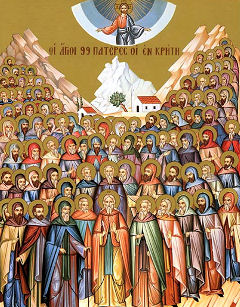
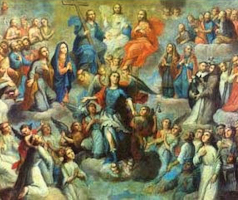
Today is the Solemnity of All Saints. The Church celebrates all the saints: canonized or beatified, and the multitude of those who are in heaven enjoying the beatific vision that are only known to God. During the early centuries the Saints venerated by the Church were all martyrs. Later the pope set November 1 as the day for commemorating all the Saints. We all have this "universal call to holiness." What must we to do in order to join the company of the saints in heaven? We "must follow in His footsteps and conform [our]selves to His image seeking the will of the Father in all things. [We] must devote [our]selves with all [our] being to the glory of God and the service of [our] neighbor. In this way, the holiness of the People of God will grow into an abundant harvest of good, as is admirably shown by the life of so many saints in Church history" (Lumen Gentium, 40).

"This perfect life with the Most Holy Trinity—this communion of life and love with the Trinity, with the Virgin Mary, the angels and all the blessed—is called "heaven." Heaven is the ultimate end and fulfillment of the deepest human longings, the state of supreme, definitive happiness" (CCC 1024).

Remember to pray for the Poor Souls in Purgatory from November 1 to the 8th.


All Saints Day
During the year the Church celebrates one by one the feasts of the saints. Today she joins them all in one festival. In addition to those whose names she knows, she recalls in a magnificent vision all the others "of all nations and tribes standing before the throne and in sight of the Lamb, clothed with white robes, and palms in their hands, proclaiming Him who redeemed them in His Blood."

The feast of All Saints should inspire us with tremendous hope. Among the saints in heaven are some whom we have known. All lived on earth lives like our own. They were baptized, marked with the sign of faith, they were faithful to Christ's teaching and they have gone before us to the heavenly home whence they call on us to follow them. The Gospel of the Beatitudes, read today, while it shows their happiness, shows, too, the road that they followed; there is no other that will lead us whither they have gone.

According to various authors including Father Francis X. Weiser, SJ, the "Commemoration of All Saints" was first celebrated in the East. The feast is found in the West on different dates in the eighth century. The Roman Martyrology mentions that this date is a claim of fame for Gregory IV (827-844) and that he extended this observance to the whole of Christendom; it seems certain, however, that Gregory III (731-741) preceded him in this. At Rome, on the other hand, on May 13, there was the annual commemoration of the consecration of the basilica of St. Maria ad Martyres (or St. Mary and All Martyrs). This was the former Pantheon, the temple of Agrippa, dedicated to all the gods of paganism, to which Boniface IV had translated many relics from the catacombs. Gregory VII transferred the anniversary of this dedication to November 1.

Highlights and Things to Do:

  • Visiting a cemetery and praying for the faithful from November 1 through November 8 will gain a plenary indulgence that can be applied only to the souls in Purgatory. On other days, this work gains a partial indulgence. See the green section below for indulgence requirements.
  • Spend a little time after Mass thanking God for all the unnamed saints, some of whom could be our own relatives.
  • Pray the Litany of the Saints 

A Guide to Plenary Indulgences for the All Souls' "Octave", November 1-8
Visiting a Cemetery: An indulgence, applicable only to the Souls in Purgatory, is granted to the faithful, who devoutly visit a cemetery and pray, even if only mentally, for the departed. The indulgence is plenary each day from November 1-8; on other days of the year it is a partial indulgence.


Visiting a Church on November 2: A plenary indulgence, applicable only to the souls in purgatory, is granted to the faithful who, on All Souls' Day (or, according to the judgment of the ordinary, on the Sunday preceding or following it, or on the solemnity of All Saints), devoutly visit a church or an oratory and recite an Our Father and the Creed.


Praying for the Faithful Departed: A partial indulgence, applicable only to the souls in purgatory, is granted to the faithful who,

  • devoutly visit a cemetery and at least mentally pray for the dead;
  • devoutly recite lauds or vespers from the Office of the Dead or the prayer Eternal rest. (Manual of Indulgences, Fourth Edition, 1999)

Indulgence Requirements:

  • To gain a plenary indulgence, in addition to excluding all attachment to sin, even venial sin, it is necessary to perform the indulgent work and fulfill the following three conditions: sacramental Confession, Eucharistic Communion, and prayer for the intention of the Sovereign Pontiff.
  • A single sacramental confession suffices for gaining several plenary indulgences, but Holy Communion must be received and prayer for the intention of the Holy Father must be recited for the gaining of each plenary indulgence.
  • The three conditions may be fulfilled several days before or after the performance of the prescribed work; it is, however, fitting that Communion be received and the prayer for the intention of the Holy Father be said on the same day the work is performed.
  • The condition of praying for the intention of the Holy Father is fully satisfied by reciting one Our Father and one Hail Mary. A plenary indulgence can be acquired only once in the course of the day, a partial indulgence can be acquired multiple times.
  • If a visit to a Church or an oratory is required to obtain an indulgence attached to a particular day, this may be accomplished from noon of the preceding day until midnight of the particular day.

Friday, November 1, 2024

All Saints Day Angelus Address with Pope Francis


Pope on All Saints' Day: With the Lord's help, let's aspire to holiness

During his Angelus address on this Solemnity of All Saints, Pope Francis invites faithful to not see holiness as unattainable, and urges them, like the Saints, to take little steps to live more holy lives.

By Deborah Castellano Lubov

"Do I ask God, in prayer, for the gift of a holy life? Do I let myself be guided by the good impulses that His Spirit inspires in me? And do I commit myself personally to practising the Beatitudes of the Gospel, in the environments in which I live?"

Pope Francis called on faithful to reflect seriously on these questions during his Angelus address in the Vatican on the Solemnity of All Saints.

The Holy Father began by recalling the day's Gospel according to St. Matthew, in which Jesus proclaims the Beatitudes, which Pope Francis called once again "the Christian's identity card" and helps us on the path toward holiness.

READ THE POPE'S FULL ANGELUS ADDRESS HERE

Gift from God

In this sense, Pope Francis observed it is a gift from God because, as Saint Paul says, it is He who sanctifies, and for this reason, he said, "the Lord is the first we ask to make us holy, to make our heart similar to His."

"With His grace," Pope Francis continued, the Lord "heals us and frees us from all that prevents us from loving as He loves us, so that in us, as Blessed Carlo Acutis used to say, there may always be 'less of me to make room for God.'”

Our response

This, the Pope said, leads us to consider our response.

In this context, Pope Francis stressed that God "indeed offers us His holiness, but He does not impose it."

"He sows it in us, He makes us taste its flavour and see its beauty, but then," the Holy Father highlighted, "He awaits our response."

The Lord, the Pope went on to say, "leaves us the freedom of following His good inspirations, of letting ourselves be involved in His plans, of making His sentiments ours, putting ourselves, us, as He taught us, in the service of others..."

Saints of our time

We see all of this, the Pope highlighted, in the lives of the Saints, "even in our time."

"How much holiness is hidden in the Church," the Pope said.

"Think, for example," he said, "of Saint Maximilian Kolbe, who in Auschwitz asked to take the place of a father of a family, condemned to death; or of Saint Teresa of Calcutta, who spent her existence in the service of the poorest of the poor; or of Bishop Saint Oscar Romero, murdered at the altar for having defended the rights of the last against the abuse of their oppressors."

"In them, as in many other Saints – those we venerate on the altars and those 'next door', with whom we live every day," he said we recognize brothers and sisters who lived or live out the Beatitudes.

Welcoming instinct toward holiness

The Holy Father highlighted a characteristic of the Saints, namely that they "are people filled with God," who are "incapable of remaining indifferent to the needs of their neighbour," and they witness, even for us, what sort of life we can aspire to.

Pope Francis went on to ask how they can on a personal and practical level be inspired by the Saints' holy examples, and implored the Blessed Mother help them make their lives "a path of holiness."

Thursday, October 31, 2024

All Saints Day, November 1, 2024


Ordinary Time: November 1st

Solemnity of All Saints

Other Titles: All Saints Day

facebook sharing button Share
twitter sharing button Tweet
linkedin sharing button Share
pinterest sharing button Pin
email sharing button Email
sharethis sharing button

MASS READINGS

November 01, 2024 (Readings on USCCB website)

PROPERS [Show]

COLLECT PRAYER

Solemnity of All Saints: Almighty ever-living God, by whose gift we venerate in one celebration the merits of all the Saints, bestow on us, we pray, through the prayers of so many intercessors, an abundance of the reconciliation with you for which we earnestly long. Through our Lord Jesus Christ, your Son, who lives and reigns with you in the unity of the Holy Spirit, God, for ever and ever.

show

Recipes (16)

show

Activities (13)

show

Prayers (7)

show

Library (6)

show

Blog & Podcasts (6)

» Enjoy our Liturgical Seasons series of e-books!

Today is the Solemnity of All Saints. The Church celebrates all the saints: canonized or beatified, and the multitude of those who are in heaven enjoying the beatific vision that are only known to God. During the early centuries the Saints venerated by the Church were all martyrs. Later the pope set November 1 as the day for commemorating all the Saints. We all have this "universal call to holiness." What must we to do in order to join the company of the saints in heaven? We "must follow in His footsteps and conform [our]selves to His image seeking the will of the Father in all things. [We] must devote [our]selves with all [our] being to the glory of God and the service of [our] neighbor. In this way, the holiness of the People of God will grow into an abundant harvest of good, as is admirably shown by the life of so many saints in Church history" (Lumen Gentium, 40).

"This perfect life with the Most Holy Trinity—this communion of life and love with the Trinity, with the Virgin Mary, the angels and all the blessed—is called "heaven." Heaven is the ultimate end and fulfillment of the deepest human longings, the state of supreme, definitive happiness" (CCC 1024).

Remember to pray for the Faithful Departed from November 1 to the 8th.


All Saints Day
During the year the Church celebrates one by one the feasts of the saints. Today she joins them all in one festival. In addition to those whose names she knows, she recalls in a magnificent vision all the others "of all nations and tribes standing before the throne and in sight of the Lamb, clothed with white robes, and palms in their hands, proclaiming Him who redeemed them in His Blood."

The feast of All Saints should inspire us with tremendous hope. Among the saints in heaven are some whom we have known. All lived on earth lives like our own. They were baptized, marked with the sign of faith, they were faithful to Christ's teaching and they have gone before us to the heavenly home whence they call on us to follow them. The Gospel of the Beatitudes, read today, while it shows their happiness, shows, too, the road that they followed; there is no other that will lead us whither they have gone.

According to various authors including Father Francis X. Weiser, SJ, the "Commemoration of All Saints" was first celebrated in the East. The feast is found in the West on different dates in the eighth century. The Roman Martyrology mentions that this date is a claim of fame for Gregory IV (827-844) and that he extended this observance to the whole of Christendom; it seems certain, however, that Gregory III (731-741) preceded him in this. At Rome, on the other hand, on May 13, there was the annual commemoration of the consecration of the basilica of St. Maria ad Martyres (or St. Mary and All Martyrs). This was the former Pantheon, the temple of Agrippa, dedicated to all the gods of paganism, to which Boniface IV had translated many relics from the catacombs. Gregory VII transferred the anniversary of this dedication to November 1.

Highlights and Things to Do:

  • Visiting a cemetery and praying for the faithful from November 1 through November 8 will gain a plenary indulgence that can be applied only to the souls in Purgatory. On other days, this work gains a partial indulgence. See the green section below for indulgence requirements.
    • Listen to the Catholic Culture Audiobook: St. John Henry Newman—Use of Saints’ Days read by James Majewski.
    • Spend a little time after Mass thanking God for all the unnamed saints, some of whom could be our own relatives.
A Guide to Plenary Indulgences for the All Souls' "Octave", November 1-8
Visiting a Cemetery: An indulgence, applicable only to the Souls in Purgatory, is granted to the faithful, who devoutly visit a cemetery and pray, even if only mentally, for the departed. The indulgence is plenary each day from November 1-8; on other days of the year it is a partial indulgence.

Visiting a Church on November 2: A plenary indulgence, applicable only to the souls in purgatory, is granted to the faithful who, on All Souls' Day (or, according to the judgment of the ordinary, on the Sunday preceding or following it, or on the solemnity of All Saints), devoutly visit a church or an oratory and recite an Our Father and the Creed.


Praying for the Faithful Departed: A partial indulgence, applicable only to the souls in purgatory, is granted to the faithful who,

  • devoutly visit a cemetery and at least mentally pray for the dead;
  • devoutly recite lauds or vespers from the Office of the Dead or the prayer Eternal rest. (Manual of Indulgences, fourth edition, 1999)

Indulgence Requirements:

  • To gain a plenary indulgence, in addition to excluding all attachment to sin, even venial sin, it is necessary to perform the indulgent work and fulfill the following three conditions: sacramental Confession, Eucharistic Communion, and prayer for the intention of the Sovereign Pontiff.
  • A single sacramental confession suffices for gaining several plenary indulgences, but Holy Communion must be received and prayer for the intention of the Holy Father must be recited for the gaining of each plenary indulgence.
  • The three conditions may be fulfilled several days before or after the performance of the prescribed work; it is, however, fitting that Communion be received and the prayer for the intention of the Holy Father be said on the same day the work is performed.
  • The condition of praying for the intention of the Holy Father is fully satisfied by reciting one Our Father and one Hail Mary. A plenary indulgence can be acquired only once in the course of the day, a partial indulgence can be acquired multiple times.
  • If a visit to a Church or an oratory is required to obtain an indulgence attached to a particular day, this may be accomplished from noon of the preceding day until midnight of the particular day.

Wednesday, November 1, 2023

November 1st thru 8th: a special time for indulgences for the souls in Purgatory


Plenary Indulgences: Nov 1-8


A Guide to Plenary Indulgences for the All Souls' "Octave", November 1-8
Visiting a Cemetery: An indulgence, applicable only to the Souls in Purgatory, is granted to the faithful, who devoutly visit a cemetery and pray, even if only mentally, for the departed. The indulgence is plenary each day from November 1-8; on other days of the year it is a partial indulgence.


Visiting a Church on November 2: A plenary indulgence, applicable only to the souls in purgatory, is granted to the faithful who, on All Souls' Day (or, according to the judgment of the ordinary, on the Sunday preceding or following it, or on the solemnity of All Saints), devoutly visit a church or an oratory and recite an Our Father and the Creed.


Praying for the Faithful Departed: A partial indulgence, applicable only to the souls in purgatory, is granted to the faithful who,

  • devoutly visit a cemetery and at least mentally pray for the dead;
  • devoutly recite lauds or vespers from the Office of the Dead or the prayer Eternal rest. (Manual of Indulgences, fourth edition, 1999)

Indulgence Requirements:

  • To gain a plenary indulgence, in addition to excluding all attachment to sin, even venial sin, it is necessary to perform the indulgent work and fulfill the following three conditions: sacramental Confession, Eucharistic Communion, and prayer for the intention of the Sovereign Pontiff.
  • A single sacramental confession suffices for gaining several plenary indulgences, but Holy Communion must be received and prayer for the intention of the Holy Father must be recited for the gaining of each plenary indulgence.
  • The three conditions may be fulfilled several days before or after the performance of the prescribed work; it is, however, fitting that Communion be received and the prayer for the intention of the Holy Father be said on the same day the work is performed.
  • The condition of praying for the intention of the Holy Father is fully satisfied by reciting one Our Father and one Hail Mary. A plenary indulgence can be acquired only once in the course of the day, a partial indulgence can be acquired multiple times.
  • If a visit to a Church or an oratory is required to obtain an indulgence attached to a particular day, this may be accomplished from noon of the preceding day until midnight of the particular day.


Manual of Indulgences, fourth edition, 1999 (Enchridion Indulgentarium)