Sunday, December 29, 2024

Holy Door opened at St. John Lateran by Rome's Cardinal Vicar


Cardinal Vicar of Rome opens Holy Door of Saint John Lateran Basilica

On the Feast of the Holy Family the Cardinal Vicar for the Diocese of Rome invites us to pray especially for those families facing difficulties and suffering. God is the source of love and unshakable hope for us, he emphasizes, no matter how far we may have strayed.

By Antonella Palermo

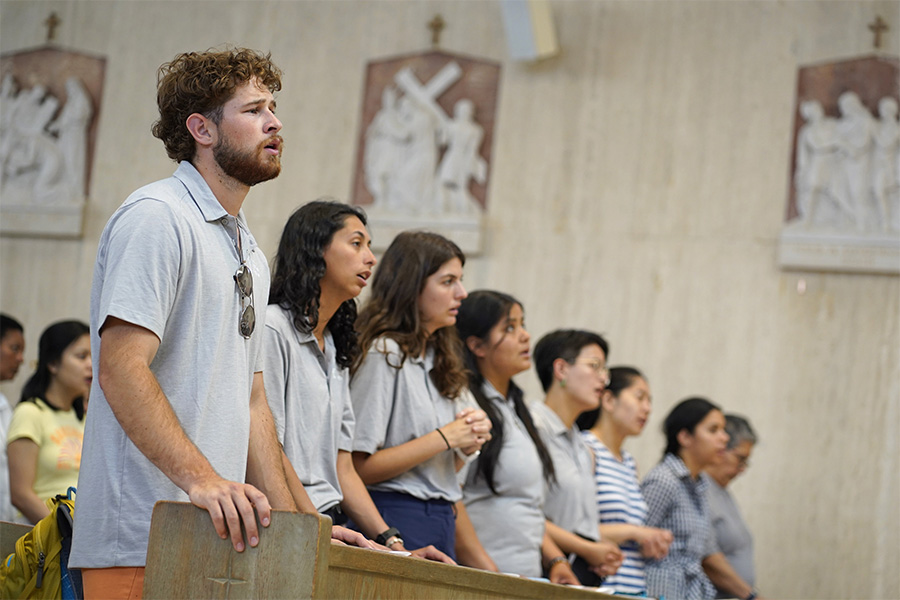
Presiding at the Sunday Mass on the Feast of the Holy Family, Cardinal Baldo Reina recalled how pilgrims come here to free themselves of their burdens and those the world places upon them. The Cardinal is Pope Francis' Vicar General of the Diocese of Rome who opened the Holy Door of his Cathedral, the Papal Basilica of St. John Lateran, a celebration marking the beginning of the jubilee year in all dioceses.


The mayor of Rome also attended the celebration, having inaugurated the square in front of the Basilica and the area facing the Holy Staircase, which now shines again thanks to the repaving work with large patches of grass and round fountains with water jets and mist. Groups of religious, mothers and their children, young families, the faithful, students, and tourists from various parts of the world were in attendance, reflecting the vibrancy, joys, and concerns for our world and hopes for it.

“It’s a great honor to be here,” a woman accompanying her mother stated. A young girl expressed the spirit of all those who wished to be here but could not. “It’s crucial to be here, to change our life, because we are called to holiness,” says a religious from Mexico. “It’s important for us because without God, we can’t do anything,” said a New York couple with four children. “May the Lord give us hope and help us bring His word to the people,” said a woman from northern Italy.

In communion with the Pope at his cathedral

Around three thousand faithful attended the celebration in the Basilica, while many others remained outside to follow it live. The prayer pronounced by Cardinal Reina in opening the Holy Door asked that all who pass through it be accompanied with God's grace: "as a flock that gathers in the one sheepfold, may they live fruitfully this jubilee year." In silence, the bronze door of the Holy Door was opened with a pause for prayer, and then the bells rang out in the "mother of all churches" to the notes of the Jubilee hymn. In communion with Pope Francis, in his Cathedral, the faithful were invited to join in prayer together with the assurance of his spiritual support and joy. 

Closeness to those suffering

In his homily, Cardinal Reina remembered especially "those who feel distant and unworthy" and to those who carry "the weight of deep bitterness" in their hearts. He recalled the sick, prisoners, those weighed down with pain, loneliness, poverty, and difficulties. He offered words of encouragement, saying let no one feel abandoned "due to discouragement or lack of meaning," who have lost hope or have stopped seeking the Father’s embrace. And "in this world torn by wars, discord, and inequalities, let us open our embrace to everyone."

Prayer for families in difficulty

By "providential coincidence" he noted today marks the Feast of the Holy Family of Nazareth, "model of every domestic community and a mirror of the Trinitarian communion," inviting everyone to recognize themselves as part of God’s family, called to grow in unity and mutual charity. He remembered in his prayers especially those families in difficulty and suffering. In one of the prayer intentions during the Mass, a specific request remembered families in poverty: "may they be at the center of the attention of civil leaders and receive the necessary support for a more dignified future."

Welcoming God in our hearts and homes

Cardinal Reina noted that "the Holy Door we crossed evokes the daily gesture we make when crossing the threshold of our homes. This door, now wide open, has introduced us not only to the house of the Lord but to the very depths of His heart." And in the prayer for families before the Eucharistic liturgy, there was an invocation to the Spirit to guide the actions of spouses, so that the human and Christian growth of children may find support in the family, and that love, consecrated by the bond of marriage, may prove stronger than any weakness and crisis. In his homily he concluded that as we cross over the threshold of the doors of our own homes, we try “to bring God into our families, into our daily relationships, into our relationship with children, into marital bonds, in the attention and care of the elderly.”

The gift of being children of God

Cardinal Reina in his homily also drew extensively from the Parable of the Prodigal Son and how it calls us to rediscover what it means to live as children of God and highlights how distorted our human perception of God’s fatherhood can often be. The relationship the Lord wants to establish is one in which "being a child is not a condition that is earned or deserved, but a gift."

The open arms of the Father are the Holy Door

Cardina Reina underscored that the Father's open arms, without reservations, full of tenderness, compassion, and "unshakable hope" are able to restore our dignity. Again, in light of the story of the two sons the Parable of the Prodigal Son, he observedwith great consolation: "Those open arms are the Holy Door. It doesn’t matter how far we have gone astray, it doesn’t matter what we have done, wasted, or ruined. The moment we decide to return to God, we will never find a closed door, but an embrace that welcomes and blesses us."

He continued: "From those open arms, we learn to be Church, to become its sacrament, the family of the God who liberates our freedom towards good." Therefore, he encouraged everyone to pass through the Holy Door with trust, to savour and contemplate the goodness of the Lord, to experience His joy, and to become "tireless sowers of hope and builders of fraternity" in our world.

Papal Sunday Angelus for Holy Family 12.29.2024


Pope at Angelus: Families, sit around the table and talk

On the Feast of the Holy Family, Pope Francis invites families to spend quality time regularly together, and suggests something as simple as sitting together at the dinner table and conversing openly and meaningfully with one another.

By Deborah Castellano Lubov

Pope Francis has reminded families to spend quality time together and suggested that sitting around the dinner table, conversing, and not looking at cell phones, is a great way to do so.

The Holy Father's exhortation fell on the Feast of the Holy Family, this Sunday after Christmas, as he addressed the faithful in St. Peter's Square during his Angelus address.

Recalling the day's celebration, the Pope remembered that the day's Gospel recounts when Jesus, at the age of twelve, at the end of the annual pilgrimage to Jerusalem, went missing from Mary and Joseph, who found Him in the Temple conversing.

"It is the experience of a family that alternates between calm moments and dramatic ones," he observed, adding that it appears "to be the story of a family crisis of our times, of a difficult teenager and two parents who are unable to understand Him."

Dialogue, the most important element for a family

The Holy Father urged those before him to take a moment to pause and "look at this family."

"Do you know why the Family of Nazareth is a model? Because it is a family that converses, that talks. Dialogue is the most important element for a family! A family that does not communicate cannot be a happy family."

In his remarks, the Holy Father spoke about the Holy Family's beautiful example for all families.

Mealtime matters

The Gospel, as the Pope noted, states that Mary and Joseph “did not grasp what He told them,” highlighting that "in a family, listening is more vital than understanding."

Noting that listening gives importance to the other and recognizing his or her right to exist and think autonomously, the Pope insisted, "Children need this."

"Mealtimes," Pope Francis said, "are a special moment for dialogue in the family. It is good to stay together around the table and to speak. This can solve many problems, and above all unite the generations..."

In a special way, he told all families to carve out moments of meaningful family time, crossing across generations, by a gesture as old as time and as simple as having meals together.

Never closed in on ourselves

Pope Francis underscored the need for all family members to speak openly with one another and listen. He noted that the Blessed Mother offers us a flawless example of making the effort to really listen to her Son.

"Never remain closed in on yourself or, even worse," Pope Francis admonished, "with your head turned to your mobile phone." "Talk, listen to each other," he insisted, saying, "This is the dialogue that is good for you and that makes you grow!"

Underscoring that the Family of Jesus, Mary and Joseph is holy, Pope Francis comforted everyday families by reminding them how even Jesus' parents did not always understand Him, and called on them to reflect on this and how it happens often in our families.

Asking for the gift of listening

When it happens, the Pope said we ought to ask ourselves some questions.

"Have we listened to each other? Do we confront problems by listening to each other or do we close up in silence, resentment and pride?" finally, "Do we take a little time to converse?"

Bearing all this in mind, the Pope said, that "what we can learn from the Holy Family today is mutual listening."

Pope Francis concluded by inviting the faithful to join him in entrusting ourselves to the Virgin Mary and asking for our families the gift of listening.

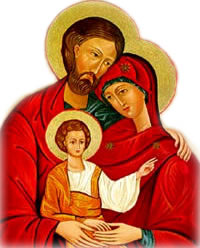
December 29th: Feast of the Holy Family


Christmas: December 29th

Feast of the Holy Family

Other Titles: Seventh Day within the Octave of the Nativity of the Lord (Christmas)

facebook sharing button Share
twitter sharing button Tweet
linkedin sharing button Share
pinterest sharing button Pin
email sharing button Email
sharethis sharing button

MASS READINGS

December 29, 2024 (Readings on USCCB website)

PROPERS [Show]

COLLECT PRAYER

Feast of the Holy Family: O God, who were pleased to give us the shining example of the Holy Family, graciously grant that we may imitate them in practicing the virtues of family life and in the bonds of charity, and so, in the joy of your house, delight one day in eternal rewards. Through our Lord Jesus Christ, your Son, who lives and reigns with you in the unity of the Holy Spirit, God, for ever and ever.

show

Recipes (3)

show

Activities (7)

show

Prayers (14)

show

Library (9)

show

Blog & Podcasts (1)

» Enjoy our Liturgical Seasons series of e-books!

Today is the Fifth Day in the Octave of Christmas.

Scripture tells us practically nothing about the first years and the boyhood of the Child Jesus. All we know are the facts of the sojourn in Egypt, the return to Nazareth, and the incidents that occurred when the twelve-year-old boy accompanied his parents to Jerusalem. In her liturgy the Church hurries over this period of Christ's life with equal brevity. The general breakdown of the family, however, at the end of the past century and at the beginning of our own, prompted the popes, especially the far-sighted Leo XIII, to promote the observance of this feast with the hope that it might instill into Christian families something of the faithful love and the devoted attachment that characterize the family of Nazareth. The primary purpose of the Church in instituting and promoting this feast is to present the Holy Family as the model and exemplar of all Christian families.
—Excerpted from With Christ Through the Year, Rev. Bernard Strasser, O.S.B.

Feast of the Holy Family—Day Five
Today is the feast day of the Holy Family, but also every family's feast day, since the Holy Family is the patron and model of all Christian families. Today should be a huge family feast, since it is devoted entirely to the Holy Family as a model for the Christian family life. As Rev. Edward Sutfin states:

"The children must learn to see in their father the foster-father St. Joseph, and the Blessed Mother as the perfect model for their own mother. The lesson to be learned is both practical and theoretical, in that the children must learn how to obey and to love their parents in thought, word and action, just as Christ was obedient to Mary and Joseph. Helping mother in the kitchen and in the house work, and helping father in his odd jobs about the home thus take on a new significance by being performed in a Christ-like spirit." (True Christmas Spirit, ©1955, St. Meinrad Archabbey, Inc.)

The Holy Family
Marriage is too often conceived as the sacrament which unites a man and a woman to form a couple. In reality, marriage establishes a family, and its purpose is to increase the number of the elect, through the bodily and spiritual fecundity of the Christian spouses.

1. Every marriage intends children. Although Mary and Joseph were not united in a carnal way, their marriage is a true marriage: an indissoluble, exclusive union, wholly subordinated to the child. Mary and Joseph are united only in order to bring Jesus into the world, to protect and raise him. They have only one child, but he contains the whole of mankind, even as Isaac, an only child, fulfilled the promise made to Abraham of a countless progeny.

2. The purpose of every marriage is to establish a Christian family. The Holy Family observed the religious laws of Israel; it went in pilgrimage to Jerusalem every year with other Jewish families (Lk. 2:41). Jesus saddens and amazes his father and his mother because to their will and company he prefers "to be in his Father's house". Thus it may happen that God's will obliges the family to make disconcerting sacrifices. Yet every Christian family must live in harmony and in prayer, which are the pledges of joy and union.

3. "He remained obedient to them." Jesus was God. And through the fullness of grace Mary stood above Joseph. Nevertheless — if we except the event in the Temple — Joseph remained the head of the family; he took the initiative (as when the Holy Family fled to Egypt), and in Nazareth Jesus obeyed his parents.
—Excerpted from Bread and the Word, A.M. Roguet

Commentary on the Mass Readings for the Feast of the Holy Family, Year C:
The First Reading is from the Book of Sirach 3:2-6; 12-14. Although all the emphasis, in these verses of holy Scripture just read to us, seems to be on the obligation of children to their parents, there is a profound lesson here for parents too. "Like father like son" is an old and a true saying very often. If the parents fail to do what is right and just in the sigh of God they can hardly complain if their children turn out disobedient to God and to them. The young learn more from example than from precept. If parents give their children the example of a life of obedience to the laws of God, and their country—the children will in turn carry out their duties to God, to their parents and to their fellowman. There have been and there will be exceptions, of course, to this rule but they are exceptions: the vast majority follow the pattern laid down for them by their parents. Today, on the feast-day of the only perfect family that ever lived on this earth, I would ask all parents to examine themselves and see how they are fulfilling this grave responsibility—which God has placed on them. Are they preparing their children by word and example, especially by example, to be worthy citizens of heaven where they will be their parents' crown and glory?

The Second Reading is from the Letter from St. Paul to the Colossians 3:12-21. Nothing but a return to the gospel of Christ and to the virtues that gospel demand of us can bring sanity back to the world. Where God is forgotten there is no happiness for man. Where the peace of Christ does not reign there is nothing but strife and hostility among men. Where there is no faith and hope in a future life, the present world is already hell. Let us being in our own family circle to bring sanity back to our world. Let us have the true peace of Christ in our hearts and in our home, each one carrying out the task God has allotted to him.

The Gospel is from Luke 2:41-52. The Church has appointed this Sunday within the octave of Christmas as the Feast of the Holy Family of Nazareth. She wants all Christian families to try to model their lives on this, the holiest of families that ever lived on earth. No family can ever hope to be as perfect as this one was, but every family must strive to imitate it if only from afar.

In Joseph, the father of the family has his model. Patiently and humbly he worked at his carpenter's bench to provide the necessities of life for his wife and for the child Jesus. He could not always give them all he would wish for them but he did what he could gladly and humbly. To his neighbors he was just another carpenter, unknown to the world, of no importance in their eyes, yet his name will be known and revered until the end of time. Fathers, many (if not most) of you, too, are living a life of obscurity — a life of monotonous toil — a daily struggle to provide bread for your family. If you carry out faithfully the task God has given you, if you provide for and protect the wife and family God has committed to your care you will make the headlines in the world to come, your names will be written in the Book of Life.

Mothers of families, in Mary you have the perfect example you should strive to follow. She was a dutiful, faithful wife and an ideal and loving mother. How often she must have regretted that her beloved spouse had to struggle so hard to earn their meagre, daily bread. How great must have been her grief that she could not give her beloved Child more comfort in his infancy and youth. She had days of sorrow and anxiety, sorrow which culminated at the foot of the cross on Calvary, but she accepted it all as God's will for the salvation of the world. You too have your days of anxiety and your years perhaps of worry — worries which will not end till you draw your last breath. But think of your Model, turn to Mary for courage and for help. She can and will get you the strength to keep going on the hard road of motherhood.

Like her, you too have a great task to perform for God. You have the eternal salvation of your family in your hands. Their future in this world and in the more important world — the next — will depend largely on how you behave as mother of the family. Your greatest joy in heaven, after the beatific vision, will be, please God, that you will be surrounded by your family which, aided by God's grace, you did so much to bring there.

Children: your duty in the family is to love, honor and obey your parents. And your model is none other than Jesus of Nazareth who, though he was God, made himself subject to Joseph and Mary. He who was God, has set you an example which you must follow. Your obedience will never be as perfect as his but it can and should be as perfect as you can make it. Be a comfort and a consolation to your parents. Remember always what they have done for you in your infancy when you could not help yourself. Remember what they have done and are still doing for you in order to fit you to take your place in this life and in the next.

Show your thankfulness and appreciation by doing what they tell you. You may not see the reason for all their restrictions and all their commands but it is because they have your welfare at heart and because they truly love you that such commands and restrictions are placed on you. It is only later on in life that you will fully understand the true love they had for you and the great sacrifices they made for you so that you would be worthy of them and worthy of your heavenly father who gave you to them. Show your appreciation now while you have them.
—Excerpted from The Sunday Readings by Fr. Kevin O'Sullivan, O.F.M.

Christmas Reflection: Children of God
1. In the middle of the night the Word of God descended into the homes of the Egyptians and slew every first-born among them. Israel was then freed from the Egyptian captivity. The Book of Wisdom reminds us of this marvelous delivery. "While all things were in quiet silence and the night was in the midst of her course, Thy almighty Word leapt down from heaven from the royal throne" (Wisd. 18:14 f.) and released Israel from the chains of the Egyptians from which they yearned so long to be freed. This descent of the angel among the people of Israel is a foreshadowing of the descent of the Son of God to free mankind when He comes to us at Christmas.

2. "God sent His Son, made of woman, made under the law, that He might redeem them who were under the law; that we might receive the adoption of sons" (Epistle). This is the mystery of Christmas, the mystery of the love, wisdom, justice, and mercy of God. We were slaves to the Egyptians; we served the severe taskmasters of this life: the world, the flesh, and the devil. God, looking upon our misery, sends His Son to become a slave, to assume our bondage, to purchase our freedom. Christ becomes subject to all the ills to which the human race is subject; He must be born as men are born, He must grow to manhood, He must suffer, He must die. He must be like to us in all things except sin. He is subject even to the law of Moses, since He is a Hebrew. He faithfully observes this law, which was fashioned for a sinful and stiff-necked people, and which had become for them an insufferable burden.

On this Sunday we find the Son of God, the almighty Word, with His mother and His foster father in the Temple, humbly submitting to the prescriptions of the law of Moses, as if He had been conceived in sin like His fellow men. From His submission to the law one might suppose that He, too, had been conceived in a natural way, by the desires of man and by a human father, not by the will and power of God. For Him the law was not necessary, but He submits to it joyfully and willingly. He has become a slave for us in order to free us from our bondage. Surely there has never been a more sublime example of perfect love and condescension. The Son of God descends from His royal throne and exchanges divine freedom for the chains of men in order that all men may be free. Such an act of divine condescension demands our careful contemplation.

"God sent His Son" to redeem us "that we might receive the adoption of sons." This is freedom, indeed. Not only are we freed from the bondage of sin, but we are made sons of God and share the majesty of the Son of God. "And because you are sons, God hath sent the Spirit of His Son into your hearts, crying: Abba, Father. Therefore now he is not a servant, but a son; and if a son, an heir also through God" (Epistle). But this redemption which the Son of God has wrought in us is not merely a liberation from the slavery of the world, the flesh, and the devil; it elevates us to a higher sphere and introduces us to a new life. "But as many as received Him, He gave them power to be made the sons of God, to them that believe in His name; who are born, not of blood, nor of the will of the flesh, nor of the will of man, but of God" (John 1:12 f.).

We are, then, the children of God. born to Him through the virginal birth of baptism, and are filled with the spirit of His life, by which we are entitled to cry out to God and call Him our Father. "Hallowed be Thy name; Thy kingdom come; Thy will be done." Thy will be done in us and through us. A redemption such as this could have been conceived only by the infinite wisdom of God and executed only through His almighty power. A new race comes into being at Christmas, a race born of the strength of the incarnate Word of God. The child who is born to us at Christmas is born under the law, but holds the scepter of omnipotence in His tiny hands.

The Gospel of the day describes the members of the family who surround the throne of the newborn King. Grouped about His throne we find the Virgin Mother and her virginal spouse, St. Joseph. There, too, is the aged Simeon, now filled with the Spirit of God and uttering his great prophecy: "Behold, this child is set for the fall and for the resurrection of many in Israel, and for a sign which shall be contradicted. And thy own soul a sword shall pierce." Nearby lingers the chaste widow, Anna, the prophetess, whose days and nights were spent in prayer and the service of God. These are the first members of the new race raised to a new life by the Spirit of God. Theirs is the new age, the age in which men will live by the Spirit of God, abounding in all good works.

3. The Incarnate Word of God became subject to the law in order to free us from the servitude of the law and to establish His sovereignty over us. Though subject to the law, He is above the law and confers upon our fallen nature a royal freedom that makes us the children of God.

With profound gratitude we cry out to Him, "The Lord hath reigned; He is clothed with beauty; the Lord is clothed with strength and hath girded Himself" (Introit). "Thou art beautiful above the sons of men; grace is poured abroad in Thy lips" (Gradual). The glory of the divine King, of the Word of God, the reflected splendor of the Father, shines in the eyes and upon the lips of the child in the manger at Bethlehem. He is our brother and our Savior, who for our sake was subject to the law of childhood and childhood's weaknesses. Yet He is the only-begotten of the Father.

The Church, the bride of the divine King, presents herself to Him as a victim. In the celebration of the Holy Eucharist, the almighty Word of God descends upon the altar (into the womb of His bride), and in Holy Communion takes up His abode in the hearts (His crib) of her children, to fulfill what was announced. He becomes subject to the law, as our sacrifice and sacrificial meal, "that He might redeem them who were under the law, that we might receive the adoption of sons." As children of His love we are privileged to address Him as our father, heart to heart. What a tremendous privilege!
—Excerpted from The Light of the World, Volume One by Benedict Baur, O.S.B.

The Holy Family: Jesus, Mary and Joseph
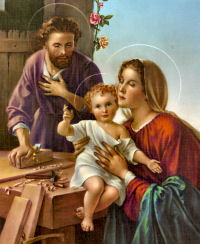
The devotion to the Holy Family was born in Bethlehem, together with the Baby Jesus. The shepherds went to adore the Child and, at the same time, they gave honor to His family. Later, in a similar way, the three wise men came from the East to adore and give honor to the newborn King with gifts of gold, frankincense, and myrrh that would be safeguarded by His family.

We can go further to affirm that in a certain sense Christ, Himself, was the first devotee of His family. He showed His devotion to His mother and foster father by submitting Himself, with infinite humility, to the duty of filial obedience towards them. This is what St Bernard of Clairvaux said in this regard, ‘God, to whom angels submit themselves and who principalities and powers obey, was subject to Mary; and not only to Mary but Joseph also for Mary’s sake [….]. God obeyed a human creature; this is humility without precedent. A human creature commands God; it is sublime beyond measure.’ (First Homily on the ‘Missus Est’).

Today’s celebration demonstrates Christ’s humility and obedience with respect to the fourth commandment, whilst also highlighting the loving care that His parents exercised in His keeping. The servant of God, Pope John Paul II, in 1989, entitled his Apostolic Exhortation, ‘Redemptoris Custos’ (Guardian of the Redeemer) which was dedicated to the person and the mission of Saint Joseph in the life of Christ and of the Church. After exactly a century, he resumed the teaching of Pope Leo XIII, for who Saint Joseph ‘ shines among all mankind by the most august dignity, since by divine will, he was the guardian of the Son of God and reputed as His father among men’ (Encyclical Quamquam Pluries [1889] n. 3). Pope Leo XIII continued, ‘...Joseph became the guardian, the administrator, and the legal defender of the divine house whose chief he was.[…] It is, then, natural and worthy that as the Blessed Joseph ministered to all the needs of the family at Nazareth and girt it about with his protection, he should now cover with the cloak of his heavenly patronage and defend the Church of Jesus Christ.’ Not many years before, blessed Pope Pius IX had proclaimed Saint Joseph, ‘Patron of the Catholic Church’ (1870)

Almost intuitively, one can recognize that the mysterious, exemplary, guardianship enacted by Joseph was conducted firstly, in a yet more intimate way, by Mary. Consequently, the liturgical feast of the Holy Family speaks to us of the fond and loving care that we must render to the Body of Christ. We can understand this in a mystical sense, as guardians of the Church, and also in the Eucharistic sense. Mary and Joseph took great care of Jesus’ physical body. Following their example, we can and must take great care of His Mystical Body, the Church, and the Eucharist which He has entrusted to us. If Mary was, in some way, ‘the first tabernacle in history’ (John Paul II Ecclesia de Eucharistia, n. 55) then we the Tabernacle in which Our Lord chose to reside in person, in His Real Presence, was also entrusted to us. We can learn from Mary and Joseph! What would they ever have overlooked in the care of Jesus’ physical body? Is there something, therefore, that we can withhold for the right and adoring care of His Eucharistic Body? No amount of attention, no sane act of love and adoring respect will ever be too much! On the contrary, our adoration and respect will always be inferior to the great gift that comes to us in the Holy Eucharist.

Looking at the Holy Family, we see the love, the protection, and the diligent care that they gave to the Redeemer. We can not fail to feel uneasiness, perhaps a shameful thought, for the times in which we have not rendered the appropriate care and attention to the Blessed Eucharist. We can only ask for forgiveness and do penance for all the sacrilegious acts and the lack of respect that are committed in front of the Blessed Eucharist. We can only ask the Lord, through the intersession of the Holy Family of Nazareth, for a greater love for their Son Incarnate, who has decided to remain here on earth with us every day until the end of time.
—From the Congregation for the Clergy

Saturday, December 28, 2024

Here is OSV take on "Catholics of the Year"

OSV’s 2024 Catholics of the Year


Hawkeyes guard Caitlin Clark (22) cuts the net after defeating the LSU Lady Tigers in the the finals of the Albany Regional of the 2024 NCAA Tournament at MVP Arena in New York April 1, 2024. Clark graduated in 2020 from Dowling Catholic High School in West Des Moines, Iowa. (OSV News photo/Mandatory credit: Winslow Townson-USA TODAY Sports via Reuters)


By 


By the time December rolls around each year, it feels like the past 12 months have seen it all. In particular for 2024, they saw tens of thousands of people kneeling in Lucas Oil Stadium; the doors of Notre Dame Cathedral reopened; a history-making election; another Roman synod; and, always, too much war and strife.

Looking back at the year, editors at OSV, in their longstanding tradition of shining a light on exemplary signs of faith, have named the following 10 individuals Catholics of the Year for 2024.

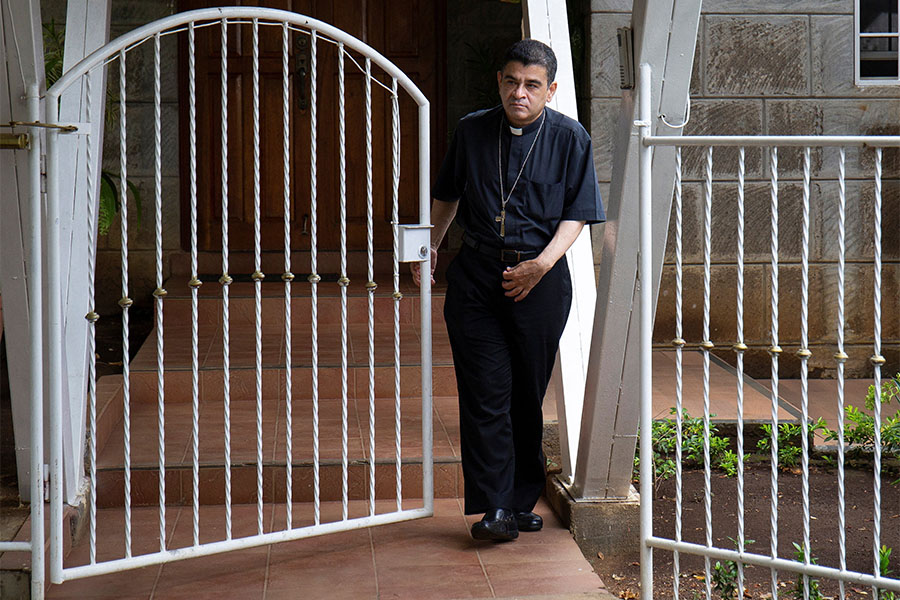
Exiled Bishop Rolando Álvarez of Matagalpa, Nicaragua, for being the steadfast hero of Catholic resistance to the Ortega regime.

Nicaraguan Bishop Rolando Álvarez of Matagalpa walks outside a Catholic church in Managua May 20, 2022. (OSV News photo/Maynor Valenzuela, Reuters)

By Paulina Guzik: Bishop Rolando Álvarez of Matagalpa, Nicaragua, was sentenced to 26 years in prison on Feb. 10, 2023, as he refused to board a flight to the United States with other exiled clergy and laity from Nicaragua. For almost a year behind bars until Jan. 14, 2024, when he was released from prison and exiled to the Vatican he gave the bloody Nicaraguan regime of Daniel Ortega and the world a lesson. During his time of imprisonment, Bishop Álvarez remained close to the cross, exemplifying a steadfast pastor refusing to abandon his people and a humble servant of the Lord. Though he was honored with international awards for his unwavering commitment to religious freedom, for speaking truth to power, and for bearing witness to the inviolable nature of human dignity, Bishop Álvarez remained out of the spotlight for the year, most probably to protect the rapidly shrinking group of clergy and religious who were still allowed to stay in Nicaragua, and who are undergoing constant and brutal persecution. Bishop Álvarez is one of the greatest unbroken bishops of the century, and a true modern witness to the humble suffering of Jesus Christ.

Caitlin Clark, for combining Catholic faith with women’s athletic excellence

By Peter Jesserer Smith and John Knebels: Caitlin Clark University of Iowa basketball legend, historically accurate shooter, WNBA Rookie of the Year, blossoming professional superstar is TIME’s Athlete of the Year. But Clark, who recently finished her first season for the Indiana Fever, rightly ranks among OSV’s 2024 Catholics of the Year. An openly practicing Catholic with a lifetime of Catholic education in her hometown of Des Moines, Iowa, Clark is one of the most scrutinized athletes in the U.S. She’s endured numerous personal attacks and cheap shots from her adversaries on and off the court. But at a time when many people think “strength” means hitting back twice as hard, Clark shows that authentic strength imitates Christ. She has responded to injustice by infusing positive energy on her teammates and coaching staff. She doesn’t speak ill of her detractors. In interviews, she takes full responsibility for her mistakes. Clark also makes clear that her public stance against racism and call for the sports world to better honor Black athletes, comes out of nothing less than deep personal conviction. Without a doubt, Caitlin Clark is a 2024 All-Star Catholic.

Kimberly Henkel, for raising awareness of foster care as a pro-life issue

By Matthew Kirby: Part of being pro-life is caring for children of parents who have chosen life perhaps by default without being able to consistently nurture it. More than half-a-million children pass through the foster system every year in the U.S., and Catholics lag behind evangelicals in mounting an organized response. Kimberly Henkel, together with her husband, Greg, founded Springs of Love to close that gap. The organization a sister apostolate to the infertility ministry Springs in the Desert provides practical support to Catholic families that have opened themselves to caring for vulnerable children, entering an often-chaotic system in order to do so. Springs of Love teams pray, make meals and provide other material and emotional support to families struggling to care for children overwhelmingly suffering from trauma. More than half of resource families withdraw within a year, but studies show that 90% continue to foster when supported by a care team in their community. Henkel is also active in raising awareness surrounding foster parenting, connecting Catholic foster families with one another and encouraging parishes to partner with Springs of Love.

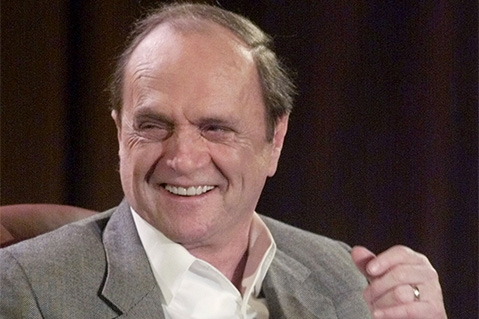
Actor Bob Newhart laughs after delivering a story during a tribute to Newhart at the U.S. Comedy Arts Festival in Aspen, Colo., March 2, 2001. He died July 18, 2024. (OSV News photo/Gary C., Reuters)

Bob Newhart, for his public witness to faith through his lasting marriage

By Michael R. Heinlein: Few in Hollywood are able to achieve what award-winning comedy icon Bob Newhart accomplished: a fruitful and lasting 60-year marriage. As we know well, the pressures and temptations associated with celebrity often break up marriages, and for his marital longevity, Newhart who died in 2024 wasn’t shy about crediting his Catholic faith. And I think that same faith should be recognized for what made him a legend, too. Newhart didn’t wear his religion on his sleeve, but his faith was a lived reality, which made him an outlier personally. Professionally, too: Newhart’s trademark dry-wit humor didn’t demean or offend, and his routines were characteristically clean something for which he was quite proud. It seems he even saw his profession as something of a vocation: “God has an incredible sense of humor, an unimaginable sense of humor. Just look around.” In an environment, industry and era where religious virtues and values were tested and cast aside, Newhart made a career out of knowing their worth. And he still made audiences laugh for decades.

Cardinal Seán O’Malley, for his tireless advocacy of victim-survivors

By Elizabeth Scalia: After explosive 2002 reports of priestly sexual abuse against minors in the church (and subsequent coverups), the Archdiocese of Boston became a smoldering ground zero from which wreckage reverberations spread throughout the country, roiling the American church. In 2003, St. John Paul II sent into that city’s detritus of shaken faith and raised fists a quiet Capuchin Franciscan friar and bishop, Seán Patrick O’Malley, who possessed a singular gift for hearing and compassionately responding to abuse victims. Putting a devastated archdiocese back together required much listening, and large and small acts of daily presence, demonstrating the bishop’s fidelity to, and oneness with, so many who felt angry and betrayed by the faith. In addition to his work domestically, for 10 years, Cardinal O’Malley has served as president of the Pontifical Commission for the Protection of Minors, making no secret of the fact that Rome’s slow-gear, deliberative approach to grave matters has at times left him feeling frustrated. As he retires at age 80, Cardinal O’Malley’s steadfastness to the people he serves and to the victims of the church he loves so patiently, is an example to us all.

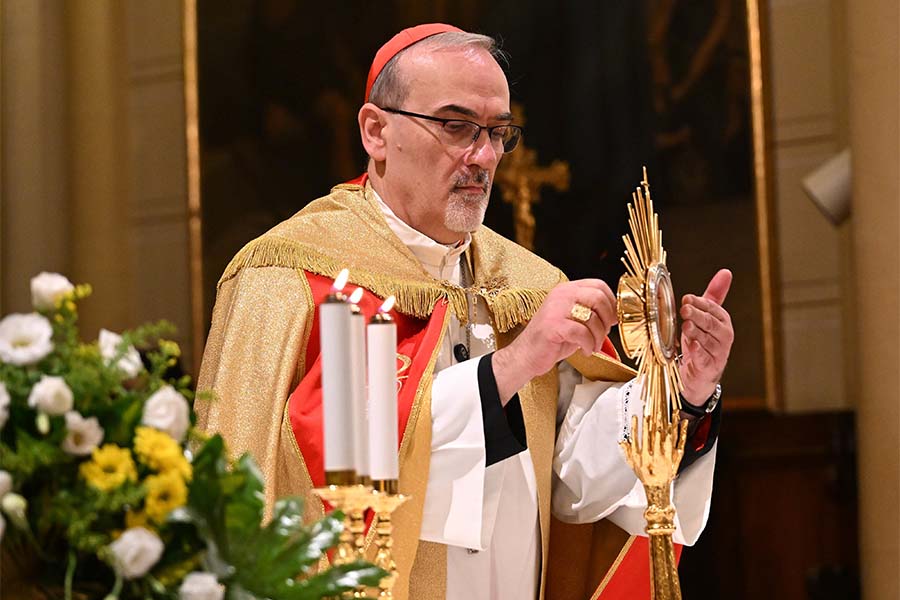
Cardinal Pierbattista Pizzaballa, for his leadership of the church in the Holy Land

By Father Patrick Briscoe, OP: “We are willing to help, even me personally,” Cardinal Pizzaballa, the Latin Patriarch of Jerusalem, told reporters as he condemned the Hamas attacks of Oct. 7, 2023, and offered himself in exchange for the hostages. Now, more than a year into the Israel-Hamas war, Cardinal Pizzaballa continues to be a tireless advocate for peace. A champion for Christians, the cardinal has raised his voice in defense of all who have suffered directly or indirectly because of the conflict Palestinians and Israelis alike. Cardinal Pizzaballa’s insistence that Christians have a unique role to play in the region because we have “the freedom to connect with everyone” makes me proud to be a Catholic. The cardinal’s hope for peace is grounded in his faith in Jesus Christ, but that faith isn’t merely a theory for him. He lives it day in and day out, doing everything he can to keep the memory of Christ in the Holy Land.

Cardinal Pierbattista Pizzaballa, the Latin patriarch of Jerusalem, presides over an hour of adoration and vespers on Oct. 7, 2024, in the Pro Cathedral of the Latin Patriarchate in the Old City of Jerusalem on a day of fasting, penance and prayer for peace in the Holy Land. Oct. 7 marked the first anniversary of the Hamas massacre on Israeli Gaza Strip border communities and a year of the Israel-Hamas war in Gaza. (OSV News photo/Debbie Hill)

Jason Shanks, for his leadership in the successful execution of the National Eucharistic Congress

By Scott P. Richert: At the National Eucharistic Congress in July, nearly everyone responsible for the event’s success was acknowledged on or from the stage, with one notable exception: Jason Shanks. As one of the original members of the executive team of the National Eucharistic Revival, I had often doubted that the congress would succeed. That changed when Jason took a leave of absence from his position as president of the OSV Institute to make what was looking increasingly impossible happen. Even today, after Jason became the new president of the National Eucharistic Congress in August, few of those who attended the event know his name. That lack of recognition is itself a testament to Jason’s humble leadership, which placed the success of the congress ahead of personal reward in order to ignite a fire for the Eucharist in the heart of 60,000 pilgrims and in the heart of the church in the United States.

Philippe Villeneuve, for leaning on his faith during the restoration of Notre Dame Cathedral

By Gretchen R. Crowe: To watch the flames engulf Notre Dame Cathedral in April 2019 was a thing of heartbreak. Heartbreak turned to joy in December 2024, however, when Notre Dame Cathedral reopened to the public after five intense years of rebuilding and restoration. So many are to thank for the effort that returned the cathedral of Our Lady to its people but among the most worthy of praise is chief architect Philippe Villenueve, who recently spoke in an interview of his devotion to the Virgin Mary. “I never stopped feeling support coming from up there,” he told EWTN’s Colm Flynn in December. “I don’t think this project would have been possible otherwise, and I think that’s what gave me the strength and determination to move forward.” It was Villeneuve who suggested the feast of the Immaculate Conception as the date for the reopening, he told the Los Angeles Times, adding that restoring Notre Dame wasn’t “about restoring a building” but rather “about restoring the heart of France.”

Perpetual pilgrims journeying on the National Eucharistic Pilgrimage’s Seton (East) Route pray during a National Eucharistic Pilgrimage Mass celebrated in English and Spanish at St. Frances Cabrini Shrine in the Upper Manhattan section of New York City May 25, 2024. The shrine was one of the stops in the Archdiocese of New York for pilgrims journeying on the Seton Route. (OSV News photo/Gregory A. Shemitz)

Pastoral agents in the Diocese of Raleigh, for their pastoral ministry to farmworkers

By Maria-Pia Chin: “God loves you. You are not alone. Keep at it.” That was the message that a parish volunteer brings to farmworkers who spend their days working under the blazing sun in the fields of North Carolina to help produce the fruit and vegetables that arrive at many tables in this country. And that is what pastoral agents in the Diocese of Raleigh try to show the migrant farmworkers in the diocese. The workers primarily men coming from Mexico on temporary work visas are far away from their families for about seven months a year, can often face harsh conditions and unfair treatment, and live at camps in remote parts of counties that do not have Catholic churches around for several miles. The pastoral agents, which include diocesan and religious order priests, missionaries and parish volunteers, work together to help in any way they can: organizing Masses, sharing the word of God, providing a hot meal, listening to them and praying together. The bishop of Raleigh has described this type of accompaniment and pastoral care as an act of humanity that reminds the workers of their God-given dignity.

30 Perpetual Pilgrims, for walking a combined 6,500 miles over 27 states with the Eucharist

By Maria Wiering: Wearing backpacks, sunscreen and serious sneakers, 30 young adult Catholics spent 60 days over May, June and July traveling across the nation with the Blessed Sacrament in what has been hailed as “the largest Eucharistic procession in history” to the National Eucharistic Congress. Between their four routes, these “perpetual pilgrims” carried out the logistics of the National Eucharistic Pilgrimage, logging more than 6,500 miles on foot in processions and in adoration inside four vans-turned-mobile tabernacles, making 551 stops over 27 states in 65 dioceses. More than 250,000 Catholics joined them for Masses, processions, Holy Hours and other events, providing their meals and lodging along the way. When the pilgrims ceremoniously entered Lucas Oil Stadium July 17, the crowd roared in appreciation, a striking contrast to their long stretches of silent prayer over those eight weeks. As they accompanied the Eucharistic Lord, he worked on their hearts and showed him his love in new ways, including through conversions and miracles they witnessed on the road.