Tuesday, May 30, 2023

Pope Francis' prayer intention/video for June released today


2023.05.30 TORTURA

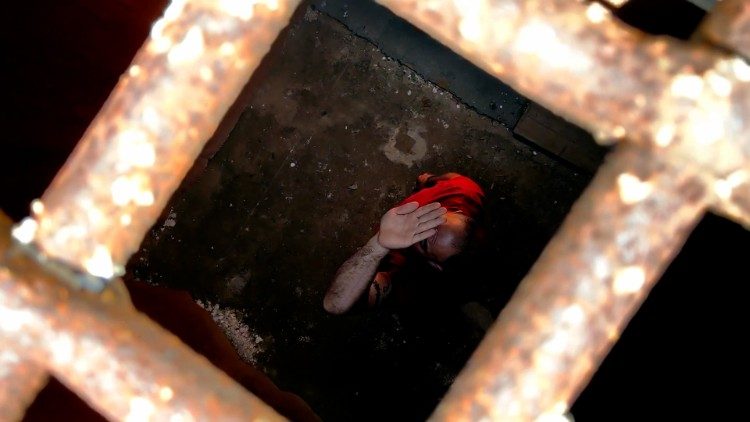
Pope's June prayer intention: for an abolition of torture

The Pope Video message, entrusted to the entire Catholic Church through the Pope’s Worldwide Prayer Network, is an appeal for "the abolition of torture in all of its forms throughout the world."

By Deborah Castellano Lubov

Pope Francis' monthly prayer intention for June is for the abolition of torture in all of its forms throughout the world.

The Pope made this appeal to eradicate the phenomenon in his Pope Video message, entrusted to the entire Catholic Church through the Pope’s Worldwide Prayer Network.

The Holy Father decried torture as a scourge that is not just a thing of the past, but is still present today.

Pope's June prayer intention for the abolition of torture

Our Lord's torture

Pointing out that our Lord, Jesus Christ, endured torture; and how many endure such suffering today, the Pope urged the International Community to commit itself concretely to eradicating this source of suffering.

The Pope questioned how is it possible that the human capacity for cruelty is so great.

There are extremely violent forms of torture, the Pope observes, including "sophisticated ones," such as "degrading someone, dulling the senses, or mass detentions in conditions so inhumane that they take away the dignity of the person.”

But this, he warned, is not something new.

"Let’s think of how Jesus Himself was tortured and crucified," he said.

Stopping the horror

“Let us put a stop to this horror of torture. It is essential to put the dignity of the person above all else.”

Otherwise, the Pope warned, "the victims are not persons, they are 'things,' and can be mistreated mercilessly, causing death or permanent psychological and physical harm lasting a lifetime."

The Pope also insisted that the international community guarantee support to victims and their families. 

Commitment against an ongoing phenomenon

The timing of his condemnation of the practice, and the prayer intention itself, is not accidental.

June 26th is the United Nations International Day in Support of Victims of Torture, for it was on this date in 1987 that the UN Convention Against Torture and Other Cruel, Inhuman or Degrading Treatment or Punishment went into effect. The convention was ratified by 162 countries after its adoption in 1984.

Torture is a practice dating back to antiquity. In the 18th and 19th centuries, western countries officially abolished its official use through the judicial system.

Today, it is entirely prohibited by international law.

Nevertheless, it continues to be practiced in many countries.

Since 1981, the United Nations Fund for Victims of Torture has assisted an average of 50,000 victims of torture each year, in countries in every corner of the globe. 

Orthodox Church of Ukraine moves Christmas to December 25th


In snub to Russia, Ukraine’s Orthodox Church moves Christmas to Dec. 25

Elise Ann Allen


ROME – In a decision seen as an act of defiance towards the Russian Orthodox Church, which also has the effect of promoting closer ties with Roman Catholics and other Western branches of Christianity, the Orthodox Church of Ukraine has decided to move Christmas to Dec. 25.

Traditionally, Ukrainian Christians, the bulk of whom are Orthodox, have celebrated Christmas on Jan. 7, along with other predominantly Orthodox nations, including Russia, which invaded Ukraine in February of last year.

On May 24, the Council of Bishops of the Orthodox Church of Ukraine voted nearly unanimously to switch from the Julian calendar to the Gregorian calendar as regards most major feasts, except for Easter and a handful of other feast days, such as the feast of the Trinity.

In a statement following the Council’s decision, Metropolitan Epiphany, head of the Orthodox Church of Ukraine, said the decision “is not an easy one, we have been coming to it for a long time, gradually, step by step, and we are making it carefully.”

However, Epiphany said the decision was “as necessary as the decision to introduce the Ukrainian language in worship instead of the traditional Slavic language, to introduce an autocephalous structure of the Church’s life instead of centuries of subordination.”

The Ukrainian Greek Catholic Church, one of several Byzantine-rite churches in full communion with Rome, was the first to make the switch to a new calendar in early 2023.

Adherents to Orthodoxy still follow the Julian calendar, while the Catholic Church and most of the world follow the Gregorian calendar, introduced via papal bull Pope Gregory XIII on February 24, going into effect in October 1582 as a modification of, and replacement for, the Julian calendar.

The transition from the Julian calendar without making a change regarding the celebration of Easter is called the “New Julian” calendar, which is already used by many Orthodox churches in Europe.

In Ukraine there are two primary branches of Orthodox, the autocephalous Orthodox Church of Ukraine, and the Ukrainian Orthodox Church of the Moscow Patriarchate – a branch of Orthodoxy in Ukraine that reports to Moscow.

Following their recent vote, as of Sept. 1, which marks the beginning of their new church year, the Orthodox Church of Ukraine (OCU) will celebrate Christmas on Dec. 25, rather than on Jan. 7.

The Orthodox Saint Nicholas Day will now take place on Dec. 6, and the church will join Catholics in celebrating the feast of the Epiphany on Jan. 6.

In a decree announcing their decision, the OCU said they made the decision to switch the date of their observance of Christmas not only because the Julian calendar is of secular origin and “has no sacred significance,” but also because it is associated with Russian Orthodoxy.

“In the modern realities of the existence of the Orthodox Church of Ukraine in Ukrainian society, especially in connection with the aggressive Russian war against Ukraine,” the demand for a change in the calendar increased “significantly,” they said.

For centuries, the traditional Julian calendar “was perceived as one of the main identifiers of Ukrainian church culture. At first, it was a sign of resistance to Latinization, and after the Bolshevik revolution, it was also a sign of resistance to the Soviet system,” they said.

However, the social and cultural context in Ukraine has changed dramatically since then, the OCU’s statement said.

Nowadays, it said, the Julian calendar “is perceived by the majority not so much as connected with ancient Ukrainian traditions, but as connected with Russian church culture. After all, the Orthodox Churches that support the Orthodox Church of Ukraine use the modern calendar, while its opponents, and primarily the Russian Orthodox Church, follow the old calendar.”

“Therefore, the desire to preserve and affirm one’s own, Ukrainian, spiritual identity, protection from the aggression of the ‘Russian world,’ requires a timely decision – to join the majority of Local Orthodox Churches – in introducing into use the New Julian calendar, as more accurate astronomically and ecclesiastically accepted, with the preservation of the traditional Easter,” the statement said.

The outbreak of the Russia-Ukraine war last year has caused a fracture inside the Orthodox world, with several local Russian Orthodox churches opting to break away from the Moscow Patriarchate over Russian Orthodox Patriarch Kirill’s support of the war, requesting to switch jurisdiction to the Ecumenical Patriarchate of Constantinople, led by Patriarch Bartholomew, instead.

Traditionally, the Ecumenical Patriarchate of Constantinople and the Moscow Patriarchate have been at odds, seen as representing two different strains of Orthodoxy, with Moscow accusing the former of being too indulgent of the West and, therefore, of Western secular values.

However, with Russia’s invasion of Ukraine last year, this sentiment has changed among many Orthodox, sparking a significant shift in sentiment among Ukrainian Orthodox, particularly those who are loyal to Moscow.

Last spring, shortly after the war broke out, priests within the Ukrainian Orthodox Church of the Moscow Patriarchate began collecting signatures for a petition to oust Russian Orthodox Patriarch Kirill from his position of leadership over his support for Russia’s invasion of Ukraine.

This follows a similar petition launched at the beginning of the war that was signed by nearly 300 Russian Orthodox priests, including several prominent members of the Russian Orthodox Church, and which urged Kirill to condemn the war, which over a year later, he still has not done.

Ecclesial tensions in Ukraine are also being felt at the political level, as the Ukrainian parliament debates a bill banning all activities of the Moscow Patriarchate in Ukraine.

Despite his frequent condemnations of Russia’s invasion, the leader of the Ukrainian Greek Catholic Church, Major Archbishop Sviatoslav Shevchuk, has condemned the bill, saying it is not only problematic on grounds of religious freedom, but would have the counterproductive effect of turning supporters of Russia into martyrs.

RELATED: Ukraine’s top Catholic frowns on banning Orthodox church loyal to Moscow

The UOC’s statement specified that despite the shift in calendar, parishes that wish to continue following the old Julian calendar for economic or other reasons may do so, but the decision must be approved by a two-thirds majority of community members and it must be “properly documented.”

Vatican urges reflective approach to social media, especially for Bishops


Vatican singles out bishops in urging reflective not reactive social media use


VATICAN CITY (AP) — The Vatican on Monday urged the Catholic faithful, and especially bishops, to be “reflective, not reactive” on social media, issuing guidelines to try to tame the toxicity on Catholic Twitter and other social media platforms and encourage users to instead be “loving neighbors.”

The Vatican’s communications office issued a “pastoral reflection” to respond to questions it has fielded for years about a more responsible, Christian use of social media and the risks online that accompany the rise of fake news and artificial intelligence.

For decades the Holy See has offered such thoughts on different aspects of communications technologies, welcoming the chances for encounter they offer but warning of the pitfalls. Pope Francis of late has warned repeatedly about the risk of young people being so attached to their cell phones that they stop face-to-face friendships.

The new document highlights the divisions that can be sown on social media, and the risk of users remaining in their “silos” of like-minded thinkers and rejecting those who hold different opinions. Such tendencies can result in exchanges that “can cause misunderstanding, exacerbate division, incite conflict, and deepen prejudices,” the document said.

It warned that such problematic exchanges are particularly worrisome “when it comes from church leadership: bishops, pastors, and prominent lay leaders. These not only cause division in the community but also give permission and legitimacy for others likewise to promote similar type of communication,” the message said.

The message could be directed at the English-speaking Catholic Twittersphere, where some prominent Catholic figures, including bishops, frequently engage in heated debates or polemical arguments that criticize Francis and his teachings.

The prefect of the communications office, Paolo Ruffini, said it wasn’t for him to rein in divisive bishops and it was up to their own discernment. But he said the general message is one of not feeding the trolls or taking on “behavior that divides rather than unites.”

Incorrupt body of Sister Wilhelmina placed in glass case in abbey church


Sister Wilhelmina’s body placed in glass case after solemn rosary procession


The body of Sister Wilhelmina Lancaster, an African American nun whose surprisingly intact remains have created a sensation at a remote Missouri abbey, was placed inside a glass display case Monday after a solemn procession led by members of the community she founded.

About 5 p.m., dozens of religious sisters of the Benedictines of Mary, Queen of Apostles, carried their foundress on a platform around the property of the Abbey of Our Lady of Ephesus, reciting the rosary and singing hymns. Some of the thousands of pilgrims who visited the abbey over the three-day Memorial Day weekend followed behind.

The procession, held in bright, late-afternoon sunshine, culminated inside the abbey’s church, where the nun’s body was placed into a specially made glass case. Flowers surrounded her body and decorated the top of the case, where there is an image of St. Joseph holding the Child Jesus. The church was filled with pilgrims, including many priests and religious sisters from other orders. 

Sister Wilhelmina, who founded the Benedictine order in 1995 when she was 70 years old, died in 2019. Expecting to find only bones, her fellow sisters exhumed her remains on May 18 intending to reinter them in a newly completed St. Joseph’s Shrine, only to discover that her body appeared astonishingly well-preserved.

The sisters say they intended to keep their discovery quiet, but the news got out anyway, prompting worldwide media coverage and a flood of pilgrims arriving at the abbey in Gower, a city of 1,500 residents about an hour’s drive from Kansas City, Missouri. A volunteer told CNA that more than 1,000 vehicles came onto the property on Monday but no official count was available.

There has been no official declaration that Sister Wilhelmina’s remains are “incorrupt,” a possible sign of sanctity, nor is there a formal cause underway for her canonization, a rigorous process that can take many years. The local ordinary, Bishop Vann Johnston of the Diocese of Kansas City-St. Joseph, has said that a “thorough investigation” is needed to answer “important questions” raised by the state of her body, but there has been no word on if or when such an analysis will take place. 

Before Monday’s procession, pilgrims again waited in line throughout the day for an opportunity to see and touch Sister Wilhelmina’s body before its placement in the glass case, where it will remain accessible for public viewing.

Among those who came on Monday were Tonya and William Kattner of Excelsior Springs, Missouri.

“You've got to experience the magic and the miracle of it,” Tonya Kattner said.

“It’s a modern-day miracle and it was just something we had to come to,” William Kattner said. “Especially with everything going on in the world today, something like this brings hope.”

Kate and Peteh Jalloh of Kansas City, Missouri, also didn’t want to pass up the chance to see Sister Wilhelmina.

“I strongly believe in the Catholic faith. I believe in miracles and I have never seen anything like this before. I’ve got a lot going on in my life and this is the best time to get that message from a nun,” Kate Jalloh said.

“It could take another hundred years for us to see something like this,” she added.

Janie Bruck came with her cousins, Kristy Cook and Halle Cook, all from Omaha, Nebraska. 

“I came to witness the miracle. I believe we’re in a Jesus revolution and he’s sending us lots of signs,” Bruck said. Kristy Cook, a former Omaha police officer, said she was surprised that Sister Wilhelmina’s body had no odor of decay.

Viva Las Vegas; named Archdiocese by Pope Francis


Pope Francis elevates Las Vegas to a metropolitan archdiocese


Pope Francis created a new ecclesiastical province in the United States on Tuesday by elevating Las Vegas to a metropolitan archdiocese.

The Vatican announced on May 30 that Bishop George Leo Thomas will be the first metropolitan archbishop of Las Vegas. Thomas has served as the bishop of Las Vegas since 2018.

The new Ecclesiastical Province of Las Vegas will include the suffragan dioceses of Reno and Salt Lake City.

Las Vegas, which has had the notorious nickname “Sin City” since the 1930s, is one of the fastest-growing cities in the U.S.

The Archdiocese of Las Vegas has a total population of 2.3 million people, of whom 620,000 are Catholics, according to the U.S. bishops’ conference.

In the Catholic Church, an ecclesiastical province is a territory consisting of at least one archdiocese and several smaller dioceses known as “suffragan sees.”

Formerly, the dioceses of Las Vegas, Reno, and Salt Lake City were all suffragan dioceses of the ecclesiastical province of the metropolitan Archdiocese of San Francisco. With the new changes, the ecclesiastical province of San Francisco still has 14 million people, 3.3 million of whom are Catholics.

The Diocese of Las Vegas was created in 1995 when Pope John Paul II divided the Diocese of Reno-Las Vegas into the two separate dioceses of Reno and Las Vegas.

Thomas, 73, is the third bishop of Las Vegas. He was consecrated as a bishop in 2000 and spent four years as an auxiliary bishop of the Archdiocese of Seattle before John Paul II appointed him bishop of Helena, where he ordained Father Stu Long to the priesthood.

Originally from Montana, Thomas wrote a doctoral dissertation on “Catholics and the Missions of the Pacific Northwest” while completing his Ph.D. at the University of Washington. He also received a master’s degree in counseling and community mental health after being ordained a priest for the Archdiocese of Seattle in 1976.

The Catholic Church in the United States now has 35 metropolitan archdioceses, including two Eastern-rite metropolitan archeparchies.

Monday, May 29, 2023

Tuesday Saint of the Day; the Maid of Orleans'


St. Joan of Arc

Feastday: May 30
Patron: of soldiers and France
Birth: 1412
Death: 1431
Canonized: Pope Benedict XV


St. Joan of Arc is the patroness of soldiers and of France.

On January 6, 1412, Joan of Arc was born to pious parents of the French peasant class in the obscure village of Domremy, near the province of Lorraine. At a very early age, she was said to have heard the voices of St. Michael, St. Catherine, and St. Margaret.

At first the messages were personal and general, but when she was 13-years-old, she was in her father's garden and had visions of Saint Michael, Saint Catherine, and Saint Margaret, each of whom told her to drive the English from French territory. They also asked that she bring the Dauphin to Reims for his coronation.

After their messages were delivered and the saints departed, Joan cried, as "they were so beautiful."

When she was sixteen-years-old, she asked her relative, Durand Lassois, to take her to Vaucouleurs, where she petitioned Robert de Baudricourt, the garrison commander, for permission to visit the French Royal Court in Chinon.

Despite Baudricourt's sarcastic response to her request, Joan returned the following January and left with the support of two of Baudricourt's soldiers: Jean de Metz and Bertrand de Poulengy.

Jean de Metz admitted Joan had confided in him, saying, "I must be at the King's side ... there will be no help if not from me. Although I would rather have remained spinning [wool] at my mother's side ... yet must I go and must I do this thing, for my Lord wills that I do so."

With Metz and Poulengy at her side, Joan met Baudricourt and predicted a military reversal at the Battle of Rouvray near Orléans, which were confirmed several days later by a messenger's report. When Baudricourt realized the distance of the battle's location and the time it would have taken Joan to make the journey, he concluded she had seen the reversal by Divine revelation, which caused him to believe her words.

Once she had Baudricourt's belief, Joan was granted an escort to Chinon through hostile Burgundian territory. For her safety, she was escorted while dressed as a male soldier, which later led to charges of cross-dressing, but her escorts viewed as a sound precaution.

Two members of her escort confirmed they and the people of Vaucouleurs gave her the clothing and had been the ones to suggest she don the outfit.

When she arrived in the Royal Court, she met in a private conference with Charles VII and won his trust. Yolande of Aragon, Charles' mother-in-law, planned a finance relief expedition to Orléans and Joan asked to travel with the army while wearing armor, which the Royal government agreed to. They also provided Joan's armor and she depended on donations for everything she took with her.

With a donated horse, sword, banner, armor, and more, Joan arrived to Orléans and quickly turned the Anglo-French conflict into a religious war.

Charles' advisors worried Joan's claims of doing God's work could be twisted by his enemies, who could easily claim she was a sorceress, which would link his crown to works of the devil. To prevent accusations, the Dauphin ordered background inquiries and a theological exam at Poitiers to verify Joan's claims.

In April 1429, the commission of inquiry "declared her to be of irreproachable life, a good Christian, possessed of the virtues of humility, honesty and simplicity." Rather than deciding on whether or not Joan was acting on the basis of divine inspiration, theologians at Poitiers told the Dauphin there was a "favorable presumption" on the divine nature of her mission.

Charles was satisfied with the report but theologians reminded him Joan must be tested. They claimed, "[t]o doubt or abandon her without suspicion of evil would be to repudiate the Holy Spirit and to become unworthy of God's aid."

They suggested her test should be a test of her claim to lift the siege of Orléans, as she originally predicted would happen.

In response to the test, Joan arrived at Orléans on April 29, 1429, where Jean d'Orléans, the acting head of the ducal family of Orléans, ensured she was excluded from war councils and kept ignorant of battles.

During the five months prior to Joan's arrival to Orléans, the French had only attempted one offensive assault, which resulted in their defeat, but after her arrival, things began to change.

Though Joan claimed the army was always commanded by a nobleman and that she never killed anyone in battle since she preferred only to carry her banner, which she preferred "forty times" better than a sword, several noblemen claimed she greatly effected their decisions since they accepted she gave Divinely inspired advice.

On May 4, the Armagnacs captured the fortress of Saint Loup and the next day led to fortress Saint-Jean-le-Blanc, which was deserted. With Joan at the army's side, English troops approached the army to stop their advance but a cavalry charge was all it took to turn the English away without a fight.

The Armagnacs captured an English fortress build around the Les Augustins monastery and attacked the English stronghold Les Tourelles on May 7. Joan was shot with an arrow between her neck and shoulder as she held her banner outside Les Tourelles, but returned to encourage the final assault to take the fortress. The next day, the English retreated from Orléans and the siege was over.

When Joan was in Chinon and Poitiers, she had declared she would show a sign at Orléans, which many believe was the end of the siege. Following the departure of the English, prominent clergymen began to support her, including the Archbishop of Embrun and the theologian Jean Gerson, each of which wrote supportive treatises.

After the Orléans victory, Joan was able to persuade Charles VII to allow her to march into other battles to reclaim cities, each of which ended in victory. When the military supplies began to dwindle, they reached Troyes, where Brother Richard, a wandering friar, had warned the city about the end of the world and was able to convince them to plant beans, which yields an early harvest. Just as the beans ripened, Joan and the army arrived and was able to restore their supplies.

Following their march to Troyes, Joan and the French military made its way to Paris, where politicians failed to secure Duke Philip of Burgundy's agreement to a truce. Joan was present at the following battles and suffered a leg wound from a crossbow bolt. Despite one failed mission - taking La-Charité-sur-Loire" - Joan and her family were ennobled by Charles VII in reward of her actions on the battlefield.

A truce with England came following Joan's ennoblement but was quickly broken. When Joan traveled to Compičgne to help defend against an English and Burgundian siege, she was captured by Burgundian troops and held for a ransom of 10,000 livres tournois. There were several attempts to free her and Joan made many excape attempts, including jumping from her 70-foot (21m) tower, landing on the soft earth of a dry moat, but to no avail. She was eventually sold to the English for 10,000 gold coins and was then tried as a heretic and witch in a trial that violated the legal process of the time.

Clerical notary Nicolas Bailly, who was responsible to collect testimony against Joan, was unable to find any evidence against her. Without evidence, the courts lacked grounds to initiate trial but one was opened anyway. They denied Joan the right to a legal advisor and filled the tribunal with pro-English clergy rather than meeting the medieval Church's requirement to balance the group with impartial clerics.

When the first public examination opened, Joan pointed out that the partisans were against her and she asked for "ecclesiastics of the French side" to provide balance, but her request was denied.

Jean Lemaitre, the Vice-Inquisitor of Northern France, objected to the trial from the beginning and many eyewitnesses later reported he was forced to cooperate after the English threatened to kill him. Other members of the clergy were threatened when they refused as well, so the trial continued.

The trial record includes statements from Joan that eyewitnesses later claimed astonished the court since she was an illiterate peasant who was able to escape theological traps. The most well-known exchange was when Joan was "[a]sked if she knew she was in God's grace, she answered: 'If I am not, may God put me there; and if I am, may God so keep me.'"

The question is a trap because the church doctrine was that no one could be certain of being in God's grace. If she answered yes, she would have been charged with heresy, but if she answered no, she would have been confessing her own guilt. Notary Boisguillaume later testified that "[t]hose who were interrogating her were stupefied."

Many members of the tribunal later testified important parts of the transcript were altered.

Joan was held in a secular prison guarded by English soldiers, instead of being in an ecclesiastical prison with nuns as her guards per Inquisitorial guidelines. When Joan appealed to the Council of Basel and the Pope to be placed in a proper prison, Bishop Cauchon denied her request, which would have stopped his proceeding.

While imprisoned, Joan wore military clothing so she could tie her clothing together, making it harder to be raped. There was no protection in a dress, and a few days after she started wearing one she told a tribunal member that "a great English lord had entered her prison and tried to take her by force." Following the attempted rape, Joan returned to wearing male clothing as a precaution and to raise her defenses against molestation.

Jean Massieu testified her dress had been taken by the guards and she had nothing else to wear.

When she returned to male clothing, she was given another count of hersy for cross-dressing, though it was later disputed by the inquisitor presiding over court appeals after the war. He found that cross-dressing should be evaluated based on context, including the use of clothing as protection against rape if it offered protection.

In accordance to the inquisitor's doctrine, Joan would have been justified in wearing armor on a battlefield, men's clothing in prison and dressing as a pageboy when traveling through enemy territory.

The Chronique de la Pucelle states it deterred molestation when Joan was camped in the field but she donned a dress when men's garments were unnecessary.

Clergy who testified at the posthumous appellate trial confirmed that she wore male clothing in prison to deter molestation.

Though the Poitiers record did not survive the test of time, Joan had referred the court to the Poitiers inquiry when questioned about her clothing and circumstances indicate the Poitiers clerics approved the practive. She had also kept her hair short through the military campaigns and during her imprisonment, which Inquisitor Brehal, theologian Jean Gerson and all of Joan's supporters understood was for practical reasons.

Despite the lack of incriminating evidence, Joan was condemned and sentenced to die in 1431.

Eyewitness accounts of Joan's execution by burning on May 30, 1431 describe how she was tied to a tall pillar at the Vieux-Marché in Rouen. She asked Fr. Martin Ladvenu and Fr. Isambart de la Pierre to hold a crucifix before her and an English soldier made a small cross she put in the front of her dress. After she died, the English raked the coals to expose her body so no one could spread rumors of her escaping alive, then they burned her body two more times to reduce it to ashes so no one could collect relics. After burning her body to ash, the English threw her remains into the Seine River and the executioner, Geoffroy Thérage, later said he "... greatly feared to be damned."

In 1452, during an investigation into Joan's execution, the Church declared a religious play in her honor at Orléans would let attendees gain an indulgence by making a pilgrimage to the event.

A posthumous retrial opened following the end of the war. Pope Callixtus III authorized the proceeding, which has also been called the "nullification trial," after Inquisitor-General Jean Bréhal and Joan's mother Isabelle Romée requested it.

The trial was meant to determine if Joan's condemnation was justly handled, and of course at the end of the investication Joan received a formal appeal in November 1455 and the appellate court declared Joan innocent on July 7 1456.

Joan of Arc was a symbol of the Catholic League during the 16th century and when Félix Dupanloup was made bishop of Orléans in 1849, he pronounced a panegyric on Joan of Arc and led efforts leading to Joan of Arc's beatification in 1909. On May 16, 1920, Pope Benedict XV canonized her.

Centuries after her death, Joan became known as a semi-legendary figure. There were several sources of information about her life, time on the battlefield and trials, with the main sources being chronicles.

Many women have seen Joan as a brave and active woman who operated within a religious tradition that believed a person of any class could receive a divine calling.

Joan of Arc has been depicted in several works by famous writers such as William Shakespeare (Henry VI, Part 1), Voltaire (The Maid of Orleans), Mark Twain (Personal Recollections of Joan of Arc), and many many more.

Images depicting Joan of Arc often show her with short hair adorned in armor.

There are several prayers to Joan of Arc, including the "Prayer of Thanks and Gratitude to St. Joan of Arc," written by Andrea Rau:

Dear Patron Saint,

Thank you for accompanying me throughout the day, and in the work that I did. Thank you also for your guidance and your counsel. Please help me to listen to God and to you, dear Saint, that I may do what I am called to do. Please intercede on my behalf and beg God to take all my faults and turn them into virtues. I thank you for all you have done for me, and all the things you have interceded for on my behalf. Please continue to pray for me and for all the souls who need it.

St. Joan of Arc, Pray for us.

Amen.