Saturday, October 29, 2022

Catholic young hear encouragement from the Pope


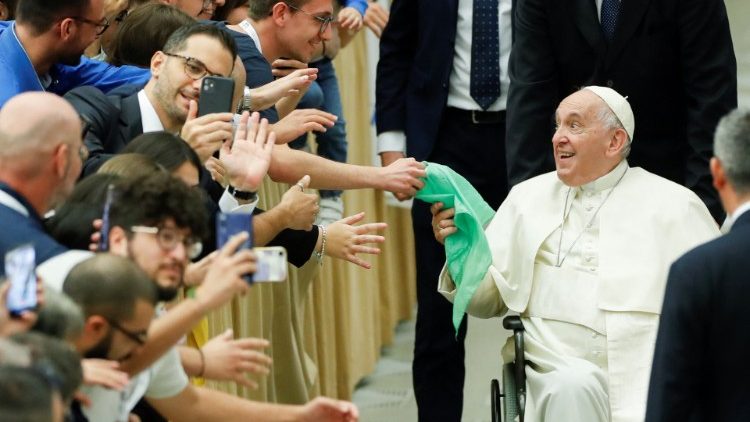
Pope Francis meets young people of the lay Catholic group 'Catholic Action' at the VaticanPope Francis meets young people of the lay Catholic group 'Catholic Action' at the Vatican 

Pope encourages Catholic Action youth to become "leaven" in society

Pope Francis encourages young leaders of the Italian Catholic Action in their work in the parishes and urges them to contribute to the growth of the Church in fraternity.

By Benedict Mayaki, SJ

Pope Francis received young parish leaders of the Italian Catholic Action group in the Vatican on Saturday morning.

Addressing them, the Pope expressed appreciation for their care of parishes, noting that, as he belongs to a different generation when the parish and the parish priest, was a central point of reference in the lives of people through Sunday Masses, catechesis and the sacraments.

He further acknowledged that the socio-cultural reality has now significantly changed – in other countries and in Italy – and the mission of the Church, including the parish, has been rethought. However, one essential thing remains for everyone in their journey of faith and growth: “the parish experience has been and is important.”

The Pope said that the parish "is the 'normal' environment where we learned to hear the Gospel, to know the Lord Jesus, to offer service with gratuitousness, to pray in community, to share projects and initiatives, to feel part of God's holy people." 

Catholic Action and the parish community

Through Catholic Action, Pope Francis pointed out, the parish leaders have had an “associational” experience intertwined with that of the parish community. Many, he added, have been part of the Catholic Action for youth group and are learning what it means to be part of a Christian community.

“This is very important: to learn through experience that in the Church we are all brothers and sisters by Baptism; that we are all protagonists and responsible; that we have different gifts and all for the good of the community; that life is vocation, following Jesus; that faith is a gift to be given, to witness.”

The Pope also upheld the Christian’s responsibility of taking an interest in social reality and making a contribution, moving from not caring to caring, in the face of human misery that is almost always the fruit of injustices to be eradicated. He said that these realities of life are often learned in the parish and in Catholic Action and many, in both Church and society have carried into adulthood these things they learned as young people.

“So, dear young people,” the Pope said, “we are from different generations, but we have in common a love for the Church and a passion for the parish, which is the Church in the midst of the homes, in the midst of the people.”

Contributing to the growth of the Church in fraternity

The Holy Father went on to recommend ways by which Catholic Action can contribute to the growth of the Church in fraternity.

First, he urged them not to be frightened even in the face of a weak community "dimension" – a social fact - which has also been aggravated by the pandemic. He noted that many young people no longer have the desire to have meetings and assemblies as it used to be 50 years ago, and in a way, it is a good thing, because “Catholic Action does not have to be a Catholic 'Session', and the Church does not move ahead with meetings."

However, he warned that individualism, closure in small groups and the tendency to relate “at a distance,” has also infected Christian communities; therefore, we need to respond, starting with “a work” on ourselves.

“Working” on ourselves

The Pope explained that he calls it “work” because “it is a challenging journey and requires constancy” as fraternity is not improvised, neither is it built only with emotions, slogans and events. Rather, it is a work “that each person does on himself together with the Lord, with the Holy Spirit, who creates harmony among diversity.” In this regard, he recommended that the Catholic Action leaders reread the part of the Exhortation “Christus vivit” titled “Paths of Fraternity”.

“The starting point is going out of oneself to open oneself to others and go out to meet them,” the Pope said. It is a “relationship in which we recognize ourselves and grow together.” He stressed that the fundamental reality for us is that “in the Church we experience this movement in Christ, through the Eucharist: He comes out of Himself and comes into us so that we come out of ourselves and are united with Him, and in Him we find ourselves in a new, free, gratuitous, oblative communion.”

“Fraternity in the Church is founded in Christ, in His presence in us and among us. Thanks to Him we welcome each other, bear each other, forgive each other.”

The Holy Father also warned against gossipping, which he referred to as "the most serious sickness in a parish community." He stressed that it is "not Christian" and is "diabolical because it divides." 

“Leaven” in society

Pope Francis then highlighted in what sense Christians become “leaven” in society, noting that if they are in Christ and animated by His Spirit, they cannot but be “leaven of humanity” because “Jesus Christ is the perfect Man and His Gospel is a humanizing force.”

He upheld the expression used by the Catholic Action: “being kneaded in this world”, saying that it is “the principle of incarnation” and “the way of Jesus” to bring new life from within.

The Pope also urged the Catholic Action leaders to allow “that leaven be leaven, that salt be salt, that light be light”, warning, that we risk becoming worldly, losing the newness of Christ and having nothing more to say or to give if we do otherwise. He added that this is what Jesus meant when on the one hand he says "You are the salt of the earth," and then immediately warns: be careful not to lose the flavor! (cf. Mt 5:13).

Responsible credible young believers

The Holy Father then highlighted another expression used by Catholic Action: “to be responsible credible young believers”. He said that these words are embodied by saints - even young saints, and pointed at the examples of a few Italian saints - Francis and Clare of Assisi, Rose of Viterbo, Gabriel of Our Lady of Sorrows, Dominic Savio, Gemma Galgani, Maria Goretti, Pier Giorgio Frassati, Clare Badano and Carlo Acutis.

“They teach us what it means to be leaven, to be in the world but not of the world,” the Pope said.

He also recalled the life of Pier Giorgio Frassati who was an active and enthusiastic member of the Italian Catholic Action, and who showed us how to be a responsible credible young believer.

Learning from the Virgin Mary

Bringing his address to a close, the Pope recalled that October is the month of the Rosary and encouraged them to learn from Our Lady to “keep and meditate in your heart the mysteries of Jesus.”

“Mirror yourself every day in the joyful, luminous, sorrowful and glorious events of his life, and they will enable you to live the ordinary in an extraordinary way, that is, with the newness of the Spirit, the newness of the Gospel.”

Finally, Pope Francis blessed and thanked the Catholic Action for their witness and urged them to go forth with joy and courage. 

Friday, October 28, 2022

English Martyrs Saints for Saturday

Douai Martyrs


 More than 160 priests trained in the English College of Douai, France, returned to England and Wales and faced arrest, torture, and execution by English authorities. A large group - more than eighty- were beatified in 1929, and English dioceses celebrate the feasts of these martyrs.

Long time coming: an update from the Abitadeacon

 This Friday morning finds me in my office at my parish church, working on some projects, listening to Gregorian chant and contemplating the realities of the day, of this time, of this season of my life.  Overall, 2022, despite its many everyday blessings and God's always abundant graces, has been a year of challenge.  Both my wife and I battled through some health issues; bless her heart Wendy is still battling.  It has been a year of extended hospitalizations, doctor visits and even confronting head on the possibility that we should began the process of moving to a less demanding home; one that does not require endless grass cutting and maintenance no longer easily accomplished.

Very recently, due to some of what I share above, I discerned that it was time for me to step away from my 14+ year ministry at Rayburn Correctional Center.  During that time, I was called the Catholic pastoral care chaplain for the men who clung to their Catholic faith despite incarceration.  I have written many times here of the joy of this ministry, the unexpected gifts of grace and peace as I went about my responsibilities as a prison chaplain.  To leave this ministry was not easy to do; it was not easy to admit how necessary it became.  In a big state-run prison, there is lots of walking, really a lot of walking.  There is also lots of waiting and my chronic rheumatoid arthritis was not holding up to the rigors of the long walks and waits through the control room, halls and walkways of Rayburn.  Thankfully, Archbishop Aymond graciously accepted my decision, and we await, with joyful anticipation, the assignment of a deacon, much younger than I, to take my place.  I am also thrilled to learn of the recent commitment of a local priest who will be visiting once a month to hear confessions and offer Mass.  I hope to still be able to go into the prison on occasion, so I did arrange to have my security clearance updated.  We will see where this leads, but the most important thing is that these men be fed spiritually from the deposit of faith and the fullness of Truth and hear the word of God and feast on the Body & Blood of Jesus.

Meanwhile, my life and my service as a Deacon has taken on new meaning and purpose since I joined the staff at my parish in Abita Springs.  I spend a good part of everyday at St. Jane de Chantal assisting both the pastor and parishioners in a myriad of activities, projects, plans and ministries.  One unexpected joy has been working very closely with our RCIA program and team as well as my expanded opportunities with Bible studies and more.  I am very happy to be available during the day to assist at funerals, plan weddings in a more complete way and experience the gift of the many parishioners who call or visit every day, many in need of help, someone to listen, someone to be present to them.

It is also a great joy, as a grandparent, to be able to spend so much time with the 2 grandchildren who live nearby.  Wendy and I bring them to school a couple of times a week even though that requires us to be on the road long before the sun comes up.  Brennan and Walker keep us busy and smiling a lot as we are able to interact with them often.  My other 2 grands live so far away from us and our physical time with them is very limited.  We often Skype, something I started doing with the family even as Calvin was a mere newborn.  He and his sister Katelyn are a joy, and it always lifts our spirits when we can catch up, either in person (the best way) or via Skype.

I mentioned earlier that we have at least entered into discussions about staying in our current home or moving elsewhere.  We have been in our current place for nearly 27 years and have always been "at home" and comfortable on my almost 10 acres.  We still can recall fondly those days when the place was home to 5 horses, a goat, chickens and critters galore.  The early days when deer roamed freely on the property in the fall and winter and the turkeys in the spring are also fond memories.  We've grown our own food on this place and marveled at beautiful scenery that comes with acreage in a real country setting.  Our first major accomplishment was the emptying out of our overfilled attic and barn.  We filled up two huge dumpsters with our accumulated stuff and made several runs to charities with numerous items.  It seems that the reality is not so much if we move but when we move; I do not anticipate it will be that soon, probably a year or so from now.  I don't think it would be easy to move but reality may be the eventual decision point that requires a move.  If we move, we will stay close so we can remain in the area we have grown to love, close to the family also here in Louisiana and close to my parish ministries.

So, as I return to the duties of the day and continue to listen to this beautiful Gregorian chant, I ready myself for a weekend of ministry, family and the dreaded trip to Wal-Mart this afternoon.  Peace and prayers to all.  


Ahead of the Pope's historic visit to Bahrain


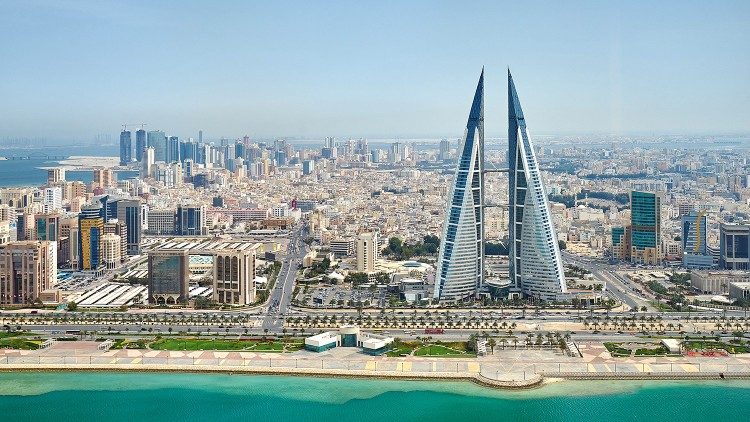
A view of Manama, the capital of BahrainA view of Manama, the capital of Bahrain  (Vladimir Zhoga)

Pope’s visit to Bahrain a ‘precious step on path of fraternity’

As Pope Francis prepares to depart for Bahrain on 3-6 November, the Director of the Holy See Press Office offers an overview of the Pope’s 39th Apostolic Journey abroad, which aims to strengthen interreligious dialogue and encourage local Catholics.

By Devin Watkins

Pope Francis returns to the Middle East on 3-6 November for the second time in a few short years for a visit to the Kingdom of Bahrain.

His 39th Apostolic Journey abroad brings him to his 58th country visited as Pope.

At a press conference at the Holy See Press Office on Friday, Matteo Bruni offered reporters an overview of the papal visit.

The Director of the Holy See Press Office pointed out that Pope Francis will be the first Pope to visit Bahrain.

Step along path of interfaith encounter

He said the papal visit will focus on the twin themes of “encounter” and "encouragement" for Catholics in the region.

Pope Francis will attend the closing ceremony of the first-ever “Bahrain Forum for Dialogue: East and West for Human Coexistence”, which will see around 200 interfaith leaders gathered to promote fraternity.

As the Pope encounters religious leaders, his historic signing of the Document on Human Fraternity in 2019 in Abu Dhabi will form the background for continuing to improve interfaith relations.

“The visit represents a precious step along the path of fraternity and interreligious dialogue,” said Mr. Bruni.

Mr. Bruno noted that war—both in Europe and in various countries—will form another backdrop to the Pope’s encounter with religious leaders.

The goal, he added, is to continue the search for allies in a common desire for peace in our world.

Pope Francis, noted Mr. Bruni, was invited to attend the Bahrain Forum and visit the Middle Eastern country by King Hamad bin Isa Al Khalifa.

Encouragement for Catholics in the region

Yet, the papal visit is not merely focused on interreligious dialogue.

As the shepherd of the Universal Church, Pope Francis travels to Bahrain to meet with the Catholic community, a majority of whom are foreign-born.

Of the roughly 800,000 Catholic faithful, around 1,000 Catholics are Bahraini citizens, making it one of the few Gulf states to have a local Christian population.

Most Catholics are expatriate workers hailing from India, the Philippines, and Sri Lanka, as well as Turkey, Syria, Lebanon, Egypt, and Jordan.

Of the Pope’s seven public encounters on the 4-day visit, four are meetings with various sanctions of the local Catholic Church, including young people, clergy and religious, and Catholics from neighboring countries.

As Pope Francis visits Bahrain next week, local Catholics and leaders of other religions await his words of hope and encouragement on the path to peace in our world currently marred by conflict.

Thursday, October 27, 2022

Apostle Saint for Friday


St. Jude Thaddaeus


Feastday: October 28
Patron: of Desperate causes, desperate situations, lost causes


St. Jude, known as Thaddaeus, was a brother of St. James the Less, and a relative of Our Saviour. He was one of the 12 Apostles of Jesus and his attribute is a club. Images of St. Jude often include a flame around his head, which represent his presence at Pentecost, when he accepted the Holy Spirit alongside the other apostles. Another attribute is St. Jude holding an image of Christ, in the Image of Edessa.

Sometimes he can also be seen holding a carpenter's ruler or is depicted with a scroll or book, the Epistle of Jude.

Biblical scholars agree St. Jude was a son of Clopas and his mother Mary was the Virgin Mary's cousin. Ancient writers tell us that he preached the Gospel in Judea, Samaria, Idumaea, Syria, Mesopotamia, and Lybia. According to Eusebius, he returned to Jerusalem in the year 62, and assisted at the election of his brother, St. Simeon, as Bishop of Jerusalem.

Saint Jude is not the same person as Judas Iscariot, who betrayed Our Lord and despaired because of his great sin and lack of trust in God's mercy.

Jude was the one who asked Jesus at the Last Supper why He would not manifest Himself to the whole world after His resurrection. Little else is known of his life. Legend claims that he visited Beirut and Edessa and could have been martyred with St. Simon in Persia.

He is an author of an epistle (letter) to the Churches of the East, particularly the Jewish converts, directed against the heresies of the Simonians, Nicolaites, and Gnostics. Though Saint Gregory the Illuminator has been credited as the "Apostle to the Armenians," the Apostles Jude and Bartholomew are believed to have brought Christianity to Armenia, where Jude was rumored to have later been martyred.

There is some debate about where Jude died, though most Biblical scholars agree he was martyred. He is believed to have been martyred either in Armenia or Beirut.

Following his death, St. Jude's body was brought to Rome and left in a crypt in St. Peter's Basilica. Today his bones can be found in the left transept of St. Peter's Basilica under the main altar of St. Joseph in a tomb he shares with the remains of the apostle Simon the Zealot.

Pilgrims came to St. Jude's grave to pray and many reported a powerful intercession, leading to the title, "The Saint for the Hopeless and the Despaired." Two Saints, St. Bridget of Sweden and St. Bernard, had visions from God asking them to accept St. Jude as "The Patron Saint of the Impossible."

Roman Catholics invoke St. Jude when in desperate situations because his New Testament letter stresses that the faithful should persevere in the environment of harsh, difficult circumstances -just as their forefathers had done before them; therefore, he is the patron saint of desperate cases.

The Chicago Police Department and Clube de Regatas do Flamengo - the Rio de Janeiro soccer team - have made Saint Jude their patron saint and there are several hospitals who have also accepted him as their patron saint, including the well-known children's hospital St. Jude Children's Research Hospital in Memphis, Tennessee.

There have also been several sites across the world dedicated to the Apostle Jude, including shrines and churches. The National Shrine of Saint Jude was founded in 1955 and can be found in England.

There are two mentions of Jude in the New Testament: Luke 6:16 and Acts 1:13.

When Jude was mentioned in the Bible, it was often in relation to James (Jude of James) which is traditionally interpreted to mean "Jude, brother of James" as in the King James version of Luke 6:16; however, "Jude, son of James" appears in Protestant translations such as the NIV, NIRV, and the New King James Version. The same discrepancy occurs in Acts 1:13.

In John 14:22, a disciple called "Judas not Iscariot" is assumed to be the apostle Jude, though critics believe it is too ambiguous to believe it is a certainty.

When the apostles are listed in Matthew 10:3 and Mark 3:18, Jude's name does not appear but "Thaddeus" does. This occurrence led early Christians to believe Jude was known as both "Jude" and "Thaddeus," the latter of which could have been a sort of nickname.

"Thaddeus" may have become a popular nickname for Jude following Judas Iscariot's betrayal. To add further confusion to Jude's second name, the name Thaddeus is often indistinguishable from Thaddeus of Edessa, one of the Seventy Disciples.

A popular Roman Catholic prayer to Saint Jude is:

"O most holy apostle, Saint Jude, faithful servant and friend of Jesus, the Church honoureth and invoketh thee universally, as the patron of hopeless cases, and of things almost despaired of. Pray for me, who am so miserable.

"Make use, I implore thee, of that particular privilege accorded to thee, to bring visible and speedy help where help was almost despaired of. Come to mine assistance in this great need, that I may receive the consolation and succor of Heaven in all my necessities, tribulations, and sufferings, particularly (here make your request) and that I may praise God with thee and all the elect throughout eternity.

"I promise thee, O blessed Jude, to be ever mindful of this great favour, to always honour thee as my special and powerful patron, and to gratefully encourage devotion to thee. Amen."

The Novena - a prayer said nine days in a row - to Saint Jude is:

"Apostle and Martyr, great in virtue and rich in miracles, near kinsman of Jesus Christ, faithful intercessor for all who invoke thee, special patron in time of need; to thee I have recourse from the depth of my heart, and humbly beg thee, to whom God hath given such great power, to come to my assistance; help me now in my urgent need and grant my earnest petition. I will never forget thy graces and the favors thou dost obtain for me and I will do my utmost to spread devotion to thee. Amen."

Apostle Saint for Friday


St. Simon the Zealot


Simon was surnamed the Zealot for his rigid adherence to the Jewish law and to the Canaanite law. He was one of the original followers of Christ. Western tradition is that he preached in Egypt and then went to Persia with St. Jude, where both suffered martyrdom.  His feast day is October 28th.

More reporting on the ongoing Synod and the theme of radical inclusion


What does the synod document say about ordination of women, LGBTQ issues, and the liturgy?


At the heart of the synodal process is “a Church capable of radical inclusion,” according to a key document released by the Vatican on Thursday to guide the Synod on Synodality.

Titled “Enlarge the space of your tent,” the 44-page working document for the Synod on Synodality’s Continental Phase is meant to spark dialogue and arouse feedback.

“It is not a conclusive document because the process is far from being finished,” it says.

Catholic dioceses around the world have been asked to respond to the document by highlighting what intuitions resonate and what divergences emerge with the reality of the Church in their continent.


Here is what the document has to say about the ordination of women, LGBT inclusion, and the liturgy:

Ordination of Women

64: “After careful listening, many reports ask that the Church continue its discernment in relation to a range of specific questions: the active role of women in the governing structures of Church bodies, the possibility for women with adequate training to preach in parish settings, and a female diaconate. Much greater diversity of opinion was expressed on the subject of priestly ordination for women, which some reports call for, while others consider a closed issue.”

The document says that “almost all reports raise the issue of full and equal participation of women. … However, the reports do not agree on a single or complete response to the question of the vocation, inclusion and flourishing of women in Church and society.”

61: “The Church faces two related challenges: women remain the majority of those who attend liturgy and participate in activities, men a minority; yet most decision-making and governance roles are held by men. It is clear that the Church must find ways to attract men to a more active membership in the Church and to enable women to participate more fully at all levels of Church life.”

The document also quotes the Holy Land’s report: “In a Church where almost all decision-makers are men, there are few spaces where women can make their voices heard. Yet they are the backbone of Church communities, both because they represent the majority of the practicing members and because they are among the most active members of the Church.

LGBTQ and polygamous inclusion

39. "Among those who ask for a more meaningful dialogue and a more welcoming space we also find those who, for various reasons, feel a tension between belonging to the Church and their own loving relationships, such as: remarried divorcees, single parents, people living in a polygamous marriage, LGBTQ people, etc."

The document also includes a quotation from the Southern African Catholic Bishops’ Conference report, which summarizes the challenge facing the synod of reducing many different views on Church teaching within a community into “a definitive community stance”:

“Southern Africa is also impacted by the international trends of secularization, individualization, and relativism. Issues such as the Church’s teaching on abortion, contraception, ordination of women, married clergy, celibacy, divorce and remarriage, Holy Communion, homosexuality, LGBTQIA+ were raised up across the dioceses both rural and urban. There were of course differing views on these and it is not possible to give a definitive community stance on any of these issues.”

Polygamous marriages are mentioned twice in the document. Paragraph 94 said: “many summaries also give voice to the pain of not being able to access the Sacraments experienced by remarried divorcees and those who have entered into polygamous marriages.”

Liturgy

91. “Many reports strongly encourage the implementation of a synodal style of liturgical celebration that allows for the active participation of all the faithful in welcoming all differences, valuing all ministries, and recognizing all charisms. The synodal listening of the Churches records many issues to be addressed in this direction: from rethinking a liturgy too concentrated on the celebrant, to the  modalities of active participation of the laity, to the access of women to ministerial roles.”

The document cites the U.S. report, which describes division regarding the traditional Latin Mass: “The most common issue regarding the liturgy is the celebration of the pre-Conciliar Mass. The limited access to the 1962 Missal was lamented; many felt that the differences over how to celebrate the liturgy ‘sometimes reach the level of animosity. People on each side of the issue reported feeling judged by those who differ from them.’”

93. “The reports do not fail to point out the main shortcomings of the actual celebratory praxis, which obscure its synodal effectiveness. In particular, the following are emphasized: the liturgical protagonism of the priest and the risk of the passivity of the wider liturgical community; poor preaching, including the distance between the content of the sermon, the beauty of faith and the  concreteness of life; and the separation between the liturgical life of the assembly and the family network of the community. The quality of homilies is almost unanimously reported as a problem.”

38. “Longing for a home also characterizes those who, following the liturgical developments of the Second Vatican Council, do not feel at ease.”

Synodal governance

71. “The synodal journey has brought out a number of tensions … We should not be afraid of them, but articulate them in a process of constant communal discernment, so as to harness them as a source of energy without them becoming destructive: only in this way will it be possible to continue walking together, rather than each going their own  way. This is why the Church also needs to give a synodal form and way of proceeding to its own institutions and structures, particularly with regard to governance. Canon law will need to accompany this process of structural renewal creating the necessary changes to the arrangements currently in place.”

In particular, the document recommends: “Economic, diocesan and parish councils should then be added, taking note also of the episcopal and presbyteral councils around the bishop. Many reports show the need for these bodies to be not only consultative, but places where decisions are made on the basis of processes of communal discernment rather than on the majority principle used in democratic regimes.”

82. “The overwhelming majority of reports indicate the need to provide for formation in synodality. Structures alone are not enough: there is a need for ongoing formation to support a widespread synodal culture.”

Pope Francis to seminarians: a warning against digital pornography


Pope Francis warns seminarians that the vice of pornography ‘weakens the soul’


ROME— Pope Francis warned seminarians this week about how the vice of digital pornography “weakens the priestly heart.”

In a meeting with hundreds of seminarians studying in Rome, the pope underlined that it is important for seminarians and priests to be very careful about the “temptation of digital pornography” because “it weakens the soul.”

“Dear brothers, be careful of this. The pure heart, the heart that receives Jesus every day, cannot receive this pornographic information,” Pope Francis said on Oct. 24 in Paul VI Hall.

“And if from your cell phone you can delete this, delete it, so you won’t have temptation at hand. And if you can’t delete it, protect yourself properly so you don’t have access to this. I tell you, it weakens the soul.”

Pope Francis explained that he wanted to bring up the problem of pornography because “it is a vice that so many people have — so many lay men, so many lay women, and even priests and religious sisters.”

He added that he was not just talking about “criminal pornography, like child abuse,” but what some people might call “‘normal’ pornography.”

“The devil enters from there. It weakens the priestly heart,” the pope repeated.

Pope Francis brought up pornography as he responded to 10 questions from seminarians ranging from spiritual direction and priestly formation to the war in Ukraine.

The Catechism of the Catholic Church describes pornography as “a grave offense” that “immerses all who are involved in the illusion of a fantasy world,” injures the dignity of its participants, and “perverts the conjugal act, the intimate giving of spouses to each other.”

Many Catholic ministries have been founded to help people struggling with addiction to pornography, including Integrity Restored, Strive: 21-Day Porn Detox, Reclaim Sexual Health, Covenant Eyes, and the Victory App.

Synodal path seeks more radical inclusivity giving voice to the excluded


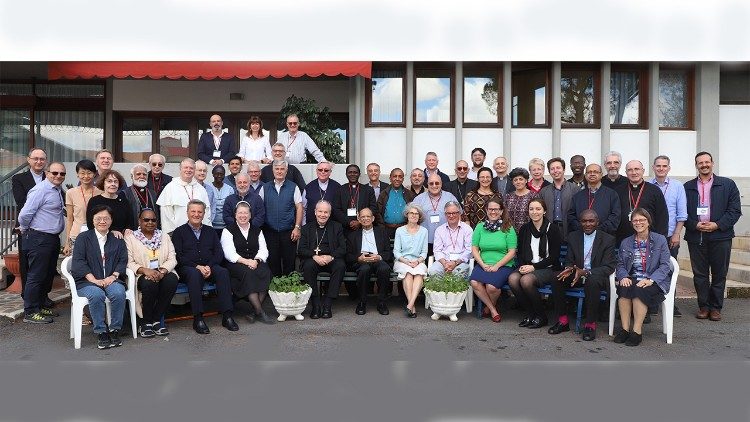
The group of experts that met at Frascati The group of experts that met at Frascati  

Voices of excluded heard in Document for Continental Phase of Synod

The Synod of Bishops publishes the text that will provide a “frame of reference” and form the basis for the work of the second stage of the synodal path launched by Pope Francis in 2021. The Working Document for the Continental Stage was based on the syntheses coming from the churches of the five continents after consultation with the faithful and others.

By Salvatore Cernuzio

Here are the poor and the indigenous, families, remarried divorcees and single parents, LGBTQ people, and women who feel excluded. Here are the victims of abuse or trafficking or racism. Here are priests, laicized priests, and lay people; Christians and those ‘distant’ from the Church, those who want reforms on priesthood and the role of women, and those who “following the liturgical developments of the Second Vatican Council, do not feel at ease.” Here are those who live in countries of martyrdom, those who deal daily with violence and conflict, those who fight against witchcraft and tribalism. In short, here within the approximately 45 pages that make up the Document for the Continental Stage (DCS) is the whole of humanity, with its wounds and fears, its imperfections and demands,.

The syntheses of the Churches of the world

This is the Document that will serve as the basis of the work for the second stage of the synodal path launched by Pope Francis in October 2021, with the consultation of the People of God. Precisely during this first stage, the faithful — and not only the faithful — of every diocese in every corner of the globe were involved in a process of “listening and discernment”. And the results of meetings, convocations, dialogues, and innovative initiatives — above all, that of the digital Synods — have flowed into syntheses or summaries that were sent to the General Secretariat of the Synod, and have now all been collected in a single document: the “Document for the continental stage.”

A ‘frame of reference’

Developed simultaneously in two languages (Italian and English), the Dicastery explains that the text “intends to allow dialogue between local Churches and between the local Church and the Universal Church.” So, it is not a summary nor a magisterial document, nor a mere report of local experiences, much less a sociological analysis or a roadmap with goals or objectives to be achieved: “It is a working document that seeks to bring out the voices of the People of God, with their insights, their questions, their disagreements.” The experts who met between the end of September and the beginning of October in Frascati to draft the text speak of a “frame of reference” for the local Churches and the Bishops’ Conferences in view of the third and final stage, the universal stage, with the Assembly of Bishops to be held in Rome in October 2023 and again in 2024, as recently announced by the Pope.

‘No one is excluded’

In particular, the Document notes “a series of tensions” that the synodal path has brought out: “We should not be afraid of them, but articulate them in a process of constant communal discernment, so as to harness them as a source of energy without them becoming destructive” (DCS, 71). The first is “listening as openness to welcome” starting from “a desire for radical inclusion.” “No one is excluded” is, in fact, one of the key concepts of the text.

Indeed, the summaries show that many communities have understood synodality as “ an invitation to listen to those who feel exiled from the Church.” There are many who feel “denigrated, neglected, misunderstood,” first and foremost “women and young people who do not feel that their gifts and abilities are recognized.” Being seriously listened to was therefore a “transformative” experience.

Priests who have left ministry

Among those who ask for a more incisive dialogue and a more welcoming space are, for example, priests who left the ministry to get married. The Document points out, "The need to ensure appropriate forms of welcome and protection for the women and eventual children of priests who have broken the vow of celibacy, who are otherwise at risk of suffering serious injustice and discrimination."

Welcoming homosexuals

It is especially those who, “for various reasons, feel a tension between belonging to the Church and their own loving relationships,” such as “remarried divorcees, single parents, people living in a polygamous marriage, [and] LGBTQ people” are among those who especially," who seek welcome. “People ask that the Church be a refuge for the wounded and broken, not an institution for the perfect,” reads a contribution from the US; while from Lesotho comes the call for discernment on the part of the universal Church: “There is a new phenomenon in the Church that is absolutely new in Lesotho: same-sex relationships. [...] This novelty is disturbing for Catholics and for those who consider it a sin. Surprisingly, there are Catholics in Lesotho who have started practicing this behaviour and expect the Church to accept them and their way of behaving. [...] This is a problematic challenge for the Church because these people feel excluded.”

Points in common and divergences

In spite of cultural differences, substantial similarities can be seen across continents with regard to those perceived as “excluded” in society and in the Christian community. On the other hand, there is a pluralism of positions even within the same continent or country. “Issues such as the Church’s teaching on abortion, contraception, ordination of women, married clergy, celibacy, divorce and remarriage, Holy Communion, homosexuality, LGBTQIA+ were raised up across the Dioceses both rural and urban. There were, of course, differing views on these and it is not possible to give a definitive community stance on any of these issues,” they say from South Africa.

The voice of the poor

Numerous syntheses express regret and concern that the Church has not been able, always and everywhere, “to effectively reach out to the poor on the peripheries and in the most remote places” — the poor, understood not only as the destitute, but also the lonely elderly, indigenous people, migrants, street children, alcoholics and drug addicts, victims of trafficking, survivors of abuse, prisoners, groups who suffer discrimination and violence because of race, ethnicity, gender, sexuality. Their voices appear most often because they are reported by others. And when they appear in summaries, these faces and names call for “solidarity, dialogue, accompaniment and welcome.”

The abuse crisis

Many local churches report that they are facing a cultural context marked by a decline in credibility and trust due to the clergy abuse crisis. “This is an open wound that continues to inflict pain on victims and survivors, on their families, and on their communities,” reads the Document, which cites a contribution from Australia stating, “There was a strong urgency to acknowledge the horror and damage, and to strengthen efforts to safeguard the vulnerable, repair damage to the moral authority of the Church and rebuild trust.” The Document continues, “Careful and painful reflection on the legacy of abuse has led many synod groups to call for a cultural change in the Church with a view to greater transparency, accountability, and co-responsibility.”

Participation and recognition of women

“The call for a conversion of the Church’s culture … is linked in concrete terms to the possibility of establishing a new culture, with new practices and structures and attitudes.” This concerns, first of all, the role of women and their vocation “to participate fully in the life of the Church.” It is a critical point that is present, in different forms, in all cultural contexts, and concerns the participation and recognition of laywomen and women religious. In fact, “From all continents comes an appeal for Catholic women to be valued first and foremost as baptized and equal members of the People of God.”

“There is almost unanimous affirmation” that many women “feel sadness because their lives are often not well understood, and their contributions and charisms not always valued.” The Holy Land’s summary is indicative in this regard: “In a Church where almost all decision-makers are men, there are few spaces where women can make their voices heard. Yet they are the backbone of Church communities, both because they represent the majority of the practicing members and because they are among the most active members of the Church.”

Therefore, the Document states, “the Church faces two related challenges: women remain the majority of those who attend liturgy and participate in activities, men a minority; yet most decision-making and governance roles are held by men. It is clear that the Church must find ways to attract men to a more active membership in the Church and to enable women to participate more fully at all levels of Church life.”

Discrimination of people with disabilities

People with disabilities also speak of a lack of participation and recognition: “The forms of discrimination listed – the lack of listening, the violation of the right to choose where and with whom to live, the denial of the sacraments, the accusation of witchcraft, abuse – and others, describe the culture of rejection towards persons with disabilities,” says a report from the Dicastery for Laity, Family and Life. “They do not arise by chance, but have in common the same root: the idea that the lives of persons with disabilities are worth less than others.”

The testimonies of persecution and martyrdom

Also prominent in the Document is the witness of faith lived to the point of martyrdom in some countries, where Christians, especially young people, “face the challenge of systematic forced conversion to other religions.”

“There are many reports that emphasize the insecurity and violence with which persecuted Christian minorities must contend.” There is talk of fanaticism, massacres or even, as the Maronite Church affirms, forms of “Sectarian and ethnic incitements” degenerating into armed and political conflicts, which make the lives of so many faithful around the world particularly painful. Even in these “situations of fragility” however, “Christian communities have been able to take up the invitation addressed to them to build experiences of synodality, to reflect on what it means to walk together.”

Defence of ‘fragile’ life

“Equally prominent is the commitment of the People of God to the defence of fragile and threatened life at all its stages,” the Document says. It gives the example of the Ukrainian Greek Catholic Church, for which “paying special attention to women who decide to have an abortion due to fear of material poverty and rejection by their families in Ukraine; to carry out educational work among women who are called upon to make a responsible choice when going through a difficult time in their lives, with the aim of preserving and protecting the lives of unborn children and preventing abortion; to care for women with post-abortion syndrome,” is a part of synodality.