Wednesday, September 28, 2022

Outrageous statements from the Russian Patriarch


Russian Patriarch Kirill Says Dying In Ukraine 'Washes Away All Sins'

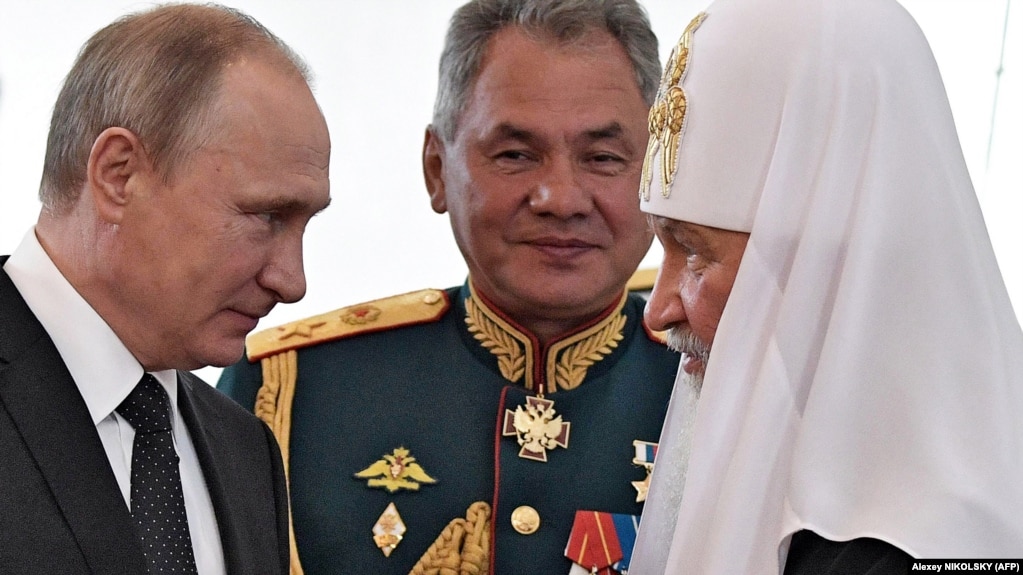
Patriarch Kirill (right) with Russian President Vladimir Putin (left) and Defense Minister Sergei Shoigu. (file photo)

Patriarch Kirill, head of the Russian Orthodox Church, has told his followers that "sacrifice in the course of carrying out your military duty washes away all sins."

The patriarch's comments during his Sunday sermon on September 25 came amid nationwide protests and rising criticism over the Kremlin's recent announcement of a partial mobilization to replenish Russian forces fighting in Ukraine.

Live Briefing: Russia's Invasion Of Ukraine

RFE/RL's Live Briefing gives you all of the latest developments on Russia's ongoing invasion, Kyiv's counteroffensive, Western military aid, global reaction, Russian protests, and the plight of civiliansFor all of RFE/RL's coverage of the war, click here.

Western officials estimate that Russia has suffered 70,000 to 80,000 casualties since it invaded Ukraine in February.

Russian officials have said the draft would focus on reservists and would bring 300,000 fresh troops to the war effort. But Russian media has said the real target is 1 million new troops, and reports that men with no combat experience and beyond draft age are being enlisted has attracted criticism even from pro-Kremlin voices.

Kirill, a prominent supporter of President Vladimir Putin who has "blessed" the war effort and warned by Pope Francis against becoming "Putin's altar boy," has previously claimed that Russians were doing a "heroic deed" by killing Ukrainians, even as he has urged them not to see the Ukrainian people as enemies.

"We know that many today are dying in the fields of internecine battle," Kirill said at a church near Moscow on September 25. "The church is praying that this battle will end as soon as possible, that as few brothers as possible will kill each other in this fratricidal war."

However, he added, "The church realizes that if someone, driven by a sense of duty and the need to honor his oath, stays loyal to his vocation and dies while carrying out his military duty, then he is, without any doubt, doing a deed that is equal to sacrifice."

After Putin announced the military mobilization on September 21, Kirill was quoted by Russian state media as saying that "danger looms over the Ukrainian people," claiming that unidentified forces were trying to turn them from being "part of the holy united Rus into a state hostile to this Rus, hostile to Russia."

Kirill sees Russia's full-scale invasion of Ukraine launched in February as a bulwark against a decadent West and has insisted that "Russia has never attacked anyone."

About 34 percent of Orthodox believers in Ukraine identify with the main Orthodox Church of Ukraine, which in 2019 was officially recognized as separate from the Moscow Patriarchate by Orthodox Christianity's spiritual head, Patriarch Bartholomew of Constantinople.

About 14 percent of Ukraine's Orthodox community are members of Ukraine's Moscow Patriarchate Church, according to a 2020 study.

Following Russia's invasion in February, about 400 parishes of the Orthodox Church of Ukraine that had remained loyal to Kirill cut ties with the Russian Orthodox Church over the patriarch's position on the war.

"Not only did he fail to condemn Russia's military aggression, but he also failed to find words for the suffering of the Ukrainian people," church spokesman Archbishop Kliment said of Kirill's stance in May.

Days later, Kirill said he understood the decision to cut ties amid Moscow's invasion but claimed that the "spirits of malice" were trying to divide the Orthodox people of Russia and Ukraine.

More than 150 Russian Orthodox clerics called for a stop to the war in an open letter on March 1. Kirill was not among those who signed it.

Britain imposed sanctions against Kirill in June as part of a package aimed at punishing Moscow over the war in Ukraine. The measure came shortly after the EU dropped a similar proposal to sanction Kirill following opposition from Russia-friendly bloc member Hungary.

Jen Psaki, who was spokeswoman for the White House at the time, said in May when asked about the possibility of sanctioning Kirill that "no one is safe from our sanctions."

The glorious feast day of the Archangels Michael, Gabriel and Raphael


The Feast of the Archangels, Michael, Gabriel and Raphael, “Michaelmas” for Short

By Jennifer Gregory Miller ( bio - articles - email ) | Sep 28, 2021 | In The Liturgical Year


September 29 marks the Feast of the Archangels Gabriel, Michael and Raphael. Only since the reform of the current liturgical calendar in 1969 were the archangels united on the same feast day. Originally September 29 marked the dedication of the Church of St. Michael in Rome, built by Constantine. It has been an older, established feast, referred as “Michaelmas” in the English-speaking world for generations. But the Archangels Gabriel and Raphael only had universal feasts since 1921, Gabriel was on March 24, the day before the Annunciation, and Raphael on October 24.

There are 26 Feasts throughout the Liturgical Year, with two being movable feasts. They are sprinkled throughout the year, with only September and December having the highest of four feasts within the months. The Archangels mark the fourth feast of the month of September.

As we apply ourselves to living the Liturgical Year, one thing I like to emphasize is that the unfolding of the year is not flat with everything being the same, like a pancake or prairie, but rather the landscape is varied, with hills and mountains with peaks and valleys. There are the Sundays, the liturgical seasons, and the feast days, with different rankings of solemnities, feasts, memorials and optional memorials, and then ferial days with no particular saint or feast celebrated. Calendarium Romanum (The Roman Calendar) from 1969 expresses this viewpoint:

Solemnities and feasts are rare and should be truly festive days, whereas a memorial is a simple remembrance of a saint on his spiritual birthday. Solemnities and feasts are held by way of exception; memorials are part of daily liturgical life.

I started to ponder why the Church honors the archangels with such a high ranking. Their role in our life is different from the saints. We pray to the saints for their intercession, but we also look to their lives for imitation and role modeling. But angels are different. The angels are spiritual creatures created by God for a particular purpose. The Catechism of the Catholic Church states,

The existence of the spiritual, non-corporeal beings that Sacred Scripture usually calls “angels” is a truth of faith. The witness of Scripture is as clear as the unanimity of Tradition (CCC 328).

Angels are spiritual creatures who glorify God without ceasing and who serve his saving plans for other creatures: “The angels work together for the benefit of us all” (St. Thomas Aquinas, STh I, 114, 3, ad 3).

The angels surround Christ their Lord. They serve him especially in the accomplishment of his saving mission to men.

The Church venerates the angels who help her on her earthly pilgrimage and protect every human being (CCC, 350-352).

Angels truly exist, but we need to push through all those cutesy “angel on my shoulder” and little cherub angels and recognize the dignity and higher order of these spiritual beings. They were created to be with God, to contemplate God in His beatific vision.

St. Augustine, as quoted by the Catechism (329), explains their essence:

The angels are spirits. When they are simply spirits, they are not angels, but when they are sent, they become angels; for ‘angel’ is the name of a function not a nature. If you inquire about the nature of such beings, you find that they are spirits, if you ask what their office is, the answer is that they are angels. In respect of what they are, such creatures are spirits; in respect of what they do, they are angels. Make a comparison of human affairs. The name of someone’s nature is ‘human being,’ the name of his job is ‘soldier’ (en. Ps. 103.1.15).

And St. Gregory the Great in one of his homilies on the Gospels (which is quoted in the Office of Readings) agrees on the nature and function of angels:

You should be aware that the word “angel” denotes a function rather than a nature. Those holy spirits of heaven have indeed always been spirits. They can only be called angels when they deliver some message. Moreover, those who deliver messages of lesser importance are called angels; and those who proclaim messages of supreme importance are called archangels.

As a person, I sometimes find it difficult to completely relate to the angels. They are higher beings and being pure spirits they are not saddled with the effects of Original Sin. While I can aim for imitation of their virtues, it’s not the same way in living the virtues with a human nature. Angels don’t change their minds. They aren’t wishy-washy like humans. They had a free will choice at the beginning of creation, which weeded out Satan and the devils. But none of them are going back or regretting their choice. Perhaps in human terms we could say the angels are single-minded and focused—never having any distractions. I can ask for help in this area, but truly it’s different when you pray to the saints who actually felt the temptations and weaknesses of the human nature.

This feast is celebrating the higher messengers of God, the three archangels that are mentioned by name in the Bible: Michael, Gabriel and Raphael. We have gratitude to God for the gift of these angels, and need to constantly remember and pray to them in our lives. We invoke these archangels to send us messages on how to live the right purpose of our lives, to lead us to do good, to help us live for others, and to imitate in those virtues they live as spirits (although not so easy for us).

St. Michael

The name of Michael, in Hebrew Mi-khe-el, means “Who is like God?” Michael is mentioned by name in the Book of Daniel 12:1, Jude 1:9, and Revelation 12:7–12.

St. Augustine proposed the angels were created on the first day of creation, indicated in Genesis 1:3-4, “Then God said: Let there be light, and there was light. God saw that the light was good. God then separated the light from the darkness.” That separation of light from darkness was the test and separation of the good and bad angels, the time of St. Michael’s rallying cry, “Who can be like God?” (which is the translation of his name) and drove Satan and the other devils out of heaven.

If you have brothers, sons, nephews or grandsons or teach boys, you know St. Michael through their eyes. He is an archangel depicted as a soldier in helmet and armor, with a sword (and sometimes spear), striking at Satan and is easily identified and loved by all young boys who want to physically fight against evil. My sons were not scared by the depictions of the devil because St. Michael was stomping him down triumphantly!

From St. Gregory the Great again,

Whenever some act of wondrous power must be performed, Michael is sent, so that his action and his name may make it clear that no one can do what God does by his superior power. So also our ancient foe desired in his pride to be like God, saying: “I will ascend into heaven; I will exalt my throne above the stars of heaven; I will be like the Most High.” He will be allowed to remain in power until the end of the world when he will be destroyed in the final punishment. Then, he will fight with the archangel Michael, as we are told by John: “A battle was fought with Michael the archangel.”

My sons are now older. They are not donning armor and the swords stay permanently sheathed in the closet. St. Gregory makes St. Michael relatable to us in the present moment. We still need his strength, valor and protection. St. Michael is the spiritual armor and sword when we have to fight evil. And perhaps St. Michael’s latest work of the present time is just sending us messages to recognize the evil in the world. Lately there is such denial of the existence of sin and the devil. We need St. Michael’s “wondrous power” to help us become a champion and overcome any fear we might have. St. Michael can cut down our mediocrity and help us to be brave and always ready to fight.

St. Gabriel

Gabriel means “Strength of God.” The Archangel Gabriel is familiar to children who attend the Catechesis of the Good Shepherd Atria as they work even as youngest children with the Scriptures of the Annunciation. Yesterday I asked my Level II children, and they were immediately reminded of that moment in the Gospel. They love contemplating that intimate moment of the Incarnation.

I love how St. Gregory points out the elevated nature of that role of Gabriel:

And so it was that not merely an angel but the archangel Gabriel was sent to the Virgin Mary. It was only fitting that the highest angel should come to announce the greatest of all messages.

We also met Gabriel at the scene where he appears to Zechariah. The high priest doubts the authenticity of his message. After all, he and Elizabeth are too old to be parents!

Don’t you wish you could hear the tone of voice in the archangel’s reply?

I am Gabriel, who stand before God. I was sent to speak to you and to announce to you this good news. But now you will be speechless and unable to talk* until the day these things take place, because you did not believe my words, which will be fulfilled at their proper time (Luke 1:19-20).

Reading between the lines, I hear Gabriel saying: “Sigh. Stupid, slow-witted, doubting man! That will teach you to doubt God! And you, a high priest!”

But of course, that’s my human response. No angel is going to think uncharitably like me.

The Church traditionally holds that St. Gabriel also appeared to Joseph in his dreams, appeared to the shepherds at Bethlehem, and also comforted Jesus in His agony in the garden.

St. Michael is the armor and soldier of God, but Gabriel provides the strength or fortitude. Michael is in the front lines, while Gabriel is in the every day work, our daily struggle.

St. Raphael

Raphael is mentioned in the deutero-canonical Book of Tobit. His name means “God’s healer” or “Healer from God” since he cured Tobit’s blindness and “cured” or exorcised Sarah of her evil spirits.

St. Gregory says:

Raphael means, as I have said, God’s remedy, for when he touched Tobit’s eyes in order to cure him, he banished the darkness of his blindness. Thus, since he is to heal, he is rightly called God’s remedy.

St. Raphael is invoked for his healing power, and not just from physical healing. We live in a time of darkness, with much of us dealing with high anxiety and worry. We are plagued with spiritual blindness and selfishness. St. Raphael can heal us of our blindness, and be the messenger of remedy to enlighten us to our faults and how to work on them and make changes.

Celebrating “Michaelmas”

Despite the other two archangels added to this liturgical feast, the name “Michaelmas” still sticks. The English tradition of shortening the name or nickname of feast day and combining with “Mass” leads to the names of Christmas, Candlemas (Presentation), Ladymas (Annunciation), Martinmas (Martin of Tours), etc.

This is one of the “quarter days” for business. The year is naturally divided into the different seasons by the solstices and equinoxes. There was a merging of both the seasonal and liturgical and it bled into daily life, including business. Feast days that fell near these quarter points of the year became the quarter days: Michaelmas for the Fall Equinox, Christmas for the Winter Solstice, Lady Day/Ladymas (Annunciation) for Spring Equinox and Midsummer Day (Birth of St. John the Baptist) for Summer Solstice.

Michaelmas is a traditional Catholic feast of Thanksgiving in many countries. The goose served was nicknamed “stubble-goose” because it would eat the stubble in the field after harvest.

There are other special foods or traditions on this day, such as the Scotch “Michaelmas bannock,” made from a mixture of barley, oats and rye. Cracking nuts became a Michaelmas Eve tradition. And bringing the devil into the picture, this would be the last day to eat blackberries, as the devil makes them “unsuitable” to eat after this date.

So many of the festivities point to similar celebrations we have for US and Canadian Thanksgivings.

It’s at home with the families that we want to help our children realize the role angels and archangels in our lives, and to invoke them often. And this can translate into fun ways, like eating Devil’s Food Cake and stabbing it with plastic cocktail swords, or play “Pin Sword on the Devil” (“Pin the Tail on the Donkey”), or make a dragon or devil piƱata and strike it down.

Art study or creating art is also a wonderful way of bringing this feast home. I have a friend who shared on her Etsy shop some Michaelmas Icons she created in stickers and prints, which evoke some of the autumnal and traditional symbolism of the feast.

The Feast of the Archangels on first glance seems so different from the usual saint days, but it is a reminder to always recognize the angels in our life, and to invoke the most powerful messengers for our spiritual battles, for our strength and for our healing.
Vatican synod chief encourages American Bishops to keep listening


Vatican’s synod chief tells U.S. Church leaders to ‘listen to others’


NEW YORK – Cardinal Mario Grech encouraged more than 200 U.S. Catholic leaders to continue the process of listening called for by the Synod on Synodality, even as it moves out of the local phase, and to consider the contributions of all people of goodwill, in a recent presentation.

“When we say that we are listening to the others, we are also saying that we are listening to the Holy Spirit, and for me, this is something sacred and it was about time that we came around to recognize this wealth, this richness in the church,” said Grech, secretary general of the Synod of Bishops.

“We believe in the people of God and in their power because the Holy Spirit lives in them, so it would be a great miss if we do not take into consideration, into account, the contribution of not only all of the baptized, but all of the people of goodwill,” Grech continued. “All people of goodwill can really contribute and help also the pastors to find what is the will of God for his church today.”

Grech made the comments on Sept. 22, to open this year’s Catholic Partnership Summit hosted by Leadership Roundtable, a U.S.-based Catholic nonprofit that seeks to promote best practices in leadership and management within the church.

The cardinal made the comments live from Frascati, Italy, where the Vatican’s synod team is gathered to review synod syntheses from across the globe as the continental phase begins. Grech called the results they’ve received so far “astonishing,” and noted that they will receive a reply from all of the bishops’ conferences of the world, “something unprecedented in history.”

Outside of episcopal conferences, Grech acknowledged that there were more than 1,000 individual synod submissions made directly to the Vatican, which he guaranteed will be taken into account.

The United States Conference of Catholic Bishops publicized its national synod synthesis on Sept. 19. Grech commented that he has read the report twice, and found it “very, very interesting.” He noted what he described as “very, very high participation” – an estimated 700,000 people.

With both the U.S. bishops and Canadian bishops having completed their national synod syntheses’ reports, both sides will now work together on the continental phase of the synod that Pope Francis launched this month. The USCCB expects the Document for the Continental Stage (DCS) from the Synod Secretariat in the coming months. Grech said that the document is being worked on.

The national synod synthesis in the U.S. keyed in on several “enduring wounds” that plague the nation’s church, including the still-unfolding effects of the sexual abuse crisis, divisions over the celebration of the Traditional Latin Mass, and a perceived lack of unity among the nation’s bishops.

The most common desire named in synodal consultations, according to the document, is for a “more welcoming church where all members of the people of God can find accompaniment on the journey.” In particular, the synthesis identifies the LGBTQ+ community, divorced Catholics, and women as those that the U.S. church needs to be more welcoming toward.

Grech touched on the “complicated issues” such as divorced and remarried people receiving Holy Communion and the blessing of same-sex couples, echoing the overarching message of his presentation that the church should listen to all people of goodwill.

“These are not to be understood simply in terms of doctrine, but in terms of God’s ongoing encounter with human beings,” Grech said. “What has the church to fear if these two groups within the faithful are given the opportunity to express their intimate sense of spiritual realities, which they experience.”

“Might this be an opportunity for the church to listen to the Holy Spirit speaking through them also?”

Present at the fourth Catholic Partnership Summit were a mix of U.S. cardinals, bishops, diocesan lay leaders, corporate professionals, canon lawyers, theologians, philanthropists, religious brothers and sisters, Catholic nonprofit leaders, priests, and young adults.

Among the clergy present at the summit were Archbishop Christophe Pierre, Apostolic Nuncio to the United States, and Cardinal Wilton Gregory of Washington.

The summit’s theme was “Living Synodal Leadership: Our Call to a Unified Church.” Kim Smolik, a Leadership Roundtable executive partner, explained to Crux that the bringing together of Catholic leaders to focus on synodality “deepens our understanding of what synodal leadership is.”

“Synodal leadership is pointed towards co-responsible leadership, lay, clergy, and religious working together, it’s about listening to each other and leading collectively, and so now our understanding of that because of this process is being deepened,” Smolik said.

Throughout his presentation, Grech emphasized making the synodal direction and leadership a mainstay.

“My dear brothers and sisters, I really wish to encourage you to go forth in this synodal direction,” the cardinal said, adding that doing so is not only a gift for the church, but “all of society will benefit.”

Cardinals discuss Catholic hospital care for transgender patients but no to gender transition procedures


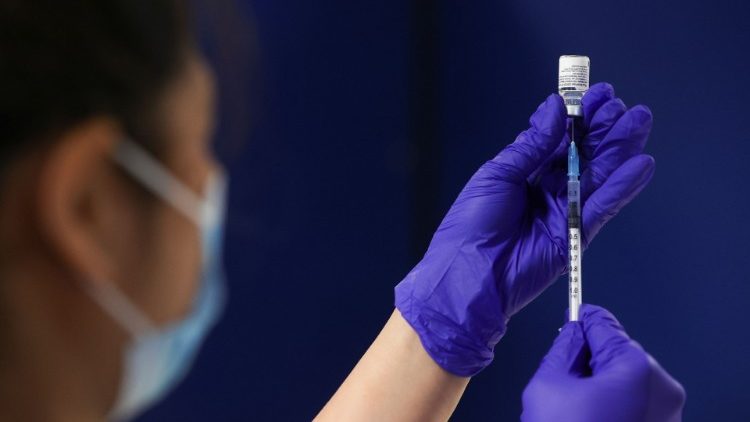
HEALTH-CORONAVIRUS/BRITAIN-VACCINE

Cupich & Dolan: Transgender patients receive equal care in Catholic hospitals

American Cardinals Blase Cupich and Timothy Dolan affirm the high quality of care transgender patients receive in Catholic hospitals, while expressing concern over a new federal rule which would force faith-based health care facilities to perform gender transition procedures.

By Devin Watkins

The Archbishops of Chicago and New York have issued a joint statement in reaction to a newly-proposed federal rule which would force Catholic health care facilities to offer gender transition procedures.

The rule proposed on 25 July 2022 by the US Department of Health and Human Services (HHS) seeks to implement Section 1557 of the Affordable Care Act, specifically to “solidify protections against discrimination on the basis of sex including sexual orientation and gender identity”, according to the HHS website.

High-quality Catholic health care for everyone

In a statement published by America Magazine, Cardinal Blase Cupich of Chicago and Cardinal Timothy Dolan of New York affirm their wholehearted support for “all efforts to ensure that everyone, without exception, receives the best health care that is their due.”

They note that 1 in 7 Americans who visit a hospital will receive care in a Catholic facility, equaling over 115 million visits every year.

“They do so knowing they will receive excellent medical care and be treated with dignity, respect and welcome,” say the Cardinals. “That is true for all people who come to us, no matter their age, sex, racial or ethnic background, or religion.”

Transgender patients also receive the same quality of care as everyone else, affirm the two Cardinals.

“Catholic hospitals do not discriminate against anyone and to do so would be offensive to the embracing and expansive healing ministry of Jesus Christ.”

Forcing doctors to violate their consciences

At the same time, Cardinals Dolan and Cupich allege that the HHS-proposed rule would coerce Catholic facilities and staff to violate their consciences.

“Under this new proposed rule, it would be considered discrimination for a health care facility or worker to object to performing gender transition procedures, regardless of whether that objection is a matter of sincerely held religious belief or clinical judgment.”

The Cardinals say the rule represents “government coercion that intrudes on the religious freedom of faith-based health care facilities” and thereby threatens the conscience rights of those who consider such procedures contrary to their own beliefs.

Even people of no faith, note the Cardinals, may object to gender transition procedures, and should not therefore be expected to “violate their consciences as a condition of employment.”

Objection to procedure, not the person

Cardinals Cupich and Dolan then reaffirm their belief that objecting to such procedures in no way constitutes discrimination, also because those same Catholic hospitals and doctors offer the same quality of care for transgender patients.

“The focus of such an objection is completely on the procedure, not the patient.”

The American Cardinals note that the proposed rule fails to codify “the rights of faith-based providers to decline procedures based on conscience, as other federal laws do.”

Rather, they say, the rule allows the HHS to decide if it can force facilities to “violate their beliefs.”

In conclusion, Cardinals Dolan and Cupich uphold every American’s right to receive high-quality health care which respects “the life and dignity of every person”.

Papal visit to Bahrain announced


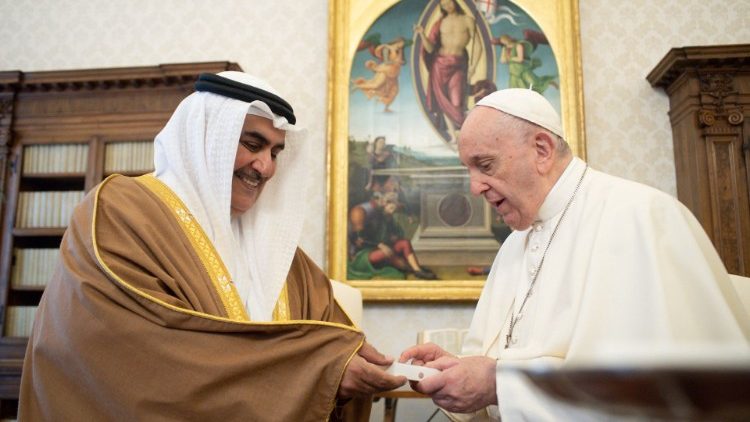
Archive photo of Pope Francis receiving Sheikh Kahlid vin Ahmed Al Khalifa, Special Envoy of the King of Bahrain, on 25 November 2021Archive photo of Pope Francis receiving Sheikh Kahlid vin Ahmed Al Khalifa, Special Envoy of the King of Bahrain, on 25 November 2021 

Pope to travel to Bahrain in November

The Holy See Press Office announces that Pope Francis will undertake an Apostolic Journey to Bahrain at the beginning of November.

By Linda Bordoni

Pope Francis is scheduled to travel to the Persian Gulf island country of Bahrain from 3 to 6 November 2022.

A statement released by the Director of the Holy See Press Office on Wednesday said the Pope had accepted the invitation of the country's civil and ecclesial authorities.

During his Apostolic Journey, the Pope will visit the cities of Manama and Awali “on the occasion of the Bahrain Forum for Dialogue: East and West for Human Coexistence.”

The programme and further details of the Journey will be published at a later date.

Pope Francis will be the first Pope to visit Bahrain.

2014 meeting between Pope and King Hamad bin Isa Al Khalifa

Pope Francis received in audience in the Vatican, the King of Bahrain, His Majesty Hamad bin Isa Al Khalifa on 19 May 2014.

The King subsequently met with the Cardinal Secretary of State Pietro Parolin and the former Secretary for Relations with States, Archbishop Dominique Mamberti.

According to a Holy See Press Office statement at the time,  cordial discussions between the Bahraini King and the Pope focused on various themes of common interest, “with particular reference to the commitment towards peace and stability in the Middle East, as well as the promotion of dialogue and peaceful co-existence among all members of society.”

Mention was also made of the Christian community’s positive contribution to the country, and “appreciation was expressed for His Majesty’s personal interest in the needs of the local Catholic community.”

Papal General Audience 09.28.2022


Pope at Audience: Prayer is indispensable aid to discernment

At the General Audience on Wednesday, Pope Francis focuses on the importance of prayer in discernment, which allows us to enter into intimacy with God.

By Christopher Wells

Continuing his catechesis on discernment, at the Wednesday General Audience, Pope Francis emphasized the importance of prayer.

He said prayer is “an indispensable aid to spiritual discernment, especially when it involves the affections.” Prayer, he added, allows us to “go beyond thoughts, to enter into intimacy with the Lord, with an affectionate spontaneity.”

“The secret of the lives of the saints is familiarity and confidence with God, which grows in them and makes it ever easier to recognize what is pleasing to Him.”

Whole self required to discern

The Holy Father went on to say that discernment is a part of life, and so is not always absolutely certain. And, citing Saint Paul, he noted that even when we know what we should do, we don’t always do it.

Precisely because human beings are more than just reasoning machines, he said, our emotions and affections are an important part of discerning God’s will and doing it.

Pope Francis pointed to the first miracle recorded in the Gospel of Mark, where Jesus performs an exorcism, freeing a man “from the false image of God that Satan has been suggesting from the beginning: that God does not want our happiness.” The possessed man cannot accept Jesus because of the devil within him.

Emotions helpful in discernment

Turning then to the young rich man in Matthew’s Gospel, who went away sad when Jesus suggested he give up all he had to follow Him, the Pope said that sadness or fear are signs of distance from God.

The young man’s attachments to earthly good’s made it hard to fulfill the desire of his heart. On the other hand, joy is a sign of a true encounter with Jesus.

Discernment can still be difficult, because appearances are often deceptive. Through prayer, however, we can grow in familiarity with God, which “can met doubts in a gentle way, making our lives increasingly receptive to His ‘gentle light,’ according to the beautiful expression of St. John Henry Newman.”

“The saints shine with reflected light and show in the simple gestures of their day the loving presence of God, who makes the impossible possible.”

Like two spouses who grow to resemble one another after many years together, the Pope said, affective prayer can make us grow in our resemblance to God, and help us recognize God’s will in our lives.

Pope Francis concluded his catechesis with the prayer that we might grow in the grace of living “in a relationship of friendship with the Lord, as a friend who speaks to a friend.”