Monday, November 29, 2021

Feast day of this great Apostle


St. Andrew the Apostle


Feastday: November 30
Patron: of Fishermen, singers, Scotland, Romania, Russia, Ukraine and Patras
Birth: Early 1st Century
Death: Mid-to late 1st Century


St. Andrew, also known as Andrew the Apostle, was a Christian Apostle and the older brother to St. Peter.

According to the New Testament, Andrew was born in the village of Bethsaida on the Sea of Galilee during the early first century. Much like his younger brother, Simon Peter, Andrew was also a fisherman. Andrew's very name means strong and he was known for having good social skills.

In the Gospel of Matthew, it is said Jesus was walking along the shore of the Sea of Galilee and saw Andrew and Simon Peter fishing. It is then he asked the two to become disciples and "fishers of men."

In the Gospel of Luke, Andrew is not initially named. It describes Jesus using a boat, believed to be solely Simon's, to preach to the multitudes and catch a large amount of fish on a night that originally was dry. Later, in Luke 5:7, it mentions Simon was not the only fisherman on the boat, but it is not until Luke 6:14 that there is talk of Andrew being Simon Peter's brother.

However, the Gospel of John tells a separate story, stating Andrew was a disciple of John the Baptist. When Jesus walked by one day, John the Baptist stated, "Behold, the Lamb of God!" It is then that Andrew and another made the decision to follow Jesus.

Little else is said about Andrew in the Gospels, but it is believed Andrew was one of the closer disciples to Jesus. It was he who told Jesus about the boy with the loaves and fishes, according to John 6:8. When Philip wanted to speak to Jesus about Greeks seeking him, he spoke to Andrew first. Andrew was also present at the last supper.

Per Christian tradition, Andrew went on to preach the Good News around the shores of the Black Sea and throughout what is now Greece and Turkey. Andrew was martyred by crucifixion in Patras. He was bound, rather than nailed, to a cross, as is described in the Acts of Andrew. He was crucified on a cross form known as "crux decussata," which is an X-shaped cross or a "saltire." Today this is commonly referred to as "St. Andrew's Cross." It is believed Andrew requested to be crucified this way, because he deemed himself "unworthy to be crucified on the same type of cross as Jesus."

Andrew's remains were originally preserved at Patras. However, some believe St. Regulus, who was a monk at Patras, received a vision telling him to hide some of Andrew's bones. Shortly after Regulus' dream, many of Andrew's relics were transferred to Constantinople by order of Roman emperor Constantius II around 357. Regulus later received orders in a second dream telling him to take the bones "to the ends of the earth." He was to build a shrine for them wherever he shipwrecked. He landed on the coat of Fife, Scotland.

In September 1964, Pope Paul VI had all of St. Andrew's relics that ended up in Vatican City sent back to Patras. Now, many of Andrew's relics and the cross on which he was martyred are kept in the Church of St. Andrew in Patras.

St. Andrew is venerated in Georgia as the first preacher of Christianity in that territory and in Cyprus for having struck the rocks creating a gush of healing waters upon landing on the shore.

His saltire cross is featured on the flag of Scotland and is represented in much of his iconography. He is commonly portrayed as an old man with long white hair and a beard, often holding the Gospel book or a scroll.

St. Andrew is the patron saint of fishermen and singers. He is also the patron saint to several countries and cities including: Scotland, Romania, Russia, Ukraine and Patras and his feast day is celebrated on November 30.

Vatican Cardinal says no open door to women's ordination


Vatican cardinal says women’s ordination is ‘wrong path’


ROME – Though the week-long Ecclesial Assembly of Latin America offered a long string of bold proposals, the proposal of ordaining women either as deacons or as priests was rarely brought up. And the one time it was, a top-Vatican cardinal dismissed it.

“We still need much synodality,” said Canadian Cardinal Marc Ouellet, prefect of the Vatican’s Congregation for Bishops and president of the Pontifical Commission for Latin America, during a press conference held Friday, as the Nov. 21-28 assembly was wrapping up.

Asked point blank if the lack of vocations to the priesthood could lead to the ordination of women, even if only to the diaconate, the prelate said that from a “doctrinal point of view” there are “no conclusions that open this door.”

The matter, he said, was studied by a commission set up by the Congregation for the Doctrine of the Faith, at Pope Francis’s request, to look into the historical figure of female deacons. Formed in 2016, the pontiff told reporters in May 2019 that the 12-member body had been unable to produce a “definitive response” to the matter, due to a lack of consensus regarding the role of deaconesses in early Christianity.

“Personally, I believe that we have to potentiate the particular charisms women have,” Ouellet said during the press conference. “The path is not to completely equate at a ministerial level men and women, because there’s a symbolic importance in the sacramental roles.”

“It’s important to remember that God made an alliance with humanity, and that the nuptial symbol is the privileged symbol in the Church and in the Bible,” he said, speaking in Spanish. “To express God’s relationship with his people, of Christ with the Church. Christ is male, the Church is feminine. The priest who must represent Christ must have a semantic coherence, and this is the reason why the representation of Christ as a husband is reserved to men.”

“It’s a bit evident,” he added.

According to Ouellet, what the Church needs to do is further develop the charisms women have, give them more room, listen to them more and grant them more responsibilities.

“The woman is an excellent catechist,” he said. “She can be the chancellor of a diocese, a [canon] lawyer, work in communication and administration, having very important roles both at a diocese and a parish.”

The Canadian prelate insisted on highlighting the charism of women, saying that they must be granted concrete recognition, without pretending that, simply by being ordained, women would be granted access to all the spaces of the Church. “It’s a wrong path, one that doesn’t respect the peculiarity of the woman.”

What is needed, Ouellet said, is a much deeper synodal reform, that is “more fundamental than imposing the same roles to women and men. The change the Church needs is much greater than giving [women] access to ordained ministry. The revolution must be more profound.”

Vatican Cardinal with broad overview of current church issues


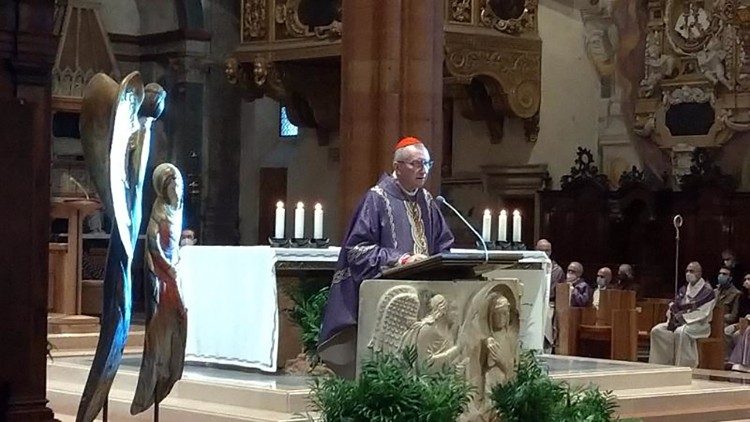
Cardinal Pietro Parolin celebrating the concluding Mass for the Festival of the Social Doctrine of the Church in Verona, 28.11.2021.   Cardinal Pietro Parolin celebrating the concluding Mass for the Festival of the Social Doctrine of the Church in Verona, 28.11.2021.  

Cardinal Parolin: Fraternity and hope are keys to finding way out of crises

In an interview with Vatican News, the Vatican Secretary of State speaks about issues such as the Church’s social doctrine, the pandemic, assisted suicide, and the synodal process.

By Robin Gomes

During pandemics, our lives "are intertwined and sustained by ordinary people, who have undoubtedly written the decisive events of our shared history": Vatican Secretary of State Cardinal Pietro Parolin made the observation in his homily at Mass on Sunday in the Cathedral of Verona, Italy, concluding the 11th Festival of the Social Doctrine of the Church. The November 25 to 28 Festival had as its the theme "Bold in hope - Creative with courage”.

Church’s social teaching

Later, in an interview with Vatican News, Cardinal Parolin referred again to the theme. One of the paths that instills hope is the Social Doctrine of the Church because it provides not only paths for reflection, but also “the criteria for judgement, indications, and operational guidelines” on which to move on issues that concern everyone. The Social Doctrine, he said, is a reference point not only to believers but also to non-believers because issues such as peace, jobs, development, civil and common life, and politics are areas of interest for everyone.

The pandemic

Speaking about living the season of Advent that has just begun, amidst the ongoing pandemic, the Vatican Secretary of State spoke about the need for constant commitment and responsibility with regard to the vaccine and the search for the most suitable cures. However, “our efforts cannot be fruitful” except by “opening ourselves more and more to Him and to His coming, to His grace and to His power”. “Hence the twofold direction: man's effort, which can never be lacking, but at the same time, relying on the Lord's grace”.

Assisted suicide and suffering

The cardinal also expressed concern over the issue of euthanasia, or assisted suicide, in Italy, on which debate is heating up after an ethics committee in the central Italian region of Marche gave its green light for what will be the country's first legal assisted suicide case. 

“Today we live in a society that is increasingly de-Christianized, where the reference to the infinite value of life is increasingly lacking... in addressing these issues.” He underscored the need for Christians to “insist on the anthropological vision of faith, which comes from the Gospel, which is a condition for safeguarding the dignity of every person”.  “If we defend these values, it is because we are convinced that they are an indispensable condition for defending, promoting, protecting and developing the concrete dignity of every person… not the abstract person, but a concrete person”. This, he said, must be done above all through example.

Referring to Saint John Paul II’s Apostolic Letter Salvifici doloris, Cardinal Parolin stressed the need of doing good through suffering. Someone in pain, even one who is experiencing extreme suffering to the point of contemplating ending his or her life, he said, can give meaning to suffering. “If there is no meaning, suffering is incomprehensible, suffering becomes unbearable”, he said

Vaccination

On being asked about anti-Covid-19 vaccination protests in Italy and elsewhere in Europe, the Vatican Secretary of State reiterated Pope Francis’ appeal to people's “sense of responsibility”. “Many call for freedom", the cardinal said, "but freedom without responsibility is empty; indeed, it becomes slavery”. He said it is responsibility towards oneself because we see how the “No Vax” (no vaccination) people are affected by the disease. Above all, it is responsibility towards others, which the Pope beautifully described as an act of love.

Synodal process

Cardinal Parolin also addressed the issue of the ongoing two-year-long synodal process across the world that Pope Francis inaugurated on October 10. He said the Pope’s teaching provides precise indications so that we do not remain prisoners, or even victims, of the current climate of little hope and discouragement, but can take the situation in hand, always in the dynamic of “God's grace and man's effort, and move forward”. The cardinal said this involvement of the whole Church through listening, co-responsibility, and participation in her mission can be a very precise indication for dealing with the present time and for giving hope to our situations as well.

The Pope’s call to fraternity in his encyclical Fratelli tuttihe pointed out, is a fundamental indication at the level of society in general, as a way out of the crisis in which we find ourselves — because no one is saved alone.

Sunday, November 28, 2021

Monday Saint of the Day


St. Francis Fasani


Franciscan mystic, born Antony Fasani in 1681. He entered the Franciscans and was ordained in 1775. While serving as provincial and in other administrative positions, he was known for prayer and for supernatural gifts. Francis was canonized in 1986.

Prayers for migrants after the Sunday Angelus


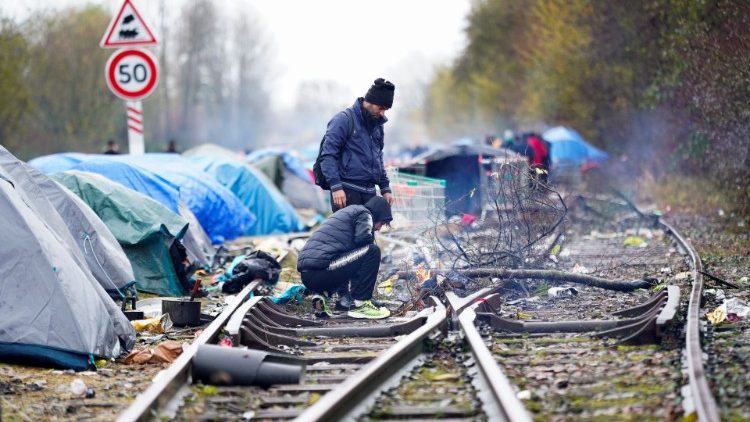
Makeshift migrant camp at Loon Beach in DunkirkMakeshift migrant camp at Loon Beach in Dunkirk 

Pope prays for all migrants, from the Mediterranean to Belarus

Pope Francis prays for the thousands of migrants who risk their lives every day as they embark upon journyes in search of a better life.

By Francesca Merlo

Following the recitation of the Angelus prayer on Sunday, Pope Francis turned his thoughts to the many migrants risking, and often losing, their lives as they embark on their journeys in search of a better life. 

Addressing the pilgrims gathered in St Peter's Square, the Pope noted how many migrants are exposed to "very serious dangers", and how many lose their lives at our borders. "I feel sorrow at the news of the situation in which so many of them find themselves", said the Pope.

He referred, in particular, to the tragedy that occurred last week in the English Channel; to the migrants on the borders of Belarus, many of whom are children; and to those who drown in the Mediterranean. 

He also referred to the many migrants who in attempting to cross the mediterranean are repatriated to North Africa, "captured by traffickers, who turn them into slaves: they sell the women, torture the men", said the Pope.

The Pope prayed for all those who, also this week, "have tried to cross the Mediterranean seeking a land of well-being and finding there, instead, a grave". To all those, and to all the others, Pope Francis assured his prayers, and also his heart. "Let us think of the migrants, of their suffering, and let us pray in silence", he concluded. 

Advent Angelus Address of 11.28.2021


Pope at Angelus: Be vigilant and pray always

At the Angelus on the First Sunday of Advent, Pope Francis calls on us to "be vigilant" and to persevere in prayer, which "reawakens the soul from sleep" and helps us focus on what is most important in life.

By Vatican News staff writer

Reflecting on the Gospel reading for this First Sunday of Advent, which speaks to us about the Lord’s coming at the end of time, Pope Francis says we are invited to be hopeful as the Lord comes to save us and "we await Him with joy", even in the midst of life's trials and tribulations. The Lord invites us to “stand erect and raise your heads because your redemption is at hand”.

Be vigilant at all times and pray

At the same time, the Pope recognized the challenge of remaining focused on our redemption when day-to-day challenges and suffering can overwhelm us. He recalled the words of Jesus that we must not fall asleep and "be vigilant at all times and pray". This vigilance is a key aspect of Christian life, he noted, and it requires that we remain alert and avoid distraction from what is really important in life. Vigilance means keeping our hearts on guard from becoming lazy or  "sleepy Christians" lacking spiritual dynamism and intensity in prayer. We can fall into apathy, he warned, and become indifferent to all except what is comfortable for us.

"With all vigilance guard your heart"

Vigilance means not letting our daily life become just a routine, or becoming preoccupied only with worldy concerns, the Pope went on to say, encouraging us to reflect on what weighs on our own spirit causing us to fall into the "lazy chair", mediocrity and succumb to vices. He also suggested we look at the burdens that weigh on the shoulders of those around us and ask ourselves if we are aware of them and doing something about it. This all will help us avoid falling into apathy, something he described as a negative spirit that "traps the soul" and takes away its joy. As the Book of Proverbs says, “With all vigilance guard your heart, for in it are the sources of life”.

Come, Lord Jesus

"The secret to being vigilant is prayer," the Pope stressed, saying that prayer always keeps the lamp of our heart lit, bringing us back to God, reawakening the soul from slumber and focusing it "on what matters, on the purpose of existence". We must never neglect prayer, he underscored, and to avoid that we can consider prayer of the heart, repeating brief invocations. The Pope suggested that during Advent we make a habit of saying "Come, Lord Jesus" through the day. He invited everyone in St. Peter's Square to repeat this invocation three times.

In conclusion, he prayed that the Blessed Mother, who "awaited the Lord with a vigilant heart", may accompany us in a special way throughout Advent.

Saturday, November 27, 2021

Patron Saint of the Miraculous Medal


St. Catherine Laboure

Feastday: November 28
Patron: the elderly, infirmed people and the Miraculous Medal
Birth: May 2, 1806
Death: December 31, 1867
Beatified: May 28, 1933 by Pope Pius XI
Canonized: July 27, 1947 by Pope Pius XII


St. Catherine Labouré was born in France on May 2, 1806 as the ninth of 11 children to Pierre and Madeleine Labouré.

In 1815, Catherine's mother passed away, leaving her 9-year-old daughter with the responsibility of caring for the household. After her mother's funeral, Catherine returned home and picked up a statue of the Blessed Virgin. Holding it close, she said, "Now you will be my mother."

Growing up, Catherine was known for being a quiet and practical child, though she was extremely devout.

A couple of years after her mother's death, Catherine experienced a dream of an old priest motioning her to a room of sick people. "It is a good deed to look after the sick. God has designs on you. Do not forget it."

Years later, during a visit to the Daughters of Charity hospital, Catherine saw a picture of the old priest on the wall. She discovered it was of their founder, St. Vincent de Paul. Catherine immediately knew she would become a member of St. Vincent's order.

In January 1830, Catherine Labouré entered the novitiate of the Daughters of Charity.

Months later, on July 19, 1830, Catherine woke from her sleep after hearing a child's voice calling her to the chapel as the Blessed Virgin Mary was waiting for her.

As Catherine approached the chapel, the door swung open revealing a brilliant light. The Blessed Virgin told Catherine she would be given a mission with all the graces necessary to complete it.

Our Lady said, "God wishes to charge you with a mission. You will be contradicted, but do not fear; you will have the grace to do what is necessary. Tell your spiritual director all that passes within you. Times are evil in France and in the world."

In November 1830, the Blessed Mother visited Catherine a second time during evening meditations. She showed herself inside an oval frame, standing upon a globe with rays of light coming from her hands toward the globe. Around the frame were the words, "O Mary, conceived without sin, pray for us who have recourse to thee."

Mary asked Catherine to take these images to her father confessor, Father Jean Marie Aladel, telling him they should be placed on medallions. "All who wear them will receive great graces."

At first, the priest did not believe Catherine, but after two years, he brought her story to the Archbishop. The Archbishop ordered 2,000 medals struck.

The medals were dispersed so rapidly and effectively it was said to be miraculous.

Catherine Labouré spent the next 40 years of her life caring for the elderly, sick and disabled.

On December 31, 1876, Catherine passed away at 70-years-old. Her body was encased in glass beneath the side altar in the Chapel of Our Lady of the Miraculous Medal in Paris.

Her body was discovered to be incorrupt after being exhumed in 1933. She was beatified by Pope Pius XI on May 28, 1933 and canonized by Pope Pius XII on July 27, 1947.

St. Catherine Labouré is often shown with the Daughters of Charity habit and the Miraculous Medal.

St. Catherine Labouré is the patron saint of the elderly, infirmed people and the Miraculous Medal. Her feast day is celebrated on November 28.

The Advent Wreath


Everything you need to know about the Advent wreath


During the holidays, nativity scenes and Christmas trees decorate most Catholic homes, but what about Advent wreaths? 

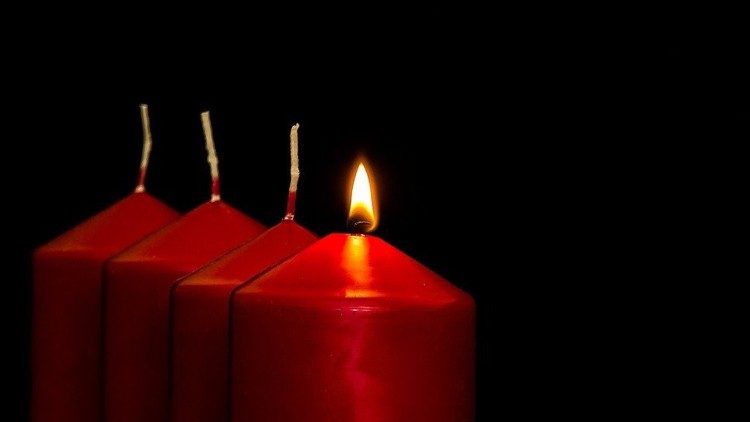
Advent wreaths are traditionally made from evergreen branches and have four candles. The four candles represent the four weeks of Advent—three candles are purple, and one is a rose color. 

The purple represents prayer, penance, and preparation for the coming of Christ. Historically, Advent was known as a “little Lent,” which is why the penitential color of purple is used. During Lent, we prepare for the resurrection of Christ on Easter. Similarly, during Advent, we prepare for the coming of Christ, both on Christmas and at the second coming. 

The rose candle is illuminated on the third Sunday of Advent, known as Gaudete Sunday. At Mass on the third Sunday, the priest will also wear rose colored vestments. Gaudete Sunday is a day for rejoicing and joy as the faithful draw near to the birth of Jesus, and it marks the midpoint of Advent. 


“The progressive lighting of the candles represents the expectation and hope surrounding our Lord’s coming into the world and the anticipation of his second coming to judge the living and the dead,” says the USCCB.

During the Advent season, the faithful will also notice a common theme in the Gospel readings. The readings focus on preparation or “making straight the path of the Lord,” penance, and fasting. All of these things remind us of the importance of preparing our hearts for the Lord and making room for his presence in our lives. 

Did you know?

The Advent wreath originated from a pagan European tradition, which consisted of lighting candles during the winter to ask the sun god to return with his light and warmth.

The first missionaries took advantage of this tradition to evangelize to people and taught them that they should use the Advent wreath as a way of preparing for Christ’s birth, and to celebrate his nativity and beg Jesus to infuse his light in their souls.

The circle of the Advent wreath is a geometric figure that has neither a beginning nor an end. It reminds us that God does not have a beginning or an end either, which reflects his unity and eternity. It is a sign of the unending love that the faithful should show the Lord and their neighbors, which must be constantly renewed and never stop.

The green color of the wreath represents hope and life. The Advent wreath reminds us that Christ is alive among us, and that we must cultivate a life of grace, spiritual growth, and hope during Advent. 

Bless your Advent wreath

The blessing of an Advent wreath takes place on the First Sunday of Advent or on the evening before the First Sunday of Advent.

When the blessing of the Advent wreath is celebrated in the home, it is appropriate that it be blessed by a parent or another member of the family.
To bless your Advent wreath at home, follow our guide, “How to bless your Advent wreath at home.

Advent is here


First Sunday of the AdventFirst Sunday of the Advent 

Is God before us, in our seeking gaze?

The First Sunday of Advent presents us with some tough questions that Google cannot answer. Jesus doesn’t offer easy answers, but a renewed vision of who we are redeemed by his love.

By Ryan Browne

“Is God before us, in our seeking gaze, or is He behind us, at our backs?”

These words by the Swiss theologian, Hans Urs von Balthasar, set before us a great challenge. He formulated this question in response to the issue of mission. As Christians, how often do we think we’re fully furnished with the Church’s teaching, fully prepared on our own merit, to go out and preach the Gospel?

In today’s Gospel (Luke 21:5-28, 34-36), we find ourselves overhearing a dialogue between Jesus and his Disciples. Jesus offers a stark warning to them: be ready for the end times and the days that precede them. This warning may now leave us feeling anxious and fearful. You may even be thinking, “why on earth do we have this Gospel on the First Sunday of Advent?” Shouldn’t we have a Gospel that leads us to meditate on the Birth of Our Lord? Good question!

Today’s Gospel offers a lesson in humility instead. There are things we just don’t know. We don’t know when our lives will end, let alone what will happen tomorrow! In our ever-updated-technological world, how often do we think we have all the answers off our backs and efforts? After all, with Google, we are only one click away from omniscience.  

Today, Jesus is calling us to humility of heart. This is the start of discipleship. This is the beginning of the profession of faith in Christ and His second coming. This is the first response to Balthasar’s challenge: keeping God ever before our searching gaze, so we can constantly be refashioned.

We are being called on this First Sunday of Advent to conversion. Humility is being able to recognise our own weaknesses. To continue walking in faith, hope, and love. To keep our gaze fixed on Jesus, who is always the One who will come. Further still, to the horizon, wherefrom Christ will come again.

So, the real questions are:

- Are we ready to humble ourselves?

- Are we ready to take up our burdens and walk?

- Can we admit that we do not have all the answers?

Only in a humble state, like Mary’s, can we begin a process of conversion. Humility helps us recognise, we will never have all the answers. Instead, Jesus will give us a renewed vision of our humanity. We are frail, earthenware vessels being constantly moulded by His love.

Let our prayer today therefore be: Lord, may you gift us with the courage to be humble, so that when you come again in glory on the last day, we may ever perfectly reflect you; crucified and risen. Amen.