reflections, updates and homilies from Deacon Mike Talbot inspired by the following words from my ordination: Receive the Gospel of Christ whose herald you have become. Believe what you read, teach what you believe and practice what you teach...
Solemnity of the Blessed Virgin Mary, the Mother of God, The Octave Day of the Nativity of the Lord (Christmas)
The Church celebrates the Solemnity of Mary, the Holy Mother of God, our Lady's greatest title. This feast is the Octave Day of Christmas. In the current liturgical Calendar only Christmas and Easter enjoy the privilege of an octave.
"Mary, the all-holy ever-virgin Mother of God, is the masterwork of the mission of the Son and the Spirit in the fullness of time. For the first time in the plan of salvation and because his Spirit had prepared her, the Father found the dwelling place where his Son and his Spirit could dwell among men. In this sense the Church's Tradition has often read the most beautiful texts on wisdom in relation to Mary. Mary is acclaimed and represented in the liturgy as the "Seat of Wisdom." —Catechism of the Catholic Church 721
The Word Took Our Nature from Mary The Apostle tells us: The Word took to himself the sons of Abraham and so had to be like his brothers in all things. He had then to take a body like ours. This explains the fact of Mary’s presence: she is to provide him with a body of his own, to be offered for our sake. Scripture records her giving birth and says: She wrapped him in swaddling clothes. Her breasts, which fed him, were called blessed. Sacrifice was offered because the child was her firstborn. Gabriel used careful and prudent language when he announced his birth. He did not speak of “what will be born in you” to avoid the impression that a body would be introduced into her womb from outside; he spoke of “what will be born from you” so that we might know by faith that her child originated within her and from her.
By taking our nature and offering it in sacrifice, the Word was to destroy it completely and then invest it with his own nature and so prompt the Apostle to say: This corruptible body must put on incorruption; this mortal body must put on immortality.
This was not done in outward show only, as some have imagined. This is not so. Our Savior truly became man, and from this has followed the salvation of man as a whole. Our salvation is in no way fictitious, nor does it apply only to the body. The salvation of the whole man, that is, of soul and body, has really been achieved in the Word himself.
What was born of Mary was therefore human by nature, in accordance with the inspired Scriptures, and the body of the Lord was a true body: It was a true body because it was the same as ours. Mary, you see, is our sister, for we are all born from Adam.
The words of Saint John: The Word was made flesh, bear the same meaning, as we may see from a similar turn of phrase in Saint Paul: Christ was made a curse for our sake. Man’s body has acquired something great through its communion and union with the Word. From being mortal, it has been made immortal; though it was a living body it has become a spiritual one; though it was made from the earth it has passed through the gates of heaven.
Even when the Word takes a body from Mary, the Trinity remains a Trinity, with neither increase nor decrease. It is forever perfect. In the Trinity we acknowledge one Godhead, and thus one God, the Father of the Word, is proclaimed in the Church. —Excerpted from a letter by St. Athanasius
Solemnity of Mary, the Holy Mother of God, Octave Day of Christmas—Day Eight Although New Year's Day is not celebrated by the Church, this day has been observed as a Holy Day of Obligation since early times for this feast. Each family and country has different traditional foods to eat on New Year's Day, with lentils being the main superstition: ill luck befalling those who do not eat lentils at the beginning of the year.
New Year's is a day of traditional hospitality, visiting and good cheer, mostly with a secular view, but there is no reason that this day, too, could not be sanctified in Christ.
Solemnity of the BVM, Mother of God: O God, who through the fruitful virginity of Blessed Mary bestowed on the human race the grace of eternal salvation, grant, we pray, that we may experience the intercession of her, through whom we were found worthy to receive the author of life, our Lord Jesus Christ, your Son. Who lives and reigns with you in the unity of the Holy Spirit, God, for ever and ever.
A person wearing 2026 glasses watches as organizers of the upcoming ball drop on New Year's Eve perform a confetti test in New York City's Times Square Dec. 29, 2025. (OSV News photo/Adam Gray, Reuters)
Q: If the church’s new year begins on the first Sunday of Advent, then why is the secular New Year’s Day (Jan. 1) a holy day of obligation?
A: You are correct that the church’s liturgical new year begins usually in late November with the first Sunday of Advent, and you are likewise correct that in the United States and for the universal church in general, Jan. 1 is a holy day of obligation (see Canon 1246 of the Code of Canon Law).
But January 1 is not a holy day of obligation because of the civil new year, but because it is the feast of Mary, the Mother of God.
Recognizing Jesus’ divine nature and Mary’s role in Jan. 1 solemnity
“Mother of God” — also known by the theological Greek term “Theotokos,” or “God-bearer” — is an ancient title for Our Lady which not only references her own great dignity, but further points to deeper Catholic teachings on Jesus’ identity and the nature of the most Holy Trinity.
Although this title had been in use among the Christian faithful long before then, formal endorsement of the practice of calling Mary the “Mother of God” is most closely associated with the Council of Ephesus in the year 431 A.D. Among other things, the Council of Ephesus refuted the Nestorian heresy.
The Nestorian heresy is named after the fifth-century bishop Nestorius, who argued that Mary should be considered the mother of only Jesus’ human nature, because to say that she was the mother of Jesus’ divine nature would seem to imply that she herself was divine.
Nestorius preached against the use of the term “Theotokos” in favor of the title “Christotokos,” or “mother of Christ.” However, this was problematic because it undermined the church’s doctrine on the “hypostatic union,” or the teaching that Jesus has two natures — a divine and a human nature — fully “united in the one person of God’s Son” (See the Catechism of the Catholic Church, 481).
To make a long story short, the Council of Ephesus formally declared Nestorius a heretic. The council clarified that because Jesus’ two natures were distinct but not separated into different persons, and since Mary was the mother of the person of Jesus in His human nature, she was also the mother of Him in His divine nature. Hence, she can, in this specific sense, rightly be called the “mother of God”: not because Mary was herself the source of Jesus’ divinity, but because she bore to the world the man who was also God.
Marian solemnity celebrated in octave of Christmas
It’s fitting that in our current calendar we observe the solemnity of Mary, the Mother of God on the eighth day after Christmas. In our Catholic liturgical tradition, especially important feasts like Christmas and Easter are celebrated for eight days. This is called an “octave,” and it gives us the space to fully ponder the mystery of faith being celebrated, often in its many various nuances and facets.
The fact that we commemorate Mary as the Mother of God in the octave day of Christmas reminds us, as the Catechism puts it, that “the Incarnation is therefore the mystery of the wonderful union of the divine and human natures in the one person of the Word” (CCC 483).
On a side note, there is one Catholic custom that is specifically tied to the civil celebration of the new year. Provided the other usual conditions for obtaining an indulgence are met, Catholics can earn an indulgence on Dec. 31 if they devoutly pray or chant the “Te Deum” prayer.
This is an ancient hymn of thanksgiving which today is most often prayed as part of the Liturgy of the Hours on Sundays and major feast days but is to be prayed on Dec. 31 as a way to thank God for the blessings and graces of the past year. Similarly, a Catholic can earn a second indulgence on Jan. 1 for praying the “Veni Creator Spiritus,” a prayer asking for the Holy Spirit’s light and guidance.
Jenna Marie Cooper, who holds a licentiate in canon law, is a consecrated virgin and a canonist whose column appears weekly at OSV News. Send your questions to CatholicQA@osv.com.
Pope Leo: Jubilee Year ‘a powerful sign of a new world’
In a homily delivered at the final liturgy of the year, Pope Leo reflects on “the mystery of Christ, which points to a plan for human history” - a plan that stands in stark contrast to “armed strategies, concealed beneath hypocritical rhetoric.”
By Vatican News
On Wednesday, 31 December, the last day of the year, Pope Leo XIV presided over the First Vespers of the Solemnity of Mary, Mother of God, his final celebration of 2025.
In St. Peter’s Basilica in Rome, with roughly 5,500 of the faithful in attendance, the Pope said that the evening’s liturgy possesses “a singular richness that flows both from the awe-inspiring mystery it celebrates and from its place at the end of the civil year.”
God’s plan for the world
“When the fullness of time had come, God sent his Son, born of a woman, born under the law, to redeem those who were under the law, so that we might receive adoption as sons.” This biblical passage from Saint Paul’s Letter to the Galatians, read out during the vespers, was at the centre of Pope Leo’s homily.
The Pope said that this way of presenting the mystery of Christ “calls to mind a great plan for human history—a mysterious plan, but one with a clear center, like a high mountain lit by the sun in the midst of a dense forest: the ‘fullness of time.’”
Today, in a society weighed down by the burden of sin, we keenly feel “the need for a wise, benevolent, merciful plan”, the Pope said.
However, he warned, there are other plans at work in the world: “strategies aimed at conquering markets, territories, and spheres of influence; armed strategies, concealed beneath hypocritical rhetoric, ideological proclamations, and false religious motives.”
The Jubilee: A time of grace
In St Peter’s Basilica, speaking before the recitation of the traditional thanksgiving hymn of the Te Deum, Pope Leo expressed his gratitude to God for the “gift of the Jubilee, which has been a powerful sign of his plan of hope for humanity and for the world.”
He also offered thanks to all those who, throughout the months and days of 2025, worked at the service of pilgrims to make Rome more welcoming.
This hospitality was, Pope Leo said, the wish Pope Francis expressed a year ago. “I would like it to continue to be so—and I would even say, all the more so after this period of grace”.
The city of Rome and the blood of the martyrs
Pope Leo noted that “the Jubilee is a great sign of a new world, renewed and reconciled according to God’s plan.”
And “within this plan, Providence has reserved a special place for this city of Rome—not because of its glories, not because of its power, but because Peter and Paul and so many other martyrs shed their blood here for Christ. That is why Rome is the city of the Jubilee”.
Pope Leo expressed the hope that the city would take care of the poor and weak: “May this city, animated by Christian hope, be at the service of God’s plan of love for the human family.”
Following the liturgy, the Pope then went out to St. Peter’s Square to pray before the nativity scene there and to greet the faithful and pilgrims who had gathered.
Pope at Audience: As we cross from old year to new, let us entrust everything to God
At the final General Audience of 2025, Pope Leo XIV invites the faithful to give thanks for the past, seek forgiveness, and entrust the journey ahead to God’s mercy.
By Vatican News
During his final General Audience of the year on Wednesday, Pope Leo XIV recalled that the months just lived had been marked by events of contrasting significance.
“Some of them joyful,” he said, “such as the pilgrimage of so many of the faithful on the occasion of the Holy Year; others painful, such as the passing of the late Pope Francis, and the scenarios of war that continue to convulse the planet.”
Precisely for this reason, he added, the Church calls believers to gather everything—joys and sufferings alike—before God, asking Him “to renew, in us and around us, in the coming days, the wonders of his grace and mercy.”
Te Deum prayer
With this in mind, Pope Leo reflected on the ancient tradition of the solemn Te Deum sung on the evening of 31 December.
“It is in this dynamic,” he explained, “that the tradition of the solemn singing of the Te Deum, with which we will thank the Lord this evening for the blessings we have received, finds its place.”
Quoting Pope Francis, he contrasted this prayerful gratitude with what he called a worldly attitude. “While ‘worldly gratitude and worldly hope are evident... they are focused on the self, on its interests’,” Pope Francis had said. “In this Liturgy... one breathes an entirely different atmosphere: one of praise, of wonder, of gratitude.”
This spirit of thanksgiving, Pope Leo continued, also calls for truthfulness of heart. “With these attitudes,” he said, “we are called upon to reflect on what the Lord has done for us over the past year,” and also “to examine our consciences honestly,” asking forgiveness “for all the times we have failed to treasure his inspirations and invest the talents he has entrusted to us in the best possible way.”
A journey with a destination
The Pope then pointed to a second sign that has marked the Jubilee year: that of the journey. “This year,” he observed, “countless pilgrims have come from all over the world to pray at the Tomb of Peter and to confirm their adherence to Christ.”
Their pilgrimage, he explained, mirrors the deeper truth of human existence. “Our whole life is a journey whose final destination transcends space and time,” a journey fulfilled “in the encounter with God and in full and eternal communion with Him.”
This hope finds voice, he added, when the Church prays in the Te Deum: “Bring us with your saints to glory everlasting.”
The Holy Door
A third sign, the Pope continued, emerges in the light of eternity: the passage through the Holy Door. “So many of us,” he said, “have made this gesture, praying and imploring forgiveness for ourselves and our loved ones.”
Crossing the threshold, he explained, expresses “our ‘yes’ to God,” who invites us, through forgiveness, “to cross the threshold of a new life, animated by grace, modelled on the Gospel.”
Quoting Pope Paul VI, Pope Leo stressed that this life is “inflamed by ‘love for that neighbour, in whose definition... every man is included’,” even those “personally unknown to us, even if bothersome and hostile,” yet always “endowed with the incomparable dignity of a brother.”
“This,” the Pope said, “is our ‘yes’ to a life lived with commitment in the present and oriented towards eternity.”
“Let the sinner rejoice”
Reflecting on these signs in the light of Christmas, Pope Leo recalled the words of Saint Leo the Great, who saw the Nativity as a proclamation of universal joy. “Let the saint rejoice, because he is approaching his reward; let the sinner rejoice, because he is offered forgiveness; let the pagan take courage, because he is called to life.”
“This invitation,” the Pope said, “is addressed today to all of us.” To the baptized, “because God has become our companion on the journey towards true life”; to sinners, “because, forgiven, with his grace we can stand up and set off again;” and to the poor and fragile, because the Lord, “making our weakness his own, has redeemed it.”
God is Love
In conclusion, Pope Leo recalled the Jubilee of 1975, noting how Pope Paul VI summed up its message in a single word: “love.”
“God is Love!” Pope Paul VI said during that audience. “God loves me! God awaited me, and I have found him! God is mercy! God is forgiveness! God is salvation! God, yes, God is life!”
“May these thoughts,” Pope Leo XIV concluded, “accompany us in the passage from the old to the new year, and then always, in our lives.”
St. Sylvester, born in Rome, was ordained by Pope St. Marcellinus during the peace that preceded the persecutions of Diocletian. He passed through those days of terror, witnessed the abdication of Diocletian and Maximian, and saw the triumph of Constantine in the year 312. Two years later he succeeded St. Melchiades as Bishop of Rome. In the same year, he sent four legates to represent him at the great Council of the Western Church, held at Aries. He confirmed it's decision and imparted them to the Church.
The Council of Niceawas assembled during his reign, in the year 325, but not being able to assist at it in person, on account of his great age, he sent his legates, who headed the list of subscribers to its decrees, preceding the Patriarchs ofAlexandriaand Antioch. St. Sylvester was Pope for twenty-four years and eleven months. He died in the year 335. His Feast Day is December 31st.
Pope Leo XIV greets the faithful before he celebrates Mass in Beirut, Lebanon, on the final day of his first apostolic journey Dec. 2, 2025. (CNS photo/Lola Gomez)
“Lebanon needed this embrace.”
The words went out over a social media platform, made more poignant for the accompanying image of Pope Leo XIV consoling a weeping Lebanese woman.
I couldn’t help thinking “perhaps the whole world needed it, and needs this pope, for this time.”
Leo’s papacy, of nine months gestation, has revealed itself slowly — full of hope but also hidden, as though the first pope from the United States meant to show himself in small, unhurried measures.
The office into which he had been thrust might quickly make its demands known, but this new pontiff seemed to be considering everything placed before him with care. The punditry, who had barely counted Cardinal Robert Prevost among the papabile going into the conclave, have been chomping at the bit to define the man, quickly comparing him to his predecessor or trying to label the new pontiff according to their preferences.
Barely had we met him before one head-spinningly swift headline blared: “With Leo, there’s no going back from Francis,” while another editorial declared Prevost would be no “Francis 2.0 or even 1.5.” More thoughtful publications watched and waited to see what the first steps of this newborn pontificate would show — would he be cautious or take off running?
Our new Peter came with a papal name of both historic greatness and clear-minded engagement with changing times and trends, and that seemed to please everyone.
As societies are roiled by the still-evolving, barely studied effects of techno-addiction on our minds and souls, increased government surveillance on our trust, mysterious use of bitcoin on economies and the thoughtless embrace of artificial intelligence on everything, there seemed to be a consensus of hope that this new Leo might be nodding toward Leo XIII, whose encyclical “Rerum Novarum” helped to define the moral concerns and rights of laborers during the Industrial Revolution.
When the new pope admitted as much, expectations grew that he would quickly address all of it, especially bringing Catholic sensibility to bear on the powers and problems inherent to AI. Meanwhile, the Augustinian who appeared on the balcony of St. Peter’s last May 8 kept his initial thoughts to himself. Making his first popemobile forays into the crowds attending his audiences, he greeted babies and made several spectacular catches as all manner of “Pope Leo” dolls came his way.
“He seems quietly centered, and comfortable in his own skin,” I wrote to a friend. “But I wish he’d do something spectacular, already. I mean, why the reticence? He’s from Chicago!”
“By way of the missions in Chiclayo, Peru,” I was reminded. “Be patient. Honestly, I like that Leo is taking his time and leaving a lot to the imagination. Showing an ankle, so to speak, not the whole leg.”
As the Holy Father’s papacy progressed, I realized that what I’d thought of as “reticence” was instead an Augustine-rooted habit of careful thought. After the dramatic pipe organ of Pope John Paul II, the quiet piano of Benedict XVI, and the larger-than-life brass band that was Pope Francis (a man unfiltered while speaking off-the-cuff but capable of real elegance on paper), Prevost presented more like an acoustic guitar tuned by the master: soothing, inviting, complex and capable of great surprise.
Here are my top 5 “Pope Leo Moments” for 2025.
1) His first interview — and the messages contained in it
Pope Leo XIV sits with Elise Allen, senior correspondent at Crux, for an interview at the pope’s residence inside the Vatican’s Palazzo Sant’Uffizio July 30, 2025. The biography of the pope is titled, “Leo XIV: Citizen of the World, Missionary of the XXI Century,” and it will be published in Spanish by Penguin Peru Sept. 18. English and Portuguese editions of the book will be released in early 2026. (CNS photo/courtesy Crux)
In his first interview, Leo spoke clearly of his concerns for socio-economic issues, wealth inequality, the marginalized, environmental concerns, immigration, war and governmental overreach but also surprised many by insisting, “I don’t see my primary role as trying to be the solver of the world’s problems.”
Rather, the new pope means to root the voice of the church firmly to its source: “The values that the church will promote in dealing with some of these world crises don’t come out of the blue, they come out of the Gospel.” It goes back, he added “to the very basic things of respecting one another, respecting human dignity …”
And so, month by month Pope Leo began to show us what he meant — by issuing a beautiful and moving exhortation on love of the poor; by praying with the leader of a historic persecutor of the church; by addressing the marginalized, both outside and within the church through Gospel lenses and with an eye toward bridging what has become polarized. He’s used digital encounters to stay in touch with young Catholics, to excellent effect.
All of that added up to a great beginning for this infant papacy, but Leo’s slow revelation ended in Lebanon, where we saw a candle of steady light, burning with a full and compassionate heart for the suffering, a vigorous and deep uplifting faith and a humble yet firm sense of occasion.
2) Visit to Turkey and, especially, Lebanon
Pope Leo XIV greets the crowd from a mini popemobile during an event with Lebanese young people in the square in front of the Maronite Patriarchate of Antioch in Bkerké, Lebanon, Dec. 1, 2025. (CNS photo/Lola Gomez)
In considering the top five moments of this papacy thus far, Pope Leo’s visit to Turkey and Lebanon is an obvious standout. The photos from Leo’s pilgrimage to Iznik were breathtaking: standing above the submerged ruins of the ancient Basilica of Saint Neophytos, the bishop of Rome joined in prayer with the Ecumenical Patriarch of Constantinople and representatives of Eastern churches, both Catholic and other Orthodox, and helped the one, apostolic church breathe with both lungs.
In Istanbul he made a respectful visit to the famous Blue Mosque, leaving his shoes outside but — in a departure from his three predecessors — politely declining to pray with an innately American demurral, “that’s OK.”
After that, Leo’s focus was Lebanon, Lebanon, Lebanon, with that beleaguered nation’s estimated 1.3 million Catholics demonstrably overjoyed to meet their new Papa. The Holy Father seemed similarly enthused, becoming the first pontiff to visit and pray before the shrine of St. Charbel Makhlouf, the great Melkite monk held in deep reverence by Catholic and even some Muslim Lebanese. Indeed, Pope Leo later acknowledged “the enduring truth that Christians, Muslims, Druze and countless others can live together and build a country united by respect and dialogue.”
From there Pope Leo met with an enthusiastic group of young people, his stirring address spelling out the challenges of balancing technology and interpersonal relationships; he also consoled the families of those lost in a devastating 2020 explosion that killed hundreds — the “embrace Lebanon needed” — closing the trip with a Mass attended by an estimated 150,000 Catholics. There, he preached with forceful beauty: “Lebanon, stand up,” he said. “Be a home of justice and fraternity! Be a prophetic sign of peace for the whole of the Levant.”
3) Meeting — and praying with — an earthly king
Pope Leo XIV says farewell to Britain’s King Charles III in the San Damaso Courtyard of the Apostolic Palace at Vatican at the end of his visit Oct. 23, 2025. (CNS photo/Vatican Media)
Precedent setting as it was, Pope Leo’s Apostolic Journey was not the first historic moment of his papacy. A month earlier he had welcomed Britain’s King Charles III, Supreme Governor of the Church of England, to St. Peter’s and for the first time since the Reformation, a pope and a British monarch prayed together, and in the Sistine Chapel, no less!
There are still plenty of issues keeping us apart but Leo is demonstrating that Christians praying together, in every part of the world, must always be the beginning dialogue for peace.
4) “Dilexi te”: Continuity and unity
Pope Leo XIV signs his first apostolic exhortation, “Dilexi Te” (“I Have Loved You”), in the library of the Apostolic Palace at the Vatican Oct. 4, 2025, the feast of St. Francis of Assisi, as Archbishop Edgar Peña Parra, the substitute secretary for general affairs at the Vatican Secretariat of State, looks on. The exhortation was released Oct. 9. (CNS photo/Vatican Media)
It was a beautiful sign of papal continuance when Pope Francis picked up Benedict XVI’s unfinished encyclical and completed it, issuing “Lumen Fidei” and graciously writing “I have taken up his fine work and added a few contributions of my own.” Likewise, “Dilexi te,” the apostolic exhortation Pope Francis was preparing before his death was finished by Leo XIV, who wrote, “I am happy to make this document my own … since I share the desire of my beloved predecessor that all Christians come to appreciate the close connection between Christ’s love and his summons to care for the poor.”
While notions of papal continuance too frequently rest upon shallow externals (“Will he eschew a mozzetta? Will he wear a camauro?”) in this cooperation of popes working as brothers toward the same end, we see the continued presence of the Holy Spirit, who upholds the institutional church, whether she is at her best or her worst. What a heartening thing.
5) Plaintalk for the plane presser
Pope Leo XIV answers a question from a journalist aboard his flight back to Rome from Lebanon, Dec. 2, 2025. (CNS photo/Lola Gomez)
Leo’s three most recent predecessors agreed to in-flight press conferences, which are informal and can sometimes yield answers requiring later follow-up or clarification. On the return to Rome, the Holy Father, while doubtlessly still processing all that he had experienced in the Levant, covered an array of topics with clarity, discernment and discretion — no follow-ups required — and he even shared something of his personal prayer life.
Perhaps in keeping with his stated belief that he is not meant to be “the solver of the world’s problems,” he refused to go into detail about delicate socio-politico issues. Asked about a letter from Hezbollah, Leo delicately sidestepped the details saying only, “Clearly, on the part of the church there is the proposal that they lay down their arms and that we seek dialogue. But beyond this, I prefer not to comment at this time.”
Responding to a query as to his state of mind when the possibility of his election became clear in conclave, the pontiff was natural and instructive. “I resigned myself to the fact … I took a deep breath, and said ‘here we go Lord, you’re in charge, you lead the way.'”
A prayer of surrender to an unimaginable change in life and station, “here we go, Lord, you’re in charge.” By word and example, perhaps the best and most succinct example of lived and intimate prayer that a pope can make, unceremoniously offered as instruction to us all.
Elizabeth Scalia is editor at large for OSV. Follow her on X @theanchoress.
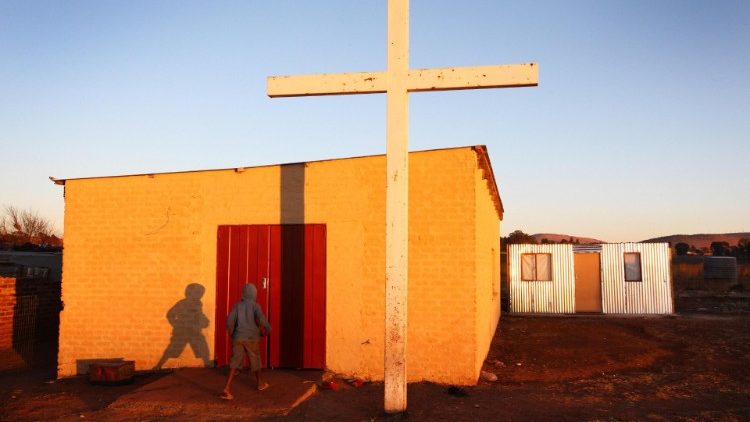
Seventeen Catholic missionaries killed in 2025, 10 of them in Africa
The Vatican's Fides News Agency releases its annual report on missionaries and pastoral workers killed in the last year, recording 17 deaths across the globe, with the African continent, and Nigeria especially, the most affected.
By Isabella H. de Carvalho
Seventeen missionaries were killed across the globe in 2025, 10 of whom died in Africa, five of which in Nigeria, according to the Fides News Agency, a service of the Pontifical Mission Societies.
As the year draws to a close, and with it the Jubilee of Hope, Fides released its annual report on December 30, reporting the deaths of missionaries and pastoral workers across the world.
Every year, Fides highlights the stories of priests, religious, seminarians, and laypeople who dedicate their lives to serving Christ and the Church, often in contexts marked by violence, poverty, and injustice.
According to the 2025 report, 10 priests, 2 seminarians, 2 catechists, 2 religious sisters, and 1 layman lost their lives. This year marked an increase in deaths compared to 2024, when 14 missionaries were killed. From 2000 to 2025, Fides has accounted for the deaths of 626 missionaries or pastoral workers.
The 2025 report underlines that it takes into account a broad definition of 'missionaries,' saying it includes all Catholics who are involved in some way in pastoral activities and are killed in violent circumstances, whether or not their deaths met the strict criteria for martyrdom.
Many Catholic deaths in Africa and Nigeria
The African continent remains one of the most dangerous continents for missionary work, with 10 deaths in 2025.
Of these, 6 of those killed were priests, 2 were seminarians, and 2 were catechists. The countries affected were Burkina Faso, Kenya, Sierra Leone, Sudan, and Nigeria, which account for half of the deaths.
In an interview with Fides, Archbishop Fortunatus Nwachukwu, Secretary of the Dicastery for Evangelization, who is Nigerian, said, “All of this is a source of profound sadness” and “also a bit of shame.”
“Nigeria is one of the countries with the most religious population in the world: a nation of believers, Christians, and Muslims. We all claim to be people of peace,” he insisted.
The Archbishop said he hopes to see the Muslim population also “denounce and reject the use of their religion to commit acts of violence.”
“We must all reject any justification for using religion to perpetrate violent acts, even to the point of taking people's lives,” he continued.
In the interview, Archbishop Nwachukwu highlighted that these Christians did not die trying to be heroes but were struck by violence in their daily lives, such as in seminaries or schools.
He emphasized that the Nigerian government should do more to defend and protect innocent people and improve the security situation in the country.
Other continents affected
The Fides report mentions how another continent which has often topped this “tragic ranking” in the past is the Americas.
After Africa, it is the region most affected this year, with 4 missionaries being killed in 2025, 2 priests in Mexico and the United States, and 2 religious sisters in Haiti.
In Asia, one priest in Myanmar and one layman, a teacher in the Philippines, lost their lives. Lastly, in Europe, one priest was killed in Poland.
Killed while serving the Church
Among the stories underlined by Fides is that of the young Nigerian seminarian, Emmanuel Alabi, who died in July during a forced march imposed on him by his kidnappers, who had attacked the minor seminary in Ivianokpodi and wounded him.
They also mention the story of religious sisters Evanette Onezaire and Jeanne Voltaire, both of whom belonged to the Little Sisters of Saint Thérèse of the Child Jesus, who murdered in March by armed gang members in Haiti.
Lastly, Fides highlights Father Donald Martin, the first Burmese Catholic priest killed in the conflict that has plagued Myanmar. His lifeless and mutilated body was found in February by several of his parishioners in the church complex.

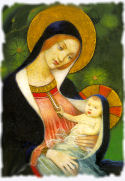 Although New Year's Day is not celebrated by the Church, this day has been observed as a Holy Day of Obligation since early times for this feast. Each family and country has different traditional foods to eat on New Year's Day, with lentils being the main superstition: ill luck befalling those who do not eat lentils at the beginning of the year.